
Translated material
Let the womb
When the quarter of Paris, Venter de Paris, was erased from the map of the capital of France, the whole country was indignant
## 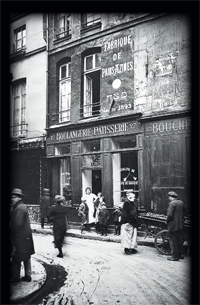
When the quarter of Paris, Ventre de Paris, was erased from the map of the capital of France, the whole country was indignant. The architects needed a place for new buildings - expensive houses, fashion cafes and restaurants, trading galleries. And although the new market in Rungis (Rungis), spread out on an area of 600 hectares instead of 30, which was occupied by the old Les-Alle (Les Halles), is much more convenient and more functional-the bus station, railway tracks, giant refrigerators, modern workshops and warehouses-it belongs to another world, and Parisians with sadness are remembered by “iron ones Umbrellas ”of the architect Baltar, who disappeared, taking away the charm, noise and amazing flavor of the old market quarter.
Coloristic essay
How everything is repeated in the history of cities! Indeed, back in 1844, more than a hundred years before the event, Balzac, the Great Gourmet and a passionate coffee lover, wrote about another market in his essay “The Departing Paris”: “It will pass for several days, and the pillars of the covered market will disappear, old Paris will only exist in books of fiction writers, which are brave enough to describe the last remnants of the architecture of our ancestors ...”
It is difficult to find a more detailed description of the famous market than in the novel by Zola “The Womb of Paris”. The writer saw this quarter through the eyes of the artist and described his life as a subtle psychologist and an erudite sociologist. His friend and student of Paul Alexis in the monograph "Emil Zola. Notes of a friend ”describes their joint visit to the market, where an extraordinary sight opened before them. In the coming night, the roof of the market looked like the Babylonian palaces. Zola took out a notebook and made several notes about this amazing effect. Later, he visited the market many times, studying it at different times - in rainy weather, on a sunny day, on fog, during snowfall, in the morning, in the morning, in the evening ... He became interested in extraordinary colors, an amazing game of light and shadow. “A simple salad, brass, chicory, blossoming and still fat from chernozem, exposed their bright cores; Skinat and sorrel bouquets, bouquets of artichokes, bundles of beans and peas, piles of Roman salad tied with straws, played with all shades of green color, starting from bright greenery of pits to dark green coloring of leaves. This gamma, gradually freezing, broke off on colorful stems of celery and on the beams of the pores. But the sharpest, screaming tones were still bright spots of carrots and clean spots of turnips scattered in many along the market and illuminated it with a variegated two kings. ”
Physiological essay 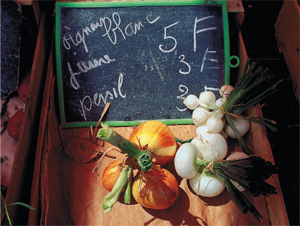
Frederick Dar, better known under the pseudonym San Antonio, a modern author of detective novels, inhabited by purely Gallic characters, describes the market in a completely different way. One inspector Bereyurya is worth it - a glutton, a merryman and a drink with traces of yesterday's breakfast on an unfastening shirt and the day before yesterday's lunch on oiled trousers! Unfortunately, a thin, playful, and often inexpensive play of words complicates the adequate translation of these novels (and after the death of the author there are more than 100) into other languages.
“... as if you are going down to the garden. The capital of the stench! Giant Horror Museum! Everywhere huge baskets with horned bull heads, who, covering their eyes, completely shows you the tongue completely. Huge tanks made of galvanized iron, filled with inedible parts of animal bodies ... Mountains of the liver! Himalayas hearts! Fujiyama guts! We are rave in blood ”(my. - A.S.). Has the "womb of Paris" has changed so much since the time of Zola? Maybe the decision to transfer the market was justified? Maybe the “Iron Horse” should always be replaced by the “peasant horse”?
Paris of contrasts
On a bright impressionist background, social conflicts between the “thick” and “thin” are unfolding, may the reader forgive me this old -fashioned terminology. Some live in the world of "delicious things, fat and melting in the mouth." Here's how Zola described the sausage shop of Kenya Grades: “At the very bottom, at the glass, there was a number of cans with fried pork slices interspersed with mustard banks. Little ham with taken bones lay higher ... Then large dishes followed: red and glossy, stuffed Strasbourg languages, which seemed bloody next to pale sausages and pork legs; Black blood sausages ... Ready to burst from excess health ... very fresh pastes with small labels in the form of flags; Large ham, large glossy pieces of veal and pork with a side dish of jelly, transparent, like a candy ... "
Of course, “thin” cannot afford such luxury. Their food is modest. The main dish is soup. “Along the indoor passage, women began to sell coffee and soup ... A tin pranous bucket with a brew smoked on a small low frill, through the holes of which a pale glimpse of burning coals was visible. A woman, armed with a spoon, took thin slices of bread from the basket ... and poured soup into yellow cups. "
Onion soup
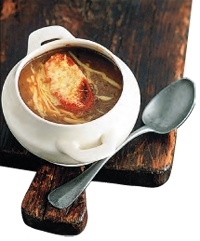
“I do not live a decent dinner with a style, but Vozhes 1 is a recipe for soups is unknown,” says Crisal, referring to Philamynt and Belize in the comedy of Moliere “Scientists” (Les Femmes Savantes).
The recipe for onion soup is no longer a secret. Show your culinary abilities, re -read Zola’s novel, put the smoking bowls with onion soup on the table, cover your eyes for a minute - and you will move to the atmosphere of “womb of Paris”, a noisy, seething and different quarter, which, alas, no longer exists.
#### E. Zola. Womb Paris. Translation by A. Lindegren and M. Eichengoltz O. Balzac. Departing Paris. Translation by B. Griftsova Zh.-B. Moliere. Scientists of women. Translation by M. Tumnovskaya P.-J. Beranger. Selected songs. Translation by V. Kurochkin
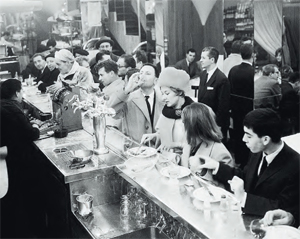
##### in Moscow in some restaurants you can also try onion soup. And if you are reluctant to go to a restaurant, prepare the soup yourself. Here is the simplest recipe.
##### На 2—3 порции вам потребуется: 500 г репчатого лука (лучше сладкого), 2—3 столовые ложки сливочного масла, л мясного бульона, 4 — 6 ломтиков белого французского багета, 5 — 6 ложек тертого сыра, соль, перец.
##### Cut the onion with rings, slightly fry in half oil and pepper. Add meat broth and boil the onion for 15 minutes. Salt. Fry the slices of bread on both sides in the remaining oil. Pour the soup into the refractory bowls, put on top of the slices of bread sprinkled with a thick layer of grated cheese, and bake in the oven.
##### Воссоздать великолепие лавки Кеню-Граделей трудновато даже в условиях мишленовского ресторана, а уж дома и подавно. But if you want, prepare a paste at home-“Paet Meson”. Take 1 kg of liver beef, 250 g finely chopped pork smoked brisket, 1 clove of garlic, a glass of chopped onions, a teaspoon of black pepper, 2 teaspoons of salt, 2 tablespoons of cognac, 4 thin slices of lard.
##### liver, brisket, garlic and onion cook in a small amount of water until the liver becomes pink inside. Skip twice through a meat grinder. Add salt, pepper, cognac and grind. Put in shape and cover with slices of fat. Bake in the oven (180-200 degrees) in a water bath 1 hour. Cool without taking out of the form. Put on a dish, cut into thin slices and decorate to your liking.
____________________________
1 Claude Vozel is a French writer and linguist, who was considered a prominent expert on the French literary language.