"Making reserves affect the interests of every citizen of the country." Banks lined up to the state for money. The government decided to replenish the capital of both state and private banks in the amount of 0.4 to 1.2 trillion rubles. Does this mean that the country's financial system was overwhelmed by the second wave of crisis? For the answer to this question, The New Times turned to the ex-Minister of Finance of the Russian Federation, now the president-the chairman of the Board of VTB Bank 24 Mikhail Zadornov
What causes the need to provide assistance to banks now?
The economic crisis began with the banking system. And it is she who is one of the most injured in terms of the fall in capitalization - not only in Russia, but throughout the world. Moreover, the market draws attention mainly to which country the bank is located, what is the general condition of the market and what is the volume of bank losses. Since October, the Russian banking system has “gone into minus”, although a number of banks, including VTB, have a profit in the IV quarter. Meanwhile, there is a rule of sufficiency of capital: a loan portfolio of any bank can be no more than 10 times higher than its own funds. And since their own funds of banks are reduced, accordingly, the ability to provide loans are reduced. And additional capital is needed in order not to even increase, but simply to maintain the size of the loan portfolio of the system. At the same time, I am sure that it is impossible to help all banks: there is not enough money.
They say that 30 banks will definitely receive help from the state, another 1000 are in line. Is it so?
No, no decision on the number of banks has been made. I think that in the end the state will support the State Bank, which is quite natural, since it is their main shareholder. And from private banks, probably, those whose shareholders will be ready to pay their capital and their funds will be supported. Then, on co -financing terms, the state can help these banks.
Among private banks, ready to share packages of their shares with government agencies, were called large as Alfa-Bank, Gazprombank and Uralsib ...
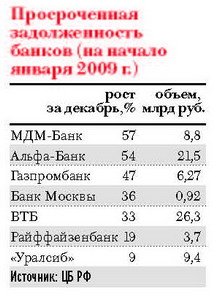
These are all speculations that are not yet related to reality. All banks are growing debt on existing loans, although to varying degrees. Which, of course, affects the stability of banks.
Since banks are waiting for help from the state again, so the second wave of the financial crisis has gone?
Any crisis passes certain phases in its development. In Russia, first, in August-September, was seriously affected by the stock market, which lost a significant share of its capitalization. Then, in a difficult situation, a banking system collided with a large volume of non -payments fell. In September-October, banks experienced a noticeable outflow of private depositors. The liquidity compression occurred, which means that the growth of loan rates and the reduction of the credit supply itself. This led to the problems of enterprises, especially those who work on credit (for example, distributors of various food and non -food products, small business, which does not have its own working capital). The crisis began to apply to the real economy and the service sector. After some time, it felt the population. And if we talk about the second wave, then on banks these problems of enterprises and the population are affected in the form of an increase in overdue debt on loan portfolios. Seeing these problems, banks more carefully provide new loans. Yes, and the demand for loans falls in conditions when people do not feel too confident and do not understand what their fate is in the next year or two.
Where is the ruble floating
Why is the ruble so rapidly falling?
I would not say that. In Kazakhstan, the new head of the Central Bank Grigory Marchenko devalized tenge by 23%in one day. Devalvation is not at all gradual or smooth. No one will devalue the currency day after day.
But since September, the bivalve basket has depreciated by a quarter. Can this be called "smooth devaluation"?
Almost in the same proportion, almost all (except Latvian Lata) currency of central and eastern Europe and developing markets were devalued. And also, for example, Australia, the structure of the economy of which is very similar to ours. It’s just that the devaluation itself is nothing more than the level of exchange rate, which leads to a payment and trade balance in balance (when exports are balanced with imports).
However, at the same time, we have a situation that the Central Bank and the ruble are devaluable, and does it lose foreign exchange reserves?
Yes, at the gradual devaluation of the Central Bank, it has already lost from $ 80 billion to $ 100 billion. And this is only direct losses, and there are also indirect ones. After all, people are not fools, they realized that the ruble was getting cheaper and would get cheaper further, and simply transferred their ruble savings into foreign exchange. I think that billions of forty dollars from these lost reserves were bought by citizens. The financiers of enterprises who are also not fools also did. If we assume that the task of smooth devaluation is to enable the population and enterprises to convert their funds into currency, then this behavior of the Central Bank is understandable. But the fact is that the currency course, the sustainability of the country's economic situation and ultimately - the situation of people and enterprises depends on the volume of reserves of the Central Bank. Therefore, melting reserves affect the interests of every citizen of the country receiving salaries in rubles.
If you were the Minister of Finance, would you carry out simultaneous devaluation?
It's not about me. Economic theory says that devaluation can only be simultaneous.
There is no one to lend it
The government is going to pour up to 1.2 trillion rubles into the banking system. Will they be spent on the purchase of currency?
I would not rush to believe pre -called numbers. The government promised a lot of help - both automakers, and agricultural industry, and the oil industry ... But let's wait until the budget for this year will be made. After all, it, as you know, is calculated on the basis of oil price $ 95 per barrel, provides for a surplus of more than 2 trillion rubles and costs - 9 trillion. It is now clear that income will be 40% less. And you will see a significantly smaller amount of banks in a changed budget. As for lending to the real sector, we are observing the decline in the economy, and it will be significant in the year. If there is a decline, then the demand for the products of a number of industries falls accordingly, development programs are frozen, and investment programs are reduced. Why increase credit activity? After all, it is clear that at best, the loan portfolio of the Russian banking system will remain the same as it was last year. In these conditions, the state simply replaces part of the money that has fallen out of the enterprises and the population that were inside the banking system. If this is not done, then the credit compression will occur much faster and the economic recession will take a chain character. Therefore, one must first understand whether today the industry is able to generate funds in order to pay off the interest on loans, and then lend it.
VTB Bank, as you know, conducted the "People's IPO". People bought stocks in the calculation of their growth, but received a drop in quotations. What do you advise your shareholders?
Obviously, a couple of years the banking sector will be in a difficult position, like the whole economy. At this time, there is no need to count on the growth of shares. But on the other hand, over the past year, VTB and VTB 24 increased the share in the corporate lending market, lending to individuals, small businesses, in the market of private deposits. Of course, people have We are more trust, because we are a state bank. But I would like to believe that the matter is not only in this, but also that we provide the entire line of banking products at affordable rates. So I can tell our shareholders that by the time the Economic Crisis was completed, the role of VTB will be much more significant than in 2007, when the “folk IPO” was held.
The budget is not rubber
How many banks will remain in Russia after the crisis?
There will be consolidation, and very significant. You can refer to the example of Kazakhstan, who carried out this consolidation before us. GDP of Kazakhstan is 1/10 of the Russian economy. In Kazakhstan, there were 400–450 banks before the financial reform, now there were 36 left. So, 360 could have been enough instead of the current 1300. But the specifics of the Russian banking system in the fact that we have quite stable regional banks that either work with a specific industry or in fact are the treasury of large or medium -sized companies. And they have every chance to survive crisis phenomena.
What will be economic growth in the country this year?
It will be negative. So far, we estimate the fall in GDP of 3%, but there may be more.
How will industry fall deep?
According to the State Statistics Committee, the fall in December amounted to 10.3%. The further decrease in the consumption of electricity and the cargo turnover of railways in the country shows that the case will not be limited to December. The decrease in production will continue in the following months. In this regard, it seems to me that the government has chosen erroneous tactics when it said that we had no crisis, and if we have, it was very insignificant. After all, it thus sent incorrect signals to economic agents, and above all to state corporations. Instead of explaining that the crisis is for a long time and everyone needs to rely primarily on their own strength, it said: do not worry, we will help you. Accordingly, the management of many companies expected help, instead of acting in accordance with the real situation, and help may not come. The state budget is not rubber.
If you were now again in the chair of the chairman of the Budget Committee of the Duma and they brought you a budget with a “hole” of $ 100 billion, what would you do?
The “hole” may turn out to be more than $ 100 billion ... Unfortunately, now the influence of the parliament is minimized. And this is sad, because the parliament is a platform for finding a balance of interests of various segments of the population and lobbying groups. And at the same time it is a filter to prevent rash solutions. And now he does not play such a role: de facto all decisions are made by the government. But if you answer your question hypothetically, then in conditions when the budget deficit is inevitable, I would limit it to a reasonable framework. I believe that the state budget should first of all help people, and not hold them artificially at workplaces in distressing enterprises. Help is required, the creation of new jobs, the maximum possible exemption of small businesses from taxes, the deployment of public work programs. That's what the state should do, and not the direct support of individual companies in a situation where the demand for their products falls.