
Translated material
Secret lumber
Crisis as an occasion to completely change your life
The crisis changes the life of people around the world. Someone breaks, and someone sees the opportunity to live another life. What comes of it - recognized The New Times 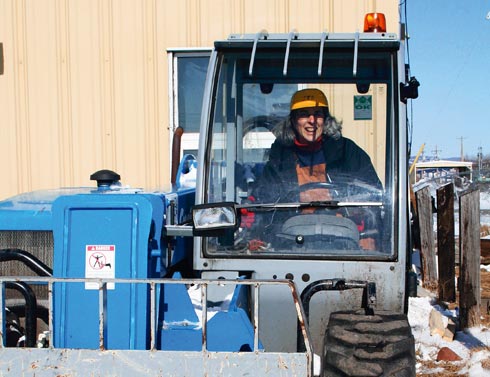
Today, Perez is waking up in the apartment in the small town of Syupirior in Wisconsin,
* * City on the shore of one of the great lakes, a population of 27 thousand 368 people. Which she herself furnished with things bought at garage sales.
* In America, it is not customary to throw old things into a landfill: homeowners arrange sales right in the courtyards of their houses or on adjacent streets - there you can often buy not new, but quite decent things for minimal money. She puts on a warm special forces and boots trimmed with steel inserts, and puts an object from a past life in a pocket: the communicator “Blackberry”, to which she still comes from letters from different countries and from different continents. When she arrives at her office of the president of Woodchuck Wisconsin (the company for the sale of lumber) in Wisconsin, she puts on a hat and from time to time sits behind the wheel of a for loader, although she used to drive only sedans: she loves large, comfortable American vehicles. The fact that in her 62 years and at her resume she began to lead the company, which is busy selling lumber, was by no means a natural development of her career. Honestly, all this is more like a well -known old song of the Talking Heads group: “And how did it bring me here?”
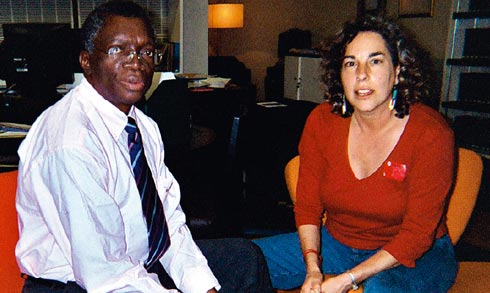
Frame from a past life: a special correspondent of the largest newspaper of the American Middle West Chicago Tribune Judy Perez in Johannesburg takes interviews from the Chairman of the Constitutional Court of South African Lang of Adventures ... It all started several years ago when she met on the Internet with the investment banker from Minneapolis David Hotst. “It was very convenient for me,” says Perez, who is divorced and has two adult married daughters and two grandchildren. “Each of us was busy with his work, everyone lived in his city, and from time to time we met and had a great time together.”
At that time, David Hotsza worked with the client on the project for the sale of real estate (granaries) in the coastal part of Syupiriore, but not a single creditor wanted to contact the project: they saw in three old granaries an exclusively problem and excess encumbrance, while Hotsza saw a storehouse of valuable timber adj.
A year and a half ago, when difficult times came for Chicago Tribune
* December 9, 2008, the head company, Tribune Co, which owns the newspaper Chicago Tribune and Los Angeles Times, fleeing the creditors, announced bankruptcy, which allowed her to postpone payments and prepare a plan for the company's withdrawal from the disaster. And the editorial office began, the company offered Perez An annual or so on the salary (this is called Buyout) in exchange for dismissal. Perez was even glad for this: in recent months, everyone in the editorial office lived under the Damoklov sword of reduction. Instead of waiting for this sword to finally fall on her head, she decided: why not enter the project with David, put his savings in him and do something completely new? The idea of Hotsz was as follows: it is necessary to disassemble the old granaries folded from a valuable tree, to sell a tree in the market and take on the next same object. In addition, this project made it possible to maintain nature: not to cut a new forest, but to process once cut down. “Initially, David thought it would take 8 months, maybe a year,” says Peres. It was three years ago, but their company is still analyzing the first repository, 15 floors high - it is about 6 million feet of an untouched tree.
... And the non-stop project continued, and the couple-an investment bank and a journalist-learned to conduct this new business for myself. For example, instead of accumulating exorbitant accounts for renting heavy equipment, they bought a used one. But solving some problems, they immediately came across new ones. “When interest rates fell and I began to think about a new loan, they called me from the bank and said that a mistake crept into the papers - and it was a loan under a cargo crane,” laughs Perez, which put most of her savings in the business. In short, Perez had to tighten the belt tightly: “If before there was at least an illusion of stability, now this is not left,” says Peres, recalling her former life in Chicago, when she had a stable income and good medical insurance. Now she is looking for profitable purchases: “I bought a huge new mattress with heated only $ 40,” she says with a proud smile. And he tells how she mastered the basics of the barter economy: “I needed a sign for the office, and I received it for a batch of firewood.” In her former city life, she did not need such skills: “I am constantly learning from my mistakes, and I even give me pleasure to overcome these new obstacles,” she admits. “Almost every day, going to bed, I can say to myself: today I managed to do something.”
She also has to constantly look for new niches in the market. In addition to the sale of rare wood, lumber of different sizes and grain polished with grain of old wall panels (over the years of storage of grain in the premises, it was polished, giving it a diverse and unique pattern) Perez now sells forged iron, which was used to support wood structures. The fact is that forged iron is no longer produced on an industrial scale, so nails and pipes at the beginning of the 20th century have, as it turned out, great value for artists. Judy found them on the Internet: “Recently, I made a deal with a metal artist who makes tripods of the Vikings,
* Ritual funeral vessels, which were supposed to accompany the deceased in his afterlife and which were shook in the mounds. Using their ancient technique, says Peres. “He was simply amazed at the degree of purity of iron.”
She also successfully coped with the bureaucratic obstacles of the colonial Williamsburg,
* The largest museum of the colonial period in the open air in the town of Williamsburg, Virginia. Where is the Department of the Department of National Parks, and was able to conclude a deal for the supply of solid iron for their forge. “We have been conducting this deal for months,” says Perez, whose talent of the reporter and journalistic perseverance served her good service.
Between the past and the future , of course, doing business in the context of an economic recession is stress. However, her former life, which seemed quite stable to her, also cannot be called smooth. “Sometimes I had to work for 18 hours, the deadlines for the delivery of the material were constantly hanging at me, and there was a feeling that you were standing exactly as much as your last article was good, as if there were no previous ones at all.” And when the Chicago Tribune shook ... “The last couple of months before leaving (from Chicago Tribune), I experienced a monstrous nervous tension: I did not understand how I could live without a newspaper, how much my internal“ I ”depends on my work, and how I could survive its loss,” says Perez, which gave a newspaper career for 40 years (before coming to in Chicago Tribune Judy Perez was the news editor of the Israeli Anglo -speaking newspaper Jerusaleum Post. For example, in their former life, people not only recognized her name, but also strove to meet her, immediately called back. “Now they do not always answer calls (which has almost never happened before),” Peres admits. “But I am so captured by my new life that there is no time to miss the old one.” It’s hard to regret when you feel so good. ”
Having left the city of winds with its rich cultural life, Perez nevertheless found her own habitat and in small towns like Twin Ports: “Since I settled here, I visited the ballet and at the concert of symphonic music and in museums,” says Perez. In addition, there is an opportunity - and no worse than in multi -ethnic Chicago - to indulge your passion for Indian, German and Polish cuisine, as well as “to a very cheap Asian food,” says Perez. And finally, the charm of completely different-ascetic, industrial-landscapes of the St. Louis Gulf was opened here to replace the glass and concrete of Chicago: the gray silage towers, strewn the shore that incorporated the colors of frozen water and the winter sky. “Previously, they seemed dull to me,” she admits. “Now I think they are beautiful.”
Translation from English by Anna Makarova, The New Times