
Translated material
Behind Moscow.
The story of how the authorities canceled the elections in two capitals
URL: https://www.proekt.media/narrative/vybory-mosgorduma-2019/
In the summer of 2019, Russian officials solved two difficult tasks: to elect a person by the governor of St. Petersburg, whom they laugh even in the Kremlin, and not to let the opposition into the Moscow parliament. The Project tells how much it was done.
The bottoms did not want to see me, but the tops could not talk about me without laughter
Venedikt Erofeev, "Moscow-Petushki"
What the polls showed
How in the Kremlin they tease Beglov
Than scared the protesters
Where Putin disappeared
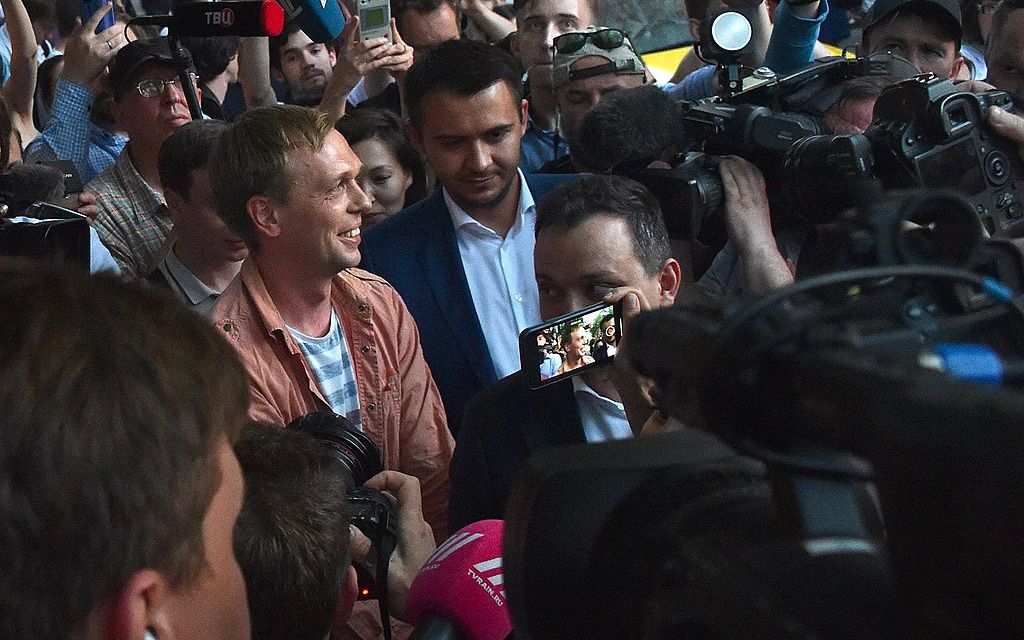
In early summer, Vladimir Putin stopped mass rallies in Moscow with one meeting with the head of the Ministry of Internal Affairs Vladimir Kolokoltsev. Since June 7, Moscow was seething due to the detention on the "drug" article by journalist Ivan Golunov. The police generals assured the Kremlin that the journalist actually traded drugs, although inconsistencies in the case testified to the opposite and threatened to lead to mass protests three months before the elections to the Moscow parliament. A few days later, Putin called Kolokoltsev to himself and set the task: personally to figure out everything, conduct examinations and release the journalist if he was not to blame. The informed interlocutor who participated in the proceedings of the case told the “project” about this, the editor -in -chief of Echo of Moscow, Alexei Venediktov, said the same earlier. The examinations confirmed that the charges were falsified, the journalist was released, and the protests ceased.
The liberation of Ivan Golunov. Source: Wikimedia.org
But the calm in the capital was short -lived. In July, Muscovites reached rallies again-now because of the unremarking for the elections to the Moscow City Duma of all opposition candidates.
Moscow. Request for public opinion
In the spring, officials responsible for elections in Moscow conducted election polls of public opinion. Their results were retold by three interlocutors close to the city hall and the Kremlin. The data received terrified them. It turned out that pro -government candidates do not have sufficient support in at least nine districts (45 of them), including throughout the center. Even the starting ratings of the opposition Ilya Yashin and Lyubov Sobol, who wanted to be elected to the Moscow City Duma from the Central Administrative District, allowed them to count on victory with a successful election campaign.
The city hall’s positions were weak in some districts outside the garden ring. Oppositionists Dmitry Gudkov in the North-West and Julia Galyamin in the north had the chances of winning. And even where there were no stellar oppositionists, the positions of pro -government candidates were still unstable - for example, in the Academic District and Kuzminki. Former State Duma deputy from United Russia, Elena Nikolaeva, running in Kuzminki, refused to believe for the results of the surveys that the officials told her for a long time - her rating was so low, recalls a familiar lean candidate.
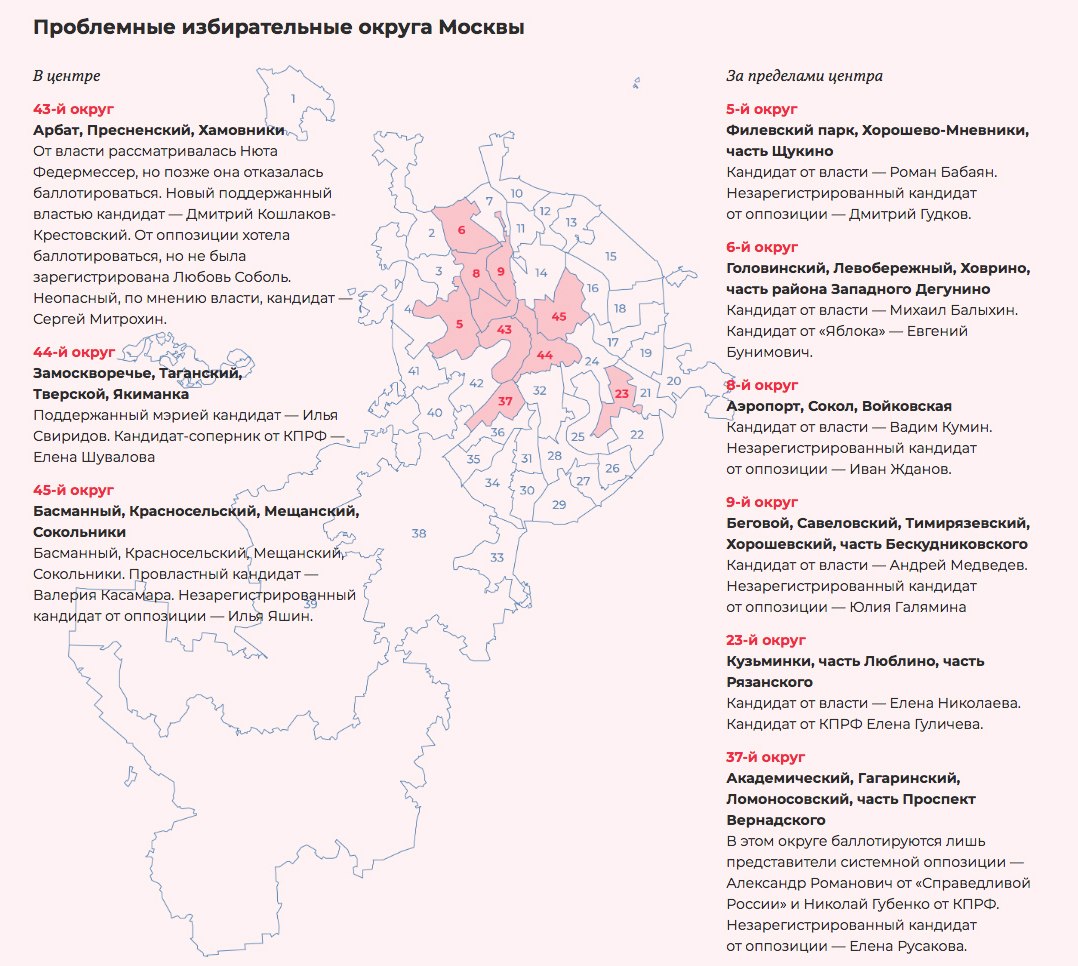
Even the classic technologies of the authorities did not work. In the district, which includes the airport, the Falcon and Voikovskaya, it immediately became clear that any candidate at least somehow connected with the authorities was doomed to defeat. Therefore, the city hall made a deal with the Communist Party, promising that a member of United Russia, Ekaterina Kopeikina, formally self -nominated, will not conduct a campaign, but in fact the city government will support the communist Vadim Kumin, says an interlocutor close to the capital's leadership. Of course, in exchange for loyalty after being elected to the Moscow City Duma. Kumin himself told the “project” that he was “wrong” to call someone’s protege, except for the Communist Party. But this did not help: polls showed that Kumin could lose to the director of the Corruption Fund Ivan Zhdanov.
The results of the work of sociologists were reported to the mayor Sergei Sobyanin and the leadership of the presidential administration. It was the polls that finally assured the authorities, and so in recent years that Navalny’s comrades -in -arms were not configured to the admission to the elections that oppositionists cannot be included in the ballots. “In 2013 (when Alexei Navalny was admitted to the election of the mayor of Moscow and he received 27% -“ project ”) that it was believed to strategically allow society to release a pair of discontent and give the opportunity to vote for opposition candidates. Now the performances have changed: they said that it was necessary to prevent Navalny’s associates from going to the Moscow City Duma so that they do not become serious politicians to the State Duma of 2021 and did not go there already, ”the interlocutor who participated in the meetings about the elections in Moscow reports.
The fact that this is fraught with big problems on the streets was not thinking at the end of spring.
Petersburg. Bibabo Putin
At the time of the beginning of the election campaign in St. Petersburg, the headquarters of Alexander Beglova received a task from the Kremlin - to win with a result of at least 55%. Such an attitude was also given with an eye on the experience of 2013 in Moscow, when Sobyanin received 51% of the vote, and the opponents suspected that one percent for the mayor’s victory in the first round was thrown away. The result of Beglov was to look more confident, but the very first measurements of the rating showed that the candidate was far from the desired numbers. The Kremlin’s behavior added horror by Beglov’s behavior, which at some moments made the chances of his election generally ghostly. According to the source of Project at the headquarters of Beglov, there he constantly circulated the rumor that the leadership of the Kremlin’s domestic political unit invites the president to replace the governor. The most famous case of this kind is described by the little -known term “bibabo”.
The correspondent of the “project” noted: when the Kremlin officials want to say something about Beglov, they do not name his last name, but simply make a gesture that imitates the glove doll (aka bibabo):
The video was made in April this year, when the governor spoke to the employees of the St. Petersburg Puppet Theater. He portrayed how King Saltan represents him, Beglov, gathered. “Hello, uncles and aunts. I am King Saltan, ”said Putin, 69-year-old ally of Putin, referring to the audience, among whom there were not a single child. “Do you know who I brought to you to visit?” Well, tell me, who is this young man with a mustache? What is his name? Uncle Sasha. Uncle Sasha, hello! "
This case is only one of a series of dubious speeches by Beglov. In February, veterans complained : they cannot ensure that the authorities erect a monument in the area. In response, Beglov took a wallet out of his pocket and handed the elderly a five -thousandth bill, says a witness to the meeting.
“The public behavior of the governor is a continuous failure,” the interlocutors of the “project” in the administration of the region admit. Political technologists even began to “hide” the chief candidate, allowing us to attend events with his participation only to journalists of loyal resin publications and limiting his communication with the press to a minimum. And the unsuccessful jokes of Beglov are asked to cut out of the shooting and not give on the air, the interlocutors of the “project” among city journalists say.
But this was not enough. Three Kremlin departments had to go to work in St. Petersburg at once - the internal policy department, the management of the State Council, the Department of Public Relations, several interlocutors at the headquarters of Beglov and in the Kremlin - and three political technology companies, including specialists from Yevgeny Prigozhin, told the project. And they began to save Beglov.
Moscow. Elections funeral
At first, the Kremlin’s plan and the city hall, who decided to prevent Navalny’s associates, were not completely cannibal. Firstly, the authorities did not want to refuse to register at once to all candidates from the opposition. “The main thing was not to register candidates such as Sobol and Yashin (Lyubov Sobol and Ilya Yashin. -“ Project ”). And, for example, Mitrokhin (the former leader of Yabloko Sergey Mitrokhin. - “Project”) could also register, ”says one of the interlocutors. As a result, Mitrokhin was registered by court decision in mid -August, when the authorities needed to calm the protests.
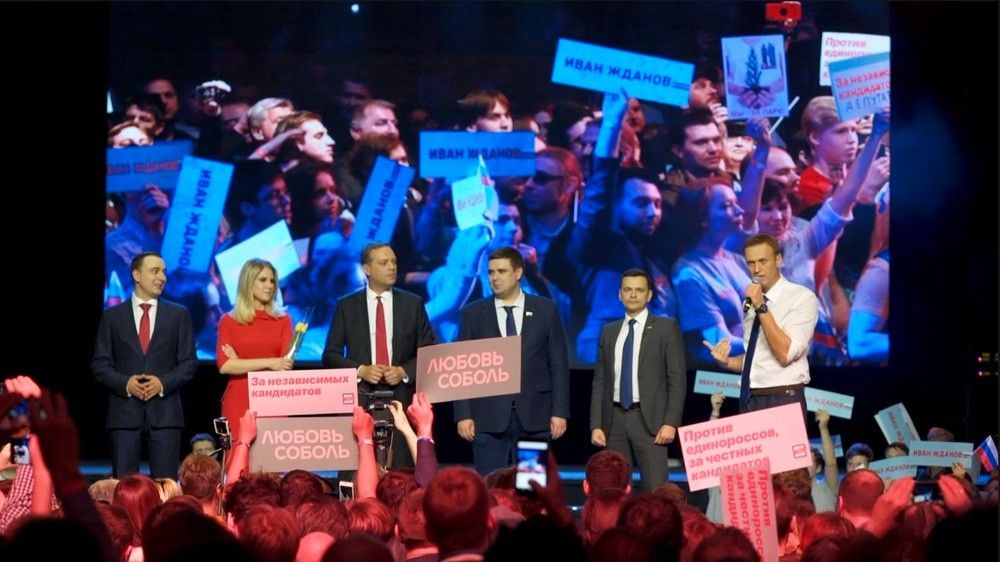
Unregistered candidates Ivan Zhdanov, Lyubov Sobol, Vladimir Milov, Konstantin Yankauskas and Ilya Yashin along with Alexei Navalny. Source: navalny.com
Secondly, the authorities hoped to agree with some opposition to cooperation. There was a conversation that you need to go to negotiations with Yashin and convince him to voluntarily refuse to participate in the elections, says a person close to the city hall.
But this plan began to fall apart very quickly. The officials never reached the attempt to talk with Yashin - they simply could not figure out what could be offered the opposition for which he would sacrifice the election campaign. And when checking the signatures (according to the law for registration, a candidate for the Moscow City Duma-a self-nominee must collect signatures of 3% of the district residents, that is, about five to six thousand people) it turned out that the quality of the subscription sheets of Sobol and Yashin is much better than those whom the city hall was ready to allow, including Mitrokhin. During the campaign, a group was even discovered that falsified signatures allegedly in the interests of Mitrokhin. After that, it was decided not to register anyone at all: handwriters suddenly “found” the signatures of dead people in the documents of the opposition.
The interlocutors of the “project” in the Kremlin are now joking evil: the curator of the funeral market of Moscow could not come up with anything better than finding “dead souls” in the signatures of the opposition.
This is a joke with a subtext. Less than a year ago, Sobyanin replaced the officials responsible at the city hall for the elections. This block was headed by two people who have never been engaged in voting campaigns so far: Vice-mayor Natalya Sergunina, who had previously been responsible for property issues, and the first deputy head of the apparatus of the mayor, Alexei Nemeryuk, who guides the Department of Trade and Services, and in this position, who oversees the funeral services market. Now Nemereyuk combines the posts of the head of the department and the first deputy head of the apparatus.
The elections for these two people were so new that they even returned to the headquarters to the honorary link to the post of deputy chairman of VTB VTB Vyacheslav Shulenin - until last year, it was he who was engaged in election at the city hall, they say a friend of Schulenin and a person close to the leadership of the mayor's office.
The scale of the problems became clear in the second half of July, when Moscow began to resent because of the withdrawal from the elections of almost all opposition candidates. Then the "senior comrades" from the Kremlin joined the elections.
Petersburg. Escort services
- Well, how much can an escort select? - Nervously spoke in an interview with the correspondent of Project Technologist, who participated in the coordination of candidates for the governors of St. Petersburg. Unlike the Moscow campaign, the elections in St. Petersburg were immediately engaged in the Kremlin, nevertheless Beglov-a long-standing acquaintance of Putin, and even a protege of a friend of the president, businessman Yuri Kovalchuk. They did not bring the opposition to the collection of signatures there, deciding to choose the unpopular candidates of weak opponents, and with the strong - to agree.
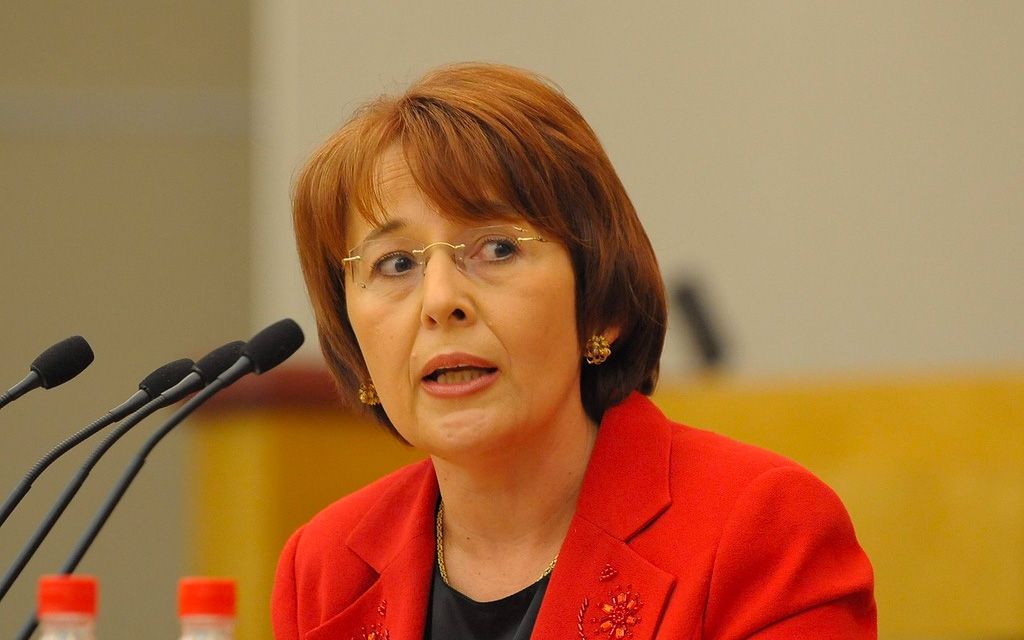
The first to exclude Oksana Dmitriev, a rating St. Petersburg policy with considerable experience. Even in the winter of the opposition, they began to invite to conversations in Moscow, to the presidential administration, about then she confidentially met with the vice-governor of St. Petersburg and Kovalchuk’s henchman Lyubov Prezheva in her office in the building of the city parliament, the interlocutor, close to the city authorities, claims. Soon after that conversation, Dmitriev began to publicly praise Prekhaeva, and then completely announced indifference in the elections. The authorities acted with the Dmitrieva method of Knut and Gingerbread, promising “problems” in case of solving “gratitude” in exchange for refusal, the former official of the St. Petersburg administration said. Dmitrieva went towards and “was satisfied” with the proposals made then, the interlocutor, close to the leadership of the Kremlin administration, reports the result of the negotiations - she also promised her the chair of the State Duma deputy, three interlocutors of the “project”, whom she lost according to the results of the 2016 elections. The public position of Dmitrieva is as follows: she herself refused to participate in the elections, since the municipal filter is obviously impossible to pass.
Oksana Dmitrieva. Source: dmitrieva.org
Having barely agreed with Dmitrieva, the headquarters of Beglova was faced with a new problem. In June, sociologists recorded the growth of the rating of a candidate from the LDPR - a young blond, the father of four children Oleg Capinov. Officials were so scared by the growth of the Route rating that he had to “persuade” him from the struggle. As a result, on June 25, captains withdrew from the elections and, at the invitation of Beglov, headed the city committee on interethnic relations. Three interlocutors of the “Project” in the executive and legislative power of the city say that Kapinova had influenced his acquaintance of the Kremlin official Alexei Mikheev. When appointing captains, albeit with ornate reservations, but said: "Russia for Russians."
But even this did not solve problems. By the end of August, ordinary employees of the Beglov headquarters ceased to show the results of the polls. “The authorities repeat to us that now the rating is 52%, but apparently, these are high numbers,” the staff officer said on the terms of anonymity. This was confirmed by the interlocutor close to the Kremlin, who received the data of closed polls - according to him, the Rating of Beglov began to grow, but did not reach 55%desired. Then another obstacle was found at the headquarters-the 73-year-old communist Vladimir Bortko. In the second half of August, there were fears that he could involuntarily unite the protest electorate, so you need to agree with him about removing from the race, the interlocutor at the headquarters told the “project”. As a result of August 30, Bortko, after a conversation with the Kremlin, voluntarily refused to participate in the elections. He tried to “keep his face” to himself and the authorities, saying that he did not want to play “in a torn fool”, and the Kremlin allegedly persuaded him not to get out of the race.
So Beglov was left without any serious opponents. On the day of voting, voters will see his name in the company of two people who have no chance of winning, so the interlocutors at the Beglov headquarters: the niece of the leader of Fair Russia Sergey Mironov Nadezhda Tikhonova and Mikhail Amosov.
Moscow. Elections racketeers
After the unauthorized rally on July 27, Kremlin’s employees tirelessly phoned State Duma deputies, offering to make statements that should scare street protests in Moscow, sources in the Kremlin and the State Duma say. The interlocutor in the lower house describes: many parliamentarians did not burn the desire to fulfill the order, climbing in history, which does not concern them. So, after reflection, the head of the Duma Security Committee Vasily Piskarev did not begin to make a statement. He denied this information, transmitting through an assistant that he had “no one” with anyone. As a result, the mission was taken upon by the deputy chairman of the Ecology Committee Mikhail Starshinov - he proposed allowing the police to detain participants in protests for 72 hours, and at the same time increase fines for unauthorized rallies.
All these initiatives were developed in the Kremlin. But they were not going to accept them, they were invented with one goal - to intimidate the participants in mass protests to reduce the number of Muscovites who went to the streets, the federal official claims.
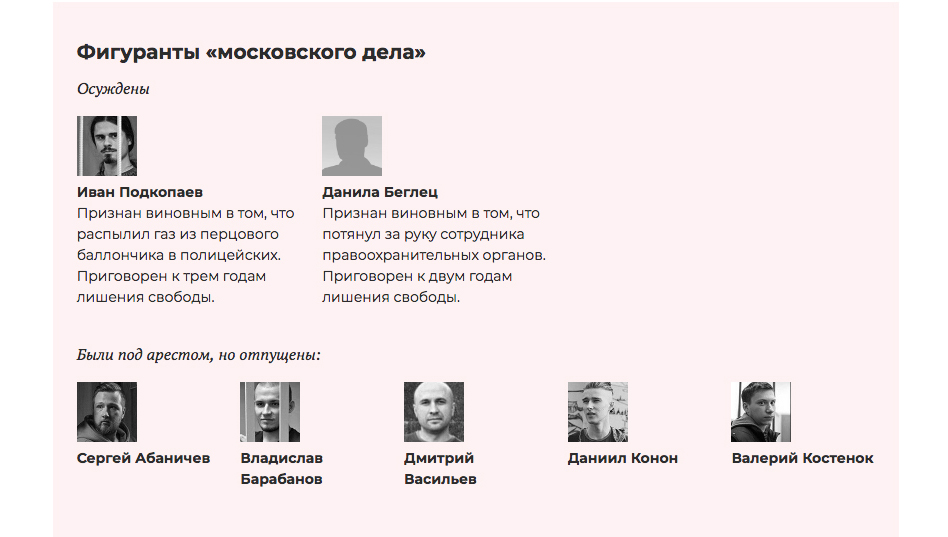
But quite seriously, the authorities used a much more effective intimidation tool - arrests. A few days after the rally on July 27, officials sat down to watch the frames of the direct broadcast of the Rain television channel and the shooting of operatives - so they decided which of the participants in the unauthorized rally should be sent under arrest, and who not to touch, told the “project” the interlocutor close to power structures. True, these lists were constantly changing depending on the political situation. There were 17 people in total. But after the scandal with director Dmitry Vasiliev, who ended up in the cell without the insulin diabetes he needed, the officials decided to avoid the scandal and asked the security forces to stop his persecution. As a result, Vasiliev was released without a charge. And after the rallies became less massive, and as the day of the vote, five defendants were released, and two more, including the Student of the Higher School of Economics, Yegor Zhukov, was transferred under house arrest. But the court had already sent two defendants in the case in the colony, and many leaders of protest, including Navalny, Yashin and Gudkov, were kept under administrative arrest so that they could not take people out into the streets with their example.
In order, as the Kremlin political technologists say, “kill the agenda”, the city hall thought to organize a “patriotic rally” in peak in peak, like those that gathered on Poklonnaya Gora during protests in 2011-2012. It was offered to speak at this rally to the mayor himself. However, Sobyanin categorically refused to go to the rally, says the interlocutor close to the leadership of the city hall. And at the very beginning of the campaign, the mayor rejected the idea of political strategists to be photographed with candidates at the Moscow City Duma.
This decision of Sobyanin, as well as the subsequent actions of the country's leadership, show the authorities attitude to their own candidates and their capabilities.
In the south. On leave
The president met the beginning of August as always - on vacation. And the Kremlin - also as always - hides this information. Presidential spokesman Dmitry Peskov even stated that Putin did not rest at all. But from July 29, that is, in the midst of protests, journalists stopped inviting to events with the participation of the head of state, the interlocutor in a large media tells, and the so -called “canned food” - pre -recorded meetings of the head of state with officials or information about Putin’s telephone telephone.
Apparently, the president spent a vacation in the south. Because a week after the start of rest, on August 6, journalists were invited for one day in Sochi to illuminate several events with Putin's participation. It was there, on vacation, the leader of the country brought the victims of the flood of the inhabitants of the Irkutsk region. The very next day, a new period of “canned food” has come. Only on the day of the next protest rally, on August 10, the president appeared in public, already in the Crimea-there he visited a bike show and swept on a motorcycle. In the south, Putin remained until mid -August, while he abolished several public events in Sochi, he had a meeting on the modernization of healthcare, but after the abolition of the International Summit Putin, according to the interlocutor in the Kremlin, decided to refuse to appear in public, then appeared in front of cameras in Crimea and Anapa. From the south, Putin left only on August 19 - for a summit in France.
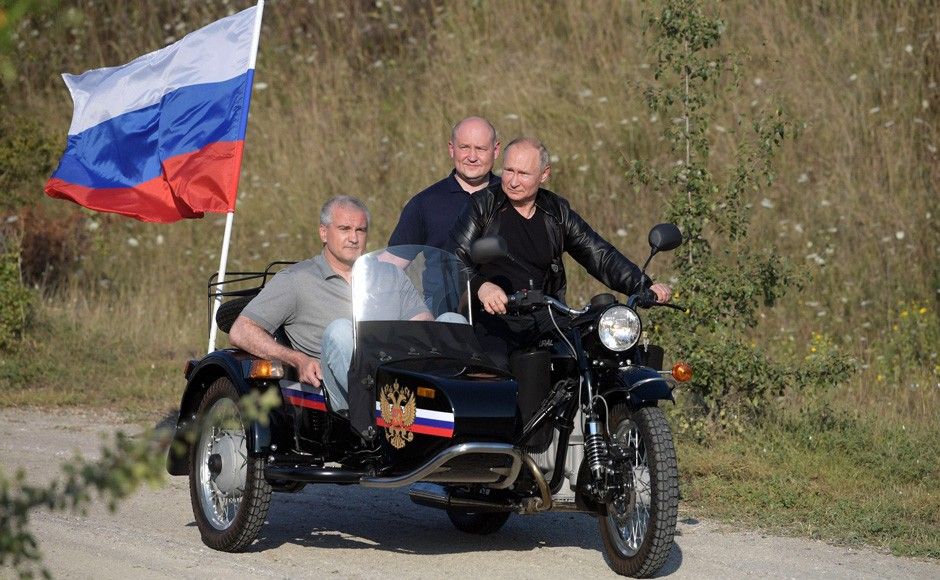
Vladimir Putin with the head of the Crimea and the acting governor of Sevastopol on the bike show of the Night Wolves motorcycle club, on August 10, 2019. Source: Kremlin.ru
However, even after this, the oddity with the first -person schedule continued. At the end of August, he was expected in regions where elections will be held in September - for example, in the Murmansk and Astrakhan regions. The officials expected that the president would support the governors elected there, says the person who participated in the preparation of Putin’s visit to the regions. But Putin suddenly changed his mind to go, replacing the visit, for example, to the Murmansk region with a meeting with the governor in his office in the Kremlin. At the same time, the president flew to the regions where governors are not chosen, for example, to the Saratov Region and Tatarstan. The interlocutor of the “Project” suggests that Putin did not want to participate in the election tour against the backdrop of unpleasant events in Moscow and, in general, the fall of the ranking of power.
Other Kremlin officials followed the example of Putin: for example, at the height of protests, the head of the presidential administration Anton Vaino was resting in Europe. The fact that at the end of July Vaino was in an expensive hotel in Biarrice was previously reported by the Russian BBC service. The interlocutors of the “project” clarify that he was resting with his family there.
Moscow-Petersburg. The final end is endless
The Kremlin officials were most afraid of the Domino principle: the fact that protests from Moscow would spread to St. Petersburg - an official of the Presidential Administration said this. Therefore, even the most insignificant actions in the northern capital were pulled away by many police officers. By the joy of the authorities, the inhabitants of St. Petersburg did not go massively on the streets, but they also did not want to vote for Beglov: until now, closed polls do not show that he is guaranteed the desired result, says the interlocutor at the headquarters.
This means that in order to obtain 55%, the authorities will have to apply administrative methods - four people who are interviewed by the “project” related to the organization of the Beglov campaign are sure of this. All conditions for this were created: the city authorities decided to arrange a vote in areas that were very remote from the city: in the neighboring Leningrad and Pskov regions, supposedly at the requests of summer residents leaving St. Petersburg. It is difficult to organize observation there, and stuffing, on the contrary, is easy.
In Moscow, the situation is similar-the city hall is still nervous that its candidates will not win in all districts, says a person close to the capital's headquarters. Closed polls (the “project” was retold by a source close to the headquarters) show that applicants from the authorities can lose to little -known candidates to the elections (they are supported by the Navalny team as part of the Smart Voting project), in four districts:
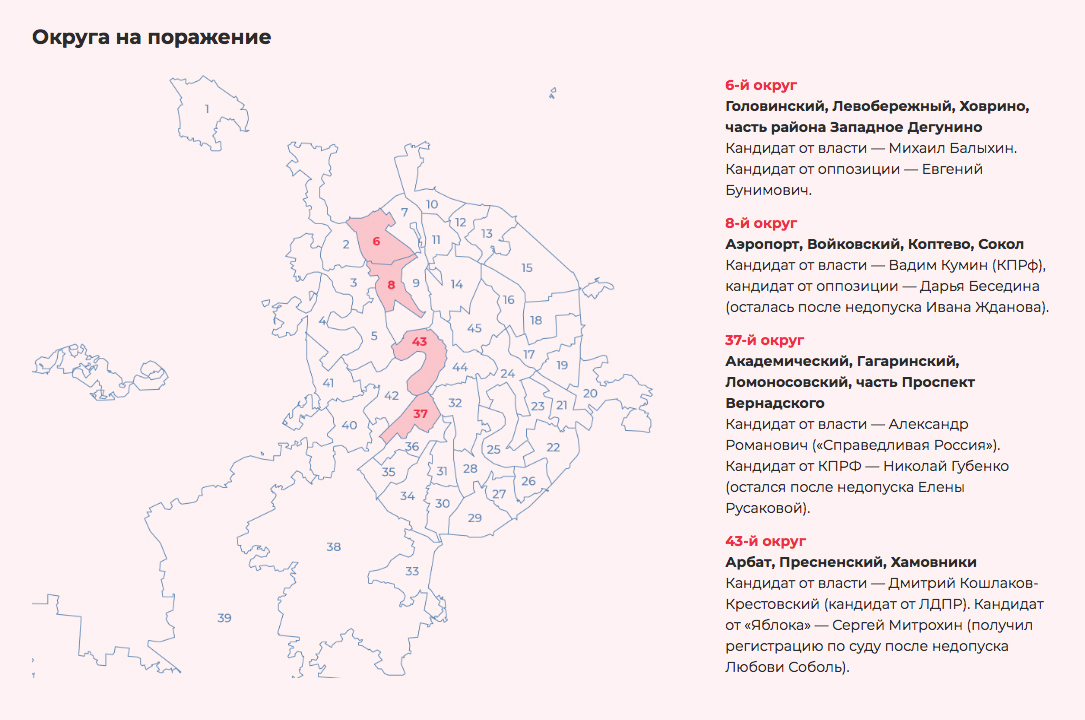
Such a defeat, as the interlocutors in the Kremlin and the city hall say, the authorities are not at all scary, however, on one condition: if after the elections mass protests do not break out again.