“Because it is strong, like love, death” - this is the motto of the current Salzburg festival, founded back in 1920. The guests of this year will be Vanessa Redgrave with a monoscope, as well as Orhan Pamuk with public readings. But not only they determine the program of the most important festival of Europe
The festival in Salzburg is akin to the enduring values of Russian literature. It seems to be unconditional status, but sometimes I would like to ask an uncomfortable question. What is generally understandable: getting into the program of Salzburg is like getting a Nobel. Here the audience is selected, critics come here from all over the world, and the general secular Fleur of the event does not affect the ability of individual artists to joke and fuck. In an artistic, of course, sense.
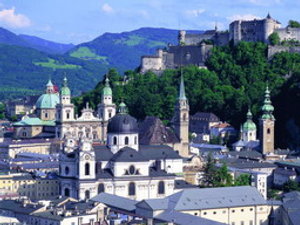
One of the most prestigious festivals of Europe is also one of the oldest. He was invented by the great director Max Reinhardt, composer Richard Strauss, playwright and poet Hugo von Hoffmannstal. The latter is considered the main ideologist of the festival. In 1919, he wrote an essay where Zalzburg declared the heart of the heart of Europe. Its small sizes allow you to focus on the main thing: "The big city is the scattering place, and the solemn representation requires concentration from those who are busy in it, and those who perceive it."
From Hoffmannstal to Mordier
The first festival was opened on August 22, 1920 by the performance "Namerek". The idea of the death of a rich man based on the play of Hoffmannstal himself, which returned the allegorical tradition to German drama. The story of the rich man, behind which death suddenly comes, has been known since the Middle Ages and is considered one of the main legends of the local places.
The hero’s painful attempts to collect the results of his own life and to gain salvation usually play before the cathedral. If it rains, the performance is urgently transferred to the city theater (and here the change of scenery causes decisive sadness). The play was shown every year up to Austria Anschlus, then the Nazis greatly shut off the entire program (Hoffmannstal turned out to be a Jew), but after the war the play returned to the posters of Salzburg, becoming its symbol. Once every few years, performers are changed here, ordering a new performance to the new director. For almost centuries, only the scenery are unchanged.
Hoffmanstal created the theater and musical festival, mixing the theatrical and spiritual repertoires emphasized. He did not imply the dominance of concerts and opera, which manifested itself in the era of the directorship of Herbert von Karayan.
Karayan was a meloman of classic sourdough. He believed that, besides sound, nothing exists, and did not tolerate the director's theater to the spirit. Under him, the festival gathered the best performers, but there were no places for directors, even so inclined to compromise as Franco Dzeffirelli.
The situation changed under Gerara Mordier, which was intended in the 1990s. He began to invite radically thinking directors, which turned out to be an aesthetic shock for the regulars on the verge of rebellion. Even on the verge of a foul, because the basis of the budget consists of the sale of tickets and sponsors' receipts, they affect the content of the poster. But the scandals were beneficial: the audience was used to the thinking theater, and now, after the departure of Mortier, he is waiting for no less vivid events. The latter happen much less often. The pendulum swayed in the opposite direction, Salzburg again fell into the moderate phase.
From non -reck to Machaidze
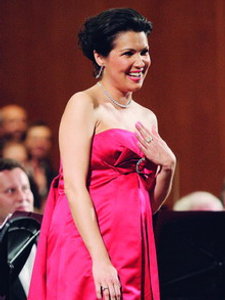
Nevertheless, the main thing happened: as with Reinhardt, the theater plays an equally important role today than the opera. Although the music lovers still feel like kings: first of all, concerts and opera attract an international composition to the audience (among 250 thousand spectators, representatives of 65 countries, English subtitles in theaters are required). So most stars are inevitably connected with the world of music. The favorite of recent years has become Anna Netrebko, attracting fans from all over the world to the shores of the pushing. Although in recent years her relationship with the festival for some reason changed. That, after a powerful advertising campaign, suddenly refuses to sell at the auction the famous red sofa from the “travia”, then, referring to ill health, cancels participation in the concert, which does not prevent her, however, immediately perform in another city. This time, the reason is finally non-good: Anna is expecting a child. So instead of her in Romeo and Juliet, the rising star Nino Machaidze will sing.
However, tickets for Romeo and Juliet have already been sold out - which does not prevent the suffering from asking at the checkout at the checkout or walking in front of the poster with the poster “I will buy for any price”. There are always unnecessary ones, and they are not always worth € 3-4 thousand, as for operas involving non -Reiblers. Among the other bright premieres of this summer are the “mermaid” of the jar in the production of Yossi Willer and Sergio Morabito and the “Duke of the Blue Beard” Bartok (you rarely see it in the repertoire theater).
In addition to the opera, the 2008 program is held, as usual, at two more whales: concerts and drama. In music, the stars familiar to Salzburg: Ricardo Muti, Daniel Barenboim or Thomas Quasthof. And new people, for example, the youth orchestra of Simon Bolivar from Venezuela under the control of Gustavo Dudamel, who is already praised by professionals. The very fact that he was on a par with the orchestras of Vienna, Berlin and Cleveland, says a lot. The program of chamber concerts is devoted to Schubert's music this year.
Russians in Salzburg are represented mainly by soloists. The pianists Arkady Volodos and who has already become a favorite of Salzburg Grigory Sokolov will give solo concerts, and Nikolai Lugansk and violinist Vadim Repin will fulfill the sonatas of Beethoven and Frank, as well as the Rapsody of Bartoca. And of course, the singers: Ekaterina Surina sings in Don Zhuan in the production of Claus Guta and under the leadership of Bertrand de Billi, and Alexander Antonenko and Marina Poplavskaya - in the Othello Stephen Langridge under the direction of Riccardo Muti. For some time after the death of Karayan Muti, who looked too glossy in the eyes of many critics, he conducted exclusively concerts in Salzburg. But now he returned to the opera scene again.
Non -traditional composers
Our directors are not invited to Salzburg yet. Last year alone, the Bolshoi Theater was called with the already ready “Evgeny Onegin” in the production of Dmitry Chernyakov, but he refused a big one, because he had already promised to take the performance on tour to Paris.
In recent years, in Salzburg, “continents” in fashion - programs in honor of non -traditional composers of the twentieth century. Last summer, for example, it was the Italian avant-garde of Shelsi, this was the turn of the 61-year-old Salvatore Skjarino. Nine concerts, including the performance of the opera “Dead Flower”, promise to become a unique event.
As for the theater, for several years, the Young Directors Project has been among the most interesting projects of Salzburg - showing the performances of young directors. So, the theater from the Norwegian Bergen will present the “extreme measure” of Brecht, the Japanese bring the political drama “Five Days in March”. Emphasis on youth in the title of such “Festival inside the festival” is rather a tribute to tradition. The performances of this program are staged for the largest theaters in Germany and Austria, such as Deutsche Theater in Berlin or the Hamburg Talia Theater. This year, for example, together with the Zurich “Shaushpilhaus” Andrea Bretes made “Crime and Punishment” on Dostoevsky for Salzburg, and the “waist” - Schiller's “robbers”.
Given the more than the cold technique received last year, “Evgeny Onegin” in the production of the same Bret, you can’t expect much. But both Dostoevsky and Schiller will be shown in a huge hall in Hallyan. This ancient Celtic town is located near Salzburg, and the trip here itself is able to brighten up the impression of any failure.
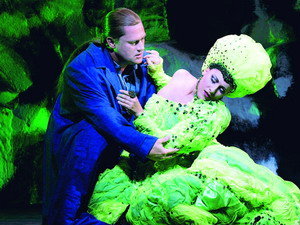
The festival program always has at least one Mozart opera. This time there are two of them - “Magic Flute” (in the picture) and “Don Juan”
Almost 200 operas, concerts and performances will be shown at 13 sites of Salzburg and Khallyain from July 26 to August 31. Budget -? 50 million.
What else to do in Salzburg: to visit the Rupertinum museum with the exhibition "Sounds of Art", or the exposition "Sin" in the gallery of the residence, or the museum of beer "Shtigl" (with tasting).
Other festivals in Austria: the Carinthian Summer festival in Ossiah (near Clagenfurt) from July 11 to August 31, Schubertiada in Bregenz from August 23 to September 7 (second part), a festival in the Grafenekh Castle from August 21 to September 7.