
Translated material
Partisan Boulevard
A walk-recall in Minsk under a red-white umbrella. The city is now sterile gray, like the profiles of its inhabitants in social networks
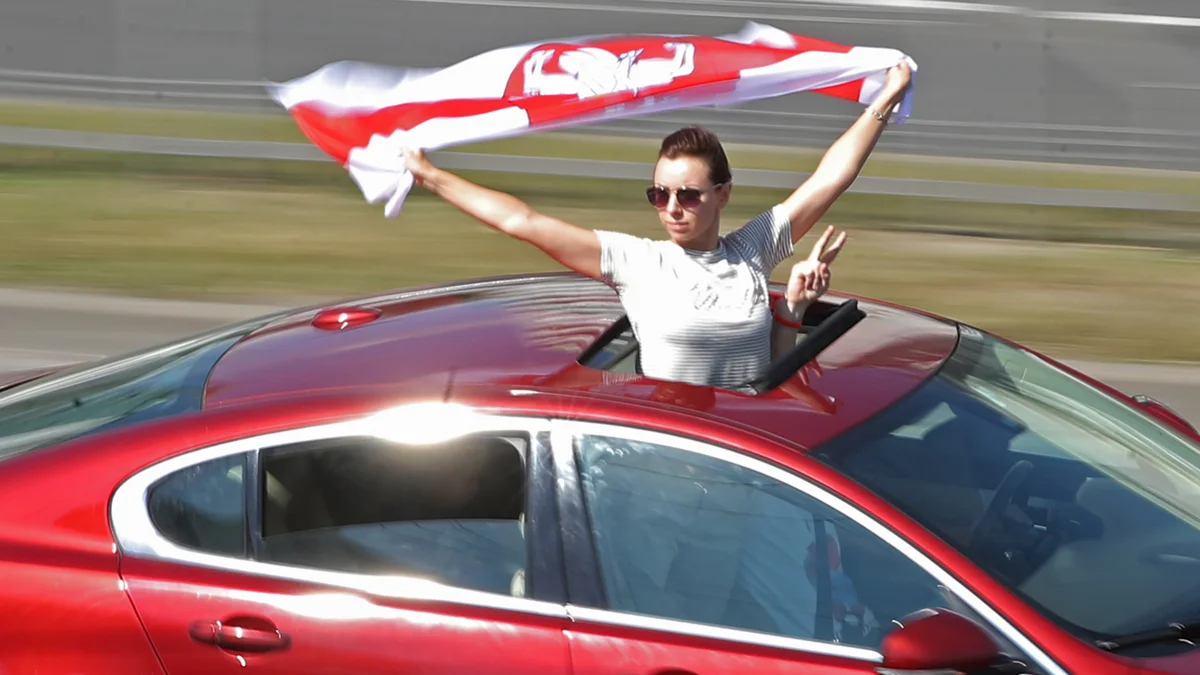
Memory of memory for the deceased Alexander Taraykovsky during protests in Minsk. Photo: Natalia Fedosenko / TASS
Belarusians who left the Belarusians to distinguish are very easy to distinguish. It is enough to look at their pages on social networks. Even if everyone says the same “lives in Minsk”, there will be photos of people who have left on the page walking along the streets with white-red-white flags. The remaining have almost clean pages. Remote photographs and posts, erased memories, sterile profiles. Because otherwise they will put them as a neighbor, brother, kuma, girlfriend. However, even carefully distinguished pages do not guarantee that you will survive.
“I like only cats,” says my friend and colleague Olya, “and I don’t write anything anywhere. I clean the phone every day. When colleagues from other countries call something, to clarify, I always ask: guys, I am in Belarus, in no case mention me! You, too, please do not write my last name. ” I will not write. Ole was partly lucky: the protests of August 2020 coincided with maternity leave, and she did not go to the marches. But cooperation with an independent resource, which is now recognized as an extremist formation, is that which it cleans the phone and likes the cats.
The streets of Belarusian cities are now as sterile as profiles in social networks. Two years ago, white and red t -shirts hung boldly on balconies (some still hung a poster nearby “This is not a flag!”, In the windows - flags, in the yards they drank tea and listened to music, and murals with portraits of political prisoners appeared on the walls of the houses. Now the walls are gray, and passers -by too. The main rule is not to stand out and in no case do not allow the combination of red and white in the clothes.
If they plant white socks with a red strip, you have to follow the wardrobe especially carefully. If white, then there should no longer be red.
And red-white umbrellas also disappeared from the streets. Like the girls who went out with these umbrellas on joint walks. Some left, others are sitting.
I remember how the perception of such umbrellas has changed. In the spring of 2021, I was still walking down the street with a red-white umbrella, and passers-by smiled knowingly and said: “Live Belarus!” Even a beggar in the transition, who asked for alms, thanked for the coin in Belarusian and added: "It is eternal!" And in the fall of the same year, after the forced landing in Minsk, the Ryanair aircraft, the final defeat of independent media, the arrest of journalists TUT.BY and Belapan, human rights activists from Viesna, all around began to lose colors - from walls to clothing. And in the fall, the red-white umbrella caused only one replica of passers-by: "Did you want to prison?" The umbrella, by the way, is no longer red-white, but red-gray. Drops of rain no longer knock on it. He dusts in the closet.
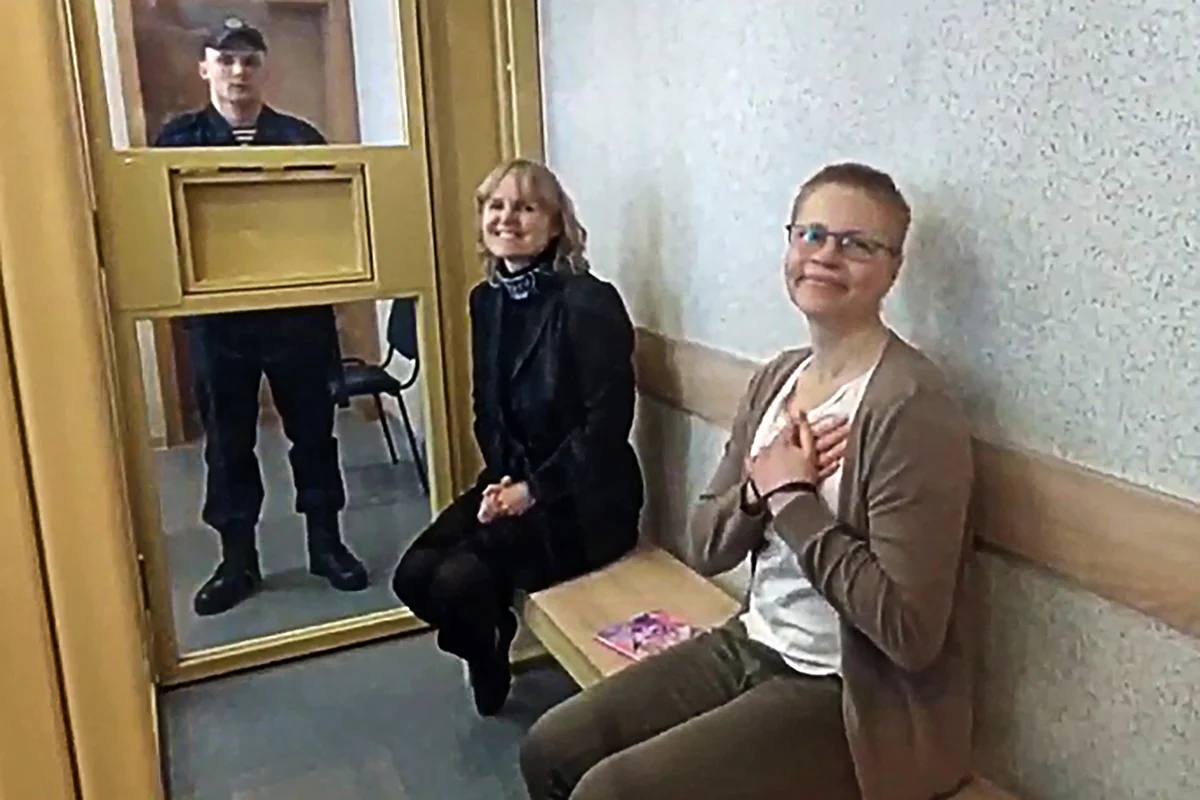
The editor -in -chief of TUT.BY Marina Zolotova and director Lyudmila Chekin was sentenced to 12 years in prison. The widow of the founder of TUT.BY Yuri Zisser Julia Chernyavskaya, who had nothing to do with the portal, was detained on May 18, 2021 simultaneously with all journalists and spent eight months under house arrest. Recently, Julia wrote on her Facebook*: “Either I dream of the city, or I have it. Stiff. No, I don’t even think of him. It does not go out with the city with the city. I think about him: I loved you so much. I’m here, he is here, but we are not together. ” This is a very accurate definition. Belarusians ceased to coincide with their cities. They will not recognize each other.
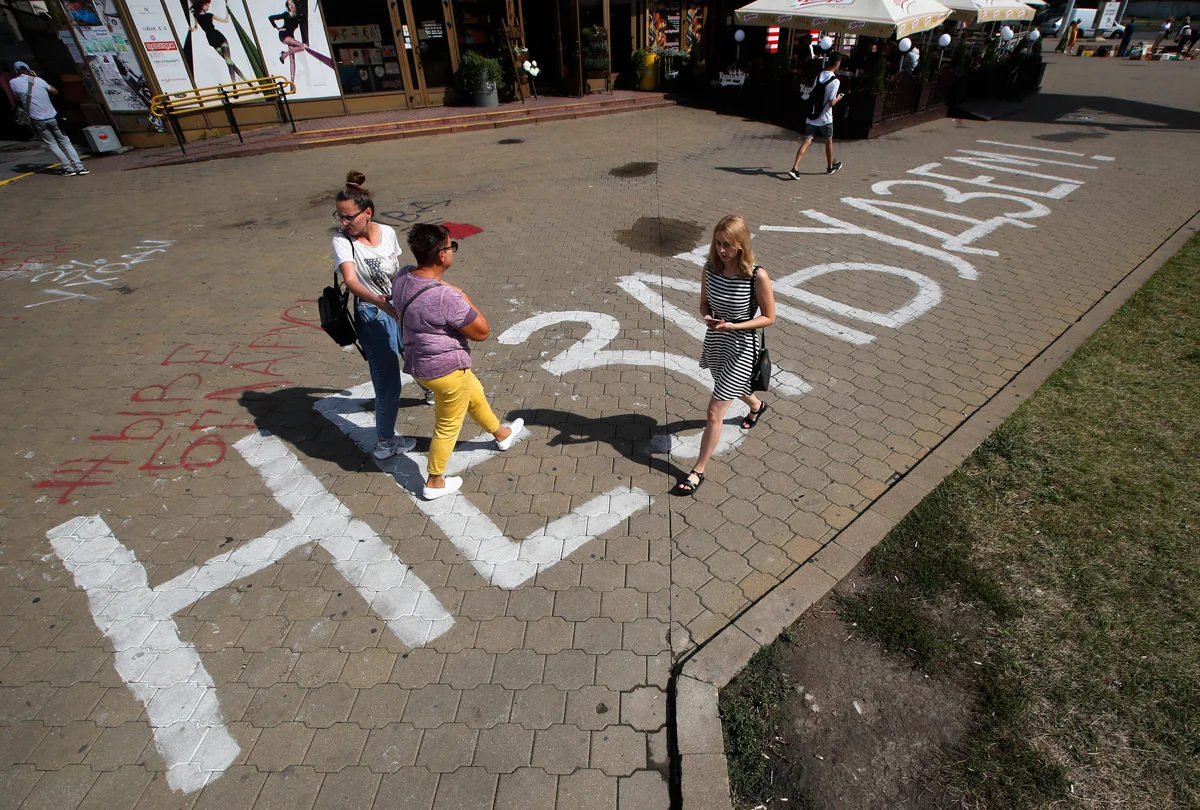
Only unbearable pain responds in the familiar places. Here, by the Pushkinskaya metro, on August 10, 2020, Alexander Taraykovsky was killed, the first victim of the Belarusian security forces during protests. A memorial lasted for a long time. People carried flowers here and wrote on the asphalt: "We will not forget, we will not forgive." They did not forget and did not forgive. But there is no more memorial. They began to plant flowers and inscriptions. Someone left the last bouquet right on the roadway on the first anniversary of the death of Taraykovsky. In the second - no one.
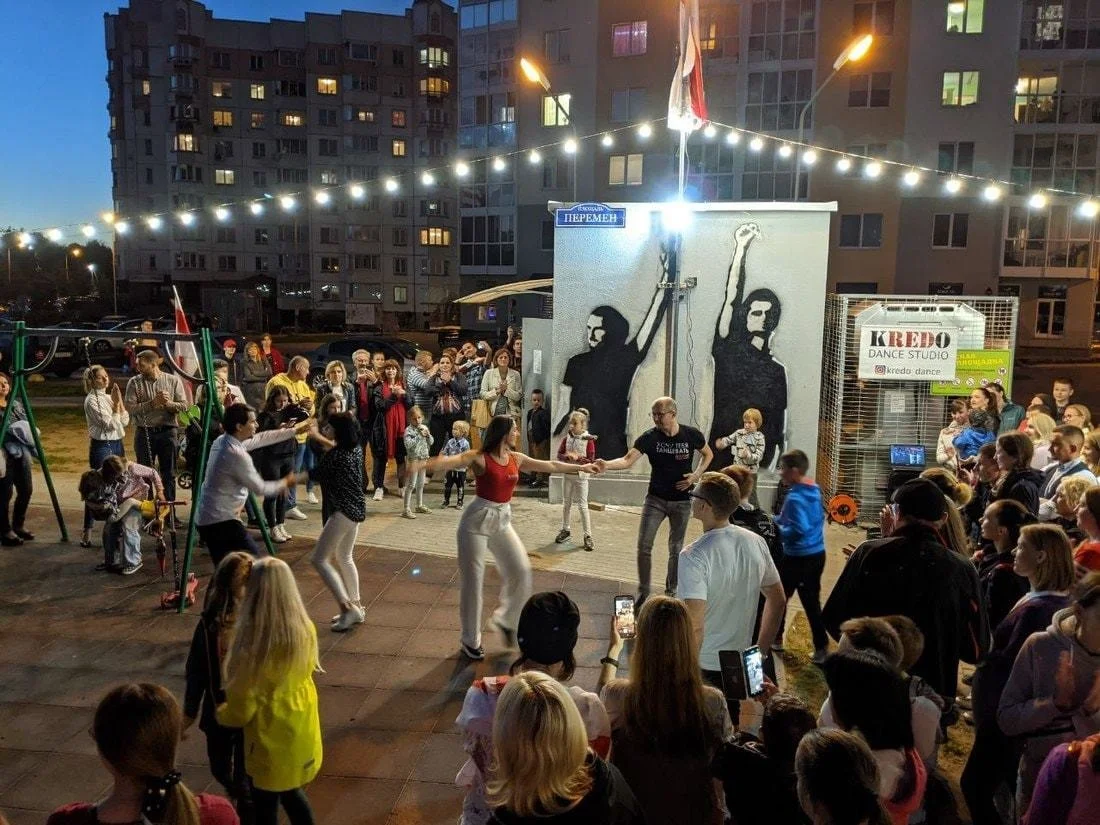
But this courtyard near Oryol Street is popularly called the area of change. Here on August 12, 2020, graffiti with the image of two DJs appeared on the wall of the ventilation mine, who in early August during the state event were cut “Changes!” Tsoi instead of a patriotic song. Public utilities washed Graffiti, and local residents restored it. At the same time, white and red ribbons hung around. Then it was no longer the communal workers, but riot police, began to come to the courtyard and cut the ribbons. And on November 11, in this court, the security forces killed Roman Bondarenko. His memorial lasted four days. Then he was destroyed.
And there, from that window overlooking the area of change, Katya Andreev was conducted for the Belsat television channel.
Katya was detained right during Stream in the same November. At first, she was given two years for a gross violation of public order, and then from the colony was again taken to a pre -trial detention center and now sentenced to eight years - for treason to the state.
Here, to the stele on the winners Avenue, people came during Sunday marches, when hundreds of thousands gathered in the city center. And in this house at the beginning of the avenue there was a coffee shop, opening the doors for demonstrators running from riot police. Then the window in a place locked from the inside was defeated by a club by the person by the internal troops, Nikolai Karpenkov. The coffee shop lasted another three months and closed forever in December. And Karpenkov became a general and deputy Minister of the Interior. For broken windows, it turns out, they can not only give 15 days, but also the general title.
And there, in the houses that were on the way of demonstrators, the tenants opened the door wide so that people could run and hide. And the doors of the apartments were also opened. Then it was accepted - open for strangers at home. Funny crowds in someone's kitchens, drinking tea and telling the owners how saved from rubber bullets and grenades. And now all the doors are closed tightly. Even the neighbors, who have long been familiar and accustomed to easily run to each other - at least behind salt, even with a question about hot water, even if you drink tea - they no longer come in, as before, without a call on the phone. A knock or a call at the door when you do not wait for the guests, means that you have come for you. So the doors are closed. Many never open: there are no owners. They are either in Poland, or in Lithuania, or in prison.
However, some are already returning. Not from Poland - from prisons. Those who were arrested at the very beginning turned out to be lucky: the first wave of repressed were given two or three years under the article on a gross violation of public order.
This article 342 even began to be called folk. So they have already served and returned. And no one else pronounces the phrase with news of new sentences: "They will not sit so much!" It sounded in the fall of 2020, and in the spring of the next, and even in the fall, and then stopped. Because it is uncomfortable somehow to those who have completely served their term. And now the articles are different: inciting races, calls for sanctions, treason to the state, creating extremist formation, treason to the state. And the other sentences - five years of imprisonment are already considered almost luck. Maria Kolesnikova Dali 11 years, Nikolai Statkevich - 14, Sergey Tikhanovsky - 19, Igor Olenevich - 20, Nikolai Avtukhovich - 25. And you never know what category you will fall into when you begin to break the door.
It happens that they themselves do not know and for starters they send for 15 days in an administrative case, but for now a person is sitting, they compose a “criminal”. Ekaterina Yanshina, who came from Moscow at the Nobel laureate Alees Behaletsky and spent 15 days on the neighborhood, said that the worst thing is when your 15 days expire, say, at four in the afternoon, and come for you earlier. This means that you do not go out, but go to a pre -trial detention center in a criminal case. Before her eyes, Julia Livyant was so taken.
In December, they took the whole Livvy family - mom, dad, daughter and son -in -law. First, they added a “day” several times, then finally came up with how to plant everyone for a long time, and transferred to a pre -trial detention center. So the Lyvivant and sit in anticipation of the court - the whole family.
And this is more and more often in Belarus - if they came for a husband, then they also grab a wife to increase statistics. Or mother, or daughter, or all at once. Human rights activists say that in Belarus there are no less than five thousand political prisoners in Belarus. How many of them in reality, no one knows.
When Minsk and other Belarusian cities became silent, gray and distilled, white-red-white flags appeared in other countries. As if all the colors moved after tens of thousands of those who escaped from the prison.
The flags hung on buildings and balconies in Poland, Lithuania, Germany, Switzerland - yes throughout Europe hung. And then they disappeared - on the very day when the Belarusians suddenly became his accomplices. They were replaced by Ukrainian flags, and Belarusians seemed to have never been anywhere. Neither in Belarus itself, nor in other countries. It seems that they are now everywhere - and at the same time nowhere. Homeless, non -zero, fearless people.
Not far from my house on the boulevard, no utilities with all their chemicals could wipe the inscription on the asphalt “Partisan Boulevard”. No matter how much they scrap, it is still visible. So no one will never dare to say that we were not here. Even if one day there really is nobody left.