
Translated material
Sorry, no shit!

The “King and the Jester” group was considered shit, and now they are a national treasure. There is no contradiction
The main Russian series in 2023 is the “King and the Jester” Rustam Mosafira, previously known for the adaptations of Russian folklore and fairy tales. According to the press service of KinoPoisk, only on the first day of the release of the two available series watched 410 thousand people-this is the absolute record of the site. Over the next six days, the audience has grown three times. The success of the series finally legitimizes the King and the Jester as one of the key groups of Russian rock. The editor -in -chief of Individuum, a music critic Felix Sandalov and writer Eduard Lukoyanov explain how the phenomenon of “shit” works that he reports on Russian society - and why this term does not detract from the creative merits of the authors of the song about the sorcerer doll. This is not quite an ordinary column, but Kish is not a very ordinary group.
In order not to miss the main materials of the "cold", subscribe to our Instagram and telegram .
Without jokes of kings
For the complete and unconditional canonization of the “king and jester”, it took a little less than ten years that have passed since the death of the founder of the collective Mikhail Gorshenev. This surprises those who found the period of the lifetime popularity of the group and remembers how, to put it mildly, the music lovers of music mowed at the fans of the team. During this time, the pot “came to life” several times in the form of a hologram, and now it is very reliably rocking in the frame toothless actor Konstantin Plotnikov in the series “King and the Jester”.
Once the group fought in the charts with the “Splin” and “semantic hallucinations”-now it is in the tops of the streams next to the BTS and Imagine Dragons. According to the latest Spotify report on Russia (we are talking about 2021, in 2022 Streaming left Russia-approx. "Cold") , "King and the Jester"-the most popular rock band in the country. "Cinema" - in fourth place.
By the beginning of 2022, when the shooting of the series started, the songs of the “king and the jester” became the school program: they are quoted on the reckless, they can be heard on the feasts of those who are over 40, and at her absorptions with those who are not yet 18, they became a source of various memes and registered in Tiktoka. Add here a specific rocker cult of the dead: the walls of houses, garages, and other spaces of memory of the dead rock musicians certainly contain an inept painted portrait of Gorshenev in their collections.
The series Rustam Mosafira does not revise the mythology of the collective, but, on the contrary, seeks to cement the status of Kisha as a national treasure and the last large rock band. He is that the monument to Gorshenev in Voronezh, only more sympathetic.
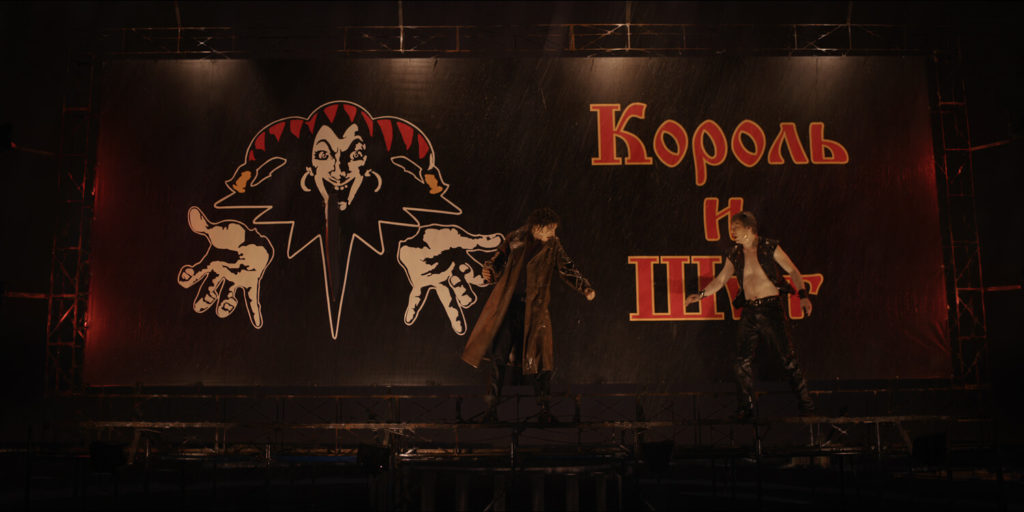
Thirst with a pot of recognition is the leitmotif of the first episodes. So far, the series is more like a series of shoes, in which Gorshenev now and then thinks whether to leave him, and from music, and from life at the peak of glory and pays about his posthumous heritage. This heritage is expressed in a pair of vigorous punk rocks of albums with launeling texts and several deep ideas, which the singer cannot fully formulate.
Reflections on life in the eternity and benefits of the anarchy interfere with the need: a) play peppy punk rock; b) fight with those who do not like peppy punk rock; c) quarrel and put up with the second frontman Prince; d) drink, puke and hang out; And also e) make sorties into the territory of their own songs to Kikimors, sorcerers and grooms. Knyazev, who left Kisha in 2011, acted as the co -producer of the series and probably influenced his image (Vlad Konoplev played his role), which led to a funny effect: his character came even more in love with himself than a pot.
The director of the series Rustam Mosafir turned the gloomy Russian 1990s into a hermetic fairy-tale world, designed for those who did not experience the experience of clothing markets, games in “freckles” and haircuts broken bottles. Nevertheless, judging this series for an anachronisms and the inaccurate work of the costumer is just as strange as to put Serebrennnikov on the fly, the inaccurated Rubinstein Street.
The place of “King and the Jester” in the same place where the films “True Trip” and “This Spinal Tap”, the game “Brütal Legend”, the cartoon “Heavy Metal” and other charming Rocist entertainments, operating love for black skin, heavy riffs and thoughtless fursu are gathered. This will probably not like the faithful fans, honoring their historical truth, but it is difficult to support such a claim to the series, where there is a walking corpse with a lobe head, a malicious jester from the collective logo and a heroin tributary, the inhabitants of which look like models for fashion shooting.
At the bottom of the fan hierarchy
The most inaccurate here, however, is the fans themselves. The trimmed girls and boys in the frame are not at all like those algoroblins that stormed the “invasion”, hung on the fences near the “pink salmon” and pulled at the congresses of the role -players. Below fans of the "Chishevsky" turbocharger folk rock in the public hierarchy of the beginning of the zero were the students of the collective farm punk. The recent announcement of the feature film about the history of the Gaza Strip is eloquently says about how time changes the perception of the establishment of marginal culture.
When and how did Kish gained its recognizable fan base? Perhaps in 2001 - after several releases with the complex fate of the King and the Jester, they released the “acoustic album” and got genuine love of neurotic teenagers. In the art of challenge to society, this army may not have been able to devote the immorals living through the “orgasm of Nostradamus”, but definitely won their number.
Despite the dumb look, the Kisha fans did not pose a great danger to outsiders. On the contrary, these are mainly for them - guys and girls in hoodies - arrived from football hooligans, riot police and Bonheads.
It is important to notice: aesthetically punk rock is a conservative genre. Gabitus Kisemanov in red-black-yellow scarves was not very different from Blab in the crowd on the "civil defense". But if Letov had really complex relations with rabid fans, then the pot and prince were with his audience on the same wavelength.
Now we will indicate which one-after all, the rock-muzikl Rustam Mosafira provides a great service to his heroes, cleansing their inherent shit of negative connotations with the help of a Disney plot, outfits from Kinky Pati and creative color correction. We begin immersion in the theory of shit with the history of Shurik-Mashurik.

The story of Shurik-Mashurik
In one small town there was a guy named Sasha Mashurik*, who could not stand it when he was called a shur.
He was the most ordinary guy with the most ordinary hobbies for the time and the place where he was born, grew up and lived part of his life before moving to a neighboring city - nothing particularly different from his own.
He studied on deuces and three, but this did not care at all, nor his parents, accustomed to the fact that it was necessary to live in the 1990s, because it, like the life of Mashurik, will not last long, and not everyone is destined to see what the future will be. Or, speaking in panka, Future.
Shurik could sit at the desk for hours, extract the contents of his nostrils and gently lay out the snot and boats on the cells of the sheet of the notebook lying in front of him. For this, two large categories of citizens beat him at once: classmates and teachers.
He hated school. But I loved the music very much. He listened to the “blades” with the cassettes accumulated by his father, “Pops”: “Hands Up”, “Fraudsters”, “Demo”, “Hi-Fi”. He also liked the Dutch DJ, whose name Mashurik read like Paul Van Duk.
But he also loved some music played in the genre of “heavy rock”. The most adored group was the “king and the jester”-pioneers of the Russian horror punk. Mashurik liked not only and not so much their music as the texts of the songs that he carefully copied by ear to the notebook. Shurik liked that these texts were simultaneously funny and terrible.
Panic in the village - grandfather became furious.
With a pitchfork, he sees everyone he sees.
Noise, din, barking dogs,
People run, clap shutters,
The women scream.
And so on.
In addition to the box with the cassettes, he started an envelope, into which he folded clippings from magazines with interviews and photographs of idols. The main of them at that time were Andrei “Prince” Knyazev and Mikhail “Pot” Gorshenev.
“What leisure did we have? - recalls Alexander. -“Babrah” took “Bagbrah”-already a holiday of some kind. There were no Internet, phones too. He took in the library [the youth magazine] “The same age” to read, made a clip - put in an envelope, so that he would read it later. I hid the envelope behind the battery, then my mother found it - everything flew in the trash with the cassettes together. The tape recorder regretted it-the thing is still ... drank? Fuck God! On the New Year of the champagne, the glass will drink Putin to congratulate. I will put her to sleep later, and myself to the village. That's all short -lived. ”
When asked whether he began to watch the series “King and the Jester”, Alexander replies: “No. I heard, but I haven't looked yet. The mood is not that. "
Shit. Study
Every researcher, who has taken on the study of the phenomenon of shit, inevitably encounters an insufficiently formed conceptual apparatus necessary to describe this sociocultural phenomenon.
During field research, we found that our many respondents most often experience problems with determining shit and identifying themselves in it. We came to the conclusion that the term “shit” itself in the current reality describes many not always interconnected, but sometimes mutually exclusive phenomena. As a result, we described the historical and cultural context of this concept, which can be stated in several short, as far as possible, theses.
1. Shit is the opposite of awareness. Shitty is characterized by a dictate of spontaneity in decision -making - both in simple household situations and in situations that require maximum responsibility and have far -reaching consequences. Some of the characteristic features of shitty thinking are inconsistency of judgments, a tendency to non -conformism in a tolerant social environment and to conformism in an environment capable of repressive measures.
2. Shit is an exaggeration. Govnar is always at the limit. His or its achievements are the victories of all mankind, and the problems are universal disasters. The picture of the world of shit is close to Manichaeism: the surrounding reality is mired in evil, because there is a “pop” in it. Only rock is genuine value, so rock musicians are like the gods and their images should be worn on the body. A self -respecting shit should play in his group or pretend that he has it. If there are no musical inclinations at all, then you can just throw a goat, jump and yell “hi”-which at least a little closer to those on whose shoulders the world holds, that is, to rock musicians. Dead rock musicians are better than the living, because they can no longer record an album that will not be considered rock. Rock sex should affect essential issues, such as love and death or biological waste. Shit implies a love of a maximalist visual series, see the design of albums, which are full of giant swords, women with forms that are not compatible with anatomy and physics, insurance monsters and hypertrophied dungeons.
3. Shit is an escape. In the conflict with others, the shit prefers to go aside: the zoo must certainly leave. The other shit becomes its determining quality, protecting from turning into a layman. The lines of this mentality is well illustrated by the song “King and the Jester” “Jump from the Rock”. Since the shit is chronically not understood, he can only run; It is no wonder that in Russian rock there are so many songs dedicated to the road. Govnar all the time On the Road, even if he has not yet moved away from his mother. Death is presented as a perfect form of escape: hence the idea that the best die young, and the cult of the holy deceased rockers.
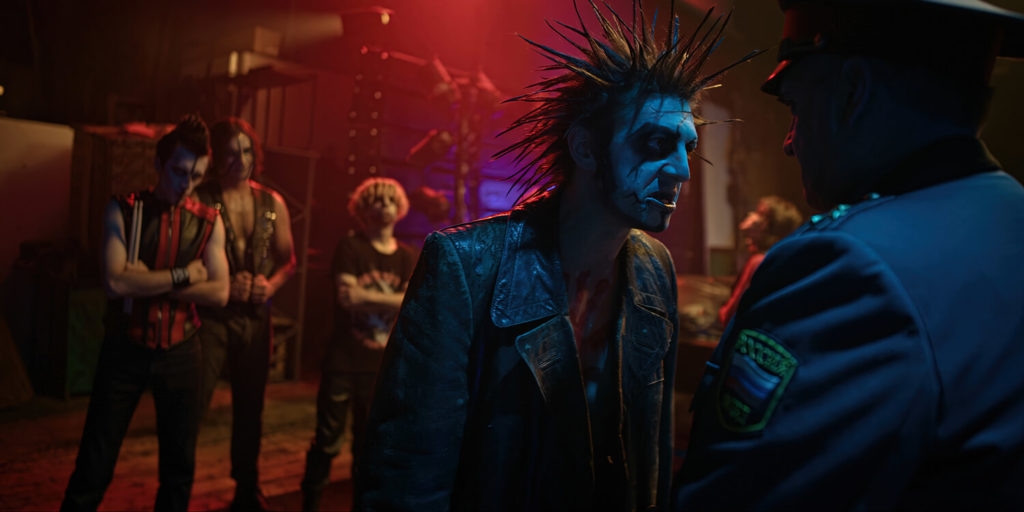
4. Govnarism is apolitical. Since the state is no more, but no less than a concentration camp, the best way to escape is the departure inside itself. To do this, you should drink and accept other means that help to abandon reality. Specific political sympathies can be any. Although the series “King and the Jester” contains fights with riot police and with the right skinheads, the replicas of the main characters do not make it possible to determine their views on significant issues of life in society. In his wandering answers in an interview, Gorshev often formulated something like egocentric anarchism based on ideas gleaned by Kropotkin, but perceived purely utopically. By and large, the anarchism of the pot is reduced to live for their pleasure, cut the punk and scold the Bolsheviks, oligarchs, gopniks - in a word, all who spoil his honest high. Here I recall another representative of the left punk-wing of those years-Alexei Nikonov with his renom of the artist, who says something evil about the cops from the stage.
5. Govnarism is a transgressive practice achieved due to intensive and regular listening to rock music in combination with destructive behavior, polynarkomania and vulgar existentialism. Tearing the psyche from the thread, the shit is disconnected from everyday life, going into the inner world, drawn by listened by music. The struggle against demons, accompanying this kind of introduction, can lead to defeat - see the magnificent documentation of visitors to the "invasion" festival under the name " We did Orthodox work today ." Govnar loves adrenaline in any form, so he has a craving for the pranks, horror and terrible fairy tales.
6. Govnar is concerned about his authenticity. The question of “realizing” - both its own and your idols - that is what the mind of every shit really occupies. A genuine rocker lifestyle is opposed to the world of corrupt pop, into which, by negligence, anyone can fail and not even notice it. To prevent this from happening, you need to continuously scan yourself and your environment on the subject of manifestation of signs of venality. If such signs are found in another, it is necessary to tear it, and in his case, the shit may try to correct the situation with indicative destruction of valuable things, a waste of all the money earned for drinking and other radical gestures. Govnar always considers the shit of others, but never - himself.
7. Due to the constant mismatch of the real and imaginary shitty, internally comical. As Immanuel Kant wrote: “Laughter is a affect from a sudden transformation of intense expectation into nothing”-and few people cause the same sincere and genuine laughter as fans of punk rock. Comism is also born due to the loss of meaning that forms new readings: for example, Knyazev’s line “cool warm evening” is ridiculous due to its absurdity and at the same time intuitively understandable to every resident of the middle strip. Or, as the brother of the deceased vocalist “King and the Jester”, Alexei Gorshenev, the founder of the Kukryniksi group put it about the series: “I expected something in the spirit of Tarkovsky.”
Shit as a fairy tale
This extremely fertile material for a funny series about the rock band begins to slip a little in the third series that collected all the cliches about groups that destroy honest male friendship (the separation of Mikhail Gorshev with his first wife Anfisa, shown through the burning of a dead fly) looks especially strange. However, sexism is an integral part of the mentality of listeners and artists of “our radio”, so the creators of the series here are embellished reality.
The biography of punk rockers cannot do without swing-it is so open, however, the features of the domestic rock movement should be kept in the mind while viewing, although it would seem better to forget about many things. The creators of the series have done a lot so that the bad taste inherent in the work of Gorshenev and Knyazev looks good on the screen, but this is the paradox of the “king and the jester” - that they are this bad taste. And an ugly jester, and completely idiotic texts, and a 3D museum of the group’s work, simulated by the prince, are all of them. Presenting them as a witty punk rock group that made the path from the basements to the stadiums, the authors are silent something crushing. This path would not have been without tens of thousands of subalterns who put their lives on the statement of shitty - a conscious form of shit. Yes, and shit itself has not taken place anywhere: the concert of the “king and jester” at the Moscow Biker Club Sexton in the series was recreated in the St. Petersburg Ionotex, which has its own ecstatic truth - this is a rare concert venue in a city where you should not count on the presence of toilet paper, and most beginner groups performing there are not chosen out of the Trekhkordal. Punk with texts about booze and vomit.

The popularity of the “king and jester” is greatly helped by the distance between them and the new generation of listeners who just turn on Spotify to enjoy the song “Naked Coki”-without the need to go to the cassette to the Castle Rock store and go through humiliating gatykin of local rock apparatus. This distance made it possible to better evaluate the music of the team: so, it became clear that there are not so many differences between the cold horror horror of the King and the Jester Early Gity Music (you will find out the melody?), The question surrounded and interpretation. В сериале есть сцена перепалки Горшенева с консерваторскими музыкантами, в которой Горшок, еще не записавший ни одной песни, ставит свою будущую группу на один уровень с Моцартом и Бетховеном. Сделав упор на вопросах посмертного признания, создатели сериала своей работой подсказывают зрителю, что в конечном счете у Горшка все получилось: ведь герои сказок живут до тех пор, пока сказки рассказывают.
PS История Шурика-Машурика. Conclusion
«Misfits? — переспрашивает Александр. — Не, честно, не слышал».
Услышав первые звуки песни « Monster Mash », Александр сначала настораживается, но уже через тридцать-сорок секунд начинает раскачиваться в такт, показывать «козу» и изображать игру на невидимой гитаре.
«А как песня называется?» — Александр наклоняется поближе к телефону, из которого доносится музыка. Прочитав название композиции, он расплывается в улыбке: «Это же про меня песня».
Достав свой телефон, он заходит в социальную сеть «ВКонтакте», открывает настройки профиля и меняет имя. Теперь он Александр Mashурик. Он открывает раздел «Любимая музыка» и вносит туда правку. Отныне этот раздел выглядит так: «Шуты, Гроб, Сектор, Lacrimosa, идет война народная, Mysfits».
Мы смотрим в окно, где догорает первый по-настоящему весенний день. На спортивной площадке возле дома Машурика трое уже довольно пожилых гопника подвесили себя за кожу на турники. Рядом с ними бегают дети — по-видимому, внуки. В беседке рядом с площадкой поблескивают пустые бутылки, на которые падает свет догорающего солнца и первых уличных фонарей.
*Герой этой главы — реально существующий одноклассник одного из авторов текста. Его имя изменено по его же просьбе.
The author’s opinion may not coincide with the opinion of the editorial office.