
Translated material
Patients forever?
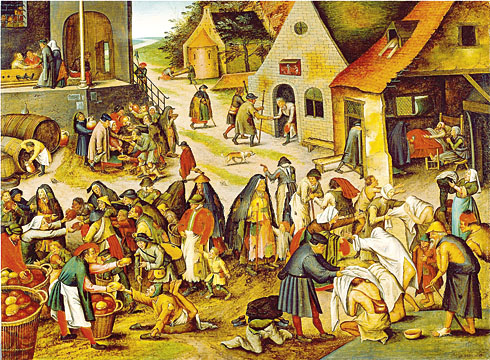
P. Bruegel-Ml. "Seven deeds of mercy." Between 1616–1638
Patients forever? It seems that poverty is not the most popular topic in art. But in 2500 years, many works were dedicated to her. Some of them are now showing in the homeland of Karl Marx, in the German Trire. Why was it necessary to advance society on the corn - the New Times sorted out
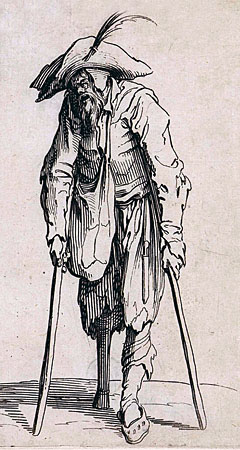 |
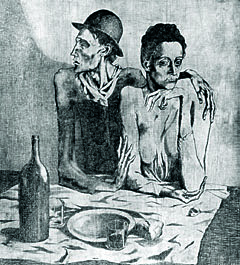
Picasso, Picasso, “Rembrandt’s poor musicians”, Rembrandt, “Russian beggar” sculptor Ernst Barlah and photographs of the homeless work, Karin, who lives on the street ... 250 exhibits from more than 80 European museums and private collections, represent two and a half millennium of European poverty, However, in antiquity to be poor, it meant to be ridiculous rather: the lack of work was perceived as a voluntary choice, society treated destitute with interest and even sympathy, but without sympathy. In the puffing economic health of Alexandria, from where many exhibits of the ancient section came from, the rich were so dense that many could feed their waste (the rich themselves thought).
Antique section of the exhibition "Poverty. Prospects in art and society ”was carried out in Trira into a separate exposition, it is shown at the Rhine Museum, dedicated to ancient history, while an exhibition about poverty of the New Age and our days - in the City Museum of Simeonsstiff. So antiquity turns out to be a prologue to the present times, which do not really depend on Christian morality, or on ideas about social responsibility.
 |  |
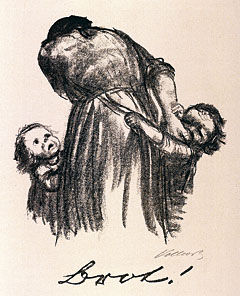
The further, the more difficult. Today in Germany, almost the seventh part of the population, 11.5 million people, lives at the poverty line or already below it, the number over the past ten years has increased by a third. This statistics are close to the average in Europe, which seems to be a prosperous edge. As a result, in order to see reality, the organizers of the exhibition needed several prospects for poverty at once, from “documentation - testimonies of poverty” to “call for help” and “ideal - model”.
 |
But there are unnamed prospects, for example, the prospect of Trier himself. Here, the famous city cathedral, whose bas -reliefs are full of afflicted, and letters of the need for the beginning of the twentieth century, and the description of the famous Trier fighters for social equality. Karl Marx is an inevitable hero (he is respected in Trira, the portrait hangs in the city museum, and the Marx Museum itself is an obligatory part of all excursions around the city where a bus with a familiar beard travels). Less famous in Russia is Oswald von Nell-Broining (1890–1991). The Catholic thinker, Jesuit, adviser to Pope XI, he formulated the provisions of the famous Encyclic 1931 on the social policy of Quadragesimo Anno. The Nazis forbade him not only to publish, but also to write, but in 1944 they condemned three years in prison. Von Nell-Broining had the most important influence on the social thought of the 20th century, 1800 of its published work largely determined the modern social strategy of the West, their influence is comparable to the influence of Marx's works. 
This unique exhibition is the result of the ten -year work of the University of Trier, who studied the theme “Alienity and Poverty”. The efforts of 70 participants in the project prepared the exhibition itself and a huge catalog for it, more similar to a scientific work with an abundance of pictures than the traditional album “about”. However, the exhibits recall that the basis of any exhibition is precisely they. Especially if it is a fun art, like an “Oscar for the unemployed” Yorga Immanorf. Perhaps he was generated by reality. In Münster, at five years of the festival of modern sculpture once every five years, one of the prizes is awarded by the homeless - to the author whose sculpture was the best from the point of view of the homeless themselves. That is, so that under it you can hide from the weather, spend the night in silence and tranquility. In a sense, this is one of the main tasks of art-not only to explore, but also to protect, comforting.