
Translated material
Extra money
Developing markets are protected from the influx of capital
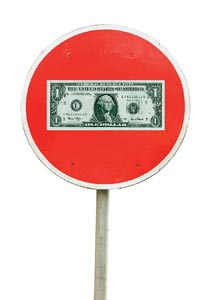
The developed countries have not yet managed to heal the consequences of last year’s collapse in the financial markets, and investors are already puffing up new bubbles with might and main - now in developing countries. For the role of Subprime-2 (the next asset in which he will inflate and then burst the bubble, as it was with mortgage bonds in the United States), two classes of assets are now applying for. The first is developing markets, where currencies, shares, bonds, and real estate are valid very quickly. The second applicant is raw materials and securities tied to them. Russia is included in the first category and the second.
New temptations
To help banks, consumers and enterprises to survive the crisis, in the USA, Eurozone, Japan and other developed countries of the Central Bank reduced interest rates to almost zero. And the Bank of Sweden (Rixbank) even introduced a negative interest rate. The surcharge for storing money in the Swedish Central Bank is a fine for bankers who should force them to credit the real sector, and not keep money in the accounts. But low interest rates have not yet helped the growth of lending in developed countries: banks are well aware that the prospects for the development of the economy and its individual sectors are now not clear.
But the cheap money of the National Bank, supplemented by an active budget policy, stimulating growth, very warm their hands to financial investors of all stripes. They are looking for applications to capital - and find. For a long time to frolic financial speculators: in the USA, unemployment is growing, and consumer moods are very unstable. In early November, the Fed warned that the bets would remain at a low level for a long time.
Accelerates the occurrence of bubbles on the continuing fall of the dollar. Since the beginning of March, he has fallen in price by 11.7% in relation to the basket of the currencies of US trading partners. JPMorgan predicts that the fall of the dollar will continue until the middle of 2010 - until the Fed does not begin to increase the rates.
All this creates ideal conditions for the influx of capital in developing countries, whose currencies have noticeably strengthened. This win -win investment is called Carry Trade - investors take a cheap loan in dollars (low rates) to buy assets in countries where interest rates and profitability of all tools are higher. The growth of currencies of developing countries increases the winnings.
If the investor is sure that in a year, for example, the Indian rupee to the dollar will grow by 10%, and the bonds of the Indian Ministry of Finance have a yield of about 10%, then taking a dollar loan of 5%and buying these papers, you can earn 16%in a year. How to resist such a temptation?
Risk - in price
Investors carry out transactions on the above scheme with all assets in developing countries and raw materials. As a result, the price of gold is close to the historical maximum, copper has risen in price since the beginning of the year more than doubled. The price of oil is now selected by $ 80. A bubble forms in the raw materials markets, the professor of New York University Nuriel Rubini warns. The same thing happens with shares. At the historical maximum, the index of bonds of developing countries - it is continuously growing since August. The abundance of money reduces the profitability of bonds and makes investors look for more profitable assets. The average profitability of the government bonds of developed countries fell to 2.2%, and developing - up to 6.5%. Low profitability attracts borrowers: the placement of issuers from developing countries in January -October increased by 74% against last year.
Defolt is in Dubai
The fact that investing in the papers of developing countries is very unsafe, on November 25, the Dubai sovereign fund Dubai World reminded. This is something between our Vnesheconombank, the Housing and Public Utilities Development Fund and Rostekhnology: a state corporation that owns factories, local and foreign assets in infrastructure industries and real estate. Dubai World asked delayed debt payment by $ 3.5 billion, which had to be repaid in December. The difficulties of the Dubai World construction unit arose after the price of real estate in Dubai collapsed from the financial crisis compared to last year's peak. The government is going to restructure the State Fund.
The problems of the Dubai Emirate - the second largest of the seven included in the UAE - is known for a long time - significant oil reserves did not prevent him from getting into debts of $ 80 billion. Of these, Dubai World accounts for $ 59 billion.
Dear oil and cheap money allowed Dubai, like other oil -producing countries of the Persian Gulf, to sharply increase investments in infrastructure - transport systems, housing and commercial construction, an ambitious project for the construction of a financial center. The highest tower in the world is built in Dubai. Many investments made by Dubai state -owned companies had an print of redundancy, oriental luxury. The expensive Dubai project for the construction of bulk islands, the fashion for which was imported by Russia, is widely known. These projects were funded in debt. Obviously, Dubai assets will still deliver a lot of troubles with careless investors, unless they “amnested” the ultra -high price of oil. Do not let go!

Fearing pouting bubbles, developing countries are trying to close from unnecessary money. In the crisis of 1997-1998, when the flows of capital limited Malaysia, it was scolded by all international organizations and economists. They threatened that the country will become an investment outcast. Now the IMF recognizes that the restriction of the influx of capital is almost the only means that can prevent the occurrence of bubbles in developing countries.
The already taken measures and steps that are now discussing the governments and central banks of developing countries are very indicative. Brazil in October introduced a 2 percent tax on the purchase of local promotions and bonds by foreigners. A similar 2 percent tax on the purchase of the most liquid shares introduced Korea. They limited both loans of local banks abroad and the possibility of Korean enterprises to play in the foreign exchange market.
In China - the Center for the interest of financial investors around the world - the authorities limited the transfer of currency from foreigners to residents of the country. This is the main channel that allows you to bypass the restrictions on the purchase of yuan by foreign investors.
Similar or slightly softer measures in the coming months can be introduced in India, Indonesia, Russia, Colombia. We have the first deputy chairman of the Central Bank, Alexei Ulyukaev, about the possibility of introducing restrictions like the Brazilian.
In the meantime, the Russian Central Bank reduces the refinancing rate - for the ninth time from April, bringing it to 9%. The goal is to reduce the difference in bets stimulating speculators. But the same measure makes the money more accessible. As a result of the rally in all markets, continues. Last year, overheating of the Russian markets, the global crisis prevented. Now, it seems, we are moving full pairs to the new crisis, which will hit primarily on developing economies.