
Translated material
Gatters and Keepers
The Russian Museum of St. Petersburg has opened an exhibition "Ancient preservation of the monuments of icon painting and church antiquity." It is dedicated to the 100th anniversary of the ancient storage named after Emperor Nicholas II
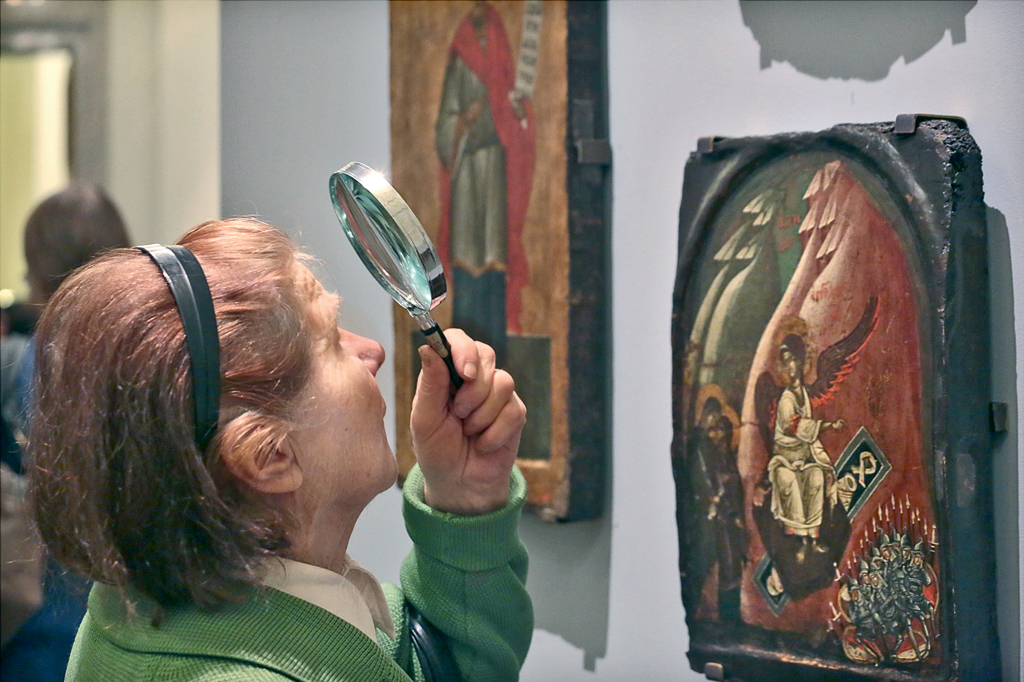
Russian museum. Like 100 years ago, in the spotlight-Old Russian art, St. Petersburg. Photo: Pavel Markin
The carved gilded amvon of the 16th century is the rarest of the preserved monuments of church culture. The earliest sample of the icon “Saints Boris and Gleb”, “The Mother of God of Vladimir” Simon Ushakova, the Chamber of the XVII century, the carved wooden sculptures of “Elders”, sewing, cast products-about six hundred monuments of ancient Russian art. “We wanted the exhibition to resemble the exposition of 1914,” said Irina Solovyova, head of the department of ancient Russian art. Then, on March 18, 1914, in the anfilad the hall of the right wing of the Mikhailovsky Palace solemnly opened the ancient storage of the monuments of icon painting and church antiquity named after Emperor Nicholas II. The exposition was designed according to the project of architect Alexei Shchusev.
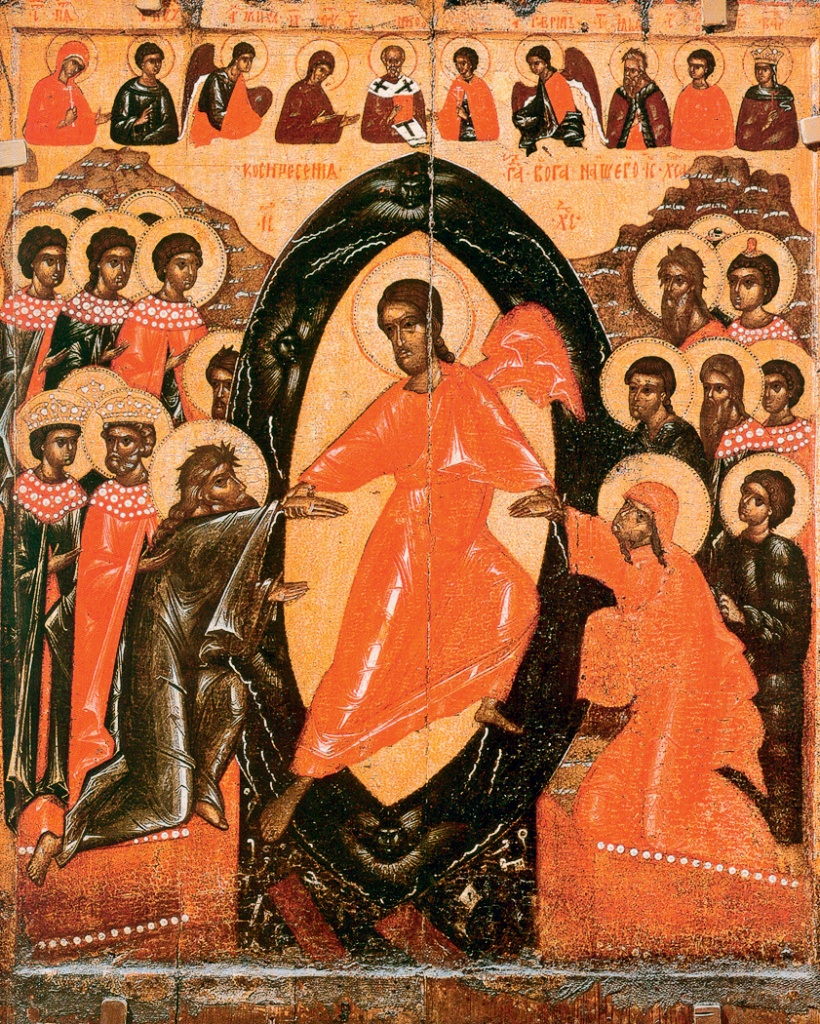
Descent in Hell, Pskov, the end of the XIV century.
Search for treasures
In Russia, a meaningful interest in the past appeared in the 17th century. The century later collecting became popular with the nobility. One of the first collections of coins and medals was collected by the associate of Peter I Yakov Bruce. Old Russian manuscripts were collected by another statesman, president of the Academy of Arts Alexei Musin-Pushkin.
After the victory over Napoleon, the collection of Russian antiquities becomes universal fashion. Enthusiasm spurred the unique find of 1821 - the golden hryvnia of Vladimir Monomakh. Numerous scientific societies appear. The search for antiquity is engaged in merchants, clergymen, even peasants, who, from the presentation of the Moscow governor General Sergei Stroganov, are called the "serf intelligentsia." It was this “intelligentsia” by Stroganov, the chairman of the Moscow Society of Russian History and Antiquities, who equipped his own expedition to the south of Russia, where Kerch treasures and Scythian gold were found.
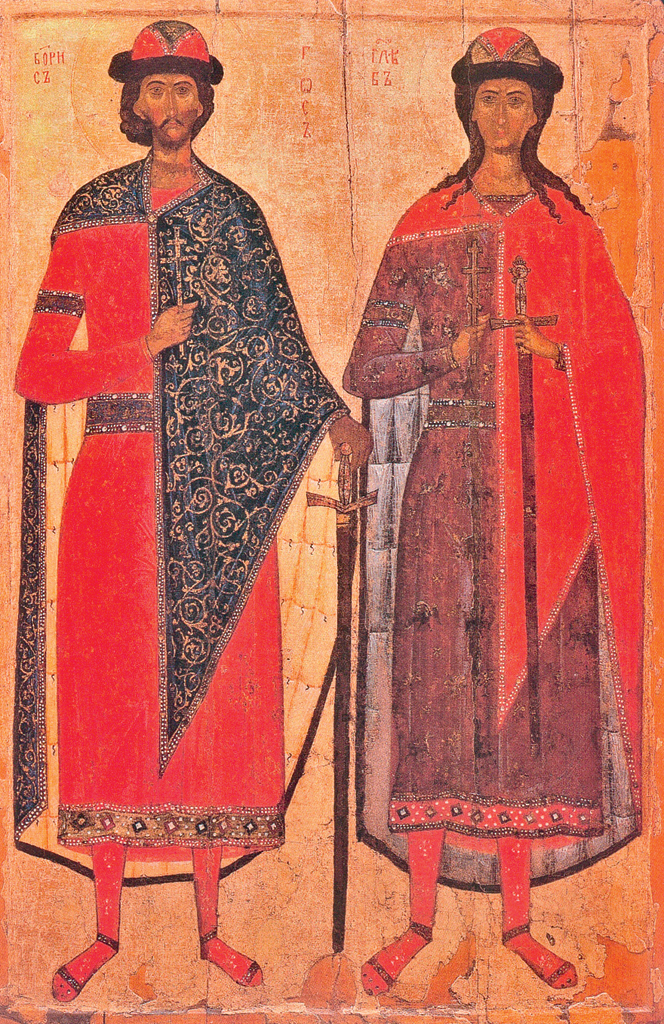
Boris and Gleb, Moscow, mid -XIV century
In 1884, provincial scientists of archival commissions appeared in Russia “with the aim of collecting and putting in the order of archival affairs and documents”. Interest in the past becomes a state affair. And then the word "ancient storage" appears in the vocabulary.
Collectors
In 1897, 1616 ancient icons were received by the Russian Museum of Emperor Alexander III preparing for the opening, about 3,000 works of casting, carving, sewing - a complete collection of the Museum of Christian Academy of Arts of the Academy of Arts.
"
The search for antiquity was engaged in merchants, clergymen, even peasants, who were called "serf intelligentsia." It was this “intelligentsia” that was equipped with an expedition to the south of Russia, where Kerch treasures and Scythian gold were found
"
The museum was created in 1856 at the initiative of the vice-president of the Academy, Ober-Hofmeister of the Court of his Imperial Majesty Prince Grigory Gagarin, a well-known admirer of Byzantium. The fund was mainly formed from private collections of famous collectors of antiquities, primarily Peter Sevastyanov and Mikhail Pogodin.
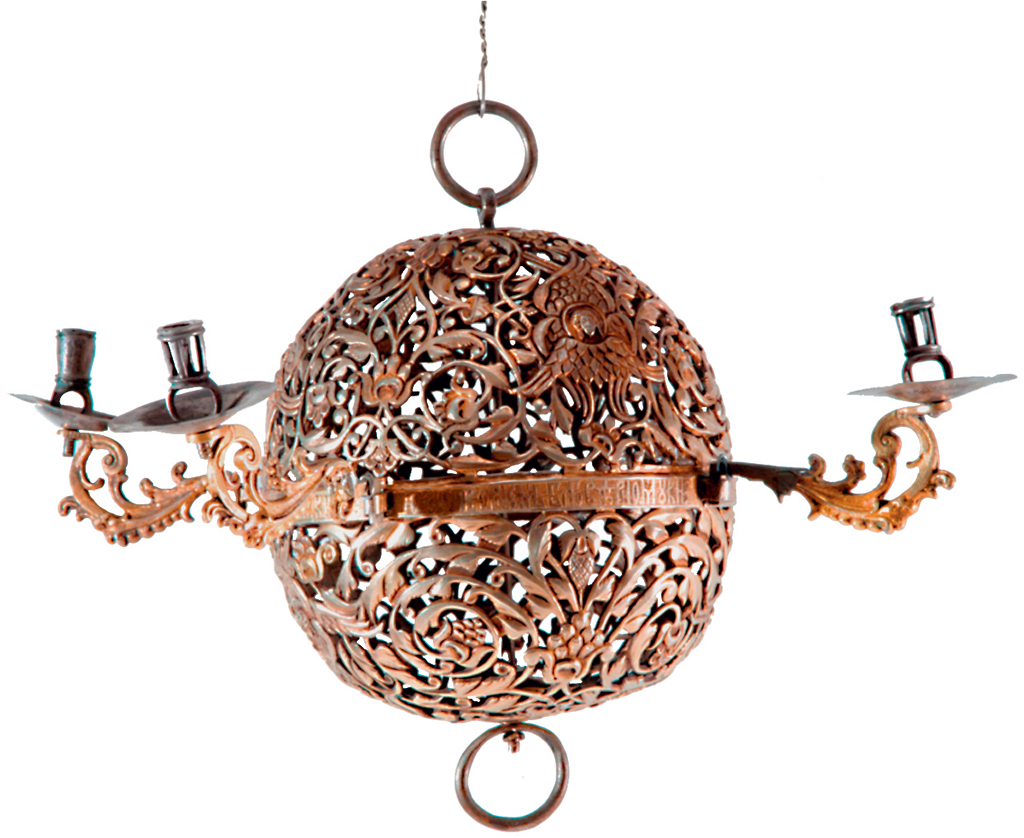
Panicadilo, 1667
The archaeologist and lawyer Peter Sevastyanov brought a lot from his meeting from Greece, from Athos, including a fragment of Khoros*. He exhibited his collection in Paris. The collection of Mikhail Pogodin, a famous historian, writer and publisher - icons, cast images, silver and copper crosses, popular paintings, ancient hanging seals and other values. Pogodinskaya collection for 150 thousand rubles was acquired by silver for the state Nicholas I.
For forty years of existence, the academic collection has become the largest St. Petersburg assembly of antiquity. For the new museum, it was a successful acquisition.
Soon, the department of Christian antiquities was replenished with 771 subjects of church antiquity and civil life from the collection of the former keeper of the Museum of the Academy of Arts and the publisher of the artistic and archaeological journal "Christian antiquities" Vasily Prokhorov. So the Russian museum was one of the early lists of the miraculous icon of the Vladimir Mother of God “The Mother of God Trushy”, made by the master from the circle of Andrei Rublev, “The Mother of God, the sign with the chosen saints” of the third quarter of the 15th century - a classic example of the painting of Veliky Novgorod.
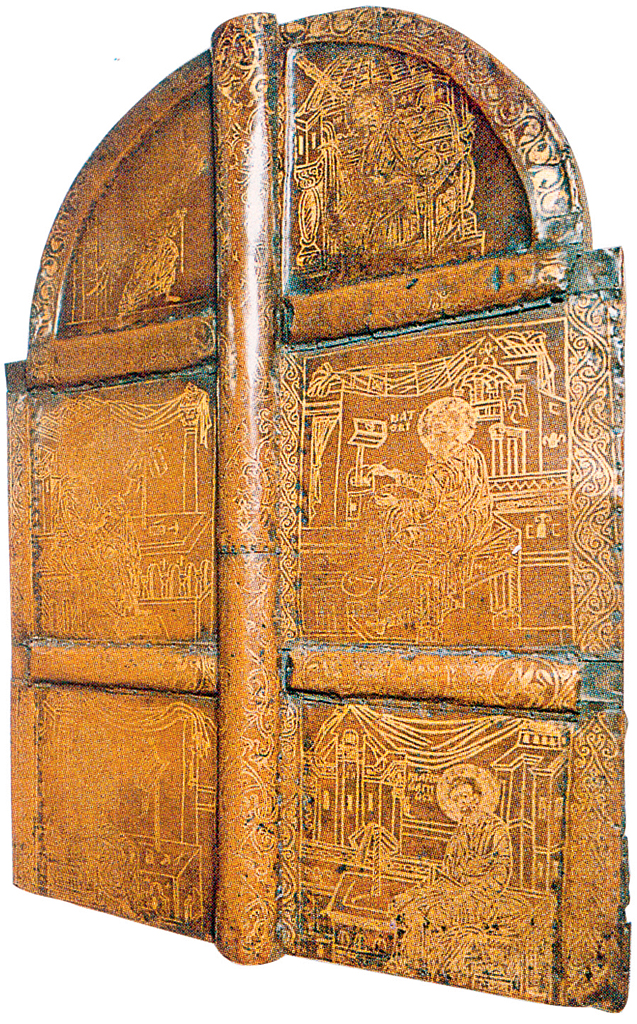
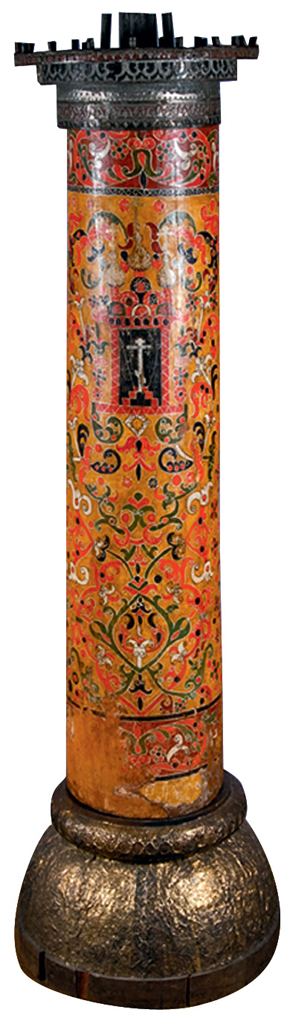
Royal gates. Likhachevsky, Novgorod, the first third of the XIV century
Cattle Candle Candle, Arkhangelsk North, mid -17th century
The museum has acquired more than a thousand copper cast icons, underwear crosses and images of mass production from the artist Vasily Vereshchagin. Another major meeting of ancient household items - the collection of the director of the Hermitage Alexander Vasilchikov, was gifted by his widow. One hundred icons, mainly written by the masters of Vladimir icon -painting villages - Msters, Kholuya - the gift of academician Nicodemus Kondakov.
The imperial Hermitage, the Imperial Archaeological Commission, took part in the replenishment of the collection of the newly formed museum.
Tsarist money was received by the honorary citizen of St. Petersburg Ivan Sinitsyn: he bought a handwritten gospel of the XVI century in the copper salary of the XIV century and other values
Royal money
With the advent of Pyotr Neadovsky, the heyday of gathering comes to the position of keeper of the art department in the Russian Museum. The keeper changes the strategy of work. Organizes expeditions in temples and monasteries in search of things that have become out of use. Entities to the museum become systematic, although not everything goes easily. For two years it took to negotiations with the oldest monasteries-Suzdal, Pokrovsky and Joseph-Volotsky (Volokolamsk). Museum workers were supported by the Synod and the Emperor.
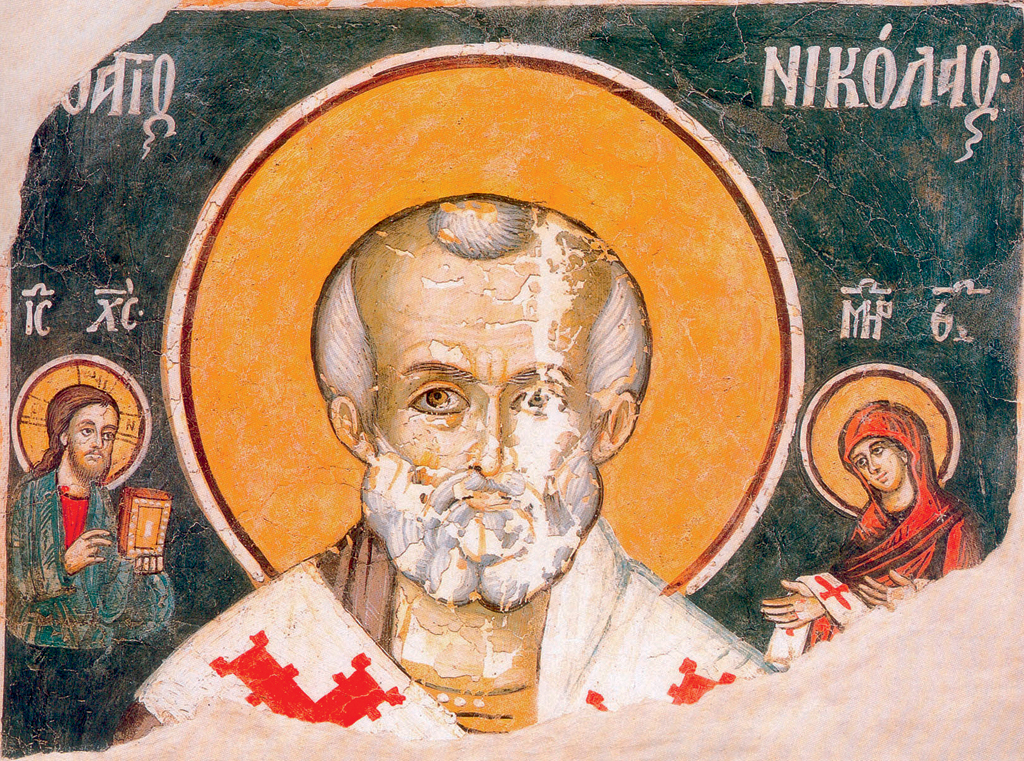
St. Nicholas the Wonderworker. Fragment of wall painting, Athos, mid -18th century
Pyotr Ivanovich Neudovsky organized a show for the emperor of the collection of icons and sewing, sent from Moscow to antiques, collectors and restorers. Nicholas I bought old things and handed over to the museum. Honorary citizen Ivan Sinitsyn also received royal money: he bought a manuscript gospel of the XVI century in the copper salary of the XIV century and other values.
For 1,500 Russian and Greek icons, the actual state adviser, a member of the Council of the Minister of Education Nikolai Likhachev, received the personal funds of the emperor, and the collector of the “fairy -tale scope” completed the floor in his house, where he placed the remaining collection. And the museum received a systematic meeting, which fully represented the Russian icon from the XIV to the 17th century. Among them are the “UNIKI” - “Saints Boris and Gleb”, “Saints Paraskeva and Anastasia”, the image of “The Mother of God of Vladimir” is a replica of the famous Byzantine shrine, written by the largest master of the arms chamber of the Moscow Kremlin Simon Ushakov in 1662.
By 1914, after sixteen years of search and finds, the Russian Museum became the owner of the largest and most unique collection of Christian antiquities. It was decided to create a museum in the museum.
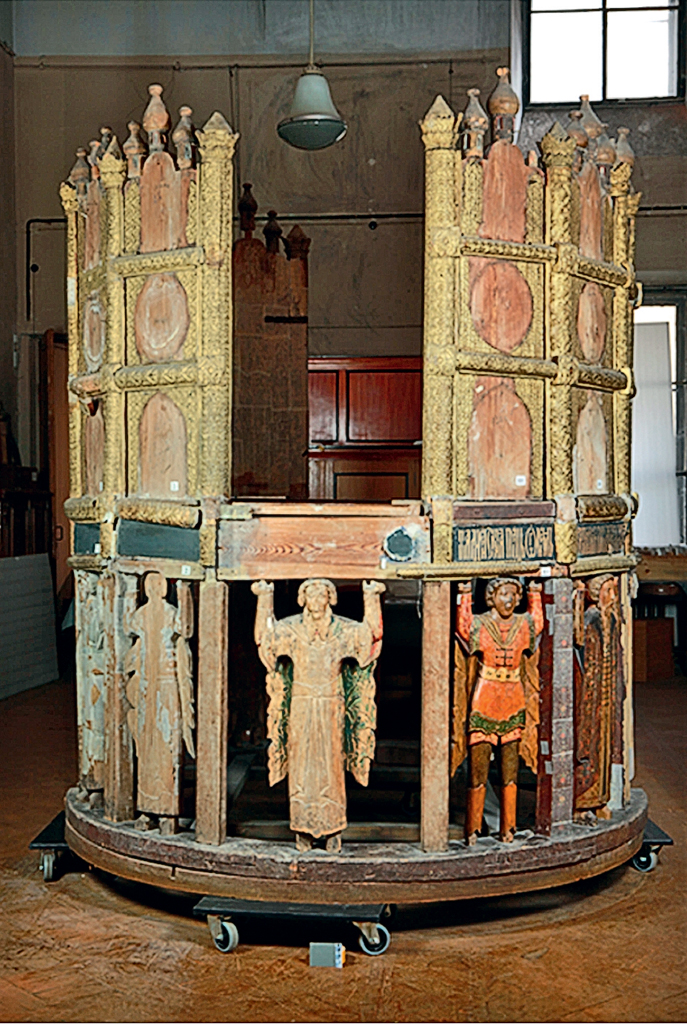
Amvon, Novgorod, 1533
The name of the emperor
The center of the 1914 exposition was the recreated Novgorod Icon chamber with an iconostasis, “skinny candles”, Khoros, made on the model brought from Athos. In the center of the hall is an octagonal showcase with small icons made of Morenoy oak and covered inside green sednary matter, and decorated with silver basma outside. In the neighboring halls - works of Greek, Novgorod, Moscow art, starting with Byzantine patterns and ending with late Russian icons. It was this exposition that became a kind of business card of the Russian Museum.
The modern exposition allows you to see unique monuments in a single exhibition space - like a hundred years ago. There is only a collection of Byzantine icons-in the 1930s they were handed over to the Hermitage.
Photos provided by the Russian Museum