
Translated material
Personal business
Why the story of Denis Karagodin, who found out who shot *his great-grandfather in *1938, is so important
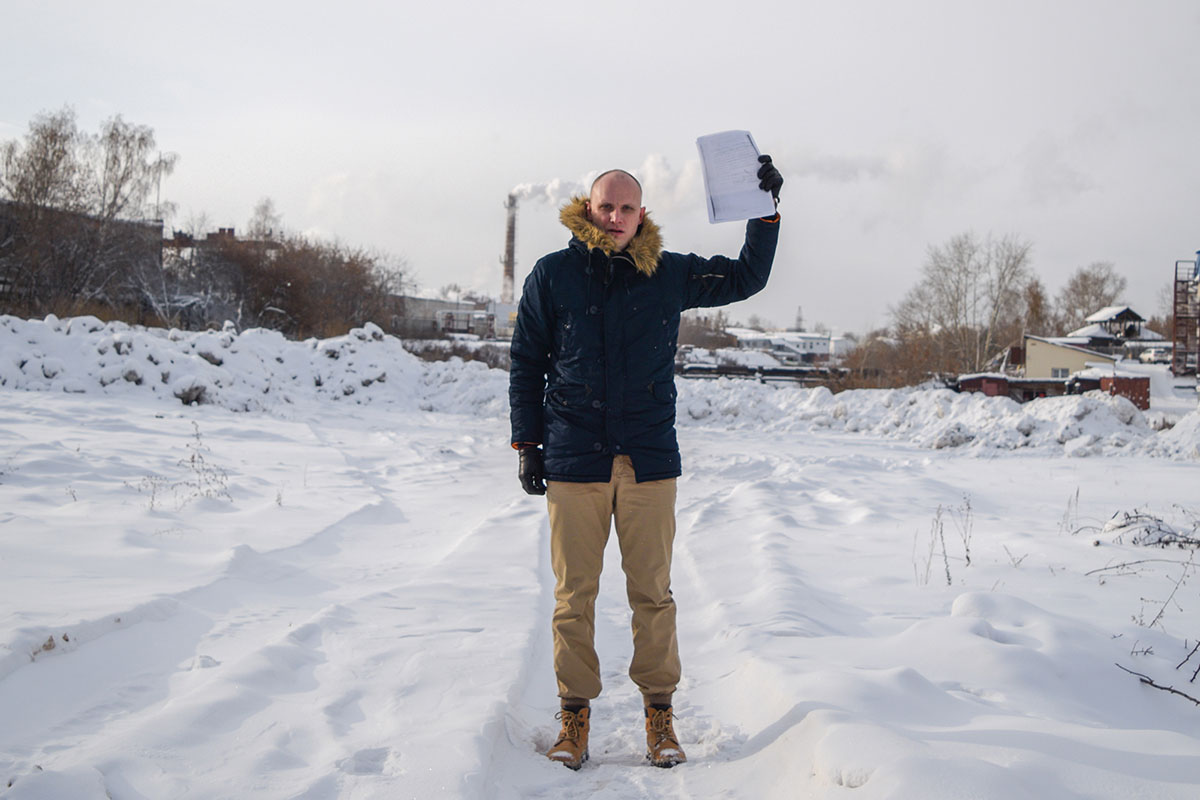
The message X blew up social networks, the news Y caused fierce disputes on the network, the opinions of social networks on the issue Z were divided. About such a phrase, any material begins about what is happening in Russian social networks and, more widely, in the space of public discussion - the benefit of hardening and dividing, users of social networks do not need a special occasion. A few days ago, a story in these formulas turned out to be a story that, it would seem, does not imply: a graduate of Tomsk University Denis Karagodin spent five years to find out the circumstances of the death of his great-grandfather, shot in 1938-and for the first time in Russian history received an official certificate with the place, time and names involved in the execution. This is a story that will surely have a long trace and which has already acquired social significance - but first of all it is a private story, the story of family memory - if a person spent five years of his own life on its restoration, what can be said here - respect. It is all the more amazing how many people who were ready to refuse Karagodin in the right to this memory, to explain to what terrible consequences this memory will lead, find the details that would prove that in this family tragedy everything is not so unambiguous. It is unlikely that at this point of discussion you can convince anyone, but I would like to figure out why this story causes irritation-and why it still deserves respect.
It so happened that historical memory in Russia is a state -based business. What and how to remember, at what angle to look at events, who is a hero in history, and who the victim is issues that require, so to speak, normative regulation. This regulation has many tools - school textbooks, monuments, films made by order of the Ministry of Culture, a variety of state programs with “approved events of events”. In recent years, these tools have been increasing more and more to the production of an unambiguous and generally binding version of events, any deviations from it can be declared “falsification of history”. The fact that this version of history is one and indivisible does not yet make it obviously wrong, say, the victims of the Stalinist repressions in it also found a place. You can even put a monument to them - to everyone in general - or enter the Gulag Archipelago in the school curriculum (in an abbreviated form). It is important to note that the causes and consequences of repressions have long been overcome, state bodies have carried out self -cleaning work, certain shortcomings and bending in the field were eliminated. You need to remember this, but do not turn the past.
And then a separate person appears, not involved in any state program, nor in the historical community, or even in opposition policy, and this past begins to turn this on his own initiative.
Karagodin is so important because he takes away a monopoly from the state to historical memory
Karagodin is so important because he takes a monopoly from the state to historical memory. He seems to say: thanks, it's all very interesting, but let me figure it out myself, where is the triumph in my story, and where is the tragedy. The memory of the past is not a directive that was sent from the center, this is the result of my own work. And reconciliation with this past, and its legal assessment, and its interpretation is all my conscious choice.
Karagodin is so important because it destroys the idea of history as a certain abstraction, the movement of the masses. There were no “crimes of Stalinism” in general or “victims of the Soviet people” in general. The Russian people are me, and each crime has names, passwords, and attendance. Put them on the table.
Karagodin is so important because it destroys the popular idea of a society consisting of “descendants of the executioners” who still pray to Stalin, and “descendants of the victims” who continue to expose him. The attitude to history is not determined by the origin, it is not laid in genes, like the color of the hair - those who were sitting, and those who guarded. It is important to know about them not in order to prove your inheritance, but in order to understand from what tragic contradictions this inheritance consists of.
Karagodin is so important because in the era of the notorious post -truth he finds something unconditional, unrealistic. Here is life, here is death, here are those who shot, here are those who gave the order. It can be said by the current custom that, they say, “in fact, his grandfather was a fist and the White Guard,” but these are all the labels taken from the chopped “short course”, they explain anything and do not justify anyone. The truth remains true-the great-grandfather lived and was killed, then, with such people.
Karagodin is also so important because it does not follow from his story that “now everyone will be” or “everyone should do this.” The power of his act is just that he is not a part of any campaign or social movement, he is in itself. You can perceive it as an example, you can try to do the same, but you can continue to harden and share. This will not solve for a person neither the Ministry of Culture, nor the Ministry of Justice, and no federal state program. This is a choice that you need to make yourself.
Photo: Stepanivanovichkaragodin.org