
Translated material
Two Benois
One and a hundred paintings of famous Russian artists Alexander Benois and his older brother and teacher Albert, whose work was rarely possible to see in the last hundred years, are presented at an exhibition that opened in the central house of the artist
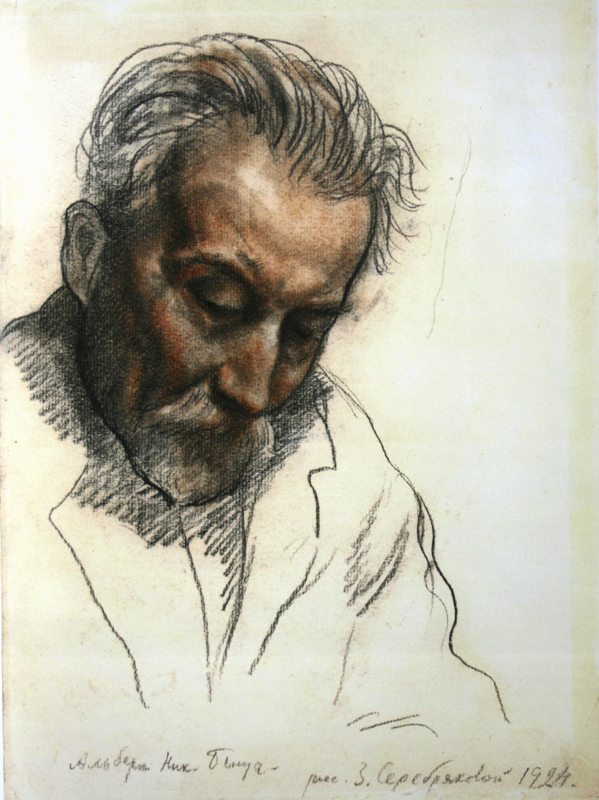
In the history of Russian art, the Benoit family is perhaps the largest. It has been conducting a pedigree since the 18th century, when at the court of the Russian emperor Paul I took the position of either a meter -free or confectioner Leonty Nikolaevich Benois. So Monsieur Benoit began to be called in the Russian manner, and in French his name Louis Jules Cesar Augustus.
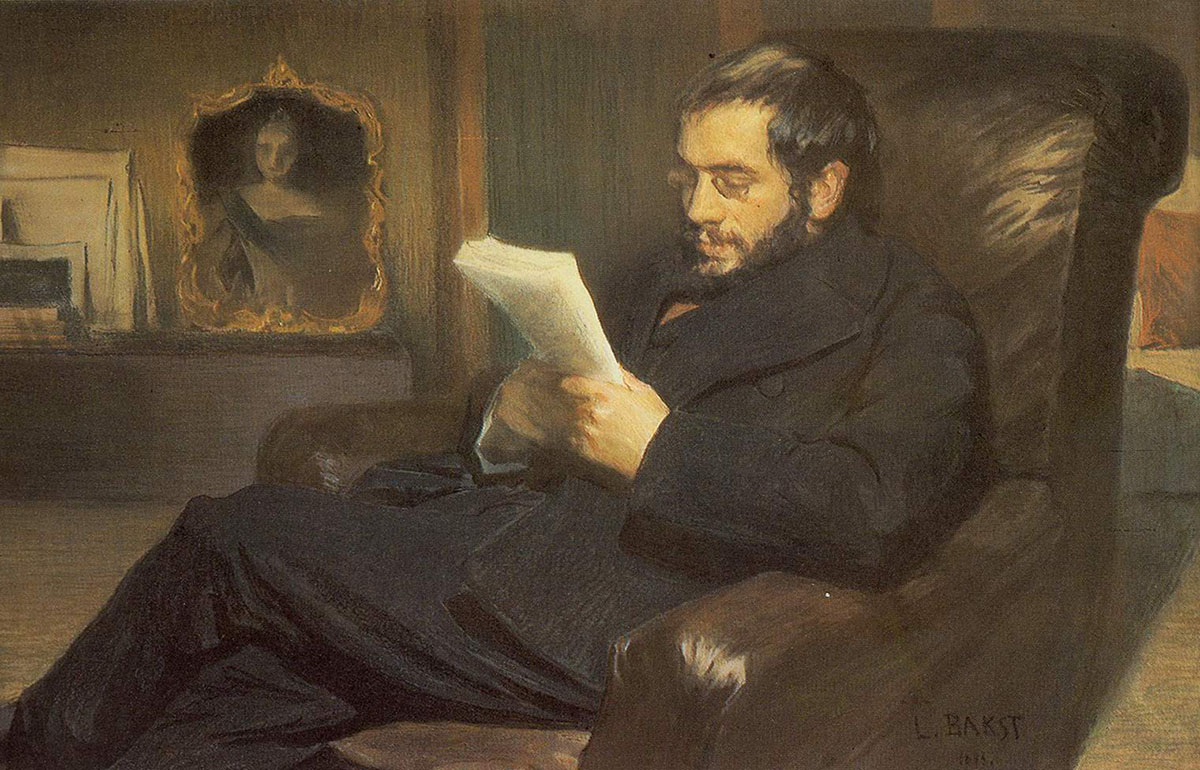
Leonty Nikolaevich was married to German Ekaterina Andreevna Gloppe (Anna Katerina Concordia Augustus). The family had eighteen (!) Children. Seven of them died in infancy, and the rest became the ancestors of a huge prolific dynasty, which had a significant impact on Russian culture. Today, in the XXI century, the names of Benois-Lanser-Serebryakovs are better known-first of all, it is Alexander Benois, Evgeny Lansere and Zinaida Serebryakov, although Alexander and Catherine and Ekaterina should be called among the Serebryakov (she died only two years ago). Most representatives of this family were engaged in architecture and arts, although among them were both merchants and military.
In his youth, earning money with architecture, Albert burst into the daimye in Peterhof in every free minute - draw sketches
The descendants of the fourth son of Louis Jules, architect Nikolai Leontyevich Benois (1813–1898), left the most noticeable creative trace in history. In 1848, he received the title of academician, two years later he was appointed chief architect of Peterhof, then became the chief architect of the imperial theaters and the chairman of the St. Petersburg Society of Architects. Nikolai Benois had nine children: three girls and six boys. The exhibition of the works of his two sons is presented at the CDH Gallery "Cabinet" with the support of the capital's Department of Culture.
The favorite of the royal surname
Albert is 18 years older than Alexander. “We were at the two ends of our family: he is the eldest, I am the youngest,” recalled Alexander Benois, the famous founder of the art association “The World of Art” and the memoirist. If his works and graphics, book illustrations are constantly in demand and well studied, then the Aqueline exhibition of Albert Benois this summer has been held for the first time in the last hundred years. The current exposition at the Central House of Sciences is a kind of continuation of the story about two brothers.
“For me, he was not Albert Nikolayevich, but Albert, joke-Albertus, even more in the lamillary in childhood: Berthu and Bertush,” writes Alexander. “On Albert's knees, I felt completely simple and treated him, as it should be a spoiled and rather capricious child.”
Like many other family members of Benoit, Albert studied an architect and worked as an architect. But in parallel, he showed a love of watercolors, which almost turned into passion. His works began to be exhibited already in 1874, when the artist was 22 years old. At 28, Albert became a member of the circle (later company) of Russian watercolors, and later-the first chairman of the board of this company, honored to be called imperial. The patronage of the crowned surname was not accidental: in a quarter century, Albert Benois organized 38 expositions in different cities of the country and abroad. The tenth exhibition of St. Petersburg watercolors in 1890, even before its opening, was visited by Alexander III, since then the members of the imperial family have regularly visited annual watercolor vernissages.
Architect Albert Benois built cottages and mansions, designed the main facade of the Great Gostiny Dvor in St. Petersburg. In the 1880-1890s, he accompanied the family of Alexander III during the summer cruises in Russia and, being the favorite of the royal family, became the guardian of the Russian Museum since its founding in 1895.
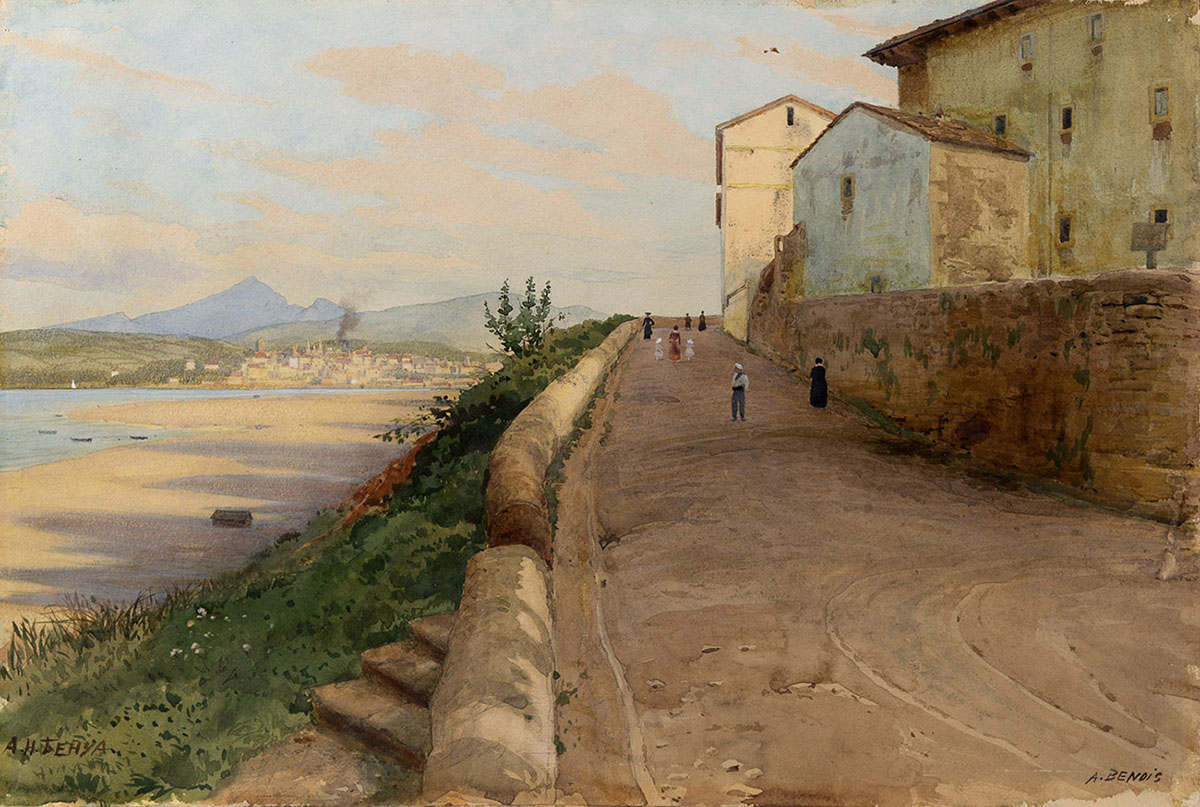
In his youth, earning money with architecture, Albert in every free minute escaped to the cottage in Pargolovo or in Peterhof - to draw sketches. Most of all, he liked to write solar sunsets. Alexander Benois recalls how "with fantastic speed, ahead of the way with a delightful picture, which was replaced before our eyes and without the slightest misfire, paints on paper fell on paper." Albert Benois painted “in the opinion”, this required a special calculation: while one part of the picture dried up, it was necessary to have time to sketch the next one, and then return to the dried up to register the details. In one such campaign, he managed to create several sketches at once - Albert Nikolayevich’s productivity was wonderful.
In 1924, Albert Benoit managed to emigrate to Paris, where his daughter and son had already lived by that time. In 1926, he was elected a member of the Paris Academy of Fine Arts. In the last years of his life, the artist was ill for a long time and was under the care of relatives. He died in 1936 at the age of 84.
At the exhibition at the Central House of Sciences, about 40 watercolors of Albert Benois, related to the Russian period of his work, including the largest (58 × 81 cm) - “Kama evening”, are presented. The artist has almost no more water format - due to the technical difficulties of the work described above.
Around the "world of art"
Albert was the first home teacher of Sasha’s younger brother, who loved to get on his knees when there was no father nearby, and forced to draw pictures for himself. “Dad I asked him to draw my favorite stories to me: marching soldiers, knights on horses,” recalled Alexander Benois. -I demanded the same from Albert and was angry to tears when he, who had not had the slightest tendency to any form of militarism <...>, began with amazing dexterity to pour any landscape. His dexterity soon fascinated me to such an extent that goosebumps began to run all over my body, tears dried up, and I already sniffed with pleasure! ”
These first children's drawing lessons are reflected in the future work of the younger Benois: it combined love for historical pictures and the ability to create magnificent watercolor landscapes.
Alexander studied at the Academy of Arts, but at the same time graduated from St. Petersburg University, received a lawyer diploma. In the same year, he began his career as a historian of art, writing the head of Russian artists for the German encyclopedia. Constantly traveling around Europe, working in France, Alexander Benois became the ideologist of the art association “The World of Art”, around which all the young and talented artists of the beginning of the 20th century gathered, lured to themselves and masters of the older generation: Leon Bakst, Viktor Vasnetsov, Evgeny Lansere, Isaac Levan, Philip Malyavin, Mikhail Nesterov, Konstantin Somov and even Valentin Serov. It all started with friendly, almost family gatherings. Young people could not come to terms with the tastes that reigned in society: in fact, the “world of art” was a reaction to the anti -aesthetics of populist consciousness. The tasks of artistic culture, the development of world heritage, and increased attention to form and skill have been put forward. This was also supported by the release of the magazine of the same name. Revolutionary in content of the exhibition - the indefatigable Sergey Diaghilev engaged in their decoration - caused disputes and actually became the predecessors of the artistic revolution.
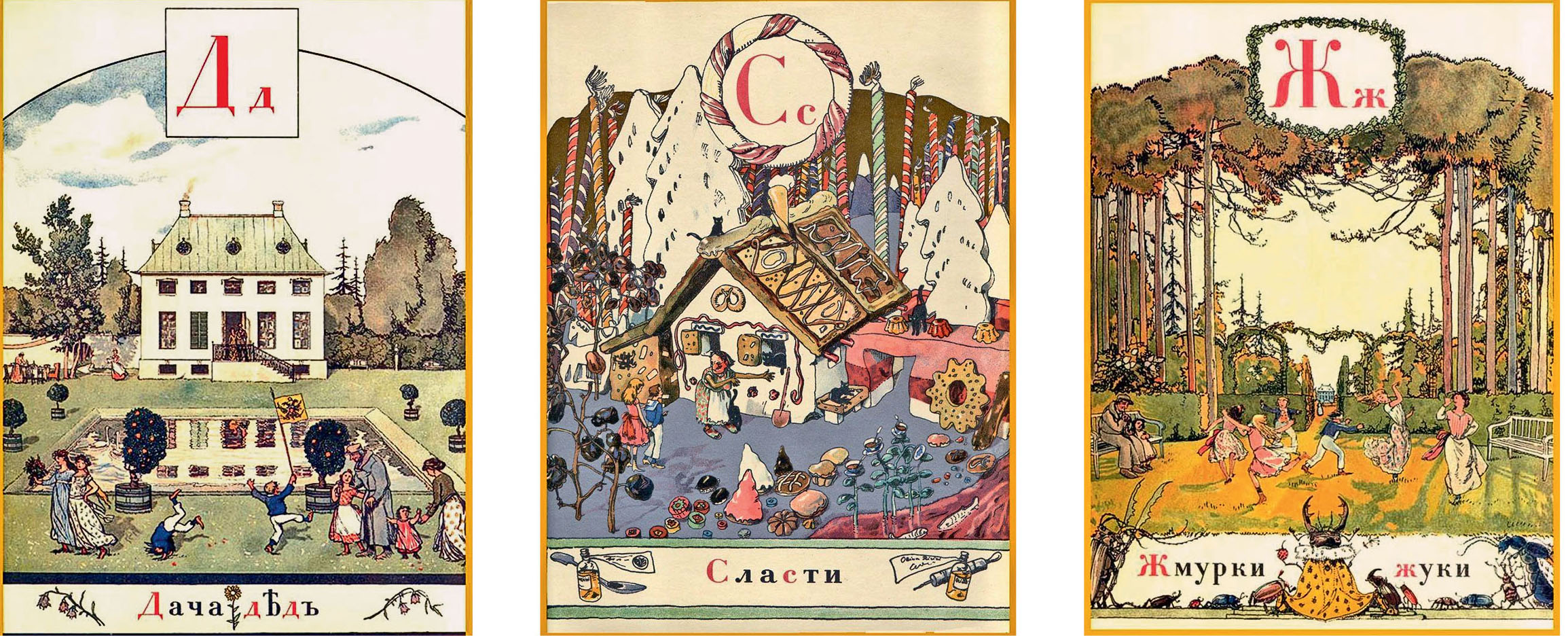
Alexander Benois not only successfully theoretized on the topics of art, but also actively painted. He proudly recalled: “He sold at the exhibition“ Blanc et Noir ”( “ White and Black ” - Fr., III exhibition of drawings, arranged by the Society of Russian Watercolists, St. Petersburg, 1895. - NT), arranged by V.V. Mate, several of my drawings with coal and pastel ... I put on it several pastels on sketches made during our wedding trip, several small sketches and one picture in which I raised a new technical technique - namely: watercolor over a fixed pattern of coal. What was my amazement and my joy, when Seryozha, who rushed right from the exhibition ( Diaghilev. - NT) said that P.M. had just visited there Tretyakov and that he bought my picture, yes, it seems, only from the whole exhibition he considered it worthy to get into his gallery. ” Falling under the influence of Konstantin Somov, Benois draws Versailles parks with walking courtiers. Being a drunken book, creates numerous illustrations for books, starting with the Pushkin’s “Copper Horseman”. By collecting folk toys, writes the article “Toys” for the magazine “Apollo”, issues “ABC in pictures”, developing folklore motifs in it, rises at the beginning of the release of painted mail cards for the charity organization “The Community of St. Eugene”.
The end of the era
In 1921, Alexander Benois decided to reduce an abandoned diary. “Although the moment is not chosen too well,” he admits, “we are again experiencing a terror strip, and just all sorts of notes, often completely innocent, destroy people. But so much interesting around and my soul is so languid that I cannot refuse myself this dangerous concess. ”
Arrests and deaths take place around him, Alexander Blok is dying, Nikolai Gumilyov shoots (“Gumilyov was arrested, and in his room in the house of art is an ambush, which Lozinsky and someone else unknown has already endured (Mikhail). They say that he is accused of belonging to some military organization. It has become a fool”). Two native brothers Alexander Benois - Leonty and Mikhail are arrested, the reason for the arrest was precisely the diaries. Nevertheless, the artist scrupulously records everything that he sees around, continuing to work, releases the Hermitage catalog, paints book illustrations ...
“We again experience a strip of terror, and just all sorts of notes, often completely innocent, destroy people. But so much interesting around and my soul so languidly that I cannot deny myself this dangerous concession. "
In 1926, after his brother Albert, he left the USSR. In Paris, the younger Benoit continued to work for the Diaghilev ballet, participated in opera and ballet stations for the Milan Theater La Scala, where his son Nikolai served as the main director.
The elder brother Albert died in Paris in a happy ignorance that in 1938, his son Nikolai-Carla and her daughter-in-law Seraphim accused of espionage would be arrested and shot in the USSR. And the younger brother Alexander will live for another 30 years and will be buried in the Paris cemetery of Batignol-just a few meters from the grave of his old friend in the “world of art” Leon Bakst, buried here in 1924. The multi -volume memories of Alexander Benois, together with his detailed diaries, is a kind of chronicle of the life of Russian society at a fracture of eras.
In addition to the paintings of both brothers, a large number of archival materials that resurrect the extraordinary page of Russian culture are presented at the exhibition at the CDH.
Photo: Wikipedia, Gallery "Cabinet"