
Translated material
"New York. 1955 "
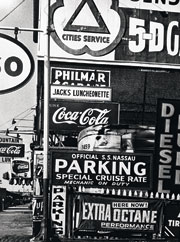 |
In focus - America. Within the framework of the 9th International Photobiennale, several exhibitions related to the United States are taking place in Moscow. The main one is “New York. 1955 »William Klein. The New Times visited her opening in Multimedia Art Museum and listened to a living classic photo 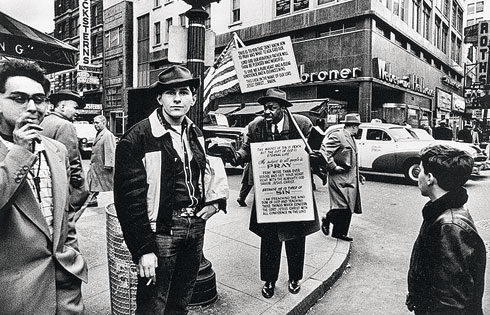
Today, Kleina is for eighty. He takes pictures little, but he likes to travel the world with his exhibitions. I drove to Moscow. At the opening, an American photographer arranged a small performance - gave the girls a rose in exchange for a kiss. Fans of art flown on the kisses of the master like bees on honey. Klein was pleased.
"
At the opening of the Moscow exhibition, Klein arranged a small performance - gave the girls Rosa in exchange for a kiss
"
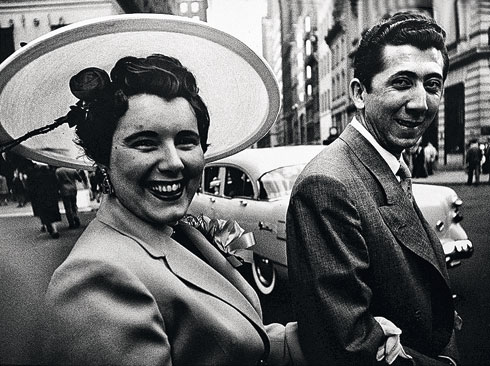
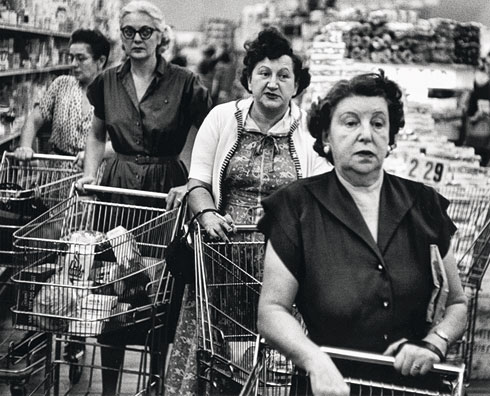
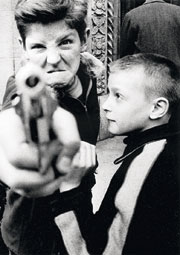
Life is good ... "New York" is the most famous album of the photographer. He starred by Vogue and was supposed to be printed on the pages of a fashion magazine. This session for Klein himself meant returning to his hometown after eight years of absence (before that there were service in the army and study in the workshop of the famous French artist Fernan Leger in Paris - Klein dreamed of not at all a photographer, but an artist). Pictures in America were adopted by bayonets, the editors said that this is not the image of a city that they would like to see. They were confused by the “unprofessional” of the artist - large grain, defocus, documentary sharpness, and shooting with a wide -angle lens of close -ups. As a result, the album was first printed in Paris under the heading "Life is good and good for you in New York." Today, beginners are taught by him, he was awarded the Nadar Prize and was recognized as the greatest photo album since the Second World War. They captured the ordinary street life of New York-often poor, modest, but full of that amazing living energy that distinguishes Americans so far. Explaining the famous photograph, which shows two boys, one of which is aimed from a toy pistol to the camera, Klein said: “I was a child of New York. And I also played with a gun. But you see next to another boy - a sort of angel who is clearly afraid of him Zadir. So I am: half a cool guy, half modest and shy. "
... And luck walks next to William Klein was born into a family of Jewish immigrants - his father had a workshop for tailoring clothes, but he went bankrupt in the year of birth, so that the family lived in poverty. In America, anti-Semitic sentiments were strong then, and Klein fled from these problems in the halls of the New York Museum of Contemporary Art, he entered the college before his peers, but did not manage to finish him-he was drafted into the army. It was then that he first hit Europe, and in 1948, after demobilization, he entered the Sorbonne, where he took up sculpture. Paris became his house and beloved city. Studying in the workshop of the avant -garde Lege, Klein met with the photographer Man Ray, another “Parisian American”, and was carried away not so much by photography as experiments in it. First, he generally used the camera in his work of the sculptor. Then he got his own Rolleiflex, and William took up photographing seriously.
 |
In 1954, the art director of Vogue Alexander Lieberman, who offered Klein, the position of his deputy, saw his work. But he did not want to throw art at all for the sake of a career of a fashion photographer, and he refused. Nevertheless, Lieberman seduced the guy - he desperately needed fresh blood to pour it into a decrepit magazine. “I will give under the breath to this city with my“ watering can, ”Klein Liberman said. The first experiment was the very shooting of New York in 1955, which caused the shock of editors and which was exhibited today in Moscow. Then the years of successful work followed and, as a result, a change in the style of fashionable photography in the world. “For me, there was no scandal in the book New York. I was an artist, and I knew that there were a lot of experiments in painting in the 20th century. And in the photograph there were almost no. There were experiments in Bauhaus, among Russian constructivists. And, strictly speaking, that's it. For me it was not a scandal, but an experiment, ”Klein emphasizes.