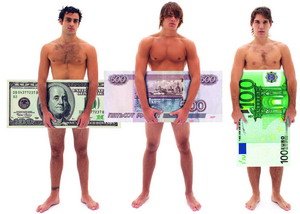
Private Russian believes the Prime Minister, Sberbank, but hesitates between the ruble and the dollar. And sometimes euro stored
Members of the club of regional journalism collect private and domestic manifestations of the crisis throughout the country. The information sent by them is published on the blog of journalist Irina Yasina (see her article on page 18). And if you read this blog, Russia looks like a overheated steam boiler that is not going to explode, but in which the crisis pairs of crisis through the gaps and gaps.
Ringing cities
In Kaliningrad, the work of some enterprises has been suspended. Dismissions began. At the Sniga enterprise, where refrigerators are produced, 180 workers are announced. Many ATMs are limited by the amount that can be removed at a time.
In commercial banks of Chelyabinsk, Magnitogorsk, Miass, Zlatoust, Troitsk, employees were informed that in January a 50 percent reduction in the states is expected. In addition, premiums and bonuses were canceled, which made up 50% of the income of clerks.
In the banks of the city of mine, the sale of currency and the issuance of deposits to the population are frozen.
In Vladivostok, street currency exchange points only buy dollars, euros and yen, but do not sell. In banks, the currency must be ordered in advance.
In the city of Belovo, the Kemerovo region, the issuance of loans has been suspended - so far until November 1.
In Samara, newspapers are fired. The local business weekly “Time” is on the verge of bankruptcy and reduces journalists. Reductions began at the regional representative office of Rossiyskaya Gazeta and the Life newspaper.
In Vladimir, banks refuse to provide consumer loans. A civil servant says that instead of a loan of 30 thousand, the bank agreed to give her only 5 thousand rubles. The Vladimir motor-tractor plant sent all employees on vacation until November 10, preserving 2/3 of earnings.
In Omsk - the lines of the ATMs. In stores of the Pyaterochka chain - half -empty shelves. Sellers explain the deficit not in high demand, but sharply reduced supplies.
In Kamensk-Uralsky in the bank, money is not immediately issued to depositors: they are recorded in the queue in 5 days.
In Tatarstan, it was announced that Tatfondbank was bankrupt. There were huge lines to the ticket offices and ATMs until the Tatarstan government reported that the bank was buying.
In Ulyanovsk, people stood in lines to ATMs in the rain - they rented a salary.
Tulachermet's largest plant, Tulachermet, switched to a four -day working week. At the entrance to the city, roadsides are forced by trucks loaded with new cars. Car dealerships could not pay for delivery.
There are many similar examples. But much more other messages like “everything is calm” or “everything is as usual, only ...”
The exercises go
In Moscow, where there were dismissals, and staff reduction, and bankruptcy, crisis phenomena are still fading against the background of the general picture of well -being. Even retail chain networks have not yet been raided by grandmothers. In Auchan, Pyaterochka, Kopeyka, as the New Times checked, the regiments are bursting, as they were bursting before the crisis. And there is not even any exciting demand for buckwheat and pasta. And even the meat about which rumors went, as if it ended, lies on the shelves in Rabelazian quantities at least ice cream, even paired. And only in the “wine, tobacco, gifts” tobacco and gifts that were adjacent to the “Auchan”, but there were no guilt.
What euro looks like
System hype is observed only in Moscow exchange offices. The young man and the girl are a little over twenty of the Tverskaya, he is from Pushkinskaya, she is from the lighthouse, and, calling on the mobile, informing each other, what exchange rate is the course. They need a currency for a long -planned vacation, which, however, it did not occur to young people to cancel. In small exchange offices, the exchange rate of dollars is prohibitive, approximately a ruble above reasonable. Reasonable course - in banks. The most reasonable one is in Sberbank, and the girl screams into the phone: "I found!"
However, in the exchange point of Sberbank - the queue. About half an hour. Eight people. Basically, the line consists of elderly women. And the grandfather in a rolled cap leans to the checkout and asks: "Can you buy euros from you?" “You can,” Clerk replies. “Only if a large amount, then you need to order.” Grandfather sighs doomedly, moves away from the window and mutters: “A very large amount. I have twenty thousand rubles. "
The neighbors take turns explaining to the old man: “This is a small amount. They (meaning Sberbank) issued 500 billion, they have. ” The old man returns to the cash desk, receives the euro, examines them, clearly seeing for the first time, and asks: "Is this real euro?"
And to the question, why did the euro answer: “Just in case. Some kind of crisis, there is a crisis after all. They will burn rubles. " - “Why then do you transfer rubles to euros, not in dollars? After all, the dollar is growing. ” - “The dollar? -The old man smiles slyly, it seems, pleased that he had unraveled some kind of trick of overseas collapsed. - American dollar. In America, crisis. " Is it not in Europe? At the same time, most people refuse to talk about the crisis in line.