
Translated material
Trajan referendum
Romanian President Trajan Bassescu can be considered a lucky one: he once again escaped resignation, despite all the efforts of the parliament
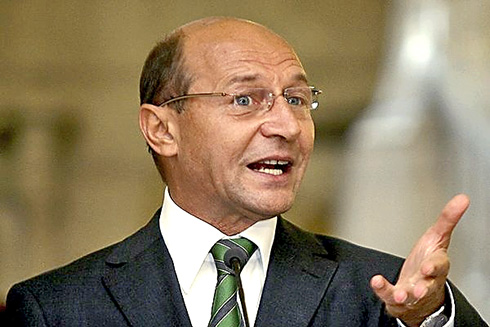
The referendum held on July 29 in the country will most likely be recognized as failed: it is officially announced that only 46.23% of the Romanians came to the urns, while the law of the Yavka-Nyanovka , the main opponent Basesku, Viktor Pontus, immediately said that the opposition was not going to give up, because 87.5% of the voted were expressed for resignation president. And in the story of the turnout, not everything is unambiguous. Even before the referendum, supporters of the rebellious prime minister tried to reform the legislation, canceling the minimum threshold. Their arguments were simple: the electoral lists did not change the last 10 years, the efforts to update ended their failure: the census conducted in 2011 recorded that the population was reduced from 22 to 19 million, but the election lists remained the same. “We still have 18 million voters on paper: here all the dead souls that have left for other European countries and are not registered in any consulate,” Alina Munguu-Pippidi, professor of the Hurti Foundation, explained The New Times, is not even converging in any way. ”
However, the European Union considered that the change in legislation on the eve of voting looks like manipulating the electoral process. The Romanian Constitutional Court agreed with the EU opinion, so the referendum was held according to the old rules. “In reality, about 60% of the Romanians came to the urns,” says Alina Mungiu-Pippidi, “but, unfortunately, 8 million people simply spent time in vain: an incompetent government that failed to update the sheets, and the opposition, with their behavior, intimidated Brussels, did not allow to adapt to local elective features in time.”
The people against the President if the numbers of Alina Mungiu-Pippidi were official, Trajan Basescu could not return to his office in the Palace Kotruly: the nation is one in distrust of its president. This is that in 2007, when a similar referendum was held in the country, 74.48% of the Romanians voted in support of Basescu (the turnout then also amounted to 44.45%).
According to political scientists, Trajan Basesku became another victim of the financial crisis: it was strict savings demanded by Brussels in exchange for the help of the EU and the IMF that led to the fact that the president had lost his popularity. The external duty of Romania is not so great compared to other European countries: only 33.3% of GDP. However, the budget deficit of 10% of GDP, 6% inflation and orientation of the economy to agriculture led to the Romanian government have nothing to pay salaries. As a result, in order to get € 20 billion loan, Bucharest had to reduce the salaries of officials by 25%, 15%pensions, raise VAT from 19%to 24%, and also dismiss more than 200 thousand civil servants. “The Romanians are very passive,” says Alina Mungiu-Pippidi, “they did not defeat Bucharest as the Greeks of Athena, but at this referendum they made it clear to understand how they relate to government policy.”
However, the matter is not only in the crisis. According to the sources of The New Times in Bucharest, the figure of Basescu has long become odious among the Romanian political elites. The main motive for the vote of distrust was the president’s reluctance to discuss measures to save either the opposition or the parliament at all, which allowed him to accuse him of "abuse of powers and the usurpation of power." “Bassescu does not know how to negotiate, he is perceived by everyone as a person of the conflict,” Alina Mungiu-Pippidi explains, “society understands the need for economic reforms, but no one was ready for the fact that people would act so hard.”
Deprived of the support of elites and popularity among the people Trajan Basescu based on EU colleagues. “This is his only group of support,” I am sure Mungiu-Pippidi, “Brussels was frightened by Viktor Pont’s warlike rhetoric, they don’t need the same problems as in neighboring Hungary, so they are ready to support an unpopular, but familiar leader to sit until 2014.”
Do not believe the premieres realizing that the jokes are bad with Europe, Victor Pontus decided to show that it was not worth being afraid of him. Almost immediately after the announcement of the voting results, he told the Western press that despite the fact that the referendum showed the president’s weakness, he is ready to extract the necessary lesson and will try to avoid open confrontation. “If necessary, we will dance tango together,” the prime minister told reporters.
The fact that the Romanian leaders will manage to dance together, experts do not believe: the country that has just survived the referendum should prepare for the November elections to parliament. “It is almost possible with one hundred percent confidence that the Social Democratic Party will win the elections, led by Victor Pont, which means that another impeachment needs to be expected,” says Alina Mungiu-Pippidi, “so I think political stability has not yet shine. It’s just a pity that our politicians, passionate about the struggle for power, have forgotten about the economic crisis and other problems that are much more urgent for ordinary Romanians. ”