
Translated material
The city of the dead
How the worst camp of destruction in the history of mankind was created
Seventy years ago, on January 27, 1945, the Nazi concentration camp Auschwitz, who was considered one of the worst death factories in the history of mankind, was liberated by Soviet troops
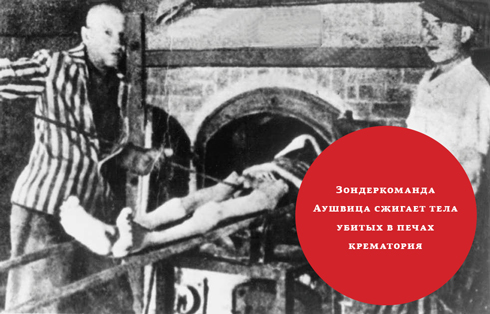
We are used to calling it Auschwitz. This word is familiar from school lessons and terrible films about the war. The whole world calls it the barking German word Aushwitz. He calls not a sweet Polish town, but exactly the place where the concentration camp was. The creators of Hell History of Aushwitz have his own intrigue. He was thinking like a camp for political prisoners. The author of the idea is one of the people closest to Himmler, the SS Groupenfuhrer Erich Bach-Zelevski * * during the Great Patriotic War led punitive operations against Belarusian partisans, then the suppression of the Polish uprising in Warsaw in 1944. Ironically, already in the late 50s, he went out of imprisonment. - He proposed to create such a camp in Poland shortly after the outbreak of World War II. His subordinate, Oberführer SS Vigand at the end of 1939, found a place near Auschwitz. There were already military barracks, which could well be remade under the huts. An important argument for choosing the place of the future camp was the developed railway system. On February 1, 1940, the SS Reichsfuhrer Henry Himmler was an order, where Auschwitz was already appearing in the list of real and future political camps under the name Aushwitz. For the construction of the camp and its branches, a territory of 40 square kilometers was allocated. It was not necessary to look for a long time to search for a long time - 300 Jews from the town of Auschwitz were driven out for a long time. So, in fact, Jews first appeared in Aushwitz. Aushwitz performed two functions: a concentration camp for people of different nationalities and a place of destruction. The number of his prisoners was constantly growing. In March 1942, a female camp appeared. In February 1943-Gypsy. By January 1944, about 81 thousand prisoners were in Aushwitz. In July - more than 92 thousand in August - over 145 thousand.
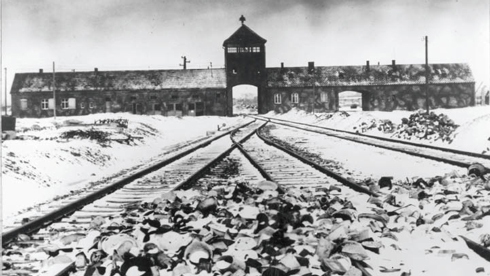
The concentration camps in Aushwitz and Birkenu possessed a developed railway system, which allowed several thousand prisoners to deliver here the guards on May 4, 1940, Aushwitz became a new (after Sachsenhausen) place of work of his commandant Rudolf Göss, a real professional of his very specific business. (This will be fully appreciated by the Polish court. According to his sentence, on April 16, 1947, Gösses will be hanged on the site of the gas chamber in Aushwitz.) With the first echelon of profit prisoners and the first 100 security guards. In total, Auschwitz guarded about 6,000 SSsovites. Their questionnaire data has been preserved. Three quarters had a full secondary education. 5 % - graduates of universities with a degree. Almost 4/5 designated themselves as believers: 42.4 % - Catholics, 36.5 % - Protestants. After the war ended, 778 (less than 15 %) executioners and guards appeared before the court. Some famous executioners, such as Dr. Mengele, who performed experiments on living people, disappeared without a trace.
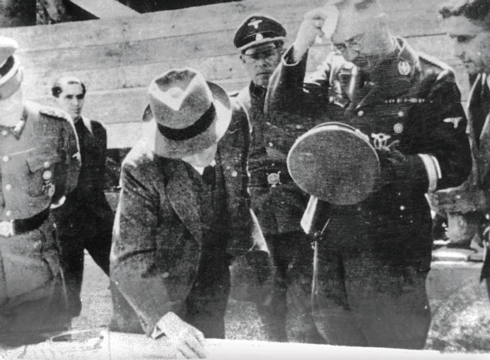
The Reichsfuhrer SS Heinrich Gimmler (on the right) inspects the concentration camp in Aushwitz, July 1942, the Polish period of the “death factory” Auschwitz became immediately. The first period of its functioning (until mid -1942) historians call “Polish”. At that moment, most prisoners were really Poles. Some were sent here from the prisons of the Gestapo and other concentration camps for death sentences. The Poles massively fell into Aushwitz and later. So, only 2 months after the defeat of the Warsaw uprising of 1944, 13 thousand people were sent here. And in total, about 150 thousand Poles passed through this camp. In March of the 41st, Himmler first arrived in the camp. In his retinue were the leaders of the IS Farbenindastr concern. The result of the visit was the following instructions to Göss: 1) expand the camp for receiving 30 thousand prisoners; 2) to allocate 10 thousand prisoners for chemical production on its territory; 3) Prepare a prisoner of war camp on the territory of Birkenu. The last instruction was directly related to the plan of Barbarossa - the preparation of an attack on the USSR. In October 1941, the number of Soviet prisoners of war in Auschwitz was 10 thousand people-almost half of all prisoners. Prisoners of war were taken daily for construction work on foot. Three kilometers one way, three in the other. After exhausting labor, no more than 2 thousand out of 15 thousand Soviet soldiers and officers who were in the camp for all the years of its existence survived. It was on the Soviet prisoners of war that a new way of destruction was tested-Cyclone-B gas poisoning.

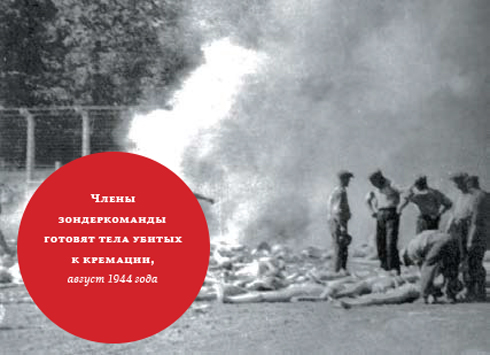
The Holocaust symbol this methodology of destruction was very interested in Himmler. In the summer of 1942, he arrived in Auschwitz secondly. On his assignment, a new plan for the development of the camp was prepared, designed for 300 thousand prisoners and included a special department for the mass destruction of Jews. According to this plan, in March-July 1943, 4 crematoriums with gas chambers were built in Birkenau. Inside, 4 mini camps were created, which by May 1944 were connected by railway tracks. One of them in camp jargon was called "Mexico City" - arriving arrived immediately to gas chambers, disguised as showers. The second stage in the history of Aushwitz is called "Jewish." It is associated with the Vanzei Conference, held in a suburbs of Berlin on Lake Vanzei on January 20, 1942. The protocol was conducted by the then little -known Obersturmbanfuhrer SS Adolf Eichmann, the head of the “Jewish department” as part of the RSHA. The main and actually the only speaker was Reinhard Heydrich, the head of the Main Directorate of Imperial Security. The following phrase of Heydrich was directed: “In the process of final practical resolution of the issue, Europe should be combed from west to east.” Even at a meeting of “dedicated”, one of the main leaders of the SS used hints and euphemisms, nowhere to mention the destruction of the Jews of Europe. The text of the protocol leaves no doubt that the term “final decision” implied this particular. Prior to this, Jews (primarily in the occupied territory of the USSR) were shot on the spot. In the zone under the control of the civil administration, the Nazis created hundreds of ghetto. After the Vanzey Conference, the Jews of European states began to be collected in transit camps, and then send destruction to camps. Aushwitz was one of the six death camps in Poland. But only it was intended to destroy Jews from all over Europe. In the Maidanek, Sobibor, Treblink and Belzha, they were destroyed mainly by Polish Jews living in the so-called Governor General * * Administrative-territorial education in the territory of Nazi Germany Polish occupied in 1939. . In Helmno - Jews from Western Poland, annexed to the Reich. At least 900 thousand Jews died in Aushwitz. Among the prisoners and victims of Auschwitz were also gypsies, residents of Belarus (mainly women and children), participants in the resistance movement.
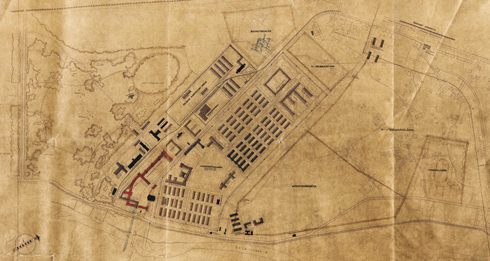
The plan to expand the Auschwitz-1 camp (April 30, 1942), presented at the exhibition “Architecture of Death: Auschwitz (Auschwitz) drawings” at the Moscow Jewish Museum and Center for Tolerance, resistance in Auschwitz also existed the resistance movement. In the first years, it was mainly involved in Polish political prisoners. Later, prisoners of other nationalities joined the resistance, mainly Jews. Attempts of flight were most often made not from the camp itself, but during work outside its territory. Few managed to run. For each escape, hostages were shot. In total, at least 802 shoots are known. Of the fled (including women) 396 were Poles, 179 - citizens of the USSR, 115 - Jews, as well as gypsies, Czechs, Austrians, Yugoslavs. On October 7, 1944, Jews from the Birkenau Sonderkomanda set fire to one of the crematoriums and attacked the SS soldiers. They managed to cut out the barbed wire and make an attempt to escape (more about this uprising - on page 54). During the uprising, about 250 Jews died, including Zalman Gradovsky * * Notes of a member of the Sonderkommandy Zalman Gradovsky were discovered at the end of the war in ash near the crematorium where he worked. In 2010, Gradovsky’s book “In the Hell of Hell” was first published in Russian at the Gamma Press publishing house. . The SS lost three people killed, many were injured. After the uprising, the murder of prisoners with gas was discontinued. The liberation in the second half of January 1945, the Nazis evacuated 58 thousand prisoners from Aushwitz. The Sesovsky guards of the camp destroyed more than 700 prisoners literally on the eve of liberation. The remaining 7 thousand weak and sick prisoners * * among the liberated - the famous Polish sculptor and artist Dunikovsky, director of the children's clinic in Prague Professor Epstein, members of the National Academy of Sciences from France and Hungary. Miraculously survived Otto Frank, the father of Anna, the author of the famous diary, - Soviet doctors also saved him. The 100th Lviv Cavalry Division under the command of Major General Fedor Krasavin was released. Four divisions of the 1st Ukrainian Front participated in the liberation of the camp and its branches. 231 Soviet soldier and officer died in these battles.
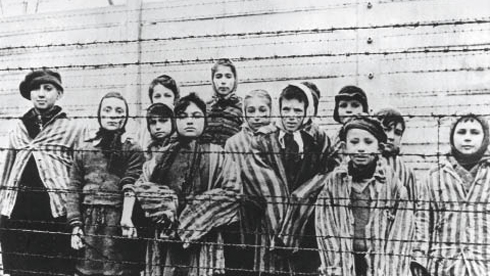
Camp children photographed immediately after the liberation of Aushwitz by the Red Army, January 1945 reports about the Auschwitz death camp in the Soviet press in early February 1945. The official statement of the ChGK dated May 8, 1945 spoke about 4 million victims of 27 states * * The exact number of prisoners who died in Auschwitz was established, since many documents were destroyed. French historian Georges Weller estimated the number of killed in a camp of 1,613,000 people. Rudolf Göss in the Nuremberg process called a figure of 2.5 million people. . It was practically not mentioned about the Jews. The author is the co -chair of the Holocaust Center, a professor at the RSUSU, candidate of historical sciences. Photo: DPA/Picture-alliance/DPA/AP IMAGES, Stanislav Mukha/Ap Photo, from the archives of Yad Vashem (Jerusalem, Israel), from the archives of the Aushvitz-Birkenau museum, CAF PAP/AP Photo Photo
The concentration camp structure of the Auschwitz camp contained about 40 different objects. Aushwitz-1 is the main camp and the residence of the main commandant. The maximum number of prisoners was 15-18 thousand people. Aushvitz-2 was created a few kilometers from the main camp, on the site of a small village of Brzezinka (in German-Birkenu). There were much more prisoners (at times up to 100 thousand), the conditions of detention are much worse, the mortality rate is noticeably higher. In the spring and summer of 1944, 3-4 trains arrived in Aushvitz-Birkenau daily, which brought 3-3.5 thousand people. About a tenth was selected for "work", the rest were sent to gas chambers. Aushvitz-3 consisted of the main camp in Monovica (the chemical enterprise of the IG Farben concern) and 39 smaller branches. The number of prisoners reached in the fall of 1944 more than 30 thousand people.