
Translated material
We will answer America by self -arrival
New sanctions against Russia were more destructive than all previous ones. And the counter -sanctions discussed enhance the damage from sanctions, leading to mass reductions in the production and shortage of drugs
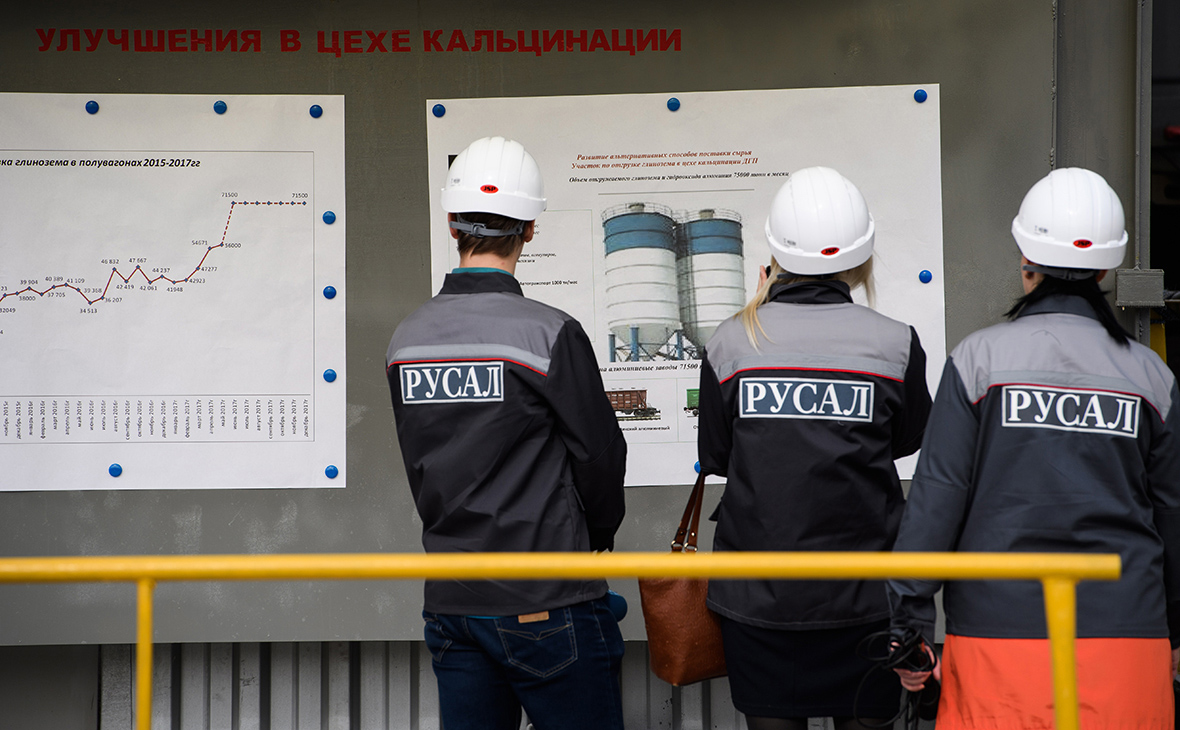
Photo: News-factor.ru
For almost four years of life under sanctions, Russian politicians began to think that sanctions are not scary and almost not painful. Russian borrowers began to get used to the limited access to the debt market, and government officials - to the fact that it is unsafe to keep a lot of money in Western banks, and you should not rest there at all. Oil and gas companies postponed shelf projects that demanded international cooperation, the military -industrial complex began to engage in import substitution, like a food: it doesn’t work out and work well, but his own. You can live.
You can also live under new sanctions . But they marginalize the entire Russian business. Now, the entire 30-year trend for embedding in global economic cooperation, into world production chains. Not wanting to change politics, not going to leave Crimea, Donbass and Syria, Russia will be forced to change its economy.
Aluminum shock
The introduction of Rusal to the sanctions list prohibiting deliveries to the United States has become a shock. The company is the second aluminum manufacturer in the world that occupies a 6% global market (if we subtract Chinese suppliers, Rusal accounts for 12.9% of the world's export). The sanctions came into effect immediately. Manufacturers of aircraft, cars, electronics, etc. rushed to look for other suppliers, the price of metal per week flew by 12%, to the maximum over 6 years. Aluminum has not been such a sharp increase in price since the launch of the London Metal Exchange exchange in 1987. But the market will survive the removal of even such a large player - analysts do not expect a serious aluminum deficit.
American investors are now forbidden to keep any Rusal papers. By the end of last week, shares of its main competitors increased by 8-14%, and Rusal fell in price almost three times, by 62.8%, its Eurobonds, according to Bloomberg, are now about 30%of the nominal price. However, even at such a price, investment battles cannot sell Bonds: the largest clearing houses, EuroClear and Clearstream, they stopped conducting operations with them. Who needs these papers if American investors should get rid of them in a month, until May 7, and they own the Eurobonds of Rusal by $ 1.6 billion (the company's debt is $ 8.5 billion)? The debt abroad refinancing Rusal can generally forget. Yes, and investors outside the United States may encounter sanctions if they deal with the company who has fallen into disgrace.
The company itself, and its Russian shareholders, and the Western owners of its securities were burnt. And Rusal demonstrates how fast and effective sanctions can be, how quickly the United States can destroy the business of a company operating in world markets
This is the nature of sanctions: they cannot be constructed so that only “strangers” suffer, but their own are happy. The company itself, and its Russian shareholders, and the Western owners of its securities, burned on the Rusal. And at the Rusal it has been demonstrated how fast and effective sanctions can be, how quickly the United States can destroy the business company operating in world markets. The company immediately announced that it could allow default on its debts.
It was quite difficult to predict such a direction of sanctions: back in January 2018, Rusal calmly placed $ 500 million abroad. An American Ministry of Finance against the company is unprecedented, quoted by Bloomberg as a lawyer Adam Smith from Gibson Dunn: never before the sanctions were imposed on a foreign company with such an amount of operations on Western markets. Sanctions against Rusal are similar to Iranian, but such measures were not previously introduced against individual companies, another lawyer, John Whittaker from Clyde & Co. Obviously, this round of sanctions should show Russia that the jokes are over: now the blows will be painful.
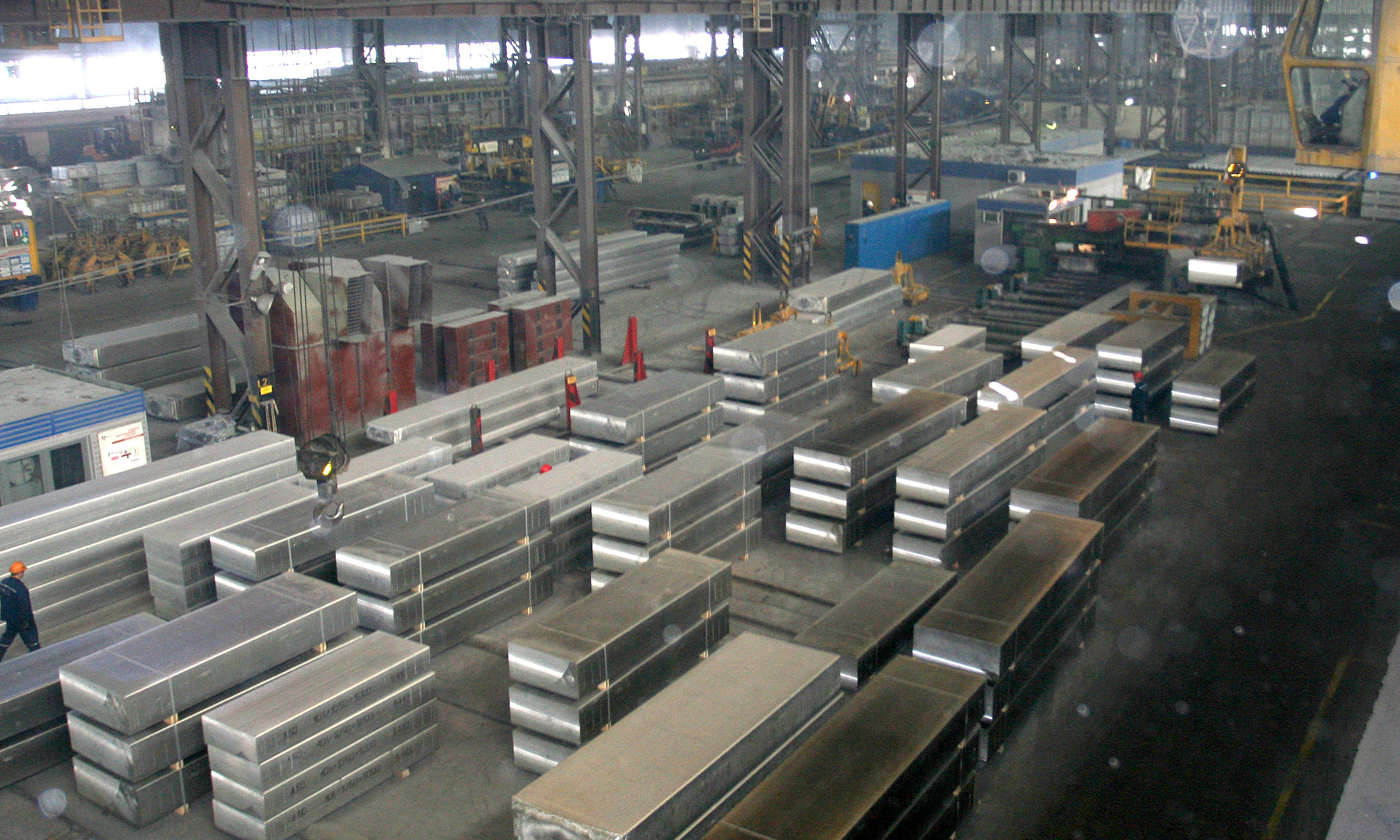
Plant "Rusal Sayanogorsk" Photo: Adi19.ru
However, with Rusal, not the worst thing happened that could happen even with a separate company. Although some aluminum trading houses stopped buying a metal from Rusal, the majority continues to do this, the main exchange is available for the company - LME.
Of the large Russian companies, not only Rusal suffered. The bonds of the gold mining and belonging to the son of Suleiman Kerimov Polyus group also fell in price and are traded for 85% of the face value, although the company itself, unlike Rusal, did not get into the sanctions list (but Kerimov itself).
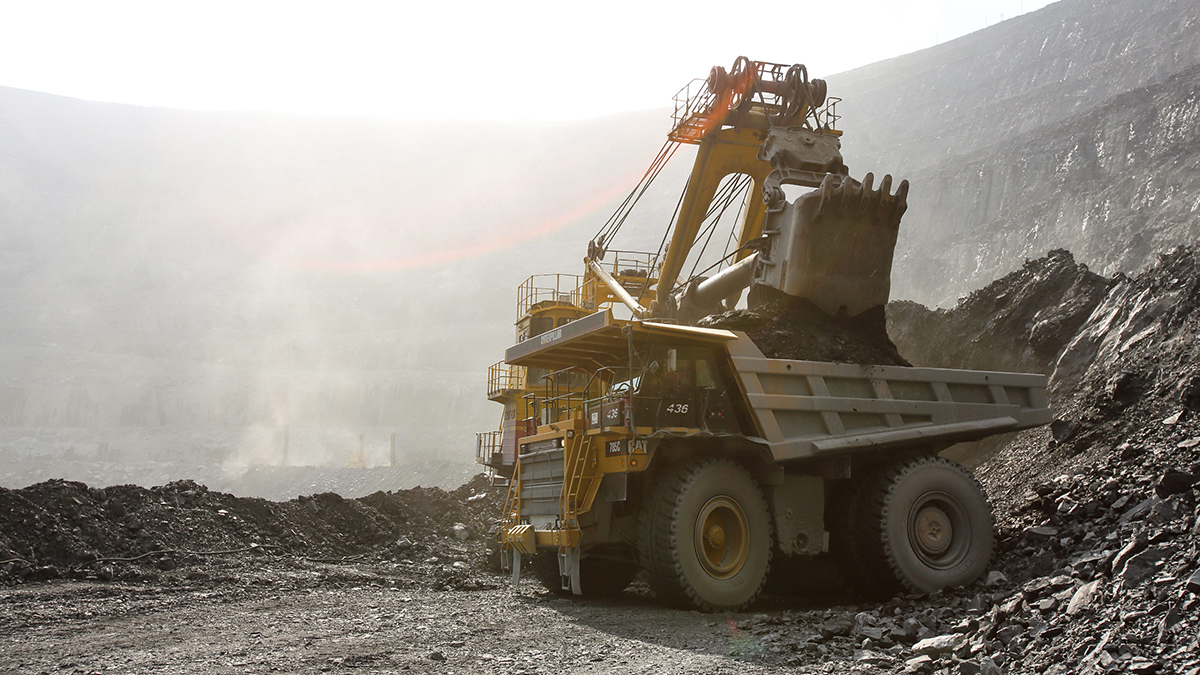
Olympics mine is the largest enterprise of the Pole group photo: Polyusgold.com
Sovereign finances
One of the possible measures that investors are most afraid of is the ban on operations with Russian duty. However, after the corresponding bill was submitted to the Congress, the head of the American Ministry of Finance Stephen Mnuchin said that nothing threatens Russian duty yet.
The sanctions blow is strong enough, but on 2014, when the Russian market and ruble were in a state of free fall, this is not comparable. Oil at the news from the Middle East is getting more expensive, and the fundamental indicators of the Russian economy are not bad. If Russia does not enter into direct military confrontation in Syria with the United States, we will not see the collapse, as in 2014.
The initial panic lowered the ruble exchange rate from 57.8 to 64.88 for $ 1, but then the ruble began to recover and played almost half the losses.
The company "VSMPO-Avisma", a Russian monopolist in the production of titanium, exporting 70% of its products, has already warned that the ban on export in the United States could lead to mass layouts. More than 20 thousand employees in the Urals work for the corporation
All these are short -term changes, not fraught with large complications. In a few days, the situation in the domestic public debt market is also normalized, for about 1/3 belonging to non -residents: this week the Russian Ministry of Finance will return to OFZ auctions. At the past, the yield of 10-year-old bonds increased from 7% to 7.6%, but quickly began to decline again.
The further depends on politics: if, with its actions in Syria or anywhere else, Russia will give an occasion to new sanctions, they will not slow down to wait. Like market reaction.
On Saturday evening, the White House said that the reason for new sanctions may be Russia's support for Assad regime in Syria. The next reason for sanctions will probably be a violation of the Convention on the Prohibition of Chemical Weapons: London will not allow the Skripal case on the brakes. The preparation of new sanctions recently announced the future US Secretary of State Mike Pompeo.
Counter -Sanctions and Estabos
The discussion in Russia of the response steps to American sanctions clearly shows that the authorities do not intend to change its behavior. The State Duma is going to provide the President and the government with a very wide selection of goods and services to restrict imports: agricultural products, alcohol and tobacco, medicines. The deputies threatened with a ban on the export of titanium (used in rocket science and aircraft industry) and uranium (the American nuclear power plant is needed) - the latest measures are akin to an auto -shot. The list also includes an increase in tariffs for servicing American aircraft, restricting the admission of American companies to purchase technological equipment and software by the state and state -owned companies, a ban on attracting specialists from the United States to the work in Russia, and the resolution of “parallel imports” if the owner of the trademark does not supply the relevant goods to Russia.
The food trade of the United States and Russia (including alcohol and tobacco) is not too extensive. In 2017, it amounted, according to the Ministry of Economic Development, $ 464 million - 3.7% of the US exports to Russia. In general, Russia has very few opportunities to “hit the USA”: our share in American foreign trade is 0.6%, while the US share in our foreign trade is 6%. Russia exports about $ 17 billion in the United States, and imports less than $ 13 billion.
The dependence of the Boeing and the US missile industry on the supply of titanium, and the American nuclear power plant on the import of Russian uranium (TechsnabExport, which is part of Rosatom, provides about 20% of needs) is one of the few examples when a retaliatory measure can be painful for the United States. Boeing purchases 35% of the titanium necessary for VSMPO. The ban on Energomash would also be sensitive to supply missile engines to the orbit of American military and civilian satellites.
However, in its own measure, this measure beats more than in strangers, since export income in the best market is lost. The company "VSMPO-Avisma", a Russian monopolist in the production of titanium, exporting 70% of its products (the company's blockpack owns Rostec), has already warned that the ban on exports in the United States can lead to mass dismissals (more than 20 thousand employees in the Urals work for the corporation). The ban on cooperation in aircraft industry will also hit the project of the Russian SSJ-100 aircraft: it has many American details.
The idea of creating a home offshore on the Russian islands in the Far East and Oktyabrsky in Kaliningrad is also being discussed. In the 1990s, offshore territories were in the Kaliningrad region, Kalmykia, Mordovia, Baikonur, etc. All of them were covered due to use for tax
Of the possible import restrictions, the most dangerous concerns drugs. Medications imported from the United States ($ 559 million in 2017) - according to RBC calculations, this is about 10% of the Russian drug market. They are used, including in the treatment of rare and serious diseases (the deputy chairman of the State Duma, Peter Tolstoy, advised to replace these medicines with a bark of oak and a decoction of hawthorn). About 45% of American drugs supplied to Russia, according to DSM Group, have no analogues. But the rest of the American drugs can affect.
Without exception, all discussed counter -sanctions only increase damage from American sanctions for the Russian economy. But it is good that so far we are not talking about the confiscation of Russian plants Procter & Gamble, Pepsico, Mars and Coca-Cola, the closure of Russian McDonald's and a ban on the sale of Apple in Russia.
The Rusal (and, if necessary - EN+) will probably receive a rumor (in refinancing debt at preferential rates through state guarantees of state -owned banks, FNB operations, repo operations). The most meaningless of the possible measures of support for the Rusal is the creation of a strategic state reserve of aluminum (in the absence of its shortage in the world market).
The idea of creating a home offshore on the Russian islands in the Far East and Oktyabrsky in Kaliningrad is also being discussed. Since confrontation with the West and “cutting” itself from the global economy is in full, then offshores are needed. There is such experience: in the 1990s, offshore territories were in the Kaliningrad region, Kalmykia, Mordovia, Baikonur, etc. All of them were covered due to use for tax evasion. For nothing more, internal offshores are not needed, because the legal system in them is not British, but Russian.
The centuries-old attempt by Russia to integrate into Europe did not bring anything good, the assistant to the president, the ideologist Vladislav Surkov , predicting the country of the century of geopolitical loneliness, who may turn out to be “the vegetable loneliness of the leader who went into the separation of alpha nation” regrets. Surkov, of course, dreams of the second option, but only the first seems real. The logic of the expansion of sanctions pushes to him with all distinctness.
Like modern Russia, in the 1950s, Spain, led by General Franco, adhered to mercantilist policy: why spend precious currency on food imports? The result of such a policy was the long years of economic stagnation and the lag of Spain from neighbors in Europe (by the beginning of the 1950s, its per capita GDP was 40% of the average in Western Europe). In order for the world to see the Spanish economic miracle (in 1959-1974, Spain was the second in the world in terms of economic growth after Japan), the world had to again open the economy.