
Translated material
The most dangerous murder
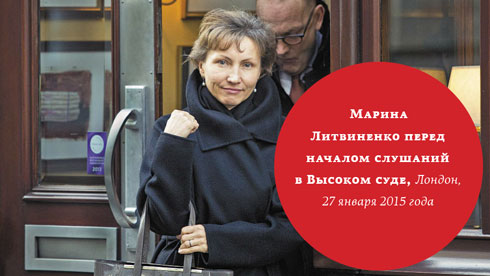
The act of nuclear terrorism - this is how the murder of Alexander Litvinenko qualified the participants of the public inquiry in the sensational case* that opened in the capital of Great Britain* . The New Times correspondent transmits a public inquiry from London in the Litvinenko case opened on January 27 and will last until March 31. This is not a court, although an experienced judge is led by the inquiry, in this case - Sir Robert Owen. An inquiry cannot bear the indictment and sentenced the accused to punish. But it can-and should establish the main facts and, first of all, to find out how much significant evidence is that it was the Russian state power that planned and carried out the poisoning of Alexander Litvinenko with a rare and extremely expensive nuclear isotope-Polo-210. In fact, in the first place, this is dictated by a tremendous interest in what is happening now in the high court of London. In the first, but - not the only one.
Curiosity for hearings is heated and an obvious change in the position of official London. Last year, the so -called coroner inquiry came to a standstill
* * The standard procedure designed to find out the circumstances of the death, if its causes were not immediately established. It is carried out separately from a police investigation. -Due to the fact that the British government refused to declassify critical evidence obtained by reconnaissance. By the way, at first the Minister of Internal Affairs Teresa May refused to conduct a public inquiry. However, later, under the pressure of public opinion and as a result of the relentless efforts of the widow of the FSB lieutenant colonel Marina Litvinenko, the official London went to meet her. It was decided that some sessions of the inquiry will be held closed, and the classified witnesses will perform under pseudonyms.
By the way, the hearings may also come up with details regarding the alleged cooperation of Alexander Litvinenko with the British intelligence services. As part of the usual investigation, it was impossible to talk on this subject. But now, during the public inquiry, the judge can consider all the facts. This will happen, most likely, at closed meetings. However, Judge Owen warned, he can decide and publicize some information - especially if there are serious reasons to suspect that the kingdom’s special services had the opportunity to prevent murder, but missed this chance.
On the eve of the hearing, the British press reported: the most important and, as approved, incontrovertible evidence of the guilt of Russia was received by the US National Security Agency (ANB) - the Americans intercepted telephone conversations of persons allegedly involved in the commission of the crime (they cannot be used in the criminal court).
In addition, The Daily Telegraph has published an audio recordings made shortly before the death of Alexander Litvinenko himself. He reports that he transferred Mitrokhin's commission
* This is the name of the Italian parliament commission, which investigated the activities of the Soviet special services in the country during the Cold War. The commission, in particular, was engaged in the study of secret documents exported in 1990 from the USSR by the former major of the 1st Main Directorate (Intelligence) of the KGB of the USSR Vasily Mitrokhin-hence its name. Among the persons who testified the commission was Alexander Litvinenko. Data on an important agent of Russian special services in Italy related to al-Qaeda (the name of the agent is carefully “attacked”). At the same time, Litvinenko argued that in revenge for this, the Russian authorities began to seek the issuance of his brother Maxim from Italy. But the most unexpected statement that sounds in this posthumous record is about the tight (literally: “very good”) connections of Vladimir Putin with the “godfather”, as he is called the East European mafia, Semen Mogilevich, which, as Litvinenko said, has been supported since 1993-94. He also said that Mogilevich sold al-Qaeda weapons.
Riddles and guesses lawyer Ben Emerson, representing the interests of Marina Litvinenko, already stated in court: Alexander said his role in the investigation of the activities of Russian organized crime in Spain - Alexander said that he knew about Putin’s connections with these groups. Here, for example, an excerpt from Emerson’s speech: “Vladimir Putin should be exposed by this inquiry as an ordinary criminal who impersonates the head of state ... A striking truth that will be disclosed during these hearings is that a significant part of Russian organized crime is organized directly from the Kremlin cabinets. Russia Vladimir Putin is a mafia state. ”
All these statements, of course, require the most serious verification and may well be the result of the offense of the former employee of the organized crime department of the FSB Litvinenko, against whom in Russia in the late 1990s a criminal case was opened, which was arrested and put in Lefortovo and who later fled the country in secrets. But then a logical question arises by itself: if we are just about the fantasies of the exile, offended by the authorities, albeit the former Lieutenant Colonel of the FSB, then why was it to kill him, and even in such a nightmare, risking the life and safety of thousands of Londoners and the international reputation of the country?
From the point of view of many, the very fact of such a reprisal suggests that in the words of Litvinenko there is at least a share of dangerous truth. His tragic and terrible death (he died in monstrous agony for almost three weeks) gave his accusations a special weight.
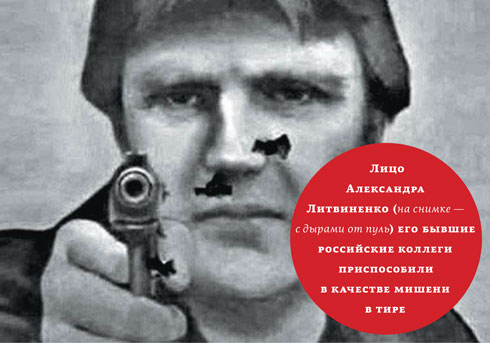
There is, of course, such an explanation: the murder of Litvinenko was an act of revenge for betrayal by former FSB colleagues (and that Litvinenko worked at least after leaving Russia for the Western special services, and he himself did not hide it): it is known that the KGB of scouts, under various prepositions, reticted to Moscow, after which they went to military Tribunal and execution. If the traitor refused to return, then he was often taken out in the new homeland - no matter how closely he was guarded by local special services. However, the Soviet government came in a similar way with opponents - so in the same London in 1978 the Bulgarian dissident Georgy Markov was killed (the operation, by the way, was prepared by the current ardent critic of the KGB -FSB, now devoid of general shoulder straps, Oleg Kalugin). So, when a public inquiry in the Litvinenko case began, many British newspapers published a photograph from a service shooting range in which Russian special services train. In the photo - Litvinenko's face with holes from bullets. Such was the target ...
One explanation, however, does not exclude another. It is clear that Litvinenko had to cause anger in power corridors. Participants in the hearings said: the power system in Russia is such that all important decisions are made only by one person who is actually at the head of the tough “vertical”. (By the way, in the USSR, the decision on liquidation was made by the first persons of the state, the KGB historians say, including from among retired Soviet political police officers.) To imagine that such an act, fraught with colossal international complications, could become the result of an amateur performances of some special services units without approval from the very top, said in the Supreme Court of London. But even if you imagine this - where is then the severe punishment, which, throughout the logic, should those who substantiated the President of Russia so much?
“A1”, the cook and others on January 28, on the second day of the hearing, a classified witness, a highly qualified expert in the field of impact of radiation on living organisms, known under the A1 pseudonym, answered the questions of the judge. She said that she was instructed to examine the areas in London, where the traces of Polonia could be. They were found at the Sheraton Hotel, where Andrei Lugovoi, now a deputy of the State Duma, lived from October 25 to 28, 2006. (Lugovoi himself, when a public inquiry began, suggested conducting an investigation directly in Moscow.) Alpha radiation traces were also found on a cup from which Litvinenko drank, and on the kettle from which tea was poured. “A1” showed the judge thermal cards on which these traces are clearly visible. She confirmed that the dose of Polonium-210 in one millionth share of the gram is considered a deadly. Litvinenko received many times more, it was impossible to save him, even if the diagnosis were made immediately. The judge, of course, was interested in: was it possible to determine the origin of Polonia by analysis. “It was impossible,” the expert answered, “a super -cleaned isotope was used.” It is clear that the owners of high technologies that have gained experience in the production of such substances made such an isotope - they are in Russia.
Pathologists who made autopsy also testified. They stated that the autopsy conducted was probably the most dangerous in history: I had to dress in two layers of protective costumes, put on special sealed gloves and masks through which clean air passed. With the help of special devices, they checked whether any, even microscopic blood drops for clothes came. An ambulance team was on duty at the operation, in extreme cases, to try to save pathologists if they still receive radioactive infection. They buried Alexander Litvinenko in the lead coffin.
It became clear with delay how greatly the doctors and nurses were at the college of the University of London, where Litvinenko was hospitalized (at first with suspected oncological disease). Also, however, as well as employees of the Millennium Hotel, where in the presence of Kovtun and Lugovoi, Litvinenko drank green tea poisoned with polonium.
At the trial, the new testimony of a certain cook, which is allegedly addressed shortly before the crime, Dmitry Kovtun, was announced - it is assumed that he worked in tandem with Lugov - with a proposal to put Litvinenko poison. The cook was not said about what kind of poison was in question, but he still refused ...
The reaction of the authorities of the United Kingdom to a super -fierce murder on its territory eight years ago was surprisingly indecisive: then four diplomats suspected of espionage were sent from Britain. In response, Russia sent the same amount, wrapped in. The British authorities calmed down on this. What was considered in Moscow a sign of weakness and unwillingness of London to seriously quarrel with an important partner. And then the Russian authorities get a strong rebuff, British newspapers write, maybe there would be no war with Georgia, nor the annexation of Crimea, nor the war in the east of Ukraine.
If the current inquiry in Britain will convincingly and unequivocally prove the guilt of Russia, this cannot but have serious consequences for the two countries - up to the complete breakdown of diplomatic relations. British public opinion will insist on the strict reaction of official London. It will not forgive him another option for behavior.
The ex-lieutenant colonel of the FSB, Alexander Litvinenko, died of poisoning with radioactive polonium on November 23, 2006, the perpetrators of his death could not be legally established. An investigation conducted by the anti-terrorist unit of Scotland Yard (as many are sure of the assistance of the MI-5 and MI-6 special services) did not give results: the two main suspects-Andrei Lugovoi and Dmitry Kovtun were hidden in Russia. At the same time, Moscow not only refuses to ensure their appearance in court, but also does not make any efforts to conduct an objective investigation.
Photo: Thetimes.co.uk, Jack Taylor/AFP * behind the “Litvinenko case” The New Times Out of his first number - see “Who killed Litvinenko” , No. 1 dated 02/12/2007.