
Translated material
The future of our past
Konstantin Zatulin, Sergey Markov and Nikolai Svanidze - about the fight against "falsifications" of history
On May 15, a decree of the President of the Russian Federation Dmitry Medvedev created a commission to counteract attempts to falsify history to the detriment of the interests of Russia. The New Times learned from members of the commission and professional historians how they see the future of our past
1. How do you represent the practical activity of the commission?
2. What do you foresee difficulties and dangers?
3. Based on what criteria will the “interests of Russia” be determined? 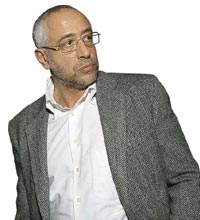
Chairman of the Commission on Interethnic Relations and Freedom of Conscience of the Public Chamber of the Russian Federation 1. I think that this will be a discussion of historical topics and the development of recommendations for the president. I believe that chronologically the commission will be limited to World War II, and I do not exclude the topic of the Holodomor. In terms of interpretation of the Molotov -Ribbentrop Pact in the Commission, I think there will be quite sharp discrepancies. And also about the role of the highest state leadership of the USSR and personally Stalin.
I would really not want the course to restrict the information, to the sovereign representation of Russian history in which there were no mistakes at all. I am generally afraid when the state takes on the functions of the chief historian. History becomes ideologized, conjunctural, and this is falsification. Throughout the 20th century, the main falsifier of history was our state itself, and not its enemies.
I have my own point of view on Russia's interest, I consider it quite state and I will defend it in every way. I believe that no truth can disperse with the interests of Russia. The more truth about the war, even tragic, the more the feat of the people who defeated Nazi Germany. The more honest we will be, the higher the authority of Russia will be in our own eyes and in the eyes of the world community.
Sergey Markov,
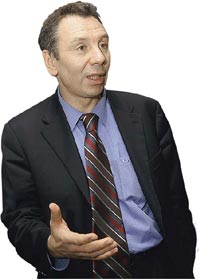
The deputy chairman of the State Duma Committee on Public Associations and Religious Organizations 1. In the 90s we threw out the Soviet model of interaction with history, left history to historians. But it turned out that many, on the contrary, took it into service and strengthened it. Huge state resources in countries such as Ukraine, Georgia, Latvia, Estonia are put on the falsification of history. And our historians, as in 1941, are with a three -line against the tank. This state activity in falsification of history should be opposed to state activities to defend historical truth.
No one is going to limit the freedom of historians, on the contrary, it is necessary to free historians in countries such as Ukraine, Estonia, Latvia, from the oppression of the state machine, which makes them engage in falsification. We have allies in both the Estonian and Ukrainian parliament, which are more outraged by the falsifications that are carried out by the authorities.
The interests of the United States also cannot be determined exactly, but this formula is constantly used in American official documents, Barack Obama's speeches. Yes, he could be mistaken, as he was mistaken, say, George Bush. But in principle, there is a legitimate political system, when a legally elected president speaks on behalf of the people.
Konstantin Zatulin,
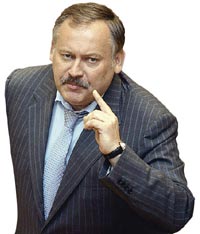
The first deputy chairman of the State Duma Committee on CIS Affairs and Relations with compatriots 1. We must first of all find out what is a threat. It is not only about those cases when the famine of 1932-1933 is called the genocide of the Ukrainian people or Latvian punishers - fighters for freedom. The point is that a number of criminal cases have already been opened in Russia against young people who, inspired by Nazi works, not only distributed fascist symbols, but also prepared or even committed terrorist acts. The problem has not only an external, but also an internal dimension.
In society, there was a feeling that censorship is being revived. But in the history of the most democratic countries there are periods when censorship is introduced if necessary. The commission should propose its methods for solving this problem, that is, how to not throw out the search for scientific truth with an ideological struggle. This is a very delicate task, but it is impossible on the grounds that it is delicate, to argue that it can neither be set nor completed.
It seems to me that it is necessary to give an order to open a number of archives, on the introduction of historical data into the circulation of a new array, which will allow to objectively illuminate certain issues. For example, the commission of the Lithuanian parliament calculated the damage from the "Soviet occupation." I have not seen a detailed historical and journalistic response regarding Russian investments in Lithuania, not only during the years of Soviet power, but also for two hundred previous years.