
Translated material
The perfect performer
80 years ago, on September 26, 1936, the punitive bodies of the USSR was headed by Nikolai Yezhov
The General Commissar of State Security* Nikolai Yezhov collected bullets extracted from the heads of the famous "enemies of the people." When at the end of his career, on April 10, 1939, the Chekists arrested the former People's Commissar of Internal Affairs, who had drunk and completely degraded by that time, then during a search of his apartment they found a bag with four flattened bullets. Each of them was neatly wrapped in paper with signed surnames: “Zinoviev”, “Kamenev”, “Smirnov” ... In the old Bolshevik Ivan Smirnov had to shoot twice, so there were two bullets in the package. In addition, Yezhov seized six pistols, five rifles and hunting rifles, more than a hundred suspicious books and brochures, including white emigrant and foreign publications, two empty, one unfinished and three full bottles of vodka, some things and clothes.
Compared to the berry, Beria or Abakumov, the low and feeble “Kolka-book” turned out to be almost an ascetic. A week later, the Yezhovsky district of the city of Sverdlovsk was renamed Molotovsky. Ten-day Proseph Stalin received from the NKVD a protocol of Yezhov’s interrogation, who admitted to the work of Polish and German intelligence, in relations with the conspirators in the ranks of the Higher Kominal Red Army and in the poisoning of his own wife, Evgenia Khayutina, who committed them in the fall of 1938.
The British diplomat reported to London: "Stalin gave Yezhov the NKVD to reduce the power of this nightmare organization"
Almost thirty -five years have passed. In private conversations, pensioner Vyacheslav Molotov ** emphasized the political loyalty and devotion of the Stalin People's Commissar of the Bolshevik party: “Yezhov was not hostile, he overdid - Stalin demands to strengthen the pressure. This is a little different. He is not from vile feelings. And it is impossible to stop. Where to stop here? He broke firewood and overdid it. ”
Carried away, that is. Burned at difficult work.
The tip of the terror
On September 25, 1936, Stalin, who was resting in Sochi, sent a telegram to members of the Politburk about the need to replace as the People’s Commissar of Internal Affairs of the SSR, the General Commissioner of the State Security of Henry Yagoda, the chairman of the party control commission of the Central Committee of the All -Union Communist Party of Bolsheviks (b), who previously headed the department of leading party bodies. Over the previous months, Yezhov distinguished himself in the preparation of the fabricated process in the case of the United Trotsky-Zinoviev Center. According to Stalin, the OGPU bodies were late for four years with the exposure of the “conspirators”: back in 1932, some former inter -party opposition figures on the initiative and with the participation of Ivan Smirnov tried to establish the exchange of information with each other and transmitted information about the situation in the USSR Lev Sedov - the son of Leo Trotsky who lived in Paris. On September 26, 1936, the berry was removed (appointed six months before the arrest, the People’s Commissar of Communications), and Yezhov took his position, remaining part -time secretary of the Central Committee and chairman of the party control commission. Only on October 11 the corresponding resolution of the Politburo followed.
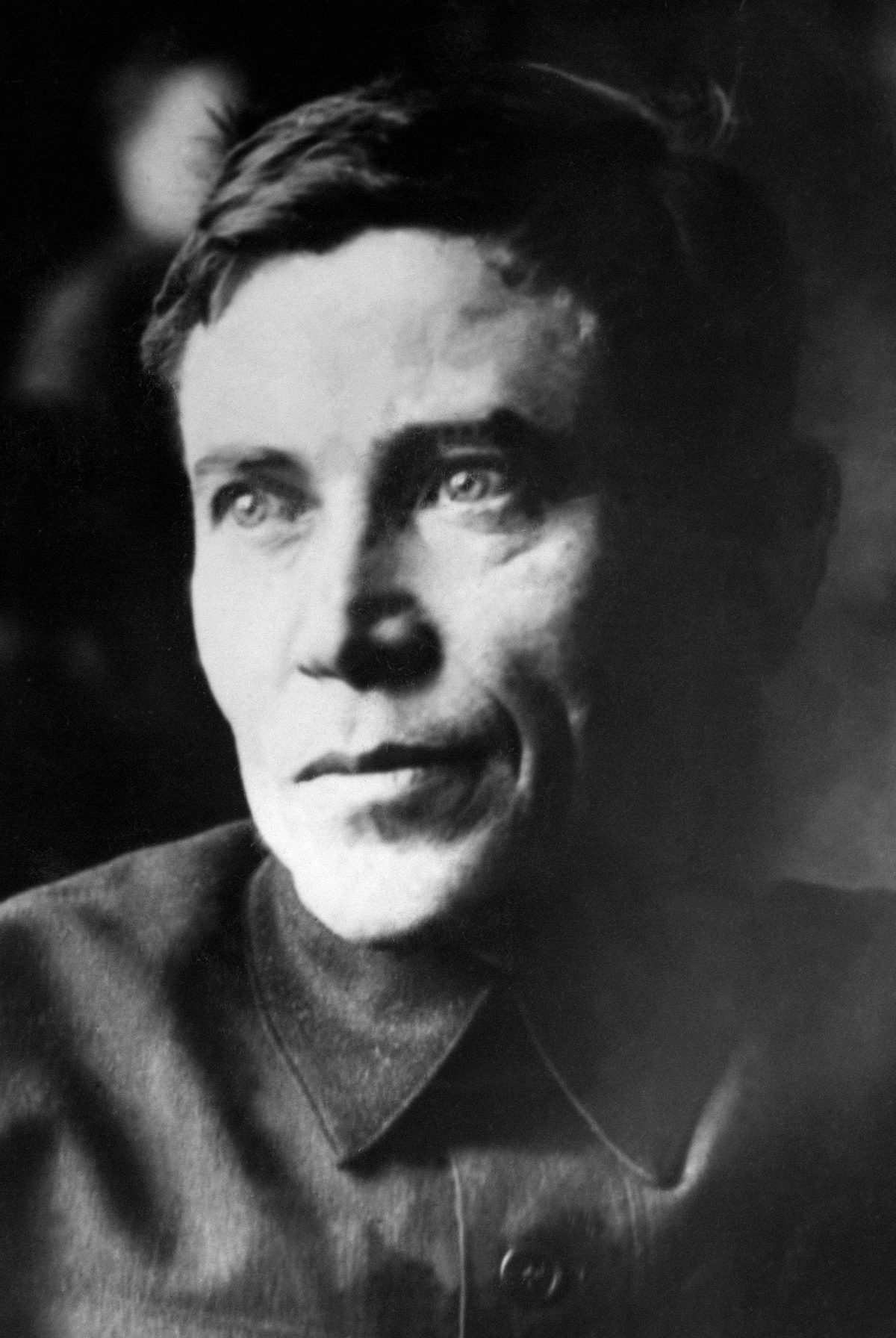
The resignation of the personnel security officer of the berry caused a positive reaction. The doomed Nikolai Bukharin, who edited Izvestia, naively rejoiced: "Yezhov, even though a person is unusual, but a good soul and pure conscience ... He will not go for falsification." The British diplomat, Aretas, Ekers-Doglyz, reported to London: “Stalin gave Yezhov the NKVD to reduce the power of this nightmare organization. Therefore, the appointment of Yezhov should be welcomed. ” The execution in August 1936 Lev Kamenev, Grigory Zinoviev and other defendants in the case of the Trotsky-Zinoviev Center seemed the culmination of Stalin's policy. In fact, this was a prelude to a large terror, a two-year period from the fall of 1936 to the fall of 1938, which was called the "Herbalism" in the history of the USSR.
In the mass consciousness of the “Hedgehog”, as a rule, is associated with reprisals against representatives of the Soviet elite, military leaders, the intelligentsia and the city “middle class” of the USSR. In the circles of marginal publicists, there is still a popular myth about a certain “Russian revolution”, allegedly committed by Stalin in 1937-1938 for the sake of stripping the state apparatus from foreigners and cosmopolitans on the eve of the war. However, we can judge the main goals of terror by the number of victims among the most numerous social group - the Soviet peasantry.
Refusing
In 1930-1935, as a result of the Bolshevik collectivization and artificially caused mass hunger, the Soviet people suffered huge demographic losses that exceeded 7 million people. In just six years, hundreds of thousands of dispossessed were killed at the stages of deportations and special settlements, the victims of the 1933 Holodomor amounted to at least 6.5 million people, more than 140 thousand convicts died in places of imprisonment. The bodies of the OGPU-NKVD shot more than 30 thousand “enemies of the people” on charges of “counter-revolutionary crimes” (for comparison: in tsarist Russia for criminal and political reasons, including victims of military fields, for thirty-five years, from 1875 to 1910, 8-10 thousand people were executed; for forty years, from 1875 to 1915, in the places in the places, in the places in the places. Conclusions died 126 thousand prisoners).
Thousands of peasants died during the suppression of the anti -collar uprisings of 1930-1932, several thousand fell under execution on charges of embezzlement of “socialist property”. During the first five -year plan, the Communists attached peasants to state -owned enterprises for the cultivation of land with fictitious payment of heavy physical labor, and the village was suppressed in collective farm visas. Only such a unprofitable system allowed the Communist Party to prevent a social explosion and maintain power in the country with the rural majority of the population.
However, by the mid-1930s, a significant protest potential had accumulated in the village. The convicts convicted at the beginning of the collectivization for the terms from three to five years were released from the places of imprisonment, exiles returned to their native places. Since the formal end of the Civil War, the Chekists have accumulated accounting materials on the obvious and hidden “enemies of the people”, the number of which has sharply increased during collectivization. The right opposition, according to Molotov, was “the main danger”, since “reflected the village, kulak essence, and many peasant peasants followed behind the fists”, “the country of the peasant”. Therefore, “Hedgehog” was primarily required by Stalin in order to suppress a hidden protest against the hard labor system and splitting a huge country. Only in this way, the NKVD bodies could ensure the stability of the authorities of the party nomenclature, which owned the enormous collective property and labor resources of the enslaved population of the USSR.
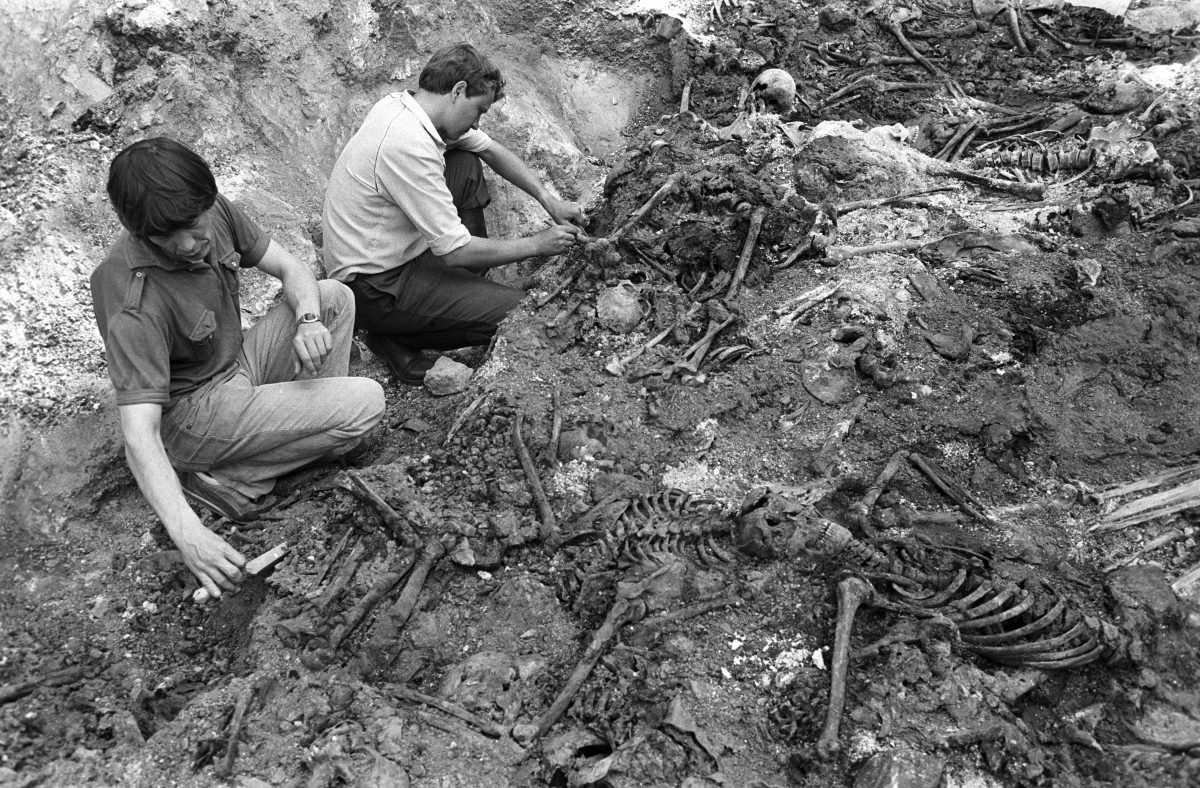
It was the peasants - collective farmers, solers and dispossessed - became the main victims of executions during the "Ezhovschina". For the period from October 1, 1936 to June 1, 1938, the NKVD bodies were shot 556,259 “enemies of the people”, the share of peasants among them amounted to 60%. Then there were representatives of potentially dangerous groups - the ranks of the White Armies, participants in peasant uprisings, opposition political parties and organizations, “former people”, etc. taken into account by the Chekists. In parallel, the most active part of the clergy of the Russian Orthodox Church and the most active laity were subjected to physical destruction.
Along the way, state, party, economic and military personnel, science and culture figures were cleaned in order not only to get rid of dubious characters, but also to ensure the prospects of young nominees. According to the plan of Stalin, all industries in the USSR were filled in party workers, "those who can carry out directives who could understand the directives who could accept these directives as their relatives and able to implement them." The Stalinist apparatus did not need other candidates. Yezhov became the ideal performer of the Stalinist directives.
Human, soft, tactful
According to the official version, Nikolai Yezhov was born in 1895 in St. Petersburg in the Founder's family, but this could also be invented by the future People’s Commissar, who wrote his autobiography in 1921. It is possible that he did not want to advertise the details of family history, hiding, for example, the Lithuanian nationality of his mother. Yezhov’s education was exhausted by one class of primary school and courses of Marxism-Leninism at the Central Committee of the CPSU (b). Molotov noted his faithful status from an ideological point of view: “Yezhov - a pre -revolutionary Bolshevik, worker. There was no opposition in any opposition ... a good reputation. ” During the First World War, the young locksmith served the lower rank in the 172nd Lida Infantry Regiment, in 1915 was injured, then worked as a master in artillery workshops and at the Putilov factory. He joined the Bolshevik party in March 1917.
Yezhov’s zealous career is a consistent path upstairs of one of the little people, whom Stalin once called the “screws” of the omnipotent and comprehensive party apparatus. Starting with the post of secretary of the Partyer in Saratov, Yezhov soon became a political officer, then the military commissar in Kazan and so in 1921 he fell into the nomenclature system of district committees and regional committees. In Kyrgyzstan and Kazakhstan, Yezhov mercilessly fought with any deviations from the general line and gained fame as a “strong guy”, a diligent and disciplined worker.
“It was a responsive, humane, soft, tactful person,” contemporaries recalled him, including even former repressed ends of the 1920s and early 1930s. Yezhov loved to sing, dance, supported acquaintances with artists and writers, with pleasure visited impromptu literary parties. Nobody could see in him a “bloody dwarf”.
In 1927, Yezhov moved from Kazakhstan to the central apparatus of the CPSU (b) and then worked in the organizational and distribution department. The bloody 1930, associated with the forced "elimination of the kulaks" and the suppression of thousands of anti -collar uprisings, Nikolai Ivanovich held the deputy commissar of agriculture of the USSR and directly participated in collectivization. As the regime of the position of Yezhov became increasingly responsible: he was a member of the Central Commission for Party cleaning, deputy chairman of the party control commission, and headed the industrial department and department of the governing party bodies of the Central Committee.
Yezhov loved to sing, dance, supported acquaintances with artists and writers, attended impromptu literary parties. Nobody could see in him a "bloody dwarf"
The real rise in Yezhov began in the winter of 1934-1935 after the murder in Leningrad Sergey Kirov. The berry was not too happy to instruct Stalin to look for killers among the Zinovievites, but Yezhov, on behalf of the Central Committee, began to oversee and control the investigation, and then the judicial farce in the form of a “process” over Zinoviev and Kamenev.
In the fall of 1936, a calm little man occupied the liberated office of the People's Commissar of Internal Affairs of the USSR. Probably, by his personal and spiritual qualities, Nikolai Yezhov was not at all a bloodthirsty villain. But it was unlikely that it occurred to him that he was going to create something inhuman. Yezhov was the Stalinist function exactly to the extent that Stalin himself personified the collective will of the party nomenclature. In the next two years, the NKVD bodies had a difficult task: to repress almost one and a half million people and shoot them at least six hundred and seven hundred thousand. And the People's Commissar of Yezhov was an ideal performer.
* Special title of commanding staff of the NKVD/NKGB of the USSR in 1935-1945.
** Chairman of the Council of People's Commissars of the USSR
In 1930-1941, the People’s Commissar, the Minister of Foreign Affairs of the USSR in 1939–1949, 1953-1956.