
Translated material
Speaker of our time
Vladimir Markin as the voice of a power clan
Vladimir Markin, Head of the Department of Interaction with the Media of the Investigative Committee of the Russian Federation, has recently become the main supplier of political news. His comments and interviews regularly become the reason for discussion not only in the press, but also in power corridors. How did it happen that the opinion of a person who is not even the head of the department, but only the leader of one of his units, has gained such a weight? In search of an answer to this question, The New Times talked with people who know Vladimir Markin well at different periods of his life, and talked with him
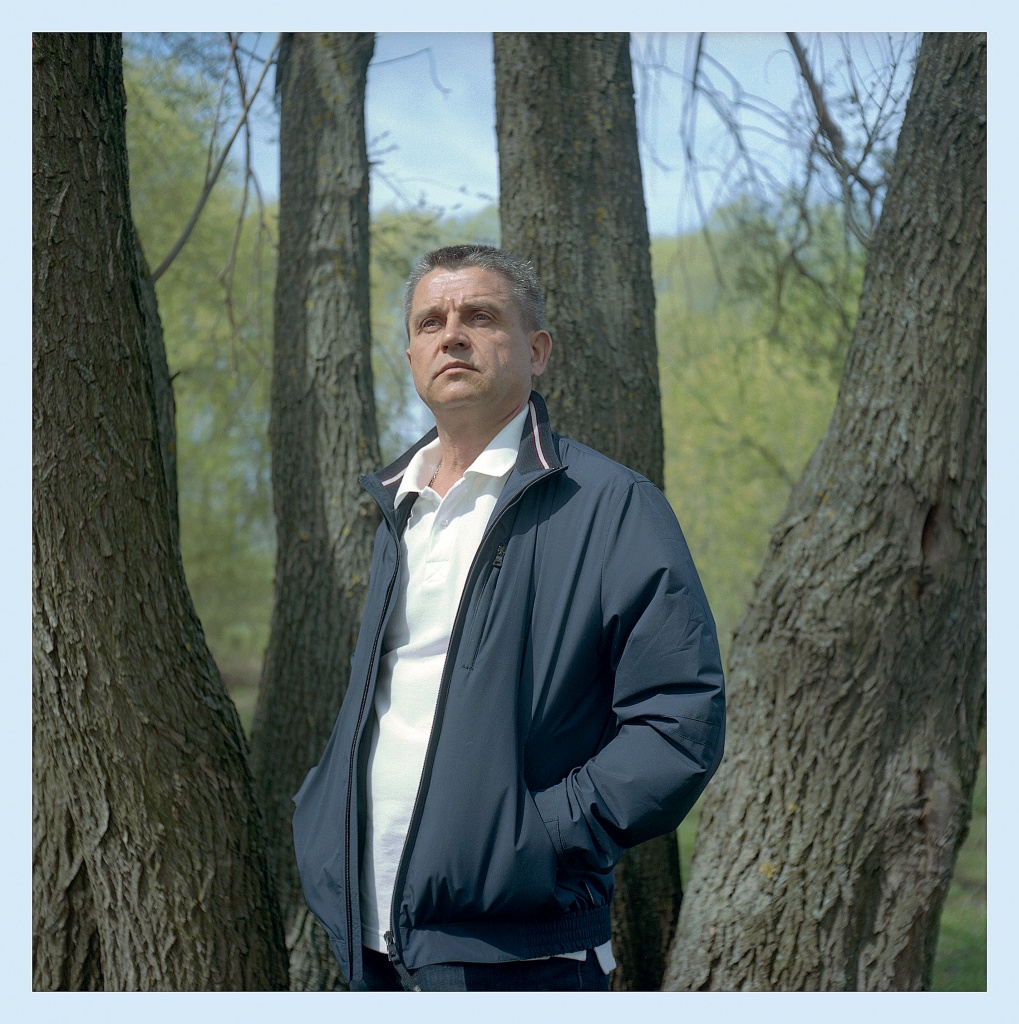
Over the past six months, Vladimir Markin has already shook the information space three times. At the end of 2012, after an interview with five television channels, Dmitry Medvedev, not knowing that the cameras are still working, commented on the actions of investigators during a search with director Pavel Kostomarov: “They come to the goats at eight in the morning.” Markin immediately published on the website of the Investigative Committee the answer to the prime minister. It said that the actions of the investigators were absolutely legal and that "it was very strange to hear comments that not only insult the investigators of the IC of Russia, but also undermine the authority of all law enforcement agencies of the country." In the White House, this answer was considered outrageous, from the SK website the comment was deleted.
| *Read more about this, see the material " Gather Resignation " |
On April 12 of this year, commenting in an interview with Izvestia criminal cases Alexei Navalny, Vladimir Markin said that he “would be able to fight corruption and from prison” - this sounded like an early sentence. At the same time, he, in fact, confirmed that the close attention of law enforcement agencies to Navalny was caused by his political activity. Finally, the last loud history was the public controversy of Markin (also through Izvestia) with Vladislav Surkov, which was followed by the resignation of Deputy Prime Minister.*
Why did the press secretary of the Investigative Committee gain such influence?
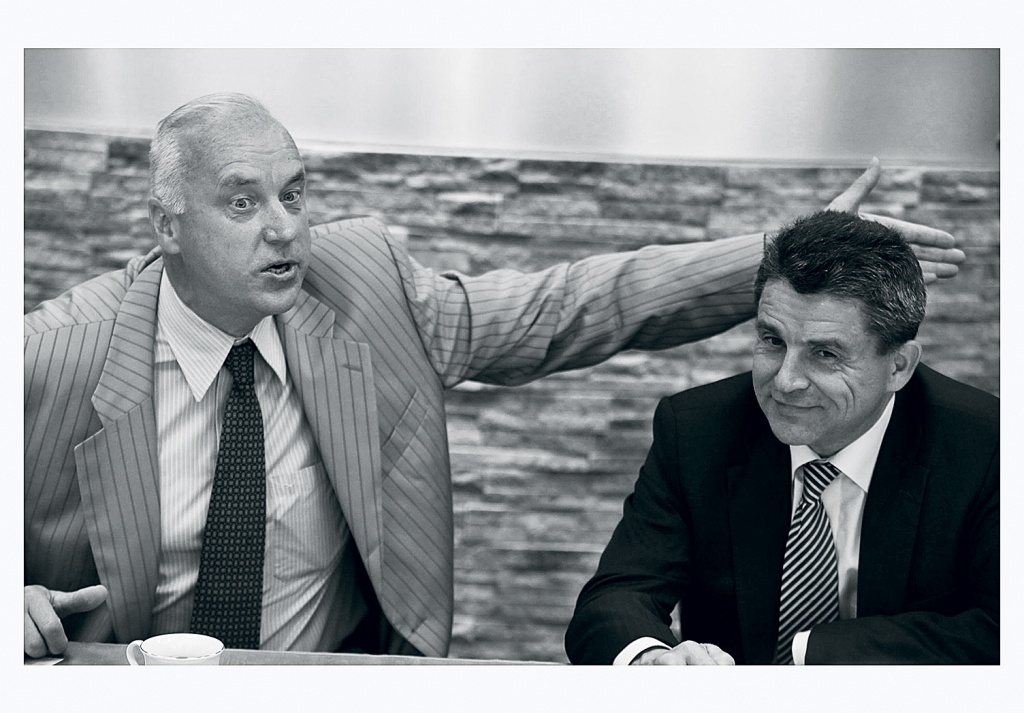
Vladimir Markin and his boss, head of the UK Alexander Bastrykin (left)
** Company man **All the New Times, personally familiar with Markin, note that for a person who had no “starting capital”, he made a dizzying career. Vladimir Markin was born in 1956 in Chelyabinsk. He loved humanitarian objects at school, wrote works well. He graduated from school without a medal and joined the army: he spent the first six months in the "training" in Lithuania, then another and a half years - in the Pavlodar of the Kazakh SSR. Markin served as a signalman, in 1977 he quit the reserve with the rank of sergeant. In 1980, he entered the Moscow State University at the faculty of journalism, studied in a group where journalists were prepared for radio.
Markin classmates describe him as a man of bright, cheerful, witty, companion. His close friend at the university, Alexander Udinov, told The New Times that Markin was actively involved in sports and played at the Student Theater, in the studio of Viktyuk.
Director Roman Viktyuk remembers Markin well - he tried his role in his play “Chinzano” by Lyudmila Petrushevskaya, but did not pass: “He had a tendency to heroic roles. Markin is such a typical Oleg Kosheva from the “Young Guard”. And in the "Chinzano" there were roles of people who are dissatisfied with life, sleeping. By the way, when I found out that he became a general, I called him and invited him to our performances. He said that as soon as he was “freed a little”, he would definitely come. I am very interested - did he retain the makings of Oleg Koshevoy? " Markin himself in an interview with The New Times said he played in the “Examiner” - “either Bobchinsky, or Dobchinsky. I don’t remember now. ”
After graduating from the university, Markin was distributed to his hometown, where he did not work for a long time a correspondent in the newspaper Vespreye Chelyabinsk. In 1986 he returned to Moscow, and he was immediately taken to the main edition of the propaganda of the All -Union radio.
"
“It was not Markin who was given a voice. This is the Investigative Committee voted "
" Creative official
“At that time, getting to work in the federal level media, get a prestigious work that allowed the leaders from different levels-both party and ministers-was a great journalistic happiness,” says former press secretary Boris Yeltsin Sergey Medvedev, who also worked in 1991-1992 on the All-Union radio. “Markin was a very energetic, smart young man, quickly fit into the team.”
| ** At the fund there was a bank of the same name, bursting in 1999, as a result of a scandal with deceived depositors, a criminal case was instituted. *** Now a member of the United Russia faction and the first deputy chairman of the State Duma Committee on Land Relations and Construction. |
For more than five years, Markin worked in the socio-political department, conducted the programs “Time, Events, People” and “Man and Law”. In 1991, he went on central television, produced the author’s program “Career”, aimed, according to Markin himself, to coverage the problems of a market economy. When the project was closed in 1997, Markin left journalism and went to the PR managers, becoming the director of public relations Reform. ** The Fund was headed by Martin Shakkum, known, in particular, in the fact that he ran in 1996 in the president of Russia. *** Comment on the work of Markin in the Shakkum Foundation.
Markin, on the other hand, went from the fund not somewhere, but to the government of the Moscow region, to the post of the first deputy minister of press and information. “He came to the team after Boris Gromov won the governor’s elections, it was in January 2000,” Tatyana Porotet, former head of the governor’s press service, told The New Times. - The ministry was headed by Elena Markova, the widow of actor Leonid Markov. Markin was her deputy and oversaw the work with the media, invented the topics of reports on the activities of the government, events for journalists. Everything was creative and interesting, especially compared to what was before him. The fact that he is now in the Investigative Committee does not surprise me-the skills in any press service are needed the same. And the main rule of the press secretary-to be calm and not succumb to provocations-he observes brilliantly. "
In 2001, Markin returned to television, but already as a producer, first to NTV, and then to the Russia TV channel. None of the former EnteVeshnikov remembers him there, Markin himself says that he mainly interacted in working with Tatyana Mitkova (after the overclocking of the old NTV team, the editor -in -chief of the television company) and Vladimir Kulistov, who was then the first deputy general director of NTV. Mitkova The New Times refused in a commentary, it failed to contact Kulistikov.
Markin worked as a producer for almost four years, but his career apparently stalled, because in 2004 he returned to PR again, heading the public relations service in the Intellectual Technology Fund.
"
Whether Markin was helped by father -in -law, in the past, the KGB officer is unknown for certain, but such rumors go
" Related ties
This fund still exists. Its official partners are the State Duma, the Government of St. Petersburg, the Institute for the Problems of the Directorate of the Russian Academy of Sciences, the Kremlin suppliers Guild and a number of private companies, including the Interros Holding Vladimir Potanin. “We were mainly engaged in scientific and technical problems. The relatively modest problems solved, but the projects themselves were large, for example, hydrogen energy, the development of a new large uranium deposit in Yakutia. There were many different topics on which it was necessary to prepare serious documents to delve into this, Vladimir Ivanovich was doing this, ”Igor Bryantsev, Chairman of the Board of the Fund, told The New Times. - Markin was also engaged in a number of investment projects: he traveled to Ukraine, met with local entrepreneurs, discussed the issue of creating a powerful logistics system near Kiev. Of course, there were some PR functions: meetings, presentations. At that time we dealt with the wounds of a major scientific problem that is associated with modeling political situations. ” According to Bryantsev, Markin practically did not have to interact with the Government of St. Petersburg and the State Duma, but he had good contacts in the field of finance - apparently since he worked in “reform”.
According to The New Times, Markin was invited to the Intellectual Technology Fund because his father -in -law was well familiar with the leadership. To the question of The New Times, who is his wife's father, Markin answered briefly: "He is from the military."
The New Times found out the details. Markin married while studying at a university at a student of the Faculty of Economics of Moscow State University Yana Beskova. Her father Boris Beskov is a graduate of the Red Banner Institute of the KGB of the USSR (now - the Academy of Foreign Intelligence named after Andropov), in 1981-1982. He fought in Afghanistan as part of the Cascade detachment, from 1987 to 1991 he was deputy head of the third department of the KGB of the KGB GDR. In 1991-1992 He was headed by the Special Penth. In the only interview that he gave to the press, Beskov said that he was well acquainted with the head of the guard Yeltsin Alexander Korzhakov and Mikhail Barsukov, the director of the FSB in 1995-1996. Having quit from bodies in 1992, Beskov headed the Association of Veterans and Special Intelligence Employees of Vympel -Soiuz.
Whether Markin helped father -in -law at other stages of his career path is not known for certain, but such rumors go. In an interview with The New Times, Markin has never answered questions about his patrons. (Read on page 29). The actor and co -founder of the famous Moscow club “Mayak” Alexander Samoilenko, who at one time was friends with Markin and did joint projects on television with him, told The New Times that he “was in shock” when he found out that he had moved to work in the Investigative Committee: “When I saw him on TV, I realized that, probably, people who worked on the radio and television were very often recruited. Maybe he worked there in parallel. ”
A failed politician
In 2007, the Investigative Committee (SCP) was created under the Prosecutor General’s Office, which was headed by Alexander Bastrykin, deputy prosecutor general and former classmate Vladimir Putin. A year before the formation of the new department, Markin entered the correspondence department of the law faculty of the Institute of Economics and Culture. Perhaps the position that he took immediately after the creation of the UPC was promised to him in advance, and he knew that he would need a legal education. Markin himself, in an interview with The New Times, called the entry into the law enforcement "prophecy." In 2009, Markin received a lawyer’s diploma, and this allowed him to first become a state council of the 3rd grade justice, and after the allocation of the Investigative Committee in an independent department in 2011, the major general of justice. (According to the law, general ranks are awarded only to SK employees with a higher legal education.)
In the same year, Markin unexpectedly goes to politics: he puts forward his candidacy for the primaries of the All -Russian Popular Front in Volgograd, and soon becomes the head of the ONF anti -corruption commission. “We never understood what it was,” says the State Duma deputy from the Volgograd region, a member of the Communist Party of the Communist Party of the Communist Party Valentina Aparin. “After all, he is in no way connected with this region, did not live there, did not work.” Surrounded by Markin, they say that Vladislav Surkov, then the All -powerful deputy head of the Kremlin administration wanted to spend him in the State Duma. They say that Surkov even called Bastrykin and asked to let his subordinate into politics. There is also a version that Markin was supposed to become a lobby for the interests of the UK in the State Duma.
But the plan did not work. First, the Human Rights Association “Agora” raised the noise about the fact that Markin, as an employee of the Investigative Committee, became a member of the political movement. Markin retorted: he does not consist in the party, which means that no law violates. But then the Prosecutor General’s Office also made claims, which found a violation of the laws “On the Investigative Committee” in Markin’s actions (SK employees are prohibited from participating in public associations) and “On State Civil Service” (officials should not give preference to one public organizations to others). However, at the end of summer, Markin's primaries lost, and the conflict faded by itself.
However, a new scandal erupted in the fall, and again with the participation of the General Prosecutor's Office. The agency conducted an audit at the Institute of Economics and Culture, where Markin received a second diploma, revealed a lot of violations in the work of the university and demanded to cancel the license and issued diplomas.
“When they came to us from the prosecutor’s office, they set a condition for the rector: either you give data that Markin received a diploma illegally, or we will cover your institute,” says Vladimir Antonov, the dean of the law faculty of the Institute of Economics and Culture. - They told me this in the Prosecutor General, tried to convince me to testify. I could not give any testimony - Markin studied in absentia to the full three -year program, handed over the state exams, defended his diploma. I met him when, after his first year, he asked him to transfer him to training according to an individual plan. He wrote a diploma with me, the topic was related to the tactics of the use of the media in the investigation of crimes. "
Nevertheless, in 2011, Rosobrnadzor recognized Markin's diploma invalid-something was not found in his test.
| **** Investigators “covered” the network of illegal casinos in the Moscow region and found out that the business “roofed” senior employees of the Moscow Region and other law enforcement agencies, the media called the name of the son of the Prosecutor General - Anton Chaika. |
Surrounded by Markin, they say that close attention to him from the Prosecutor General’s Office was due to the confrontation between the two departments, which sharply worsened just in 2011 in connection with the “gambling business”. ****
Nevertheless, this story ended for Markin safely - in January 2012, his diploma was restored: it did not find an additional verification of violations.

December 2009 Vladimir Markin (Foreman on the right) at the ceremony of transferring the Icon of the Icon of the Kazan Mother of God Museum Hermitage
** Voice SK **Absolutely everyone with whom the New Times managed to talk: Markin is not an independent figure, and his noisy statements and attacks on high persons are a consequence of his close relations with the head of the UK, Alexander Bastrykin, who, in turn, is considered a protege of Igor Sechin and who, as they say, receives direct instructions from Putin for political affairs. Political strategist Igor Bunin draws attention to the fact that Markin’s position in the power vertical should not allow him to collapse with criticism on Deputy Prime Minister Vladislav Surkov. “I am sure that Surkov began to find out who this article was authorized. It turned out that this is not Markin's “amateur performances”, from which Surkov made conclusions about his situation, ”says Bunin. Political scientist Dmitry Oreshkin agrees with him: "Such a team is given to him from above."
“The Investigative Committee is one of the key departments through which domestic political problems are raised, why is the figure of Markin embarrassing you? - The source of The New Times in the Presidential Administration is surprised. - It was not Markin who was given a voice. This is a vote to the Investigative Committee. ”
Victoria Carochkin and Anna Kalachina took part in the preparation of the material
Photo: ITAR-TASS, RIA Novosti, Igor Starkov