
Translated material
Black terror
Ethnic cleaning in Mali
In the “liberated” territories “liberated” in Mali, ethnic purges of the Arabo-Tiger population began. The New Times Spended a Witnessing Genocide 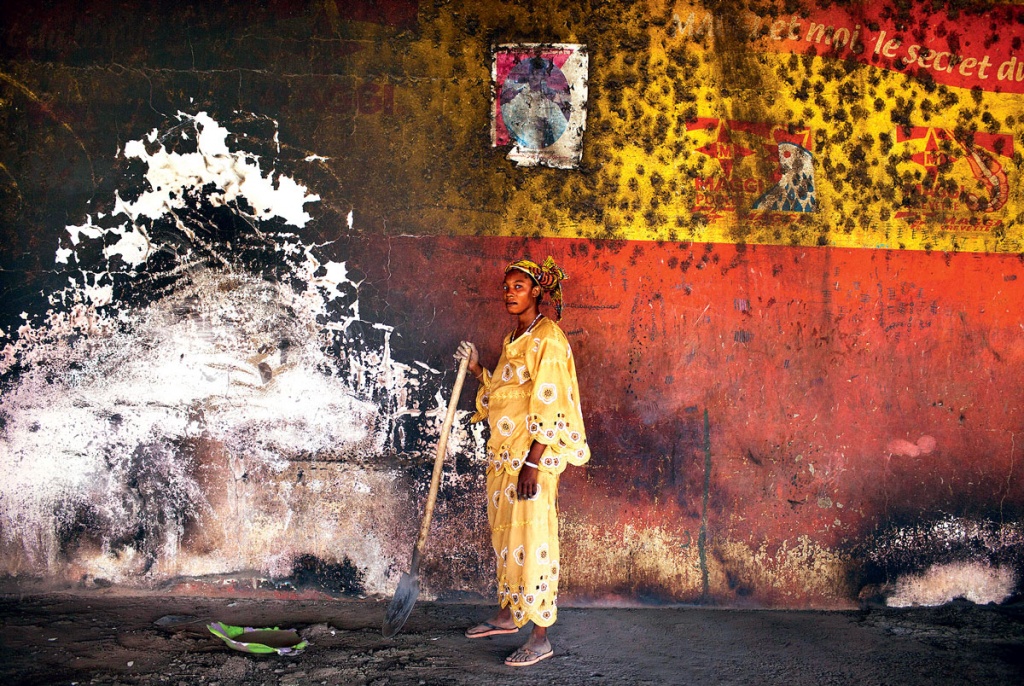
Alleys destroyed during the battles of the Central Market Gao in Northern Mali
It is not so easy to get from Bamako to Timbukta. After the French military changed their minds to take the author aboard a cargo aircraft, holding three days in the unknown, the car remains the only option. There is a straight and relatively safe road from the capital, but there is nothing to do on it, the European journalist: the first checkpoint of the Mali army will turn you back, even if you have a resolution of any minister. You have to go along a narrow mountain road through Diabali and Lera, on which you can often find the pickups of Islamists who continue to rob provincial towns.
600 kilometers, two days of paths along the asphalt, lost in the sands of a narrow ribbon, and now - Timbukta. It is far from going to go for terrifying paintings - a few meters from the northern gates of the city are the bodies of three killed Arabs. Under the thin layer of sand, facial features are still distinguishable, a hot wind crosses dark hair. “Here everyone does not care about these corpses,” the old woman passing by screams, as long as I am numb in front of my bodies.
Pearl executions
“Two killed were street merchants, the third - a teacher of a madrassah, a Muslim spiritual school,” explains the conductor of Agyss. - His name was Mohammed, the military grabbed him in front of his wife and took him. A little later, his body was found here next to the bodies of other unfortunates, but there is no one to bury them - the wife, probably, was either arrested or fled ... "
“Look, these three were shot,” says Agissa after a small pause. “Usually, the Malian army does not shoot anyone-soldiers-bambar* simply cut the throat to the prisoners.”
| *The nationality living in the "black" south Mali. The regular army mainly consists of a bambar |
Agyssa asks not to stand too long: the military is doing everything to talk about such executions as little as possible. So the Malian operator named Mustafa, who was the first to take off the dead, is now forced to hide from the military: the personnel fell on European television channels.
Timbukta was nicknamed “Pearl of Desert”: once European travelers dreamed of visiting this mythical city to see their own famous houses from sand and land dried with sultry sugar sun. However, today there is little from the former architecture - the city is more likely to an accumulation of slums, in the midst of which a mosque built a century ago a century ago rises. The wind that does not stop for a minute falls asleep the streets of Timbukta with sand lying along the gray concrete facades. The puny leaves of rare, miraculously surviving trees in this heat are covered with a layer of the same gray dust - the city is not too friendly and very far from myths.
Mustafa and Agisse, the Black Malines themselves, who, however, are respected by the Arabs, introduce me to their friends, and they agree to tell the truth. It is not so simple to find such people here: many are accustomed to the fact that Western journalists bribe local “false witnesses”, so that endless glory about the good deeds of the French army sound in the frame.
Night, silence, a city in a desert without water supply and electricity, a house made of concrete and dry land, frightened people sitting on the mats right on the floor around a kerosene lamp and a metal tray with tea, so strong that the first cup is spinning. “The first cup is bitter, like death, the second is soft, like life, and the third is sweet, like love,” they say in Timbukta. After the third cup, the owner and guests begin to talk in an undertone about the fact that the Mali soldiers who came from the south are with their former neighbors and friends.
“Three days ago, one Arab family was arrested,” says one of the friends of Agisis. -They have a son, 18 years old, lived before that in the cat-d'Ivoire, and recently returned to help his parents. No one knows what happened to them. But we suspect that nothing good. For the Mali army, all fair -skinned (as they call Arabs and Tuaregs here. - The New Times) are the same, whether Arab, Tuareg or Bell*. The military believe that it is fair -skinned - the culprits of all misfortunes and they need to get rid of them as soon as possible and forever. One colonel told me the other day: "If you are exterminated, there will be no more uprisings anymore."
| *Bella - dark -skinned residents of the North Mali, who were in the past, were slaves of Tuaregs. They adopted the language of Tuaregs and their customs and are considered by the Malines as part of the Tuareg ethnic group |
“Yesterday, an idda, a merchant who had his own shop in the market - everyone knew him well, - fell into the hands of the military, - the third interlocutor picks up. “He disappeared what happened to him - we don’t know.”
“When the French came, many Arabs and Tuarean fled,” explains Agisissa, “but they could not go far because they were captured by the Malines, who did not spare anyone, moreover, they seized the good of the dead. Light -skinned disappears even in the army. They are sent to a patrol, two or three - with the rest. And they do not return. But they gradually find out about this, and the fair -skinned people are deserted from the army. ”
And further again - examples, names, history ... The systematic nature of the executions, which the interlocutors are talking about, is not in doubt: we are talking about the most real ethnic cleaning.
The mercy of the winner
Immediately after the Timbukta of the French and then Mali armies, those families of Arabs and Tuaregs who did not run to the refugee camps in Niger or Mauritania, received the official order of the military authorities to come to the census. The arrivals were arrested a few days later - they all disappeared.
After that, robberies began in the empty Arab quarters of Timbukta: the shops of fair -skinned owners were ruined, property was plundered. Trade in the city practically stopped, because Tuarean, as experts in the desert, was engaged in the transportation of goods, and Arabs - by commerce. Now, if you can buy anything else, everything is very expensive. The houses of the disappeared Arabs were also plundered: even furniture was taken out, broke and carried out window frames, pulled out electric wiring with the root. Soldiers make regular raids on nearby villages. Mali officers are hung with rings, for hours, collect entire wagons from abandoned motorcycles and other belongings: they share the prey between their own, preparing to return to the capital. At night Timbukta is buzzing - the military smoke hash, get drunk and have fun. They are the owners of the city.
The French military, entrenched next to the airport, cannot but know what is happening under their nose, but for some reason they prefer to look at it through their fingers. “Why should they intervene in local showdowns,” Agisissa says bitterly.
French journalists only casually mention "some abductions" committed by Mali soldiers. “This will shock our readers,” the correspondent of one of the leading weekly French newspapers explained to the author, “I was sent here to make reports in support of our soldiers. There are a lot of interesting things that you can write about: the airport corrected the automatic fire extinguishing system, the city is being repaired in the city and the water supply system. ”
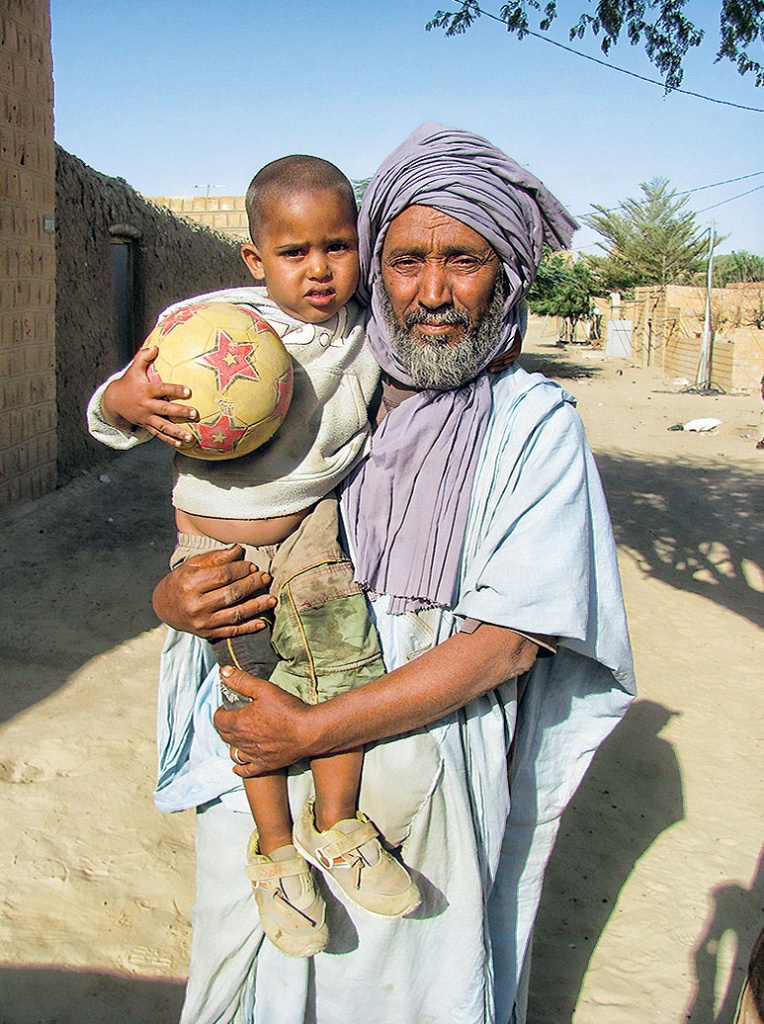
70-year-old Ali, the last Arab Timbuktu, was arrested after a meeting with the author
The last Arab
About where the Arabs disappear, I manage to find out very soon. Before dawn, Agids and I leave the city and head for the desert - we go along the sands, barely lit by moonlight. “Do not lose sight of me,” repeats Agyssa. “In the desert, when you don’t know it ...” In about forty minutes we approach the next dune, and my guide suddenly gives a sign so that I do not make noise. We lie down on the stomach, a few tens of meters from us are heard by voices: this Mali soldiers are sitting by the fire, their shadows dance in the sand. We carefully go around them to climb the next dune.
Here, behind the sandy hill, in the cold moonlight there are corpses barely sprinkled with sand. Twenty or more? Mostly adults, but, it seems, three children. Hands, legs, faces without eyes stick out of sand. Suddenly brightly, white teeth glisten between the dry stretched female lips. The smell fell. Open -air cemetery. Agyssa in a whisper explains that this is not the only place in the desert where the Malian army takes the bodies of the "missing" people.
The next day the thought comes: it's time to go away from this hell. And - shelter in the car hiding from the authorities of the operator Mustafa. However, he offers to meet with the last Arab in the city. We go to his bench, where the old man sells toilet soap and canned food. Dressed in a traditional Tuareg costume, he meets us very cordially. His name is Ali Ud-Mohammed Calbali. His passport says that he was born in 1943, but he is not sure in this date. In his youth he was the head of the caravan, drove 150 camels through the sugar, finding the right path along the stars. Today lives with his wife and grandson, the photograph of which shows with love. “I'm too old to leave,” Ali says, adding that he does not know what is happening to others. In his eyes fear, they also wanted to arrest him, but black residents of the quarter stood up for him. We warmly say goodbye.
Exactly two hours later, after the author left the Timbukta and already crossed the Niger River on the only current ferry, Agyiss calls: “They grabbed Ali!” It’s too late to turn back: the Cordons of the Mali army allow Europeans to leave Timbuktu and go towards Bamako, but go back to the north, foreigners are strictly forbidden. I call other European journalists to Timbukta, one of them, the correspondent of Associated Press Rukmini Kallimachi, goes to Ali and ... finds only an empty ruined shop. Neither on that day, nor on the following from Ali there is no news.
“Do not worry about this Arab,” the black guide bambar says already in Bamako. - Arabs, they are all too rich. Now it's over for them. ”
**Context**Newspapers in Mali in unison with French are full of bravura reports about the successes of French and Mali weapons. But today it is already clear to everyone: in March, the withdrawal of the French troops, as Laurent Fabius, the Foreign Minister Laurent Fabius promised a month ago. It will not be in April. And then how the chip will lie down. The Operation “Serval” in Mali will last “as much as necessary” - until the complete elimination of the terrorist threat in North Africa, French President Francois Hollande said during a recent visit to Moscow. The fact that the threat turned out to be serious is also evidenced by the US adopted by the United States to open the base of drones in the neighboring one with Mali Niger-to monitor al-Qaeda's volatile detachments in the north of Sakhara. However, this is an official motivation. And other rumors go to Bamako: this Paris asked Washington to open a “second front” in Niger, where the French mines uranium. The French General Staff fears that the most combat -ready forces of the Islamists can be relocated from Mali.
Photo: Reuters, Pierre Pichinin