
Translated material
With Google around the world
Google Intend-Company announced the entering the market of the new Google Chrome Internet Brauzer
Silicone Valley, or Googles on the conveyor. Google has announced the entering the market of the new Google Chrome Internet Brauzer. Already on September 2, the browser became available to users who immediately discovered that the new browser works faster than Microsoft Internet Explorer and Mozilla Firefox. Few doubt that Google has enough resources to seize the browsers market: this is one of the largest software companies in the world with a market value of about $ 150 billion 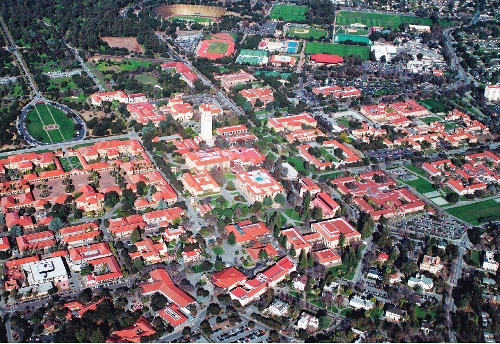
The culture of cooperation why do such stories occur more often in the Silicon Valley? In 1950-1960, the Main Center for Computer Technology of the United States was in the vicinity of Boston. Nevertheless, by 1980, the silicone valley in the state on the other coast of America won in the competition of regions. Professor Anna Lee Saksenian from Berkeley believes that the cause of Boston’s “defeat” was the difference in cultures. The companies around Boston were large, solid, self -sufficient pyramidal companies. They poorly cooperated with each other, tried to make all the design and production within the company itself. If the engineer quit from one company and moved to another, he was seen as a “traitor”. At the same time, in the Silicon Valley there was a culture of small companies, which were many and which sought to cooperate with each other. The transition of an engineer or manager from a company to the company was not considered as misconduct. In the Silicon Valley, a modern culture of a technological startup also developed, when an engineer who came up with a good idea, can create his own company without remorse and get support of hundreds of thousands and millions of dollars from venture capitalists.
The birth of a startup startup begins when an entrepreneurial engineer comes up with a new idea. First, the company passes the “kitchen” and “garage” periods when the engineer finds like-minded people, they quit work, write a business plan, make a prototype and meet with investors. Each company of venture capitalists consists of several people (partners) who manage one or more funds, each volume from several tens to a couple of hundred millions of dollars distributed between dozens of companies. Money to new companies comes on the following chain: ordinary Americans bring their savings to private pension funds, they, in turn, invest in venture funds that are invested in young companies.
Investors-angels, venture funds try to invest at least $ 1 million in each transaction. In many cases, young companies at the very initial stage need smaller amounts - several hundred thousand. Very "green" companies may not be of interest to venture capitalists. Then the founding fathers use their money or borrow it from relatives. But if this is not enough, wealthy private individuals, the so-called “investors-angels” can act as investors. Although each of these investors invests less than the venture fund, there are more angels: according to estimates by the National Venture Capital Association, organized venture funds invest about $ 20 billion a year, while angels are about $ 30 billion.
Venture funds expect that over 3-7 years, a new company must create a product and start sales, after which either go to the exchange (conduct an IPO) or be sold, a larger company. By the time of the IPO, the share of the founders of the company is often eroded and amounts to 2–5%- the rest is in the hands of venture capital or used for options to other employees of the company. Nevertheless, after entering the exchange, many founders become multimillionaires, and sometimes multimilliarders.
From which Sora ... As the veteran of Silicon Valley John Nash says, a typical venture capitalist receives about 1000 business planes a year, of which 994 go to the garbage basket. Venture capitalists select companies that, from their point of view, have potential to return $ 20 and more for each invested dollar. Nevertheless, out of 10 companies that receive financing, 6 companies become bankrupt, one becomes successful and three are sold for little money or become zombies, that is, companies that cannot grow, but do not burn out. One successful company is capable of covering bankrupt costs, and on average successful venture capitalists receive about 20% of the return on invested money.
True, the market can collapse, as happened in 2000-2002, when more than half of the companies of venture capitalists left business.
It is clear that startups and venture investments are an extremely risky and far from always profitable business. Nevertheless, practice showed that in this way technological progress is carried out. Supporters of state financing of progress will object that some large projects of the 20th century, for example, the exit of a person into space, were carried out precisely through targeted state projects. And so. However, in most cases, the state is too slow compared to thousands of cooperating and competing private companies funded by independent investors. The Silicone Valley system, in which a dozen new companies, of which survive two, allows you to quickly create new technologies (like modern Internet infrastructure) in conditions when it is impossible to predict that it will be invented next year is financed.
Silicone Valley is a conglomerate of two dozen small cities south of San Francisco: Palo-Alto, Sanwerel, Santa Clara, San Jose and others. Most leading technological companies in the world are either in the valley itself, or have a branch here. On the territory of the valley is Stanford University, at a short distance from it - the Berkeley University, not to mention several universities and smaller colleges. The silicone valley is not like Akadkgororodok - it is comparable to Moscow in the territory, and in the population it is located between Kiev and Minsk. Many regions of the world tried to copy a silicone valley, creating a silicone forest in Oregon, a silicone alley in New York, a silicone desert in Arizona and dozens of other “silicone” places, but no one even managed to approach the success of the original silicone valley-this tapilon of technology.