
Translated material
European measurement
If in Russia the Crimean-Ukrainian syndrome mixed the conservatives in one heap, raising them around the slogan "Bey Paragists", then in Europe everything is different
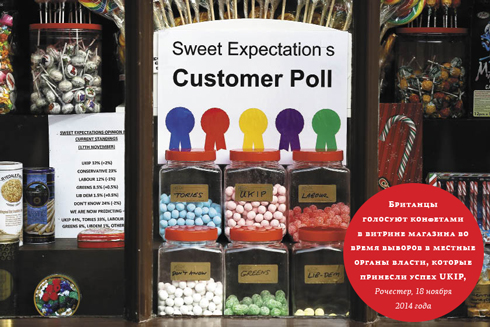
The conservative political wing in the old world, as well as about its electorate, is usually judged by what they opposed: against a single strong Europe, against immigration, against the erosion of national identity ... And it seems that the slogans among Euroconservators are common, expressing a single field. But if you look closely at what the conservatives are opposed to everything, but for what each of them is separately opposed, it immediately becomes clear: this is a very different community.
Labels in relation to a conservative camp European political scientists use rather expressive labels. There is liberal conservatism (liberal wing of traditional conservatives), and there is conservative liberalism (conservative wing of traditional liberals). There is economic conservatism: its priority is saving on state expenses, not to get into debt. And there is national conservatism, when national (interests, identity, culture) is placed above the international, for example, unions and agreements.
It is easy to get confused in the etiques. Moreover, many allergies have been preserved - since the Cold War. In fact, the left-right and today allows you to navigate the political labyrinth. The left agenda is for ordinary people, for social security, affordable education, healthcare, decent pensions and decent nursing care. The right agenda - there should be freedom of possibilities, not freedom to be forced, rich - the locomotive of the economy. The rest of the market will suck. And of course, the right ones, as before, accuse the left - of inability to manage the economy, in the eternal manner to climb into unbearable debts with their social programs, that they do not help the poor from poverty, but only drive them even further into the trap of the lobes, etc. The difficulty here is different: the conservatives in a number of cases have appropriated something from the traditional agenda of the liberals, and the liberals from the summons of the right.
Difficulties in discourse
 |
| Increase the image |

Since the Great French Revolution, the patriots in Europe called themselves more happiness left. Today, patriotism and nationalism have moved to a conservative vocabulary. And the left even has to fight back.
The tragedy Charlie Hebdo forced the French to ask themselves the question - who we are. They gave the answer: "We are Charlie." But they invested in this one, all the same. The leader of the extreme right -wing (or extremely conservative) party “National Front”, Marin Le Pen, generally abandoned this slogan, saying - “I am not Charlie”. But behind the left President of Hollande, during the march of January 11, the president of the former, now the leader of the conservative mainstream Nicolas Sarkozy was walking. It was he, being the president, raised a conversation about strengthening national identity.
Of course, in the background-socio-economic problems. In immigration, and free legal migration inside the EU, the conservative flank sees a threat to workplaces for their own, an additional burden on the social sphere. Why should the "indigenous" be paid for intercourse for strangers?
But for immigrants, integration into the society that accepts them is associated with their economic position. According to surveys, more than half of French Muslims in the first place among the questions that excite them, put unemployment. The young man with the “Muslim” surname in France, as calculated, was 2.5 times less likely to get an invitation to interview when searching for work. Not to mention the work itself. Nevertheless, identity - a connection with roots, tradition, religion - and for them plays an important role. This is where it arises amazing, as it is now fashionable to say, cognitive dissonance in conservative discourse.
By logic, less wealthy layers, including Muslim immigrants, should be attractive to the ideology of the left (in fact, this is what happened-more than 90 % of Muslims voted in the last presidential election for the Socialist of Hollande). So it is so, but the liberalism of the left includes not only guarantees of social support, but also libertarian measures (like the legalization of same-sex marriages). And this causes rejection of, albeit not rich and discriminated people, but still conservative in simple outlooks on life, on what is “right” and what is not.
On the other hand: the national-conservative rhetoric of the right-wing conservatives, including the anti-immigrant "national front", rests just on such close traditionalists, deeply believers, Christians and Muslims, slogans, like roots, family, faith ...
In such a situation, it is difficult to find the answer to the question: "Who are we?" This gap is well noticeable when analyzing voting in the same presidential elections in France. The majority system makes you make a hard choice. And in the second round, the extremely conservative electorate Marin Le Pen did not flow all in favor of a moderately conservative sarcose, and went into favor of a socialist for a third.
New landscape? The shift of European sentiments towards the conservative and extreme right spectrum has been felt in the last years and was confirmed by the European Parliament in 2014: the right -wing parties almost everywhere achieved great success, speaking from anti -European (against the EU omnipotence), anti -immigrant, nationalist or isolationist positions.
In France, the National Front came out in the first place with 26 % of the vote. In England, the UKIP - Yukip, the Independence Party of the United Kingdom - also collected the largest percentage of votes - 27 %. In Germany, conservatives, but pro -European - Christian democrats Angels Merkel - won with 35 % of the vote. At the same time, the Anti -European Alternative Party for Germany unexpectedly greatly performed
* * In the leadership of the alternative was the professor of St. Petersburg University Irina Smirnova, who is currently working in Germany). (Alternative für Deutschland) - 7 % of the vote. In a word, a new political landscape is clearly developing in Europe. Nevertheless, to talk about a “decisive jerk”, as some analysts in Russia allow themselves, extreme conservatives in Europe prematurely.
Firstly, in the elections to the European Parliament, the conservatives did not receive a blocking number of mandates-the working majority remained for moderately conservative legal parties.
Secondly, the success of the extreme right was not widespread. In Holland, for example, the Anti -European Freedom Party of Herth Wilders lost her voice. In Greece, success was achieved by the coalition of left -wing radicals, which also opens against united Europe, but for its own, left -wing reasons. (It is appropriate to note that for all the post -Soviet time, European left has not yet found a new “big idea” - alternatives to conservative liberalism, which in the 20th century served socialism in one or another interpretation. But the conservatives lost “communism” as the main scarecrow).
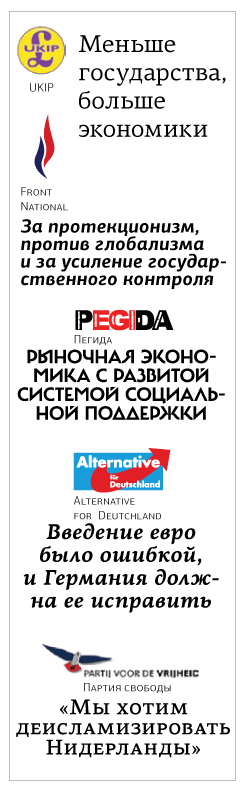
The third, perhaps, is the most important: the parties of EuroSceptics are seriously different from each other in ideology and software slogans. This is especially noticeable if you compare the French “National Front” and the British UKIP - in their approaches to the economy.
UKIP appears with a conservative-liberal agenda-for reducing corporate taxes and a complete abolition of inheritance tax. Both of these measures were in favor of business. The party considers it possible to reduce expenses in the state sector by £ 77 billion, but not to the expense of vital services, but by reducing the government apparatus. For example, one of the ideas is to sharply reduce the size of the Ministry of Health, and transfer the released funds to the regional level - of the Department of Health of the County. In the foreign economic region, the UKIP is worn with the idea of creating a free trade zone based on the Commonwealth - countries of the former British Empire. Yukipovsky conservatism is closer to the American "tea party" - less than the state, more economics.
“National Front” is conservatives of a completely different sense, a state of state. Marin Le Pen - for strengthening the role of the state in all areas, including the economy, up to nationalization, for protectionism, against globalism and for strengthening state control not only in the field of health and education, but also in the banking sector, in energy and transport. This is the conservatism of an authoritarian sense, which, perhaps, explains the well -known sympathies of Le Pen to Russian conservative experience.
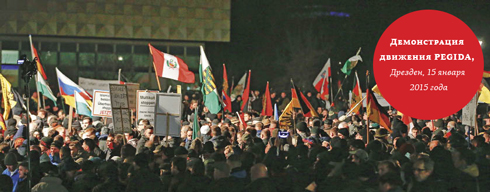
The German path in Germany also moved to the right. They are alarming about thousands who gather at the anti -immigrant, anti -Islamic manifestations of the Pegida group (patriotic Europeans against the Islamization of the West). However, the mainstream remains firmly behind moderate conservatism.
German conservatism differs from British and French primarily in that it is based not on separation, contrast in society, but on the desire to build coalitions, to achieve consent. This is also expressed in the fact that the left-wing social democrats are included in the ruling “large coalition” along with the conservative CDS. The influence of this conservative center leaves back in the post -war period, when the leading German politicians and ideologists have realized what danger the extremes, albeit left -wing, even right. Actually, the post -war construction of the “social market economy” in Germany was carried out by conservatives Adenauer with its Minister of Economics Erhard. The conservative liberal hybrid was obtained: a market economy with a developed social support system.
The material was prepared by: Alexander Anichkin photo: Paul Hackett/Reuters; Fabrizio Bensch/Reuters