
Translated material
New Old Rada
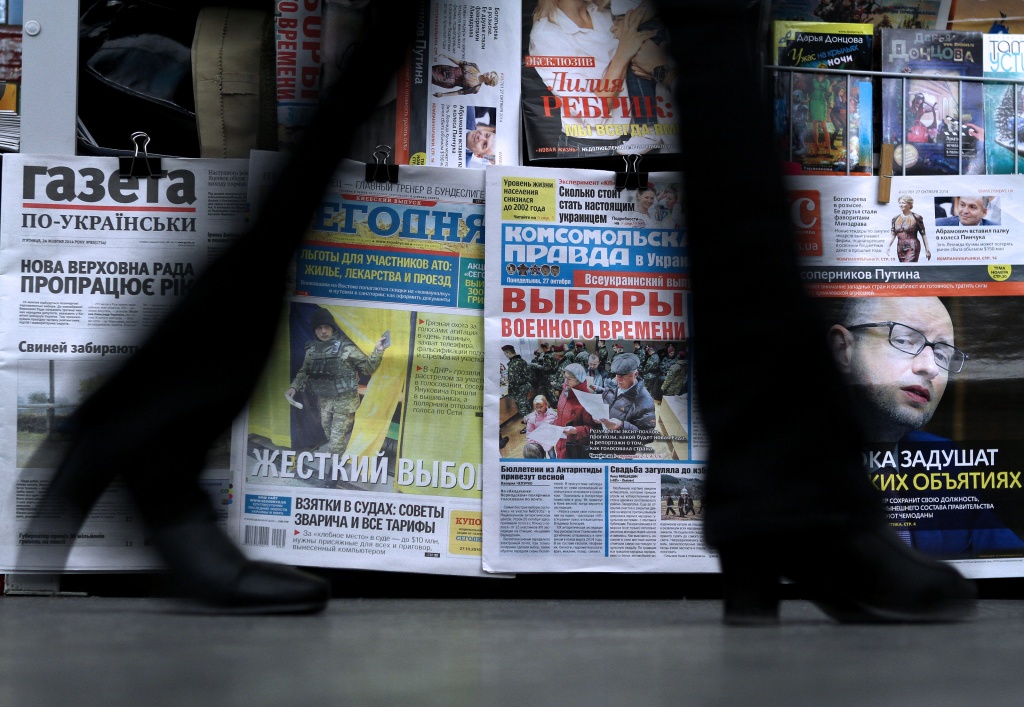
The first place, following the results of the parliamentary elections in Ukraine, was taken by the Petro Poroshenko Bloc. However, even in a coalition with other pro -European parties, the presidential forces will not have a majority
Sergey Gapon/ AFP Photo
The new Ukrainian parliament will most likely be divided into many factions that will not be easy to negotiate. Neither the president nor his competitors will have a stable majority in the Rada. This is perhaps the most important election result. After all, they were up to President Poroshenko mainly in order to consolidate power, to receive a stable majority in the Rada and form a government led by one of the devoted people. Most often, the prime minister was tried to Vladimir Groysman, the former mayor of Vinnitsa, who is considered one of Poroshenko's closest and most trusted people.
Unfortunately, for the president, his party gained significantly fewer votes than expected, even uniting a coalition with instruments from the Popular Front, Prime Minister Yatsenyuk, it still will not get even a simple majority of 226 votes. It is necessary to somehow get the missing voices. With the help of self-nominated deputies, it is risky, because single-mandate, as practice shows, people are very unreliable. So you will probably have to connect the third place “Self -help” and the “radical party” Oleg Lyashko to the negotiations.
Journalists in politics
“The bed of the press collapsed into the Hall of meetings of the Verkhovna Rada” - so, jokingly, comment on the results of extraordinary parliamentary elections in Ukraine. Among the newly elected deputies are a dozen popular journalists. They are on the lists of the Presidential “Petro Poroshenko Bloc”, and the Party of Prime Minister Arseniy Yatsenyuk “Popular Front”, and in the party “Self-help”, which won the sympathy of the city middle class. It is possible that over time they form an independent deputy group.
Perhaps the most striking representative of the “fallen from the bed of the press” is the temperamental Mustafa Nayem, half an Afghan, half Iranian. Mustafa was born in Kabul, his father emigrated to the USSR, in Kyiv, where Mustafa grew up, graduated from the Kiev Polytechnic Institute, but went to the media to work and eventually became almost the most famous Ukrainian journalist from the generation of the current 30-year-olds. It was Mustafa Nayyem in November last year, when the government suddenly announced that he would not sign an agreement on the Association with the EU, and threw a cry on Twitter with an appeal to go outside. Mostly students and high school students responded. The brutal acceleration of a small and completely harmless student rally on the night of November 29-30 launched a spiral of events, which ultimately led to the fall of the Viktor Yanukovych regime.
In one hall with Naim, Sergey Levochkin, the former head of the Yanukovych administration, who in the morning after the bloody beating of students on the Maidan defiantly resigned. Levochkin, who was considered an informal leader of the pro -European wing surrounded by Yanukovych, was the first to venture to leave the presidential ship, when it seemed to the majority that he was not going to sink at all. As a result, the former high -ranking employees of the administration of the overthrown president, ministers, the bonzes of the ruling “Party of Regions” (PR) - on the wanted list, on the run, behind the high fences of the ruble, and only a few, the most risky careers in the new parliament, albeit not in the most convenient positions of the opposition minority.
Minority riddle
The minority, however, may not be so small: only 29 people passed from the former “regionals created by the“ regionals ”of the“ opposition bloc ”, but there are 63 members of the PR or closely related people among 93 people. It is clear that not everyone risks openly connecting themselves with the “opposition block”, but the faction may well become the third largest.
By the way, among the deputies of the Samomed, in the past of the “regionals”, the veteran of Ukrainian politics Efim Zvyagilsky went to Rada. He is 81 years old and, as the oldest deputy, he will open the first meeting of the new parliament. Yuri Shukhevich, the son of OUN-UPA commander, a member of the Radical Party Oleg Lyashko, was not enough only a few months to get this solemn duty to him. Zvyagilsky, by the way, was elected to the parliament eight times without missing a single convocation. Zvyagilsky is a noticeable figure (including because of physical dimensions) and very colorful. In the USSR, he was the permanent director of one of the largest mines of Donbass - the Zasyadko mine, and after the restoration of capitalism became its sovereign master. Even under the first president of independent Ukraine Leonid Kravchuk, Zvyagilsky rose to the post of acting The Prime Minister, then fell under such a dense fire of the opposition that he was repatriated to Israel away from sin, and only a few years later returned to Ukraine and politics.
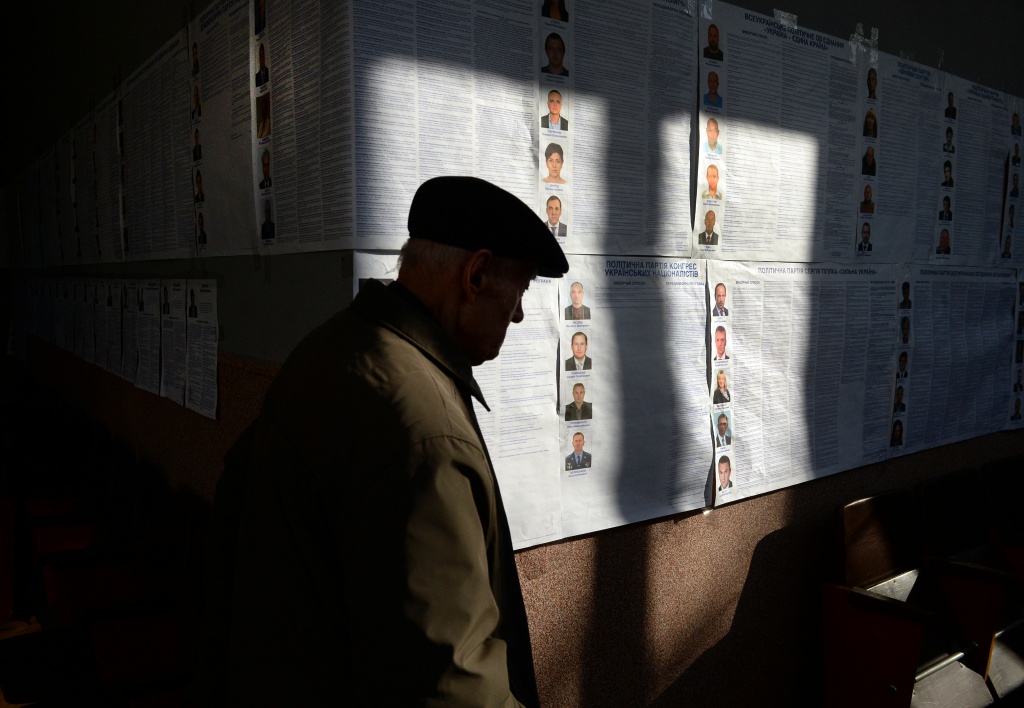
Among the deputies of the new parliament will be another former resident of Israel - Borislav Bereza, one of the two deputies representing the notorious “right -wing sector” (the second leader of the PS Dmitry Yarosh himself became the second one - both of them won the single -mandate districts. In the elections, on the party lists, the Right Sector failed without gaining 2% of the vote, once again demonstrating that the radicals do not use significant support. Even if you add the results of the “Right Sector”, the ultra-nationalist “freedom” and the “radical party” of the Ukrainian “Zhirinovsky” Oleg Lyashko, “about 14% will turn out to the circle-less than the ultra-right parties in many EU countries.
Vasily Maksimov/ AFP Photo
However, it is impossible to guarantee that the same Borislav Bereza, an rational Jew, with his European gloss, erudition, fugitive English and impeccable Hebrew, breaking stereotypical ideas about the dense Ukrainian nationalist-anti-Mesemite, in the future will slightly change the orientation and be in the ranks of some more moderate political power.
The heroes of the Maidan
Another bright person in an updated approximately half deputy corps is the famous centurion Vladimir Parasyuk, an unfinished student from Lviv, one of the ordinary defenders of the Maidan. Parasyuk became famous on February 21, when between Yanukovych, opposition leaders and international intermediaries, agreements were signed to resolve the political confrontation. But in the evening of the same day, when the opposition leaders went to the Maidan to talk about the agreement reached, Vladimir Parasyuk unexpectedly uttered a short emotional speech, the meaning of which was simple: the Maidan did not agree with these agreements, the Maidan does not intend to endure Yanukovych under the president’s post for almost a year - let him go out by 10 in the morning the next day! This amazingly turned out to be a point in the "platform" part of the revolution, Yanukovych fled from Kyiv that evening.
We can say that it is precisely such centurions as Vladimir Parasyuk that owes his liberation to Yulia Tymoshenko, who was met the very next day on the Maidan. She did not arrange an enthusiastic standing ovation - only polite, restrained applause. Tymoshenko did not seem to feel this. She would miss a move, invent herself again, as people from a close environment advised her, but she did not obey, went to the presidential election and failed with a crack. The train of this failure reached the parliamentary elections, many faithful associates, including the speaker of the Parliament of Alexander Turchinov, left Tymoshenko, and her "Fatherland" with difficulty overcame the 5% barrier. To write off the “Orange Princess” from the bills, possibly, prematurely, but her political career is clearly at the end. The outcome of the coalition negotiations will show much-whether she will offer any high position or she will have to be content with the role of the opposition, because taking into account the fact that the Communist Party of Ukraine did not get into the new parliament, the niche of the left opposition was free, it is possible that it is suitable for Tymoshenko, which had long been prone to social populism.
Legends and myths of the new Rada
The results of the parliamentary campaign quickly overgrown with all kinds of myths. One of the main ones - the victory in the election was won by the "Parties of the Maidan." It seems to be so, but not so.
In the new Rada, in fact, not a single “party of the Maidan” is presented in its pure form, and certainly not a single political force of those that determined his face. The Right Sector did not pass. The “democratic alliance” did not pass, which conducted all the most striking and independent protest actions against Yanukovych. He joined the “civil position” of Anatoly Gritsenko. The former “orange” Minister of Defense showed in May a good result in the presidential election, gaining almost a million votes (5.5%), and it seemed to many that his party should easily overcome the 5% barrier. Not overcame. Oleg Tyagnibok, who captured and held one of the key outposts of the revolution, the building of the Kyiv city hall in Khreshchatyk, also remained overboard.
As for the opposition parties and their leadership, the Maidan never recognized them as its leaders. Arseniy Yatsenyuk, who sometimes became an object of caustic ridicule, always caused special rejection. Its subtile appearance, inexorably causing the image of a sort of “Knowledge” in the “Smaks-Oski”, did not fit in any way with the role of a brutal platform. Even a weekly “revolutionary” bristle did not help. After once Yatsenyuk in a verbal impulse publicly promised to die for the revolution - either a victory or a bullet in his forehead - he began to sarcastically call him "Senya - a bullet in the forehead." The “Bloc of Petro Poroshenko” incorporated the “blow”, whose leader Vitaly Klitschko became the mayor of Kyiv, the “Fatherland” split. It’s not at all the forces that made a revolution in the Rada.
The second myth of this campaign is that pro -Russian parties lost the elections. It is not entirely known to talk about their full defeat - it is not known how many self -nominated “regionals” will join them. In addition, the oligarchs are Rinat Akhmetov, for example, although they suffered heavy losses, they did not go broke. They have media, experience and the ability to lobby their interests through acquaintances since ancient times. So the new parliamentary season in Ukraine promises to be interesting and full of surprises even for those who have seen the types of politicians.