
Translated material
Children's cancer
It seems that it is impossible to imagine a more absurd phrase. That these are nature errors or civilization fees - recognized The New Times
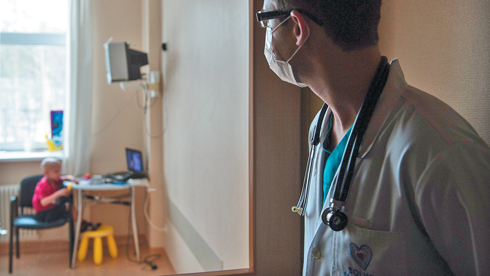
Yekaterinburg. In the postoperative chamber of the Center for Pediatric Oncology and Hematology in accordance with January 2015, the incidence of cancer in Russian children under 15 years of age is 120 cases per 1 million per year. Although the indicator has grown over the past 15 years, this, according to the chief children's oncologist of Russia Vladimir Polyakov, reflects not an increase in the number of diseases, but an improvement in detection: parents used to contact doctors, and, most importantly, the diagnosis of * * ** of the interview dated 05/25/2015, see here. In developed countries, children's oncological diseases are from 110 cases per 1 million in Japan, up to 165 per 1 million in the United States. In most developed countries, children's oncology occupies the second place among the causes of child mortality (in the first place are trauma and accidents). Children's cancer is a very heterogeneous group of diseases, and the spectrum of diseases in children is sharply different from adult oncology. About 30% of childhood cancer falls on blood disease, acute lymphoblastic leukemia (all), it usually manifests itself at the age of one or two years. Another third is diseases of the nervous system: astrocytomas (brain tumors) and neuroblastoma (tumors of the peripheral nerves). Then, according to prevalence, another disease of the hematopoietic system follow - acute myeloid leukemia (15–20%) - and a number of more rare diseases. Defected genes are approximately 5-10% of children's oncological diseases are associated with several famous predisposition genes. For example, 3% of sick children in the United States suffer from a retinoblastomic, rare eye disease, which is caused by one defective genome (in Russia there is no complete statistics of such patients). Some children are inherited by this gene from parents, and in the rest it mutates in the process of development of the fetus. This mutation affects one or both eyes, and with timely diagnosis, almost 100 percent cure is achieved, although vision is not always preserved. Another relatively common genetic risk factor is Down syndrome, which significantly increases the likelihood of all malignant diseases, including childhood. In particular, the probability of Oll increases by 50 times up to 5 years and 10 times in the next 10 years. But due to the relative rarity of Down syndrome, such children account for only 2-3% of all baby leukemia. The traditional method of studying the contribution of genetic factors to the development of certain diseases is the determination of their occurrence in the pairs of single -eating twins. The probability of the disease in both twins varies in different studies, but usually does not exceed 40%. In other close relatives of sick children, the probability of cancer is not much different from the average: say, in native brothers and sisters it is increased by no more than 2-3 times. Another approach to the study of the role of genetic factors and the contribution of heredity is a comparison of incidence in various ethnic groups. For example, in the United States, with an average total incidence of 165 cases per year, there are noticeable differences between ethnic groups per year: 120 among Afro-Americans and 173 among white. Modern technologies for deciphering the genome and exoma (i.e., the totality of working genes) will probably help in the search for new genes of predisposition to children's cancer. In the meantime, we can say that with most children's oncological diseases, a genetic predisposition has a very limited effect.

The civilizational risks of scientifically proven factors of the negative impact of the environment are few. The main firmly established risk factor is the Mother's radioactive irradiation during pregnancy (X-ray) * * Stewart A., Kneale GW Radiation Dose Effects in Releation to Obstetric X-Rays and Childhood Canceers. Lancet. 1970; 1 (7658): 1185-8. . However, now the radiation doses that are used in a regular X-ray are one or two orders of order less than it was in 1943-1965, when the study was done, and they do not pose such a danger. Computed tomography is much more dangerous: it requires 10–20 times more doses than an X -ray in 1970, and its use during pregnancy is practically excluded. The 1986 Chernobyl disaster made it possible to collect extensive statistics on the effect of radioactive pollution on the frequency of malignant diseases, including in children. The main consequence of pollution was an increase in the frequency of thyroid cancer (up to 30-100 times) due to the accumulation of the radioactive isotope of iodine * * Williams D. Cancer after Nuclear Fallout: Lessons from the Chernobyl Accident. NAT. Rev. Cancer. 2002; 2 (7): 543-9. . The frequency of other oncological diseases in children remained within ordinary statistical vibrations. The question of other environmental factors that increase the risk of childhood malignant diseases is contradictory - the results, as a rule, are on the verge of statistical reliability. For example, mother’s contact before and during pregnancy with pesticides slightly increases the likelihood of lymphoma in a child, but does not affect other cancers. Herbicides and exhaust gases of diesel engines can affect the total incidence of cancer in children, but there are no confirmed results yet. But in a number of works it suddenly turned out that another risk factor for oncological diseases in children can be both insufficient and excessive weight of newborns. In particular, the risk of acute lymphoblastic leukemia, tumors of the central nervous system and other neoplasms increases with an increase in the weight of the newborn. One of the possible explanations of this fact is that such children are exposed to growth hormone longer. On the other hand, the risk of the liver tumor increases markedly with a decrease in the weight of the newborn. But these observations require a convincing explanation to become the basis for preventive measures. Another risk factor is the general weakening of the immune system of the mother and the child. Against this background, there is an infection with HHV-8 carcinogenic viruses (one of the herpes viruses), hepatitis B, Caposhi sarcoma, Burkitt lymphoma. Some of these viruses are widespread in completely healthy people and cause cancer only with weakened immunity.
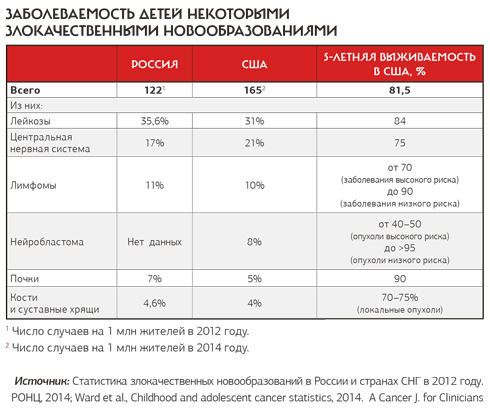

What the numbers show in the past statistical data showed that the number of childhood malignant diseases is growing, but this was explained by a radical improvement in diagnosis: for example, in the late 1980s, the use of MRI (magneto-resonance imaging) sharply increased the frequency of detection of brain tumors. Currently, breakthroughs in diagnostic methods are rare, and statistics of children's oncological diseases in developed countries are more likely to reflect the real state of things. One of the important works on the dynamics of the incidence of cancer among children was performed in the UK. It clearly shows that each increase in the incidence in 1966-2005 was associated with new diagnostic methods and improvement of registration of sick children, including universal compulsory registration introduced in the country in 1993 * * Me Kroll, LM, Carpenter, MFG Murphy, Ca Stiller. Effects of Changes in Diagnosis and Registration on Time Trends In Recorded Childhold Cancer Incidence in Great Britain. BJ Cancer. 2012 SEP 25; 107 (7): 1159–1162. . In another work, the incidence in the USA has been investigated over the past 20 years: the incidence increase was 0.7% per year, but the result did not reach statistical reliability. In Japan, since the 1990s, the incidence is slightly reduced. At the same time, for unknown reasons, the spectrum of childhood malignant diseases changes: the share of diseases of the hematopoietic system is growing in the United States and the share of diseases of the nervous system falls, in Japan - on the contrary * * Limin Yang and Junichiro Fujimoto. Childhood Cancer Mortaly in Japan, 1980–2013. BMC Cancer 2015: 15: 446. . Be that as it may, reliable data indicating the growth of children's oncological diseases in countries with a reliable accounting system. Unfortunately, the statistics of incidence in Russia are not complete enough. In particular, children, patients with Oll very often die from related infections, and as a result, their initial diagnosis is not recorded anywhere. The unreliability of Russian statistics indicates, in particular, a significant spread of data by regions * * statistics of malignant neoplasms in Russia and the CIS countries in 2012. M.I. Davydova and E.M. Axel. RONC Publishing Group, 2014. The budget for salvation oncological diseases in children develop much faster and more aggressive than in adults, the main condition for successful treatment is early diagnosis. Unfortunately, in Russia in 2012, 77% of children entered specialized centers in the later stages of the disease. In most cases, this is the result of the unpreparedness of the local doctors: a general general profile therapist often does not even ask the question of why the child is “sick” all the time, and is not an alarm. The treatment of children's oncological diseases includes complex protocols of chemotherapy, irradiation, the use of supporting drugs, sometimes requires bone marrow transplantation, and in the case of tumors, surgical intervention. This is a very expensive direction of medicine. It is unlikely that the situation improved after the closure last year of the Federal National Oncological Program and the reduction of 30% of the budget costs of healthcare * * Daria Burlakova. The state program to combat oncology will not be continued. November 14, 2014. But in Russia in 2012 (the last year for which statistics is available), only 1283 children were treated for cancer! The standard criterion for assessing the effectiveness of treatment of cancer is 5-year survival. In Germany, Japan, the USA, total survival reaches 82–83%. Of course, this indicator is very different for different crayfish: the highest survival - with thyroid tumors, blood cancer, liver tumors, kidneys, the lowest - with damage to the nervous system and sarcoma of soft tissues. If you believe in Russian specialized magazines, in Russia, children's mortality from cancer in 1989-2012 reduced almost double * * T.Kh., Polyakov V.G., Aliyev M.D. Epidemiology of malignant neoplasms in children in Russia. Oncodiatrics, 2014, No. 1, 7–12. . Nevertheless, it remains high, and it is not possible to calculate it quite accurately. The same article states that “the lack of learning of the sick children in Russia is currently at least 20%” and that “the level of mortality of children from leukemia and central nervous system tumors (which combined are half of all malignant diseases of children in Russia. - A.K.) in our country more than 50% higher than mortality in developed countries ... and mortality from mild tissue tumors (this is about 12% of all oncological diseases. A.K.) more than 2 times higher than similar indicators (in the countries of Northern Europe). ” Unfortunately, survival for 5 years does not mean that the child will be completely healthy in a more distant future. Firstly, one cannot exclude the return of the initial disease due to the incomplete destruction of malignant cells. Secondly, the main methods of treatment-radio- and especially chemotherapy-themselves are carcinogenic, and some chemotherapeutic drugs damage the cardiovascular system. In total, a quarter of all patients who survived for 5 years have been experiencing serious and even threatening complications in the future. These complications can disrupt the functions of almost any organs, affecting the quality and expectancy of life, but they are already in another field of medicine. Nevertheless, the progress, reached over the past 40-50 years in saving children's sick cancer, is difficult to overestimate.
* The author is a molecular biologist, candidate of biological sciences, in the past - an employee of the Institute of Molecular Biology named after V.A. Engelhardt. After moving to the United States in 1991, he worked at the Illinois University Medical School in Chicago.
Photo: Donat Sorokin/ITAR-TASS