
Translated material
Nevashensky
Alexander Morozov - about the fight against carriers of "alien code"
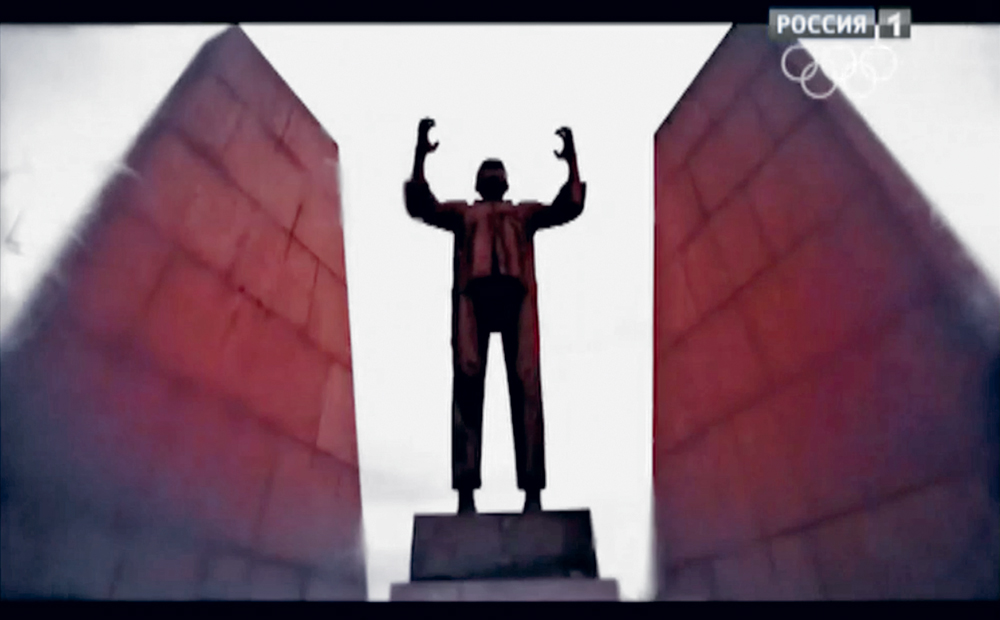
The frame from the film “Biochemistry of betrayal” TV channel “Russia” showed the author’s film “Biochemistry of betrayal” by Konstantin Semin. There are many heroes in the film-Cadad Milyukov and General Alekseev, the Provisional Government of 1917, General Vlasov and employees of the Radio "Freedom", Soviet dissidents of the 70s and anti-communists of the 80s, today's liberals, nationalists and so on. The audience, what to say, is motley. And it binds them, according to the author, the fact that all of them, regardless of the historical period, carried the “gene of betrayal”. This gene itself is the result of the “genetic political engineering” of the external enemies of Russia - the State Department of the times of Woodro Wilson, then fascist intelligence, then again the American State Department. The acute scalpel of the eternal and metaphysical enemy of Russia invades the Russian gene and gives rise to the “fifth column” in it, these are the very “wide rows of the Vlasovites”. By the way, a few days before the premiere of Biochemistry, TV presenter Dmitry Kiselev on the same main state channel collapsed on modern “cultural Vlasovites” - in particular, to the former governor of the Perm Territory Oleg Chirkunov, on Navalny and Marat Helman, Viktor Shenderovich. But since we are talking about a “gene”, any person can be “a traitor”, a “vain”, without wanting to be at all. Often, the Stalinist historian Yuri Zhukov, often flashing on different television channels, summarizes in the Semin film: each generation has its own “General Karbyshev” and its own “General Vlasov”. The television journalist Semin is a bright representative of the generation of thirty years. In 1991, during the collapse of the USSR, he was 11 years old. At the age of 24, he turned out to be a special commander of the VGTRK in the United States, in 2007 - Putin shot his first noticeable anti -American, propaganda film under Putin's Munich speech. And although now his film has already thundered against the backdrop of many similar creations Arkady Mamontov, Boris Korchevnikov and others, he himself is nevertheless an important event. Why? In the film Semin there is an expression "civilizational cultural code." In relation to the “Russian civilization”, the concept of “cultural code”, based on biological and genetic metaphors, for a long time wandered in the marginal circles of military retirees. There, carefully, with a pencil, read Khantington and Brzezinsky, considering them the great gurus of our time. Entire regiments of popular literature were written about the “Millennial War of the West against Russia” for reading in suburban trains, later these works penetrated into the bookstores of airports. But in the second half of the zero years, the idea of the “genetic” picture of the world moved from the periphery to the political center. Vladimir Putin and Patriarch Kirill are now publicly talking about the “cultural code of Russian civilization” and the threat to this code. This concept finally replaces the remnants of communist ideology in the mass consciousness of the new generation. The new generation, which grew up on the widespread theme of “otherwise programmed strangers”, political rhetoric, based on the metaphor of the “cultural code” and the struggle for its preservation, is perceived as a natural picture of the world. The older generation in this rhetoric is clearly heard by the propaganda mechanisms of Stalinism. But for the generation of Semin there is nothing specifically “Stalinist” in this. This is a computer “war of civilizations”, reinforced by Huntington and approved by the influential representatives of the senior Putin’s call - Vladimir Yakunin and his “dialogues of civilizations”, Archimandrite Tikhon Shevkunov with his “fall of Byzantium”, and now Putin himself. In other words, the idea of the battle of the “cultural codes” of civilizations becomes the base no longer for the left or right-wing political periphery, as it was in the 90s and zero, namely for the political center of modern Russia. The struggle is not conducted with the “opposition”, not with people of other views, but with “strangers”, with traitors of the Russian cultural code, with “rebirth”. Such is now the militant mood of the wide circles of the new “Eurasian generation” of thirty years.