
Translated material
An empty place
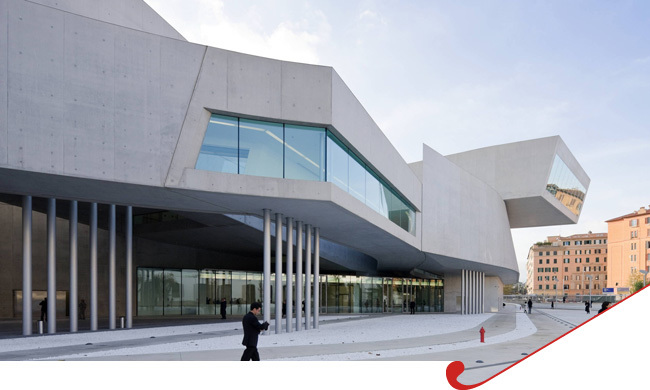
The flared disputes around the new Museum of Contemporary Art, having casually affected the architectural shortcomings of the project, went into the software and financial plane, ignoring the interesting phenomenon of the architectural significance of the Museum of Modern Art in our time. And this question is not idle, and the difficulties that the museum encountered is in some way related to this problem.
What place does the building of the museum, especially contemporary art, in the urban environment occupy? The answer seems obvious: all museums of recent years are different from any other buildings. These are structures that claim to be uniqueness, as a rule, provided with the choice of an architect with a world name and its specific architectural philosophy.
Museums occupy in the cities of the New Age the place of temples that have lost their significance. In a positive world devoid of secrets and sacraments, contemporary art has become the last stronghold of transcendental. Now his buildings should become symbols of cities, attracting pilgrims to them. Therefore, the same qualities are expected from museum buildings as expected from the cathedrals. No wonder the museums of the 19th century formally reproduced the pathos of ancient temples, although indirectly, through the churches and palaces of the nobility of classicism.
State museums of contemporary art is a relatively recent invention, obliged to the appearance of modern secular states to growing paternalism, deprived, however, by virtue of their structure unifying religious ideas that would substantiate this paternalism. And it is this property that leads to the exposition fluidity of art museums, which are built on the authority of specially hired curators built on an elusive authority. Museums of the past arose, as a rule, from private collections that grew up the needs of their owners, however, they were based on the result of choice and taste - that is, they were authoritarian, even if the taste of their founder was distinguished by eclecticism. In the case of curators specializing in contemporary art exhibitions, copyright ambitions are much less, since they are too fleeting on the scale of the museum building. The postulated “democracy” of the Museum of Contemporary Art, its alleged openness to the new and the rejection of the hierarchy in the exposition policy, leads to an increasingly spreading rejection of the constant collection and, therefore, from the constancy of the museum space. This sharply distinguishes the architectural essence of the museum from the essence of the religious building, with all its own way demonstrating authority, whose internal space is symbolic no less than the appearance, and jewelry and wealth complement the central meaning of the building, without taking its place.
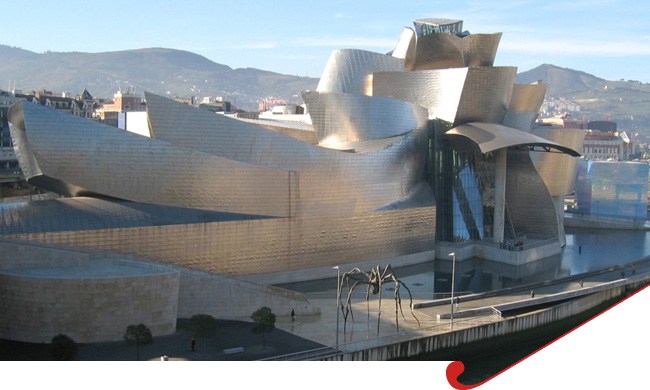 © User: Mykreeve Guggenheim Museum in Bilbao
The architectural structure always represents an authoritarian manifestation due to its size (in other words, invested labor), completeness and long-term, exceeding human life. In the case of buildings out of the ordinary, which, of course, are museums, this significance only increases. The deliberate authority of the external architectural form of the museum is devoid of content, more precisely, its physical internal content becomes conceptual, but not formal. Planning schemes rotate around varying degrees of ingenuity in the distribution of flows of visitors, employees and exhibits, in the composition of expressive vertical ties. The interiors of the exhibition halls, that is, those spaces for which museums are created, strive for ultimate cleansing of all expressiveness that could interfere with the works. The building of the modern art museum is essentially torn: outwardly demonstrating its significance and authority, internally it is a fundamentally empty place suitable for “any” statement, concentrated readiness.
It is not surprising that in the absence of an internal form due to the technical requirements for the exposition flexibility of the museum (and, in essence, exhibition) space, external, city images of modern museums acquire quite abstract forms. In some ways, we owe this mantra of modern architecture “you can build everything”, repeatedly confirmed by various examples of buildings of varying degrees of constructive incredity. However, the forms are closed in their own expressiveness. As a result of the building of museums, they manifest themselves, and not what is inside them, since their architecture reflects any problems, except for the problems of contemporary art, which is also not there on an ongoing basis. The pathos of modern museums contains, for example, in the victory of the forms over constructive difficulties, in meditative renunciation, in overcoming the spatial difficulties of the surrounding urban fabric, in the wit of their outer shell-they turn out to be works of modern architecture-in-sebe. It is noteworthy that with such an empty symbolism of the building of museums of contemporary art, on the one hand, they are in contradiction with the general conceptuality of contemporary art, and on the other hand, they become unconscious with institutional-critical gestures, which, in turn, contradict the very completeness of the architectural work.
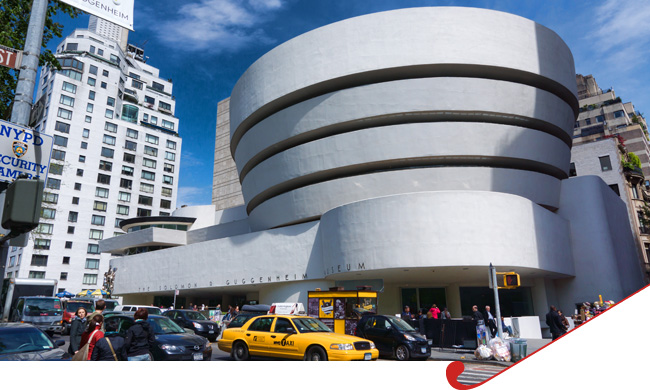 © Jean-Christophe Benoist Museum of Solomon R. Guggenheim, New York
An objection suggests itself for such a conclusion: after all, the modern museum building is modern and in its very unusualness it postulates this non-relief of modern art. In response, you can point out two circumstances. The first is that the architectural language of our time has not yet left the shackles or diapers of modernity and only taking into account the mass of historical buildings that determine the average taste, is perceived by extraordinary. However, the novelty is a kind of weapon, and what seems to it today is tomorrow's everyday life and the further, the more the halo of extraordinary loses. But most importantly, the second circumstance is an internal contradiction between the museum as the idea and nature of contemporary art, regardless of the architectural qualities of the building. The museum as a peak in the hierarchy of “achievements” cannot serve as an exponent of criticality inherent in the art of our time: the building is not critical in its very essence, being existing in time and space as a thing. More precisely, the criticality of the building can only be decorative: otherwise it would lose its essential grounds - the confrontation of gravity and the elements. That is, the very fact of the existence of the museum building is contrary to the properties of the art demonstrated in it, and the possible decorative criticism of this circumstance only becomes evidence of the impossibility of overcoming this contradiction.
Probably, this criticism can be extended to any modern symbolic buildings like airports, administrative buildings and stations, but only in the case of museums the contradiction of the architectural object and its content acquires such acuteness. Therefore, it is not surprising that the discussion about the architectural qualities of the project of the Federal Museum of Contemporary Art has ended without having time to begin. The problem contained in the very existence of such a museum in general as a museum and as a building has not been resolved to talk about architectural advantages and disadvantages. The architectural form is faced with the metaphysical impossibility of its existence. Against this background, private projects of individual museum buildings are of third -rate importance and do not deserve attention outside the professional environment and outside the advertising booklets of local tourism development departments. So, in fact, it happens.