
Translated material
To the borders
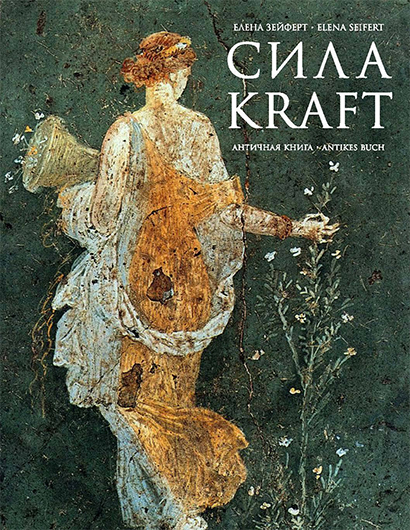
Elena Zeephart "ancient verses" happily avoid many traps awaiting anyone who addresses the poetic (and mythopoetic) heritage of the ancients, primarily stylizations and comic-ironic decrease. In fact, “antique verses” do not guess any specific normative sample to which they would send and which would be played in a particular value-semantic register. They have no imitation of ancient Greek or ancient Roman poetic sizes, as there is no reconstruction of certain types of ancient poetry and their features. From a formal point of view, they are organized as a modernist free verse, which is often bordering on prose and far away from its ancient and biblical sources. However, in domestic modernism, it is also not easy for them to find a precedent. "Alexandria Songs" by M. Kuzmin? But in them, with all the originality, the stylization, which E. Zeifft does not have absolutely no hearing. "Found Horses" by O. Mandelstam? But this is a bitter, tragic reflection on the fracture of the eras, the loss of solid historical soil and impotence of the word, while in “ancient verses”, despite the drama of individual episodes, the enlightened, festive tone prevails, the absolute power of the word/naming and freedom of aesthetic game reign. Rare Verlibers of Khlebnikov are also, perhaps, hardly suitable parallel. In brackets, I note that in the same way the “ancient poems” are far from the “postmodern”, critical in its intention to work with the ancient fragment-Ruin in Sergey Zavyalov Meliki.
 © Mavi groups
Before us is a powerful synthesis, which absorbs different poetic traditions and based on an accurate philological flair and knowledge of the classical world (knowledge, which, however, does not dominate the aesthetic freedom of handling the material, and this freedom itself does not fall into aesthetics). In the thematic center of these verses - transformation, metamorphosis, possibly remotely reminiscent of the "metamorphoses" of Ovid, but not at the level of composition or plot, but as a nodal poetological principle. “Now I want to tell about the bodies turned into forms / new ...” - this is how the first line of the first book “Metamorphosis” sounds in S. Shervinsky. E. Zeephart undergoes a similar transformation: the bodies, names, languages, things, geography, empire, feelings, historical and mythological characters, gods, heroes, kings, earth, sea and air elements ... And conditions, and a dynamic transition from one to another-metamorphosis-are given at the sensory-flat perspective, extremely physiologically. Above, I mentioned the "classic world." But, strictly speaking, we are not in front of us not the classical, but a subclacial, pondural (Dovinkelman) chthonic Greece, Greece, which has not yet known a harmonic measure and has not yet drawn clear boundaries between nature and culture, a thing and a name, external and internal, letter and spirit. The territories of the human and the divine are not yet divided, the boundaries are mobile, it is still possible. This is the childhood of mankind, but it would be reckless to call it unconditionally happy.
In many episodes of “ancient verses”, metamorphosis is associated with physical violence and very often - with the seizure of new territories, war. Along with the birth of the Greek spirit from the Latin letter and bodily transformation, this is one of the leading, albeit underlying, motives of the book. The author does not moralize and does not arrange assessments (and this is right), but the persistently present the context of violence and enslavement makes us think about the civilizational mission of the empire not only at the angle of well -balanced multi -language / polytheism / multinational state (the Romans, as you know, domesticated the gods of the conquered peoples and adopted their customs), but also under their customs). The angle of colonializing cultural policy, leaving an individual, aesthetic unconscious, deeply imprinted in the bodily practices of individuals and peoples, a kind of armed (expressed by the post -classical language). And this is the “objective correlate” that makes “ancient poems” by a real event.
Rome, October 18, 2018