
Translated material
Cleaning espionage
Roomba's “smart” vacuum cleaners can begin to collect information about the houses of their owners. Is it safe?
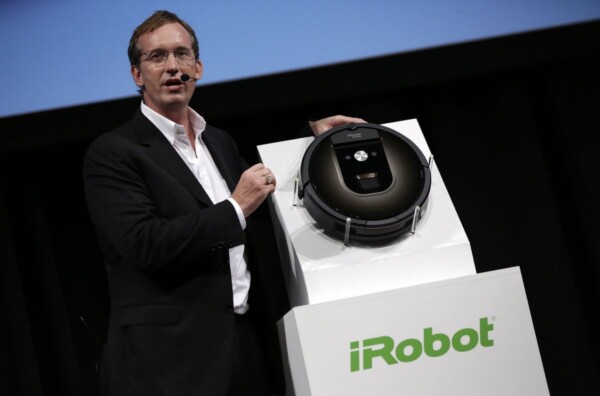
At the end of July, Reuters spoke about the plans of the IROBOT company, which produces “smart” Roomba vacuum cleaners, collect information about the arrangement of furniture in the user's house with its permission. The authors claim that this initiative can begin a revolution in the technology of the Smart House. However, opponents immediately had opponents. They saw in him the desire of the IT companies to “spy” for customers.
"Smart" vacuum cleaner becomes even smarter
A few years ago, the name of the co -founder of IROBOT Colin Angela was known only in narrow circles. Now, with his opinion, large technological companies are considered.
According to Angela, the world has greatly advanced in creating “smart” devices and, accordingly, a “smart” house that will favorably change human life. However, so far none of the giants of the industry has created a device that can scan in detail and remember the interior of user houses.
In a conversation with Reuters, the entrepreneur said that this problem can be solved with the help of “smart” vacuum cleaners Roomba. New models that will appear over the next two years will be able to remember the location of the furniture in the house, and then build its card.
A similar function already exists in Roomba models from 2015, equipped with cameras. However, they cannot transfer the accumulated data, only store. New versions will be able to remember the location of the house in more detail, write down and transmit these data to the IROBOT server. Anjel plans to transfer accumulated information to IT companies that are interested in the development of a “smart” house.
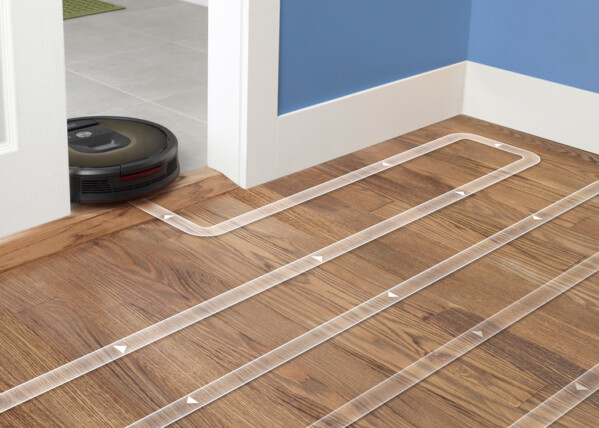
Although it will take a long time to implement such an idea, Angela’s proposal was immediately supported by Amazon, Apple, Alphabet (which controls Google). Each of these companies plans to use data to improve their “smart” devices: Amazon Echo, Siri and Google Home, respectively.
The representative of Amazon refused to comment on the promise of Angela, the press departments of Apple and Google ignored Reuters's requests.
Development prospects
According to the IHS Markit analytical company, the market for a smart home last year cost almost $ 10 billion, and by the end of 2017 this figure would increase by 60%. In part, thanks to this, Angela’s proposal was supported not only by technological giants, but also by IROBOT investors.
Now the total market price of the company is 2.5 billion dollars. Last year, she brought the revenue of $ 600 million. Despite the competition with the cheaper Analogues of Roomba, its models, at the price of 375 to $ 899, are occupied by 88% of the market of “smart” robots. It is not surprising that Angela is listening carefully to the words.
Professor of Robotics at the University of Kornel, Guy Hoffman, in response to the proposal of the head of IROBOT, said that the technology of detailed scanning and mapping in Romba would be a “major breakthrough” in creating a “smart” house.
With the help of advanced scanning, according to Hoffman, the robot permits will be able to store information about the acoustic qualities of the home, regulate the air conditioners at the right time and change the brightness of the lamps in the house depending on the location of the windows and time of the day.
Based on the scanning data, Roomba can, according to experts, indicate the location of the lost thing or advise the owner to buy furniture where there is a free place. Amazon, Google or Apple supported this perspective it is no coincidence: these companies will be able to use furniture in the house to advertise the user goods in their services.
For supporters of the IROBOT initiative, the practical benefit of the idea seems obvious, but this proposal could not but raise ethical issues. During the surveys, the Americans reacted coolly to the idea of revealing data about their house and found this "rather frightening prospect."
A wave of criticism
Although the head of the IROBOT several times clarified that the robot vacuum cleaner will be able to send information about the user's house only with its permission, it is not clear how the permit request will look. This can be a bright pop -up window asking a direct question, or a small line in the user agreement that not everyone reads.
In a conversation with The New York Times, a full-time lawyer of the EFF human rights organization (electronic borders) Jamie Lee Williams explained how large companies can use the data of the Robot Spoles. On their basis, you can calculate the average income of a person, and in the future the authors can teach the robot to determine the brands of furniture. This technology will be able to study the lifestyle of people, their needs and daily behavior.
IT giants have long been collecting information about users, constantly increasing data arrays. With the help of the IROBOT initiative, they will be able to find out even more.
One of the leaders of the Stanford Center for the Internet and Society Albert Gidari explained that the introduction of scanning technology will raise several legal issues. For example, what to do if the owner of the house, who approved the technology, will sell it along with furniture? In this case, the company will gain access to the data of the Human House, who did not give consent to their disclosure.
It is also not clear how long the information will be stored and whether insurance agents or police will be able to receive it to evaluate the lost or stolen property. Where exactly will the data be stored? If in the cloud, then attackers will be able to access it.
This problem has already been talked about in connection with the Amazon Echo smart-dynamic. Even during the announcement of the device in 2014, its authors clarified that all dialogs with a built -in voice assistant are recorded and sent to the cloud storage, where they are analyzed to increase the relevance of answers.
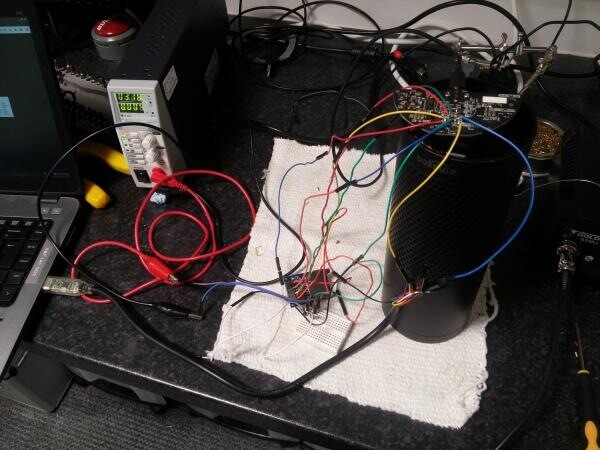
Only this year it became known that in the system of devices there is a vulnerability with which the virus can be introduced into it. According to the MWR Infosecurity research organization, using a gap in the system, the hacker can get remote access to the device, confirmation codes, as well as the gadget microphone. At the same time, no traces of the presence of a hacker in the system will not be fixed.
Researchers clarified that vulnerabilities exist in the version of the device for 2015 and 2016, and the version of this year is devoid of a system hole. MWR InfosecUrma reported the found Amazon error, and the problem should soon be eliminated. Nevertheless, this story demonstrates how modern “smart” devices can be used by attackers.
Even if IRobot can close all vulnerabilities, there will be enough open legal and ethical issues. If the initiative is realized, then the company will be among those who are constantly criticized for collecting user data.
#technologies