
Translated material
Triumph of the designer
In the St. Petersburg Theater Museum, the Exposition "All Bakst" opens
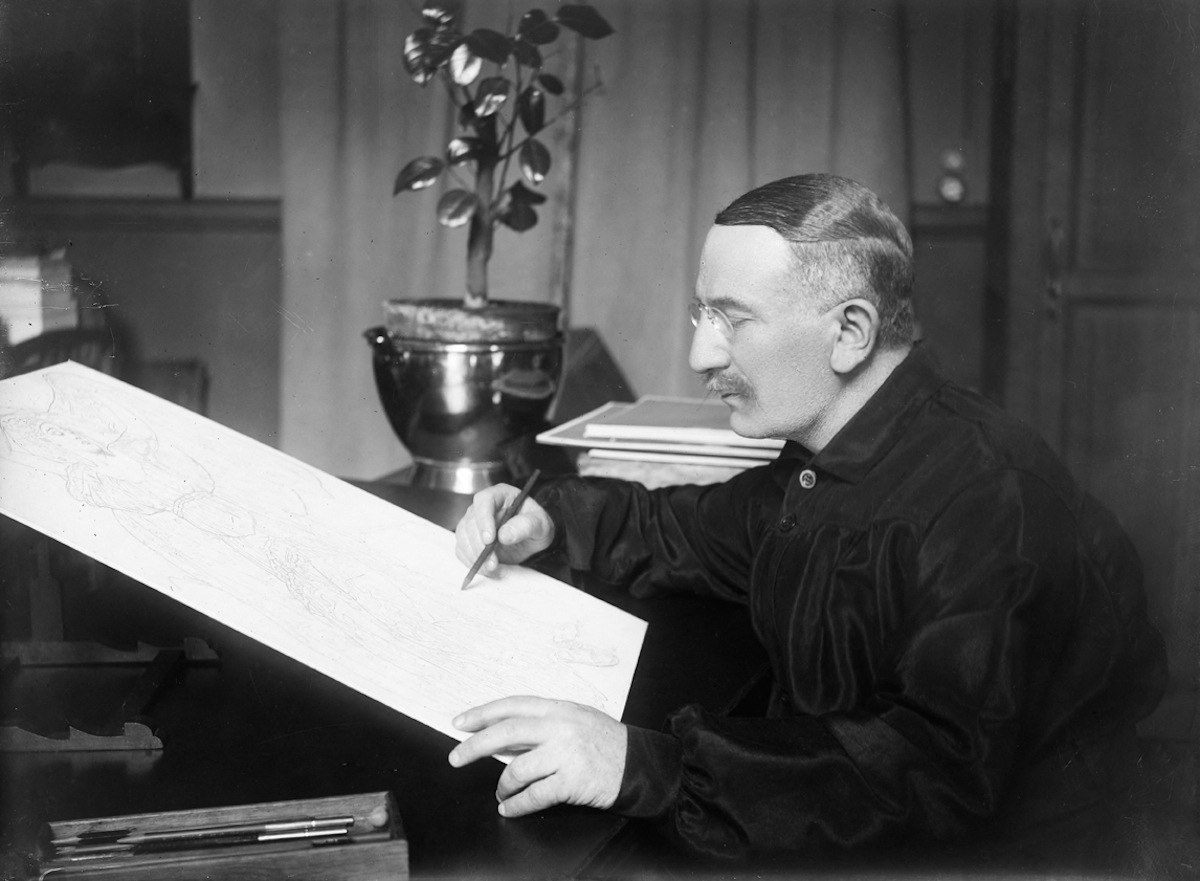
Only in 2016 they celebrated the anniversary - 150 years from the birth of Leo Bakst: you might think that the theater museum was late, but no - I managed just in time. On the retrospectives that held last year in Russian and Pushkin museums and in Minsk, they showed exactly what “all of the whole Bakst”. Large picturesque things, including programmatic panels "Ancient Horror". The famous portrait of Sergei Diaghilev is with a nanny in the background. And already the second front was designed, vignettes for the magazine "World of Art", theatrical sketches. All this was fed as a background to the most important - painting. With any other artist, this approach - big things against the background of handwriting - would have worked. But not with Bakst.
The theater museum waited for a pause and threw a trump card on the table. The ambitious name of the exhibition should be understood as follows: "Everything that you wanted to see from Bakst, but still could not." In 2008, the Konstantinovsky International Charity Fund handed the museum to the Sotheby's auction part of the collection of Nikita Lobanov-Rostovsky-the most representative collection of “myriscus” works and in general all related to “Russian seasons”. Until now, it was possible to see the collection of Lobanov-Rostovsky only in small parts. The Bakst exhibition is its first voluminous phenomenon to the public.
Mr. Designer
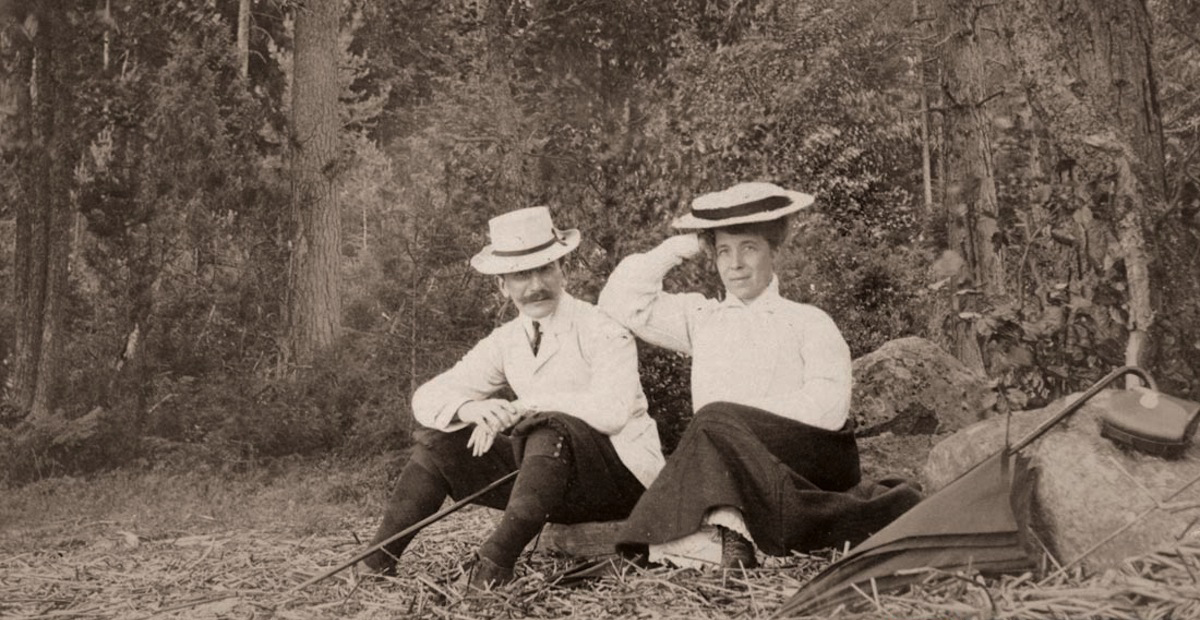
Leo Bakst was really not a painter. In the memoirs of contemporaries, the Grodno Jew (real name-Life Haim Rosenberg), who moved to the capital, appears as a kind of collective galatea of St. Petersburg snobs. Alexander Benois in his memoirs describes him as a hilarious figure, something between the Chekhov Epicode and Chebutykin. Calls only as a leverage. According to him, Bakst was sure that all the great people of the Jews: "... in belonging to the Jewry of Rembrandt, he did not doubt on the grounds that the great master lived in the Jewish quarter of Amsterdam and that there were many Jews among the people posing." Benois laughs: Bakst all the time drops and breaks something if he is asked to keep any secret, immediately spanks him. In general, a nonsense. I did not see the impressionists, about the Pre-Raphaelites-the Victorian avant-garde-unless he heard something out of my ear. He visited the Academy of Arts by the freedom, but did not graduate from it, like a gymnasium. The ballet does not love and considers it vulgar - prefers dramas and operas. But they learned him, showed what was happening to Paris (where he immediately got drunk and took off the prostitute) - and the great designer turned out.
“One of the advantages of Mr. Bakst is inherent in him the ability to give the first amazement the appearance of mock embarrassment”
It should be noted that when this image of Bakst was created, it has not been alive for many years. Before his death, he had been with his allies for a long time in constant disgraces. Benois held him a grudge for the fact that Bakst, in his opinion, appropriated the authorship of a number of ballets. In reality, things were a little different: the “world of art” did not raise a great artist from Bakst. The Petersburg snobs, the “Neva Pickwitsaians”, wanted to indicate his place to the ambitious provincial, but in fact helped to find their unique path in art. In the magazine Diaghilev - Benois, he painted illustrations and vignettes, developed fonts. Another artist would have perceived this as an insult - Bakst was fully realized here.
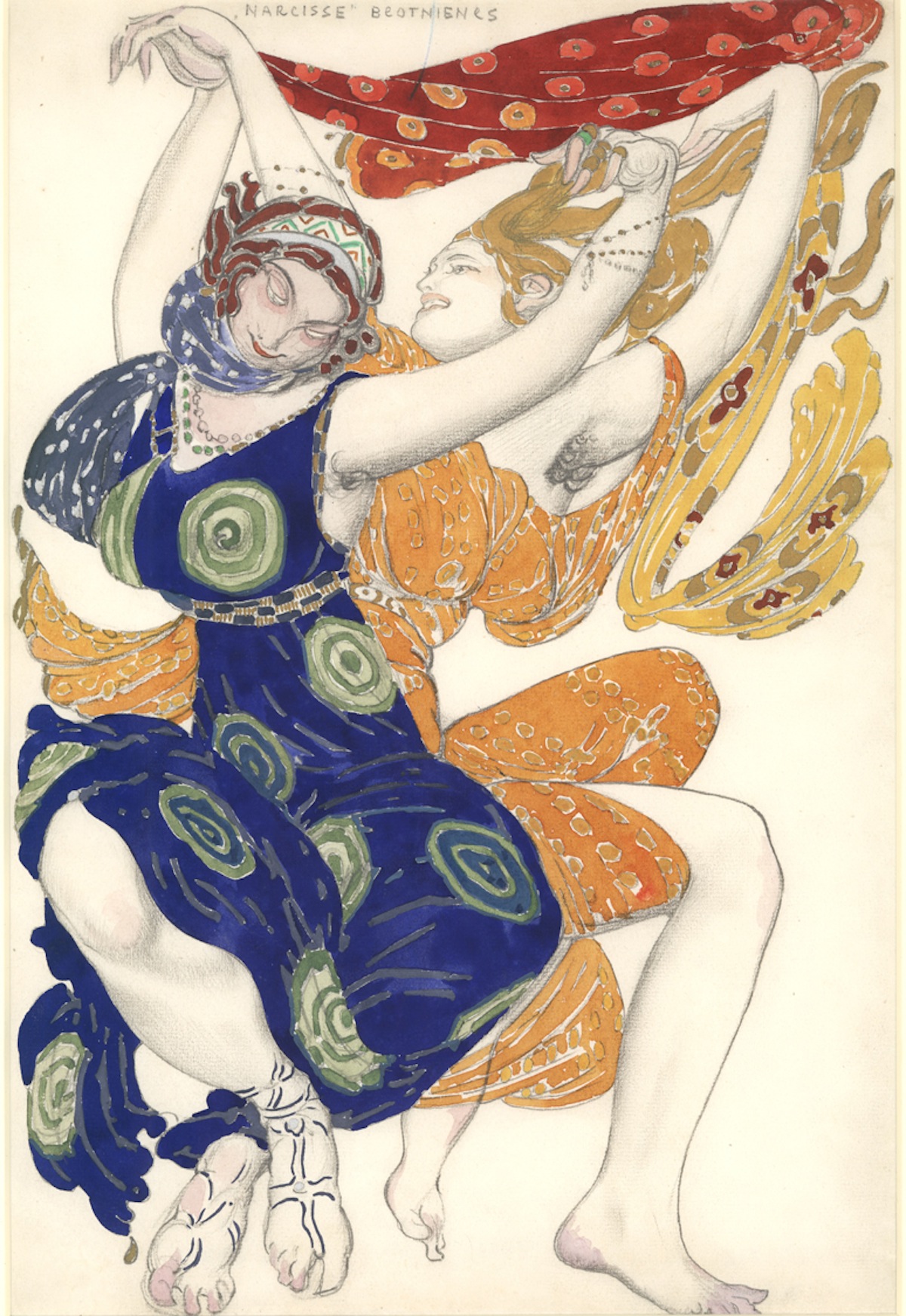
Style is a key concept for Bakst. Almost the entire XIX century - since classicism was blown away - there was no single visual image. It was a protracted period of imitations: pseudo -Gothic, pseudoralsansa and so on. Reflection on this subject is the natural part of the poetics of the Russian Fin de Siècle, from Chekhov’s prose to the “retaliation” of the Blok (“Neurasthenia, Boredom, Spleen”). Bakst filled this vacuum. He created the image to which they will follow. He led the surrounding reality to uniformity. Vignettes for the “world of art”, fonts and illustrations for “Apollo”, pictures for humorous “Zhupel” and “satirikon” created the way of time to a much greater extent than notes and types of Versailles Benois or the nostalgic dreams of Konstantin Somov.
Parisian seasons
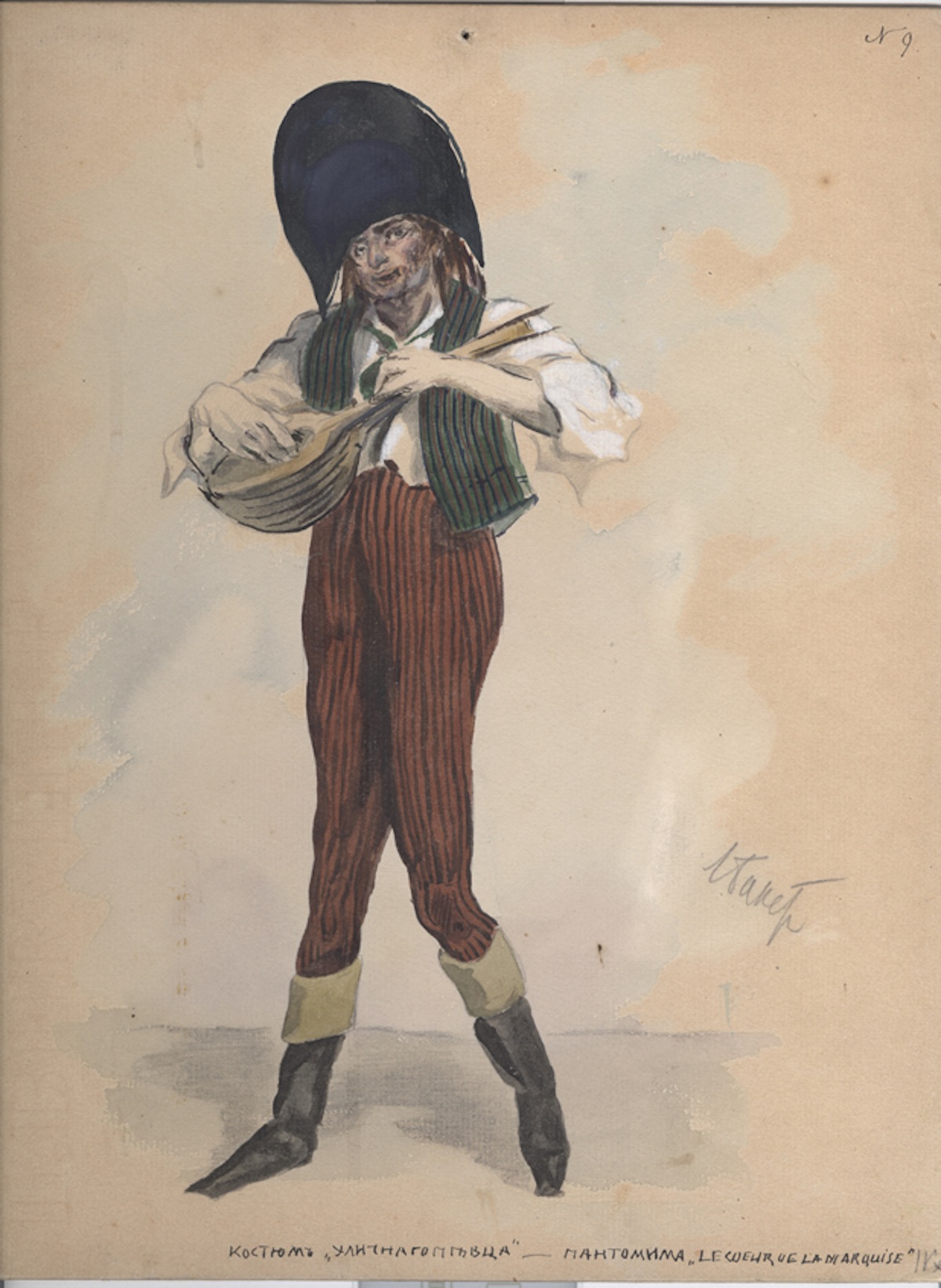
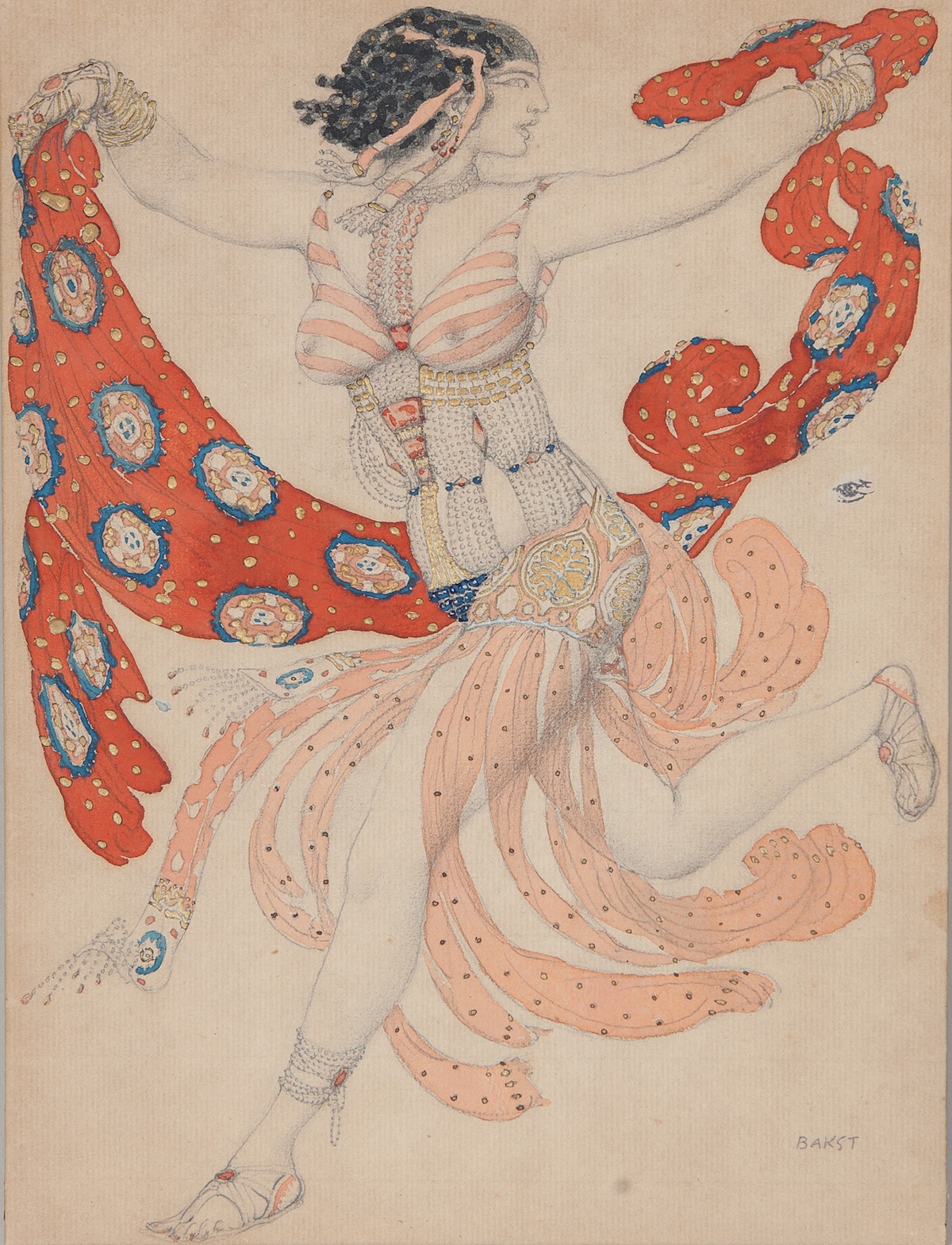
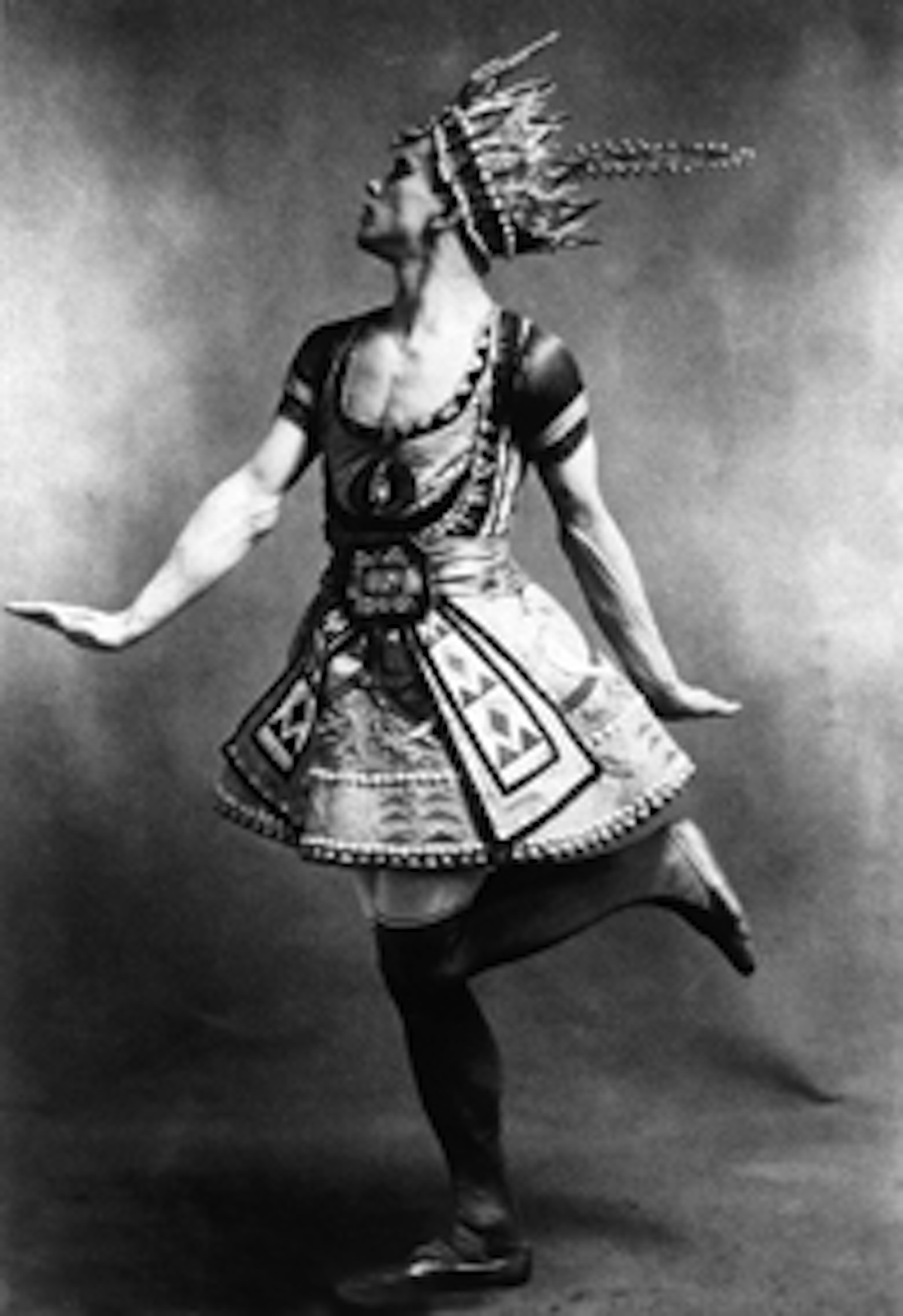
When Diaghilev in 1909 decided to open the Russian ballet seasons, he attracted Bakst to work with other Miriskuns. And again, the “technicality” of Bakst, its existence on the second roles ensured the artist success. He already had a rich experience of work for the stage - the Mariinsky Theater, the Hermitage, Alexandrinsky, private entreprise. If Nikolai Roerich and Alexander Benois came up with a spectacular stage decision and only, then Bakst was a master of stylization. The artist included in the visual image of the performance all its constituent elements. Bakst received the best of the possible materials for stylization-“Scheherazad” and “Firebird”. Danticated to the dancers - Tamara Karsavin, Mikhail Fokin, I go Rubinstein, Vaclav Nizhinsky - to turbans and trousers, filled the stage space with eastern exoticism.
After these two premieres, the history of real glory began. Paris, London and New York extol from Bakst as a legislator of fashion east. He ceases to be a “master of the designer” and turns into one of the most authoritative artists of the Western world. A person who determined the fashion of the 1910s: not artistic, but common to everyone. He collaborated with fashion houses, created the design of interiors and costumes. Jean Cocteau devoted several essays to him. In one of them he wrote: "One of the advantages of Mr. Bakst is the inherent ability to give the first amazement the appearance of feigned embarrassment, which only leaning the enthusiasm of the viewer." Time will pass, and the student of Bakst Mark Shagal, making out the grand-opera ceiling, will put his teacher on it on it. Symbol of new art. A symbol of time and skill.
Fifth point
At the same time, Bakt’s Diaghilev “Seasons” did not have the most rainbow relations. At first, the creative conflict occurred with Diaghilev - the entrepreneur sought to keep up with the times, and the artist insisted on continuing the “stylization line”. But really the duet broke up in the early 1920s and for financial reasons. Diaghilev ordered Baksta of the scenery for the “sleeping beauty” of Tchaikovsky and the “Mavra” of Stravinsky. While the artist was working on them, the entrepreneur for insurance ordered an alternative design to Leopold Survazha (otherwise Leopold Surskvag, an artist of Finnish-Data). Bakst found out about this and arrested his scenery. The case came to the court, which Diaghilev lost. There was no question of cooperation after this.
The talent of the stylist raised Bakst to a position that no Russian artist reached. But in Russia he became an outcast - the first famous emigrant "on the fifth point"
Bakst from the collapse of the creative union did not suffer too much: orders came from the Grand Opera, and from London, and from New York. The talent of the stylist elevated him to a position that not a single Russian artist reached. But at the same time in Russia, he became an outcast. It so happened that he became the first famous emigrant "on the fifth point." To marry Lyubov Gritsenko, the daughter of the Moscow collector Tretyakov, he adopted Christianity in the early 1900s. After the divorce, in 1909, he returned to Judaism. This demonstrative gesture caused unprecedentedly cool measures: the artist was sent from Russia at 24 hours. None of the high intercessors, including the Grand Dukes, could not influence the situation. Bakst left and, according to friends, vowed to never return again. The power was recovered, he was elected a member of the Academy of Arts (which he did not graduate). Nothing helped.
The image of the time
Bakst was the first to determine the path that the artist can go in a new society. There is a strategy for existing outside galleries and collections. He built his own alternative to the snobbish art test of the turn of the century. The same road-the design, creating a style-then the Bauhaus will go, the visual image of the era was created by Andy Warhol's “Factory” in the 1960s. Now figures like the Danish Olafur Eliasson are engaged in something similar, who creates gigantic kinetic sculptures and is working on ballet production in the same Paris.
“Russian Seasons” in general and Bakst in particular - perhaps the only case of a hundred percent successful Russian image project. Classical Russian literature is a loud brand, but Leo Tolstoy, Dostoevsky or Turgenev nevertheless became for the world those who became, not quite of their own free will. Diaghilev and Bakst systematically created the image of a wild, energetic, bright land of bold artists. The lands of the "Spring of the Holy" Stravinsky and "Steel Cope" Prokofiev. Casimir Malevich and Dmitry Shostakovich, Alfred Shnitka and Ilya Kabakov, Timur Novikov and Sergey Kurekhin, who once formulated her essence: “The greatness of Russian culture is in its total madness” fit into the same matrix of Russian art. We still cannot come up with a better national idea than madness.
Photo: Rierr SHOUMOFF/ROGER-VIOLlet/East News, Federico Parra/AFP/East News, press service of the theater and musical art museum, AKG IMAGES/EAST News