
Translated material
Thaler, dollar, efimm
On May 29, 2017, Spain released the silver coin "History of the dollar" weighing 1 kg and a diameter of 100 mm (ill. 1). Its face value is 300 euros, but on numismatic sites it can be bought for about 1750 euros - in a wooden box, with a booklet and a certificate. The circulation is one thousand, all the coins have an individual number on the gurt. If someone has a completely extra one and a half thousand euros, you can try to pay such a coin in the store. In general, coins with the image of coins are an interesting plot, and we will come back to it someday, but now the same story of the dollar. Or thaler.
At the beginning of the XVII century, silver deposits (ill. 2A) were opened in the ore mountains in Bohemia. In 1618, the local ruler Count Stefan Schlick received a monetary regalia from the king of Hungary, Croatia and Bohemia Louis II Yagellon (ill. 3) and began the minting of full -fledged silver coins (ill. 4), called JoachimStalers around the town in which there was a monetary yard, now it was the Yakhimov in the Czech Republic (Il. 2b). (For physicists, we mention, although this has nothing to do with the coins that in 1898, Maria Curie opened Radiy in Uraninitis, extracted just in Joachimstal.)
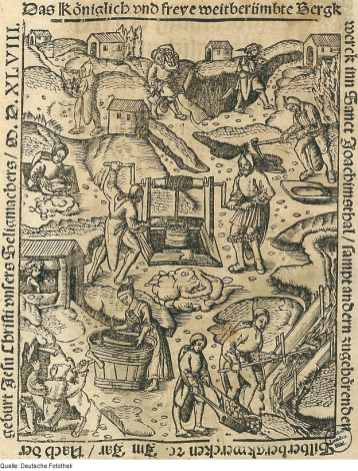 2a. Silver mining in Joachimstal (engraving of 1548)
 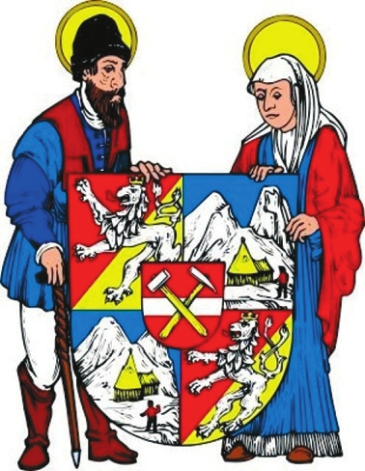 2b. The coat of arms of Yakhimova from St. Joachim and St. Anna (Wikipedia, Deutsche Fotothek; TaggManager.cz )
 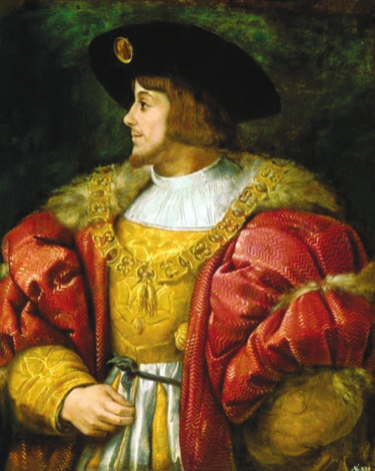 3. Titian. Portrait of the King of Hungary Louis II (1526)
In 1519, more than 90 thousand thalers were minted, in 1527-more than 200 thousand, and from the beginning of minting until 1545-more than 3 million thaler weights were 29.5 g; The content of silver was at first 27.2 g, and from 1534 it decreased to 26, nevertheless, the Austrian Archduke Ferdinand I Gabsburg, who became the ruler of Bohemia in 1527 and the next year the coinage of the coin of the coin from the Schlikov family, and his heirs resisted from the noticeable damage of the coin, and almost two hundred years, from the 1566th to 1750th, the Reichstaler was the main monetary monetary a unit of the Holy Roman Empire. Taler images were minted in many European countries. We will give those of them that were depicted on the 300-European coin, and about some we will tell you a little more (ill. 4–9, 11).
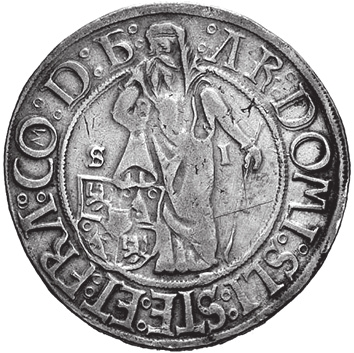
4. The first version of Joachimstaler, 1519-1523 (300 euros on the Avers on the right is a later option with the date “1525”). Avers: St. Joachim and the inscription of the counts of Schlikov. Reverse: Bohemian Leo and the name of King Louis ( en.numista.com )


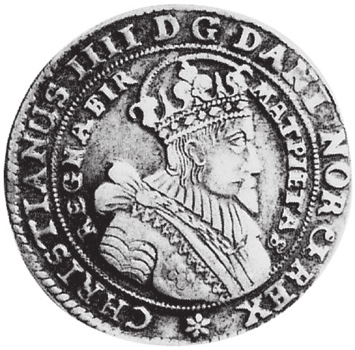
7. Speaker (120 skilling), Norway, Christian IV, 1635 (300 euros on the reverse on the right - date "1637") ( ngccoin.com )
Perhaps the most famous thaler was the Austrian thaler of Empress Maria Teresia (ill. 8), who ruled from 1740 to 1780 (300 euros on the reverse below). After her death, such thalers, slightly distinguished by small details of the drawing, were minted not only in the monetary courtyards of Austria-Hungary, but also in the UK (Birmingham, London), in the capitals of continental Europe (Brussels, Paris, Rome), in India (Bombay, Calcutta), in China, Brazil, Mozambique and mosembic Ethiopia, on Madeira, Java, Celebles and Azores, in the USA (Karson City). These thalers have become the main payment remedy for trade in East and Southeast Asia.
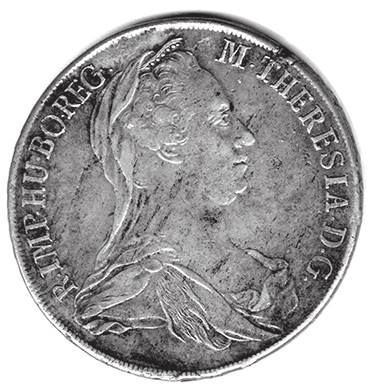
8. Thaler of Maria Teresa, Vienna, 1780 ( Theresia.name )
In a number of Arab countries (Yemen, Djibuti, Emirates Nedz and Hijaz), Thaler of Maria Teresa became the prototype of the local Rial (however, this word comes from the Spanish Real Madrid, see below). In total, more than 300 million such thalers were minted; In 1946, the Vienna Mint established a monopoly on the minting of the thalers of Maria Teresa and since then mumbled about 50 million of these coins.
Thaler of Maria Teresa was one of the first coins addressed to the United States; Before him, in the thirteen first colonies, Dutch Daalders were popular; Apparently, the name "dollar" comes from here. In 1792, the secretary of the Treasury Alexander Hamilton (his portrait was depicted on a modern 10-dollar bill (ill. 9)) investigated the Spanish silver coins and defined the US dollar (ill. 10) as a coin containing 371 8 granu pure silver (slightly more than 24 g), or 416 grains of standard alloy (1485 parts of silver for 179 parts of impurities-this Deliver test 885). In the middle of the 19th century, an increase in silver price compared to gold required a decrease in the sample and weight of silver dollars and their derivatives.


The symbol of the dollar is a twice crossed out the letter $, apparently ascends to the Hercules pillars depicted on the Mexican coin in 8 Real (ill. 11). The history of this image is also noteworthy: in the Spanish emblem of Hercules, pillars with the Latin motto Non Plus Ultra (“Next - Nothing”) were introduced in 1492 by the king of Aragonia Ferdinand II, and after the discovery of America, the motto was replaced with Plus Ultra (ill. 12a), and part of the coat of emblem of the Spanish colonies (ill. 12b).

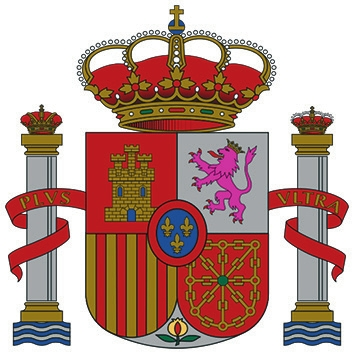
12. (A) the emblems of Spain and (b) the Spanish Western India (colonies on the islands of the Caribbean; expandfully the term was applied to all Spanish colonies in America)
We expand geography. In the second half of the 19th century, in East Asia, in addition to Thaler, Maria Teresa, Mexican peso were popular (as coins in 8 reals began to be called) (ill. 13), and the local population did not accept dollars, which at that time were about half a gram easier. Starting the minting of the so -called trading dollar (ill. 14), the American government hoped to supplant other coins from the market and earn on the difference in the nominal value and the price of the silver contained in it.
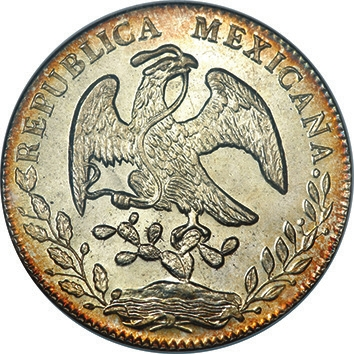
13. 8 Real (Peso), Mexico, 1868 ( en.numista.com )

This was not quite possible, since the sample of American coins was lower than that of thalers and peso, and they were not very popular, especially in Northern China. A few years later, the price of silver fell, and enterprising merchants began to buy coins at the price of metal (about 80 cents per dollar), export them to the United States and pay like dollars there - the treasury suffered losses. As a result, the walking of trade dollars in the United States, and soon their coinage was discontinued. Nevertheless, in five years, from 1873 to 1878, almost 36 million coins were released; Single specimens for collectors were minted until 1885.
Around the same time, the East Asian countries began to produce their own large silver coins; In particular, in 1874, the coinage of the Japanese yen began (ill. 15). Numerous and diverse fakes for all these coins can be bought in flea markets in China or on online auctions; They can be recognized by small errors in the figure, impossible combinations of dates and labels of monetary courtyards, and, of course, on the metal from which they are made.
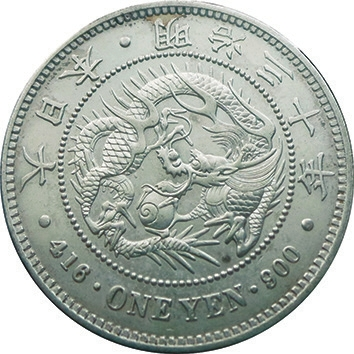
15. 1 Yena, Japan, 30 years of Meji era (1897) ( en.numista.com )
The irony is that, since in 1965, the US Congress Congress act was restored as a legal payment vehicle, owning fake coins in the United States or selling them, say, through e-Bay, it is formally a crime.
In Russia, talera was called Efimki - according to the first part of the original name. The Efimki of different mints distinguished them, but they did not have all circulations in Russia and were used only as a source of silver: the merchants who brought them should have taken them for rumbles in a penny; Talers, and at the underestimated course, customs payments were accepted.
Initially, the sample of cents was higher than the thale test, but it gradually decreased. The decrease in silver content in the kopecks under Tsar Mikhail Fedorovich managed to hide: “How Russian Dengi redistribute from the Efimki, and a lot of ore comes out of the Efimki, and the Silver is the cleanest in the Dengi,” Russian ambassadors said during negotiations with the Swedes in 1649 (we quoted by A. S. Melnikova [1], which, in turn, quoted by K. Yakubova [2]). However, it was impossible to hide the weight of the weight of cents, and the thaler rate grew with 42 kopecks immediately after the end of the Time of Troubles (1613) to 48 kopecks in 1619–1630 and further to 50–52 cents.
Tsar Alexei Mikhailovich set a course of 48–50 kopecks for the efim, depending on his type: “... trading people will learn to give a freshness for the efimki, or who will learn the goods to change the efimki, and that they would give them the denigures according to your sovereign, for the Lyubov Efimi according to half a tin, and for the croof according to the signs” [3] (3] (3] (Lyubovsky Efikom - Tale of the city of Lyubeck, Kryzhovy - a variety of the Dutch Daalder with the image of a oblique cross (ill. 18)).

18. Patagon (Albertostal, Kryzhovy), Brabant (Spanish Netherlands), Philip IV, 1646 ( en.numista.com )
The real price of Efimka was higher - 60–64 kopecks; About the same turned out from Taler during the rumper - but it could not be installed on the market, because there was no market. Already in 1649, in the royal penal distribution to the merchants of Arkhangelsk it said: “Which of the German entertainers will be in the assurances of Efimki, and those Efimki would buy it for the sovereign, and money for goods and money in customs duties, and did not tell anyone to buy the sovereign treasury, and orderly order it” [4].
According to A. S. Melnikova [1], the transition to the thalest samples of silver occurred around 1626. However, real events happened later, during an unsuccessful attempt to monetary reform, Alexei Mikhailovich, which led to a copper rebellion.
The need for the reform was clear for a long time: two denominations that went in the country - money and a penny (half -lines were almost minted) - could not fully serve trade: there was not enough shared exchange coin, nor a large coin for large trading transactions. In 1654, new coins were minted: a silver ruble (ill. 16), which was minted on thalers with a shot down image; copper hip, equal to the ruble by weight; Silver Politina (ill. 17), minted at the four parts of thalers, cut into four parts; Copper Altyn (3 kopecks) and a penny (2 kopecks), the weight of which was calculated based on the weight of a penny; And a silver penny that was actually the only full -fledged coin.


It is clear that such a system was absolutely inoperative. The senior denomination, the ruble, weighed half of what was supposed to proceed from the weight of cents. Copper coins were not bargaining to the silver ones, but should have been walking at a forced rate. The population refused to accept new money, and the monetary courtyard experienced difficulties with a minting rubles: the thalers were too firm.
In 1655, it was decided to produce large coins, but by the old foot. To do this, thalers rushed a mint with a mint with the image of a rider and separately - with the date "1655". The new coin was called Efimi with a sign (ill. 19), it was equated with 64 kopecks, regardless of the weight that could hesitate somewhere within the gram around 29 g. At the same time, a minting of copper cents began (using conventional stamps). Their immoderate release led to impairment and copper rebellion of 1662; As a result, in 1663, copper pennies were redeemed by the treasury at the rate of 100 copper cents for one silver.
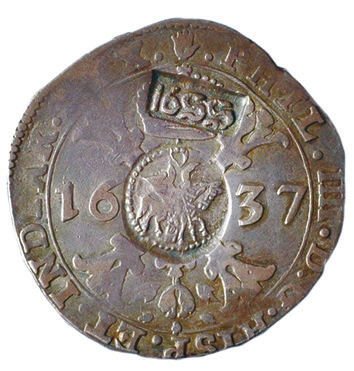
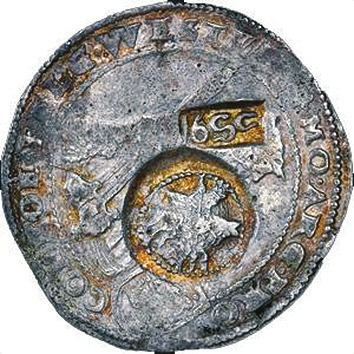
19. Efimki with a sign: at the Patagon of 1637 (cf. Ill. 18), on the Daalder 1650 (cf. Ill. 6 - Avers must be turned so that the top of the coin has been for about two hours), on the Saxon Talera of 1579 (Wikipedia; raaritetus.ru )
Now the price of Thaler is hundreds of dollars, Efimka with a sign is thousands. Since it is relatively easy to make the percann, a lot of fakes are turned on the market, which are difficult to identify, especially since there are many options for stamps that produced a real overclock.
Well, in conclusion, we mention two failed monetary units. Among the numismatic experiments of Paul I was a trial efimom (ill. 20), which was planned to be equated to one and a half silver rubles. And in the early 1990s, some political figures of Belarus proposed to make Thaler the main monetary unit of the new state, but the Presidium of the Supreme Council of Belarus left as such a ruble.
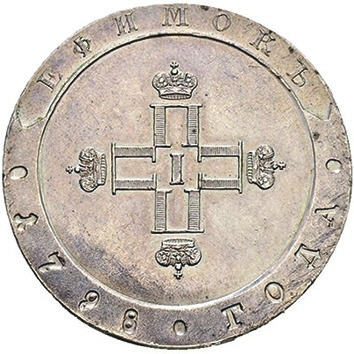
20. TRASTE EFICOM Paul I, 1798 ( vechi.com.ua )
M. G.
1. Melnikova A. S. Russian coins from Ivan the Terrible to Peter the Great. M.: Finance and Statistics, 1989.
2. Yakubov K. Russia and Sweden in the first half of the XVII century. M., 1897.
3. Russian-Swedish economic relations of the XVII century. No. 100. Cit. by [1].
4. Additions to historical acts, collected and published by the archaeographic commission. T. III. No. 55. St. Petersburg, 1848. by [1].