
Translated material
Around the pandemic
In society
 Around the pandemic
December 11, 2020 Boris Kolymagin
Pandemia brought fear. He hides in the rhetoric of power and in the movement of bodies, but most of all in the voids that formed in places where politics, culture, and religion used to live. The disease lurks somewhere behind the plane of the screen, on the other end of the phone, rests on a social distance. This is not our fear. Because we know our fear and cannot talk about him while he is in us.
But now - we let him go. And we see how, under the influence of fear, familiar things acquire a different color, go into virtuality, and hold on some thin threads.
What happened to our tactfulness? Why did the noise of football fans remain in history? Why did the versatility move to the number and the borders of the states were again on the castle?
Fear acts as power. Actually, this is the force that changes objects. But this is by no means active power (we will use the language of Nietzsche). This is a reactive, lower force. We find ourselves captives of our reactions, the thought becomes frankly nihilistic. Nigalism captures us.
You can say as much as you like that completely new opportunities for communication through Zoom have opened, that thanks to self -isolation we managed to read, listen, see many interesting books, lectures and films. These are trifles compared to the claw that drags a person into darkness. The new power is destructive in nature. Her nihilism is visible, for example, in how a person is silent.
The pandemic plunged many people in forced silence.
Silence, of course, can be its own , fruitful, in which something is born. But we are talking about someone else's silence. About the silence, which, if you turn to the classic images, is experienced by the mother in front of the tomb of the only son. There were a lot of it, a lot. This silence occurs not only in the hospital, in the nursing home, at the habitat of homeless people. It is injected into many cells of the social organism - small doses.
Alien silence speaks of the impossibility of going somewhere, going somewhere. It pushes to the rejection of mercy, from collective actions. In a word, from being together. Parents, friends - only a voice in the tube. And nature is only a look from a high -rise building to the courtyard.
All this is not so. Because the power of fear is opposed by other forces - if our will is not inactive. And they change modified things. Give them another sound. The very attempt to think in a situation where the thought becomes lonely and does not meet the response, there is already a sign that everything is not so clear.
Of course, fear can not just be crossed out. He returns to us, recalling the horrors that experienced medieval cities during the epidemics. And yet, reassuring ourselves and others, we can say: this is not a plague or cholera. Fear is measured by quantity. In the Middle Ages there was more.
Those who cross out fear, who become a Covid dissident, work for him. Their behavior is still due to pandemia.
One of my American acquaintances spoke about the situation in their city, which was divided into several districts. In one of them is hard quarantine, most shops and restaurants are closed, the streets are dimly lit. There is no quarantine in another sector, music plays, advertising shines. His house stands on a boulevard sharing two districts. You can walk quietly, burying, in one, and have fun in the other.
Perhaps this city is a metaphor for the pandemic world. Everyone decides in which area he wants to be. Or, depending on the time of day, in which place. The authorities, based on the epidemiological, and somewhere from the political situation, draw a red line. But the boundaries were drawn not only in the outside world, they are inside us. And they change all the time and play with us.
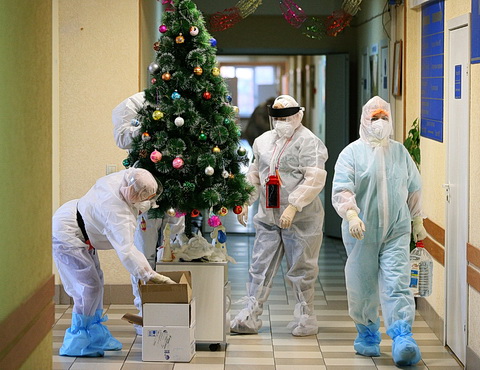
Photo: 11.12.2020. City clinical hospital No. 3 in Ivanovo during the Pandemia of Coronavirus. Vladimir Smirnov/TASS