
Translated material
“Open Source”-activist presented a platform for free mobile devices
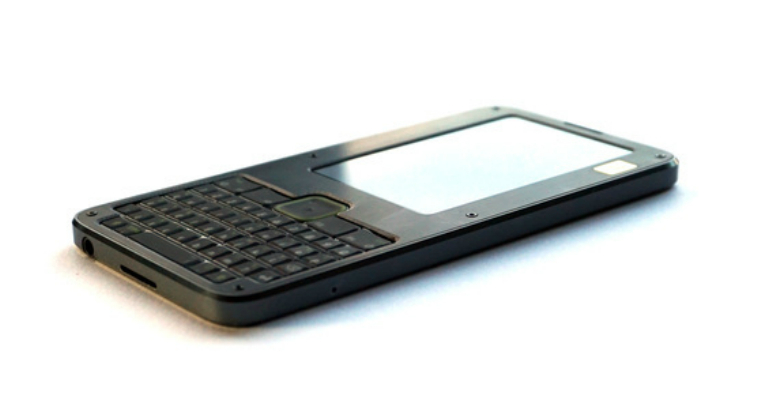
Andrew Huang, who gave the world a free Novena laptop and a fee for creating an open NetV2 video, launches a crowdfunding campaign to create a new Precursor Openceavor device.
The well -known “hardware hacker” and an Opensoric enthusiast Andrew Huang, awarded the EFF Pioner Award 2012, introduced an open Precursor platform, designed to create concepts of new mobile devices. By analogy with how the Raspberry Pi and Arduino allow you to create devices for the Internet-wing, Precursor is aimed at providing the opportunity to design and assemble various mobile devices with your own hands to solve their problems.
Precursor platform is presented to create free mobile devices
Published Opennet Monday, September 21, 2020
Unlike other projects, Precursor offers enthusiasts not just a fee, but a ready-made prototype of a portable device with an aluminum case, an LCD screen, a battery, a miniature keyboard, a loudspeaker, a vibromotor, an accelerometer and a gyroscope.
Huang sees his goal of a portable platform, which could be reviewed and configured. The device, according to him, has FPGA , which can be programmed to emulate various low -energy processors, and hardware can be “tested, dismantled and hacked by an experienced user”.
Of the capabilities associated with safety, there are two hardware generators of pseudo -random numbers. It is interesting that the device is fundamentally supplied without a built -in microphone - it is understood that sound intake is possible only when the headset is clearly connected, and if the headset is disabled, it is physically impossible to organize eavesdropping, even if the device software was compromised.
The wireless chip (Wi-Fi) is hardened from the rest of the platform and works in a separate environment. To protect against unauthorized access, a lockable case, a separate RTC to track integrity, monitoring of movement in standby mode (always included by the accelerometer and gyroscope) are also used. It is also provided for the presence of a chain of self-destruction and instant cleaning of all the data activated using AES-Slok.
To describe the hardware components, Migen (Fragmented Hardware Description Language), based on Python, is used to describe the hardware components. Migen is part of the Litex framework, which provides an infrastructure for creating electronic circuits. On the basis of Precursor using FPGA and LITEX, the standard SOC Betrusted is prepared.
The SOC Betrusted provides a built-in set of cryptographic primitives, such as the generator of pseudo-randomic numbers, AES-128, -192, -256 with the ECB, CBC and CTR, SHA-2 and Sha-512 modes, crypto-engine based on the Elliptical curves of Curve25519. The cryptodes is written on SystemVerilog and is based on crypto -ties from the Google Opentitan project.
Precursor is positioned as a platform for creating and verifying prototypes, while Betrusted is one of the finished mobile devices created on the Precursor basis. Since traditional enclaves used for isolated storage of cryptoscneys are not protected from high-level attacks, such as password collection using keys or access to messages through the creation of screen screenshots, elements of interaction with the user (Human-corpuscular interventing) are added to Betrusted. Guaranteeing that the secret data that a person can read will never be saved, shown or transmitted outside the protected device.
Betrusted does not try to replace a mobile phone, but only forms a protected enclave with input and withdrawal, accessible to the audit. For example, an external smartphone can be used through Wi-Fi as not a trusting data channel, but the transmitted encrypted messages are recruited only on the built-in keyboard of the Betrusted device, and the received messages are displayed only on the built-in screen.
All components of Precursor and Betrusted are open and available for modification and experiments under the Open Hardware Liceance 1.2 license, requiring the opening of all the derivatives under the same license. Including schemes and full design documentation of the main and auxiliary boards, finished implementation of the SOC Betrusted and the controller (EC) are opened. Models are available for 3D printing of the case. In the form of open projects, a set of firmware and a specialized XOUS operating system based on micro -rewell are also developing.
Preursor may not be powerful enough to replace the modern smartphone, but Juang says that it has more power than Palm Pilot or Nintendo DS.
“Just keep in mind, this thing is intended for developers and hackers, and not for end users,” the profile publication Liliputing notes. “Nevertheless, it's all quite cool.” Prices and availability have not yet been declared, but more detailed information will be available on the Preursor Crowd Supply page in the near future. ”
Andrew Huang is a fairly cult level of an IT specialist and researcher, who has the degree of Doctor of Philosophy in the field of electronics of the Massachusetts Technological Institute. He is the author of several developments, and also promotes the ideas of Open Source, from time to time presenting his ideas, embodied in free software and "gland". At one time, he was the head of the hardware department in Chumby , also engaged in hacking equipment, in 2013 he developed a free Novena laptop on the Freescale IMX6 processor, a fee for the development of an open video , etc.