
Translated material
Is it possible to defeat theft?
Part I. Lee Kuan Yu and Singapore phenomenon
We will make a reservation right away, we will not be very interested in the criminal fishing of the “classic” thieves-housekeepers, pickpockets, store robbers and others who made the theft of someone else's property with their profession. The marginal layer of such people is in any societies. And in any countries - that the poor, that the rich - there is a distinct public request, if not for complete eradication, then all of the minimization of the possibility of professional criminals to seize the money and property of citizens or private legal entities. And any state, whether it is democratic or authoritarian, will first of all take care of the protection of their citizens (or subjects) from the encroachments of private individuals to the property of private individuals, because Such protection is an essential component of the fact that the layman puts into the concept of “order” - for which, in fact, he, the layman, agrees with the very existence of the state, pays him taxes and carries his duties (military, for example). The police and investigating authorities, coupled with subsequent punitive authorities (courts, penitentiary systems, shooting teams), are engaged in this, and “there are police in the life of every state” (Kozma Prutkov). Any state will fight with domestic theft and precisely because of the existence of a universal public request for this. Despite the fact that the country's economy is the domestic theft of damage, no matter how cynically it sounds, does not inflict: the money stolen from one person will simply be spent by another, sometimes in the same store.
It is not so interesting and the case when some private person takes possession of the money or property of a private corporation in one way or another. Such “intra -corporate” theft of the service of their own security service suppresses even more efficiently than the state police - since in general any private activity is more effective than state in the same field. Of course, this does not apply to the occasion when the company itself comes from the presentation of its owners as an element of a wide thieves scheme. In such a situation, of course, the security service will, on the contrary, will cover thieves and fight with those who, due to ignorance, open such theft.
We will try to understand the possibilities of at least partial eradication of a much more large -scale type of theft in our country today. This refers to the appropriation (person or group of persons) of part of financial flows, mainly state budget or initially state budgets. Assigning this may be monetary or directly property (in the form of a car, real estate or even an enterprise).
Near theft is not always, but in many cases corruption is also worth it. In itself, this phenomenon has a completely different nature (and should be understood wider than receiving bribes), but often combines with theft in the same person. In addition, the large -scale theft of the “type” interesting to us is difficult to concern without inclusion in the criminal schemes of public servants - and this is the corruption of the official. Therefore, the methods and options for solving the problem of corruption will also be considered.
Before moving on to today's Russia, it seems interesting to turn to other countries and consider examples when this problem was successfully resolved to one degree or another. We will start with Singapore of the 60s. past century.
Brief outline of the previous story
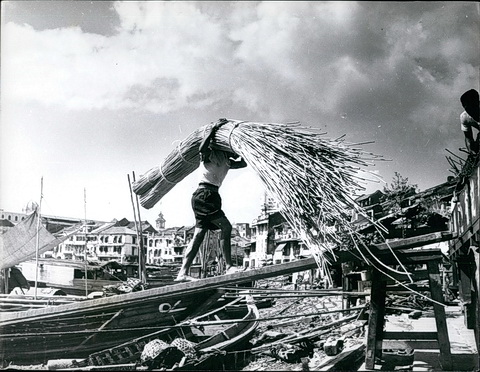
The Republic of Singapore is a city-state in Southeast Asia, located on an island in the southern tip of the Malay Peninsula. The Singapore area is a little more than 700 km² (Moscow inside the Moscow Ring Road - 900 km²). Once (in the XV-XVI centuries), Singapore was part of the Malay Sultanate Joor. At the beginning of the XIX century, he fell under English influence, from the 20s. He had the status of a separate colony of the British Empire. At that time, only about 1000 people inhabited the island, ethnically mainly Malays with a small number of local Chinese (several families).
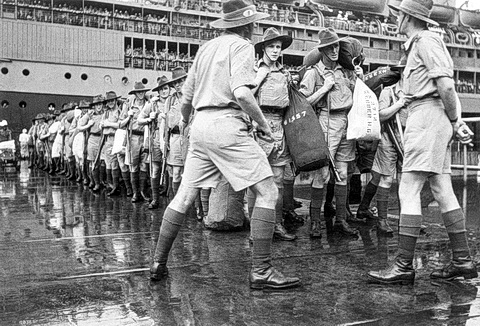
Having colonized Singapore, the British quickly appreciated all the advantages of his location in the bay. The Singapore port, founded back in 1819, becomes a transshipment of a retail point on the way of delivering British goods to China. The settlement quickly turns into a large port and trading city. The population is growing rapidly and by 1860 it is already 80,000 people, and the Chinese dominate while maintaining a fairly noticeable Malay community. Many immigrants come to work on pepper and Gambir plantations. Later, in 1890, the island became the center for the production and export of rubber and tin.
During the Second World War, Singapore captured Japan, the occupation continued from 1942 to 1945. After the war, Singapore returned to British control, but with a large level of self -government (there was its own political system, parliament was elected, the courts and law enforcement agencies were “local”), which ultimately ended with the merger of Singapore with the Malay Federation and the formation of Malaysia in 1963. However, civil unrest and inter -party intra -Malay conflicts led to the Singapore department. Since August 9, 1965, Singapore is an independent state.
The background of one Singaporets. Lee Kuan Yu
It is impossible to write anything about Singapore without mentioning a person without which this unconditional phenomenon of the latest history of our world would not take place. Therefore, a brief biography and the original portrait of Lee Kuan Yu.
In 1923, the population of Singapore-the capital of the British colony of Streits-Setlemen-was replenished with another person who was destined to become a converter to become a converter of the god of the forgotten tiny territory in one of the "Asian tigers": in the Chinese family, Kuan Yu. It was born important: his native language (those in which the little Yu learned to speak) was English-mother and father belonged to the mother and father. They did not know different peoples of China and languages, communicating in English. There were few who suspected the imminent sunset of the British Empire. However, in childhood and youth, he was called Harry Lee - under this name he graduated from college in Singapore, and then the London School of Economics and Cambridge University. Both diplomas - one right, the other in the economy - were “red”.
In 1949, a freshly baked graduate of two prestigious British universities at once returned to his homeland and begins to work in the advocacy, specializing in trade unions consultations. But, apparently, some deep ambitions interfere with a brilliant education to the young man to be satisfied with the career of a lawyer. In Singapore, the post -war almost sovereign political life is already beginning. In 1954, Lee Kuan Yu founded a party of moderately social democratic sense and calls it “Party of Folk Action” (PND). By the right of the founder, he holds the position of general secretary in it.
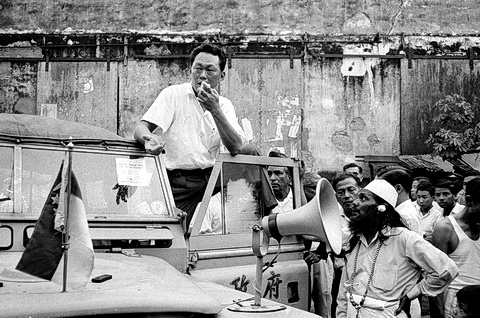
Neophytes are often lucky, especially in a compact city-state with a population of 1.5 million people: in 1959, the PND wins the election and Lee Kuan Yu as its leader became Prime Minister Singapore. This Gallic village , in which the newly -made Caesar became the first (under the formal roof of the British empire), then few in the world heard in the world. And whoever heard, would not put the dollar on the future deprived of the resources of a small island in an unfriendly environment. Rather, it was discussed which of the neighbors will absorb him: the northern one is Malaysia, which also acquires independence from the British crown, or bordering Indonesia, then supported by the USSR, bordering the Malacca through the Malacca Strait.
No one could have thought that after a quarter of a century Singapore would be called one of the four “Asian tigers”. He was not sure of this and Lee Kuan Yu himself, but he began.
The situation is at the start: from which clay Lee Kuan Yu decided to blind the "Asian Tiger"
What was Singapore by the end of the 50s. XX century, how should its sovereign history should count? Until that time, both trade, and (what was) industry were in the hands of the British. However, the British left, taking with them the ruling elite and destroying jobs. It was necessary to re -create them and make all this national, but for starters it was necessary to understand what a “nation” is in relation to a newly -made sovereign education. The ethnic composition of the population of Singapore is about 70% of the Chinese and about 15% of the Malays and Indians, the rest accounted for 1-2% of residents; The ratio of ethnic groups remains to this day. By confessional affiliation: 33% - Buddhists, 18% - Christians, 14% - Muslims, 11% - adherents of Taoism and other Chinese beliefs, 5.0% - professing Hinduism. Is it not true, an impressive basis for the unity of the one and a half million people gathered in one place (the population of Singapore for 1960), who did not think yesterday that there may be such a nation - “Singaporeans”?
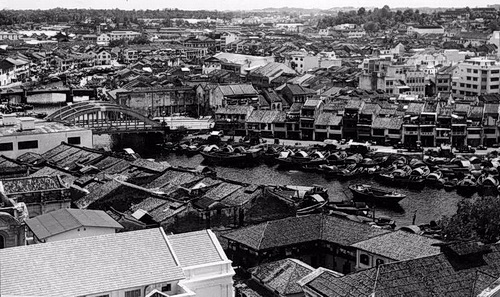
We add to this that everything that brought noticeable money was controlled and was covered by triumphs that existed since the 19th century by mafia groups - triads . These were secret societies that arose among Chinese emigrants and quickly transformed into criminal organizations. The police tried not to notice the triads, satisfied with the “taxes” from the small business, with which corruption income they shared with higher authorities.
Of all this, it was supposed to make an advanced, attractive economy for investors.
Lee Kuan Yu. Authoritarian modernization
It was also necessary to take into account the presence of an opposition, for the growth of the popularity of which the dysfunctional economic and social situation in the country is always fertile soil. And the opposition in Singapore was primarily not just the left - communist. Its popular was also that the majority of the population of Singapore were ethnic Chinese (former at the same time more educated in comparison with the Malays and Hindus). The spread of the left, primarily communist sentiments, which was walking in this environment, was almost open from Beijing. In continental China, at that time, Mao Zedong ruled, and, of course, the then ultra-orthodox communist leadership of the Middle Kingdom was not averse to acquiring a political control package over a city-state-state-owned location. So in the left or directly communist opposition, then quite rightly saw a completely tangible danger to the young state. Lee Kuan Yu and actually belonged to the principles of Western democracy without unnecessary pet. And taking into account the above, he considered (and, possibly, not without reason) that, subject to all parliamentary norms, democratic freedoms of human rights, the Government, which took the right -capacity economic course, which he considered the only prospect, has no chance to stay in power for a long time - and it was obviously more time than one electoral cycle. That is, the prospect of building an authoritarian meritocratic state, led by the newly elected prime minister, was suggested.
But, on the other hand, to declare a straight line, directly based on force, the dictatorship meant not only not only to attract potential foreign investors, but to scare them away for a long time: even no one at that time Singapore as a possible place of investment was seriously perceived. And Lee Kuan Yu began to build the fact that political scientists would subsequently call the "electoral autocracy". When, while maintaining all the attributes of the European -type parliamentary democracy as a result of an outwardly free and competitive political process, the government would still come to power where he would make decisions, while decisions would be carried out strictly. For some time now, this type of state and I are well familiar, under the term “controlled democracy” more adequately reflecting the essence.
This was not forced measures that the chosen premiere went out of the heart. The tendency to authoritarianism was inherent in Kuan Yu, apparently, initially - this is evidenced by his own confessions, repeatedly made in numerous interviews and in memoirs. He spoke with great skepticism about universal electoral law, saying that the ideal system would be the one that would provide in proportion to more votes to responsible people - heads of families. He also responded to the jury's court with contempt, and relying on his own experience: when he was still British subjects and a colonial lawyer, he once achieved four scum from the jurors, who killed the English officer during racial riots, from which he concluded: twelve illiterate inhabitants are easily lending in to manipulation of the dexterous hook. He made his commitment to violence as an effective way to solve social problems from the Japanese occupation during the Second World War: poverty in Singapore was absolute, but crime was almost at zero, because the Japanese shot for any reason on the spot.
Lee Kuan Yu fought hard with the political opposition and the media. He closed the newspapers or limited the circulation of those that, according to his ideas, incorrectly covered the situation in Singapore. However, he never hid behind economic formulations such as “dispute of business entities”. So, in 1971 the Chinese -language newspaper Nanyan Syan Pau was closed, and its four leaders were imprisoned without trial. Without abysses, it was stated that the newspaper “extol communism” and “encourages Chinese chauvinism”, portraying “power as oppressors of Chinese culture and language”. “The freedom of the press, the freedom of the media, should be subordinated to the primary needs of the integrity of Singapore,” said, justifying his actions by the fact that newspapers were “financed by the foreign wishers of Singapore” (is not the wording familiar to us?). Li Kuan Uu landed many oppositionists or ruined through court claims - with the wording “for slander” [3] .
Such a person set up such a man and solved the task of turning a beggar and backward territory into a successful state of the first world. Through the corrupt and affected by both organized and lower crime, it is not even society even, but rather a mechanical accumulation of permanent individuals, turned into the country of the 1st world. The whole complex of transformations is not included in the topic of this publication, we will dwell on how Lee Kuan Yu coped with theft and corruption, without a merciless struggle with which there would be no growth of the economy in Singapore, and therefore the arising of welfare.
How theft and corruption were eradicated in Singapore
The mafia triads were so penetrated by all aspects of the life of Singapore that it was impossible to cope with them by means of classical, European type of law enforcement: no one would have testified against them, not a single jury would risk voting for the indictment verdict. Immediately after the victory of the PND in the 1959 elections, when Li Kuan Yu became Prime Minister Singapore, the “Internal Security Act Law” was adopted, which gave the police extraordinary powers. Special services received the right to put a member of the triad without any court and investigation, if they had three testimonies of the witnesses anonymous for the public (but not for special services). Without a trial, it was possible to keep a person behind bars for two years, after which the special commission (Advisory Board) considered the issue, release it or leave it for the next two years.
Equally mercilessly and not looking back at the legal canons, Lee Kuan Yu began to eradicate corruption. Historically formed traditions of multi -level bribery, reverently supported not only by the administrative apparatus, but also by the population itself (the Chinese did not accept to come to an official without a gift) could only break a set of measures aimed at each member of society, from supreme officials to a simple citizen. The first thing that was paid to and what the root of the problem was seen in was small wages of officials: endowed with power, they compensated for small earnings with bribes. Therefore, first of all, the remuneration of civil servants was significantly increased. The formula for its calculation has still been preserved - the official’s income is formed based on the 2/3 income of the employee of the private (commercial) sector of the comparable rank. The custom of rotation and officials was also instituted - to prevent the occurrence of corruption ties. Unexpected checks and audits on the ground - as opposed to previously practiced exclusively planned ones, to which an unclean official could prepare in advance.
At the same time, a rigid system of punishment was introduced on “corruption” articles for all civil servants without exception. At the same time, the institution of inviolability of a civil servant was abolished. When considering anti -corruption cases, a departure from the classical presumption of innocence occurred, in fact it was replaced by the presumption of the guilt of the official. В качестве доказательства коррупционного происхождения доходов стали использовать показатели уровня жизни госслужащего (который должен соответствовать только трудовым доходам).
Бюро по расследованию коррупции (Corrupt Practices Investigation Bureau (CPIB)) было создано еще англичанами в 1952 году (что уже само по себе говорит об укорененности этого явления). В результате законодательной работы первых лет правления «Партии народного действия» оно в 1962 году получило широкие, практически авторитарные полномочия. С тех пор (и поныне) CPIB сочетает в себе функции:
— тотального контроля над всеми государственными служащими;
— расследования, обысков, допросов не только чиновников, но и членов их семей;
— отбора кандидатов на государственные посты посредством конкурсов и собеседований;
— выявления слабых мест в организации работы государственного аппарата.
Подчинялось Бюро Ли Куан Ю как де-юре, так и де-факто.
Надо понимать, что система уголовных наказаний в Сингапуре гуманностью не отличается. Смертная казнь (через повешение) предусмотрена для 20 видов преступлений, в частности за провоз наркотиков. В ходу телесные наказания (кнутом или удары палкой). И, разумеется, тюремные сроки (в заведениях отнюдь не европейского уровня комфортности) и штрафы, суммы которых часто не адекватны содеянному (например, за плевок на улицу – 500 сингапурских долларов, это около 370 USD). Несмотря на это, кровавые в буквальном смысле репрессии по образцу Китая, где коррупционеров публично расстреливали, в Сингапуре практиковать не стали. Наказанием для замешанных в коррупции как были, так и остаются штраф до 100 тысяч долларов + конфискация незаконно нажитого имущества + тюремное заключение. Немаловажно, что очищение сообщества государственных служащих от коррупционеров Ли Куан Ю начал со своего ближайшего окружения, когда были приговорены к тюремным срокам и уплате огромных штрафов несколько министров из его же кабинета. Борьба со взяточничеством, писал он в своих мемуарах, шла сверху вниз, с самых высоких чинов, что было главной причиной ее успеха.
Параллельно в СМИ была развернута кампания, имеющая целью информировать население о происходящих антикоррупционных делах и их исходе, что в конечном счете должно было привести к изменению отношения общества к коррупции, к превращению ее из привычного института в осуждаемый и постепенно исчезающий рудимент «старого времени». Шла прививка населению новых стандартов жизни. В итоге воспитанная в гражданах нетерпимость к коррупции привела к тому, что сегодня во всех международных рейтингах Сингапур признается наименее проблемным в этом отношении государством.
Было бы странно, если бы молодая страна перешла на новые стандарты быстро. Спустя уже 20 с лишним лет после начала революционной перестройки сингапурского общества, в 1986 году, ввиду очевидной перспективы утраты состояния и длительного тюремного срока покончил с собой министр национального развития Те Чин Ван, а его семья, не выдержав позора, была вынуждена покинуть Сингапур. Инвесторам, без привлечения которых был бы немыслим даже минимальный экономический рост, приходилось ориентироваться не столько на фактически достигнутые успехи, сколько на доверие к наблюдаемым процессам очищения от старого наследия. Они должны были поверить в то, что в скором будущем Сингапур станет одной из самых комфортных и безопасных для бизнеса стран мира. Те из них, кто, поверив, вложил деньги в экономику острова, в итоге не прогадали.
Итог работы: экономика и бизнес-климат сегодняшнего Сингапура
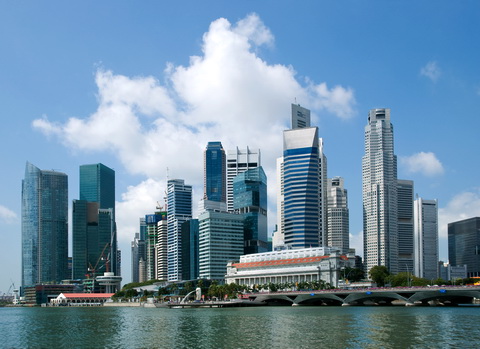
Сегодняшний Сингапур относят к четырем так называемым «азиатским тиграм» ( Four Asian Tigers ) – странам, демонстрировавшим очень высокие темпы экономического развития с начала 1960-х (три других – Южная Корея, Гонконг и Тайвань). Лучше всего о месте в мире страны, еще 60 лет назад бывшей отсталой британской колонией, говорят объективные показатели. Перечислим некоторые из них.
Рейтинг удобства ведения бизнеса Doing Business, который составляет Всемирный банк: 1-е место – Сингапур; 2-е место – Новая Зеландия, 3-е — Гонконг (2015 год).
Рост годового ВВП с момента обретения полной независимости (1965 г.): к 1990 году (формальный уход Ли Куан Ю с должности премьер-министра) – в 9 раз, к 2012 году – в 33 раза (средний годовой прирост – 7,7%).
Инфляция: 1% (за 2014 год).
Иностранные инвестиции: $81 млрд в 2014 году (на 5 млн человек населения; по этому показателю страна уступила Китаю, Гонконгу и США, но опередила Бразилию, Великобританию и Канаду).
Безработица: чуть менее 2%.
Индекс человеческого развития по методике ООН: 9-е место в мире в 2014 году. По этому показателю он опережает, например, Данию, Ирландию, Великобританию и Гонконг.
Индекс восприятия коррупции международной неправительственной организации Transparency International (Corruption Perceptions Index, CPI ): 6-е место в мире в 2018 году.
По последнему показателю Сингапур пропустил вперед только Швейцарию, Швецию, Финляндию, Новую Зеландию и Данию. Индекс CPI составляется с 1995 года и основан на независимых опросах международных финансовых и правозащитных экспертов, в том числе из Азиатского и Африканского банков развития, Всемирного банка и американской неправительственной организации Freedom House. Это оценка в процентных баллах от 0 (максимальный уровень коррупции) до 100 (отсутствие коррупции). Для сравнения – значения CPI по некоторым другим странам в 2018 году: Азербайджан – 149 место, 27 баллов; Россия – 136 место, 29 баллов; Украина –120 место, 32 балла; Китай – 86 место, 39 баллов; Грузия – 42 место, 57 баллов; США –22 место, 71 балл; Эстония – 20 место, 73 балла; Дания – 1 место, 89 баллов. Всего рейтинг CPI рассчитывается для 180 стран.
Resume: примерим к России
Ли Куан Ю занимал пост премьер-министра Сингапура до 1990 года, когда, уступив формальное лидерство в «Партии народного действия» Го Чок Тонгу, занял пост вице-премьера в его правительстве, курируя промышленность, торговлю и оборону. В 2004 году лидером в очередной раз победившей на выборах ПНД становится сын Ли Куан Ю Ли Сяньлун, премьерствующий и по сей день. Для Ли-старшего в его кабинете была создана должность «министра-ментора» (наставника). В 2011 году 88-летний отец «сингапурского чуда» окончательно ушел на покой. Скончался Ли Куан Ю в марте 2015 года.
Успехи в экономике и борьбе с коррупцией были достигнуты Ли в недемократических условиях. Правящая «Партия народного действия» манипулировала избирательным процессом, а кандидаты от оппозиции преследовались в судебном порядке, в основном с формулировкой «за клевету». Суд в этих процессах, как правило, вставал на сторону правительства. Ли скептически относился как к выборам, так и к свободе СМИ, которой в Сингапуре нет и по сей день. Занимая самые верхние строчки в рейтингах отсутствия коррупции и привлекательности для бизнеса, в оценке степени демократии страна располагается в лучшем случае в середине списка, а по свободе слова – прочно в нижних строках рейтингов. Именно это и составляет главный парадокс, который привнес в новейшую историю Ли Куан Ю: феномен авторитарной модернизации, создание успешного государства, построенного на противоречащих западному политическому мейнстриму принципах – без сильной оппозиции, свободных СМИ и с де-факто несменяемой властью.
В этой связи естественны два вопроса. Во-первых, насколько жизнеспособной окажется сингапурская модель в ближайшем будущем, то есть будет ли Сингапур продолжать успешное развитие, если его политическая система останется такой же авторитарной, как сейчас. Политологи самых разных школ уже давно ведут дискуссии на эту тему. Опосредованно, через свои многочисленные интервью, в них принимал участие и сам ныне покойный Ли Куан Ю. «Уникальность Ли Куан Ю заключалась в том, что диктаторы во второй период своего правления начинают откат назад, ревизию того, что они делали в первую половину своего срока. С Ли Куан Ю этого не произошло. Как говорят социологи, Ли Куан Ю — это «статистический выброс», исключение» (профессор ВШЭ Константин Сонин, [4] ). Думается, ответ на этот вопрос придет сам собой в ближайшие годы, хочется лишь надеяться, что очевидно вставшее на ноги и завоевавшее себе место под солнцем молодое государство с потерей харизматичного лидера естественным образом придет к свертыванию авторитаризма, как это случилось в Южной Корее и отчасти на Тайване. Впрочем, Восток – дело, конечно, тонкое и нами труднопонимаемое.
Второй вопрос – насколько сингапурский опыт искоренения (правильнее все-таки будет говорить о сведении к минимуму) коррупции и воровства применим к России. Понятен соблазн сходу ответить на этот вопрос прямо положительно – исходя из внешней схожести политических режимов Сингапура и России. Представляется, однако, что сходство это именно что видимое, поверхностное (любые авторитарные режимы по внешним признакам сходны, т.к. эти внешние признаки отсутствия демократии достаточно формальны и потому легко сравнимы). Разница видится в том, что Ли Куан Ю создавал новое государство с нуля и в комплексе, в каковой комплекс была как полноценная составляющая включена и проблема воровства и коррупции, решавшаяся одновременно и параллельно. В то время как Владимир Путин, выстраивая свою «управляемую демократию», ставил управляемость самоцелью, откладывая, видимо, «на потом» остальные задачи (создание эффективной экономики и как часть этой задачи искоренение воровства и коррупции). Если Ли учреждал механизмы, через которые на государственные должности попадают люди не только лояльные верховной власти, но и способные принимать нужные стране решения, а также создавал структуры, которые препятствовали бы вовлечению их в коррупционные и воровские схемы, то Путин заботится лишь о первом пункте — лояльности Кремлю (именно Кремлю, а не России). Естественным образом государственные должности по всей созданной вертикали оказались замещены людьми, в общем случае на решение государственных задач не «заточенными» и внутренне не ориентированными.
Проблема еще в том, что как государство, так и экономика Сингапура строились почти что с нуля, количественно и качественно мало что собой представляя на старте, в то время как в России уже в первом приближении выстроены как государство (институционально действительно похожее на сингапурское), так и экономика (в одной из худших своих форм – мало того, что сырьево-ориентированная, но еще и достаточно монополизированная, с неприемлемо большой государственной долей и сильной зависимостью формально частного сектора от исполнительной власти всех уровней). Последнее объективно детерминирует режим наибольшего благоприятствования для воровства и коррупции. А это означает, что, желая искоренить воровство и коррупцию, расчистив тем самым площадку для строительства эффективной экономики, авторитарный диктатор (условный русский Ли Куан Ю) должен будет вначале сломать имеющуюся экономическую систему, а уже затем строить на освободившемся месте что-то новое. А подобное невозможно без повсеместного разрыва «сложившихся экономических связей». Описанный процесс более характерен для революционного правительства, а не авторитарной диктатуры, для которой подобная, пусть и представляющаяся временной смута равнозначна самоубийству. В силу этого можно предположить, что даже если принять как неизбежную данность авторитарный вариант решения проблемы коррупции и воровства в России, сингапурский опыт будет малоприемлем – разве что как яркий пример того, что политическая воля, если она направлена на достижение позитивной и рациональной цели, в общем случае может дать такой вот позитивный же результат.
Не говоря уже о том, что опыт невозможно позаимствовать частично. Любые реформы работают только в комплексе, и, приняв «сингапурскую стратегию» решения задачи искоренения воровства, следует быть готовым принять и другие «побочные издержки». Так, в Сингапуре еще больше, чем в России сегодня, ограничена свобода слова (например, строго запрещены темы политики и секса). Среди мер уголовного наказания есть смертная казнь (и не только за насилие), а также удары плетью и палками. Денежные штрафы от 500 долларов и выше присуждаются за самые мелкие нарушения. Регламентируется даже повседневная одежда. Контроль над рождаемостью может выражаться, в частности, в регулярных звонках в семью, уже имеющую двух детей, с напоминанием о необходимости принять противозачаточные таблетки. Автор не уверен, что читателю сильно понравятся такие вот сопутствующие детали процесса лечения экономических язв нашего многострадального Отечества.
Использованные источники:
1. Ли Куан Ю https://ru.wikipedia.org/wiki/Ли_Куан_Ю
2. Сингапур https://ru.wikipedia.org/wiki/Сингапур
3. Максим Калашников. Сингапурский тоталитаризм Ли Куан Ю глазами Латыниной. https://m-kalashnikov.livejournal.com/970230.html ;
4. Государство – это он: как Ли Куан Ю создал процветающий Сингапур https://www.rbc.ru/ins/politics/23/03/2015/550ff3569a79473e26caaee0
5. Ли Куан Ю: авторитарный творец сингапурского чуда https://www.bbc.com/russian/international/2015/03/150322_obit_lee_kuan_yew
6. Триады Сингапура https://ru.wikipedia.org/wiki/Триады_Сингапура
7. Спецслужбы Сингапура http://www.agentura.ru/dossier/singapore
Иллюстрации:
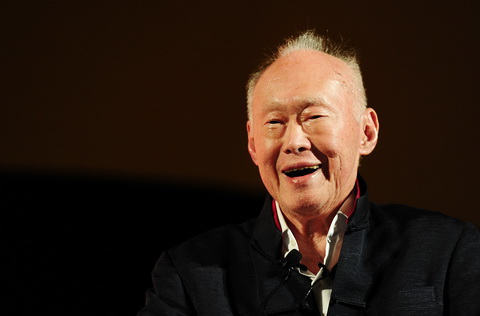
Фото 1. Первый премьер-министр Сингапура Ли Куан Ю. 2011. Then Chih Wey/Zuma\TASS
Фото 2. До 1962 года Сингапур жил под флагом Британской Империи.
1). Indonesia / Malaysia / Singapore, 1950-е. Keystone Pictures USA/ Zuma\TASS
2) Тысячи австралийских солдат были посажены в Сингапуре 15 августа 1941, чтобы укрепить там британские силы. AP/TASS
3) Indonesia / Malaysia / Singapore, 16.01.1960. Keystone Pictures USA/ Zuma\TASS
Фото 3. 1). Ли Куан Ю времен начала политической деятельности/ 21.09.1963. Prime Minister Lee Kuan Yew is hoisted by supporters in Singapore after leading his leftist, but anti-Communist, People's Action Party to a landslide victory in the elections, Sept. 21, 1963. The victory assured Lee of a second term as leader of Singapore, one of the states in the newborn federation of Malaysia. AP/TASS
2). 29.07.1964/ первый премьер-министр Сингапура Ли Куан Ю./n this July 29, 1964, file photo, Singapore's then- Prime Minister Lee Kuan Yew addresses a crowd from a vehicle in Singapore. Lee Kuan Yew, the founder of modern Singapore who helped transform the sleepy port into one of the world's richest nations, died Monday, March 23, 2015, the government said. He was 91. AP/TASS
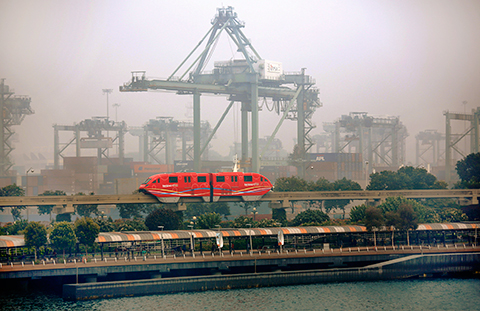
Фото 4, 5. Сингапур сегодня 1). Thor Jorgen Udvang/ YAY\TASS , 2). Wong Maye-E/ AP/TASS