
Translated material
Kovalev - 80
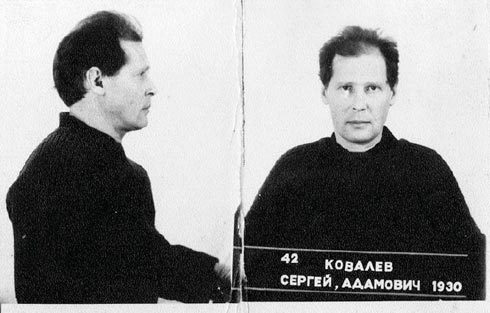
For love for his homeland, he received 7+3+3. Seven years of camps, three - links on Kolyma, three - “by horns”, that is, without the right to enter large cities. Everything else was before and after. U - Moscow State University, the use of mathematical methods in biology, candidate dissertation, more than 60 scientific works. After - the Ombudsman, the first in the history of the country, and in the place of service and in conscience - the defender of human and citizen rights. Always - a dissident who is thinking, which allows himself to argue with the kings and plebs and they are unloved. But he could not and would not change, and late - on March 2, Sergey Adamovich Kovalev turns 80 years old
For Chekists from the fifth KGB Directorate, dissidents have always been difficult matter. They did not understand them. Here is Kovalev: he headed the scientific group at the Interfaculty Laboratory of Moscow State University, received promising results. So no: he created an initiative group to protect human rights (in 1969), the forbidden books began to be distributed. They kicked out of Moscow State University. Well, this is not enough: he wrote a letter to the chairman of the KGB Yuri Andropov, so that Solzhenitsyn’s “Gulag” Archipelago ”was returned to him during the search. The forbidden Samizdat, by the way, was not Adamych at all - what his friends were called and called - he simply took another person from the prison and hung one more thing on himself: "I had a prison ahead." Not only did he edit the underground “Chronicle of current events”, but also gathered a press conference in his apartment-this is in 1974! - on which he publicly took responsibility for the release of the Chronicle. Well, how to understand this?
Jail
To help the investigation when they were arrested, Kovalev refused. Although if he repented, he would probably have been allowed to go abroad - he was hinted at that. He received to the maximum provided for in article 70 (anti -Soviet agitation and propaganda) - seven years of camps and three links. From the camp period of a year-in a pre-trial detention center, three in the political (“strict”) zone of the aircraft-389/36, in the expansion of Perm-36, in the hut with an average temperature of 8-11 degrees; A year in "Covering", that is, in prison. Plus 32 days of non -stop hunger strike and two months in the Gaaz prison hospital in Leningrad. Plus, twice for 6 months in the PCT - a solitary chamber of the internal prison, where they fed at the norm “9B”: hot food every other day. Former Biofaki researcher of Moscow State University Kovalev calculated that the feeding, according to the norm, “9b” was below the so -called “main exchange” - energy exchange necessary to maintain normal functioning of the heart, lungs, etc. (By the way, the first thing Kovalev did, becoming the chairman of the Human Rights Committee of the Armed Forces of the RSFSR, achieved the abolition of all these slow torture, such as the norms of low nutrition, night vigils on boards without bedding, concrete floors and the like.)
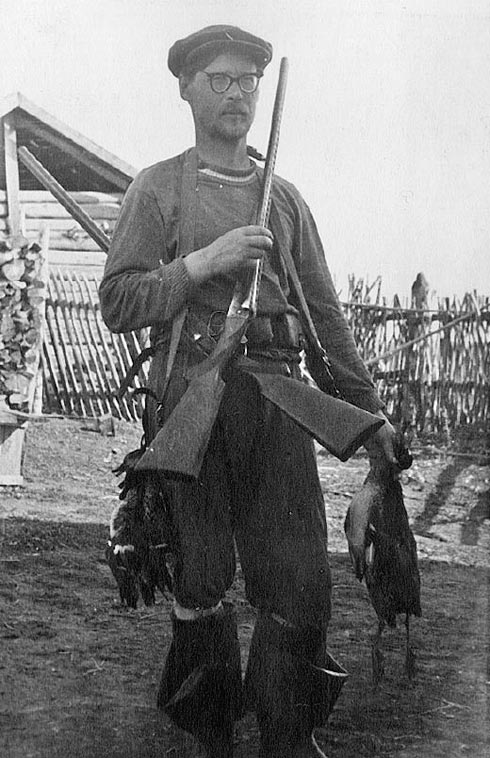
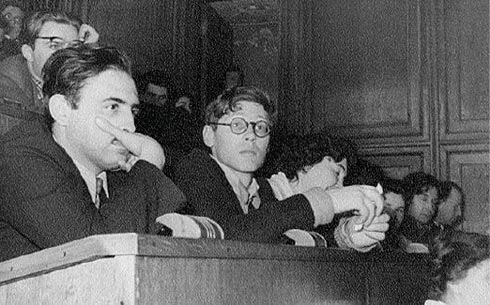
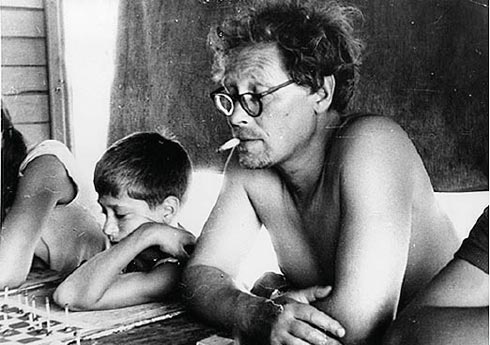
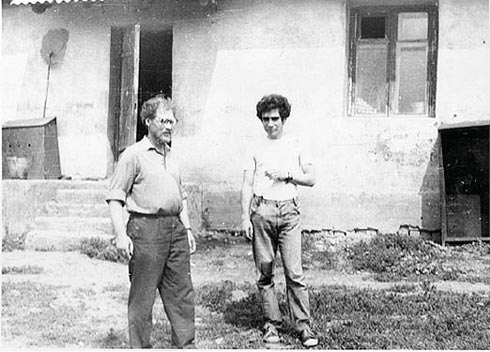
1-3. And in his youth and now Kovalev is an avid hunter, a participant in the discussion (here he is also an employee of the biofacment of Moscow State University) and a wonderful chess player
Xiva to the will
Kovalev received his first six months in the PCT for an appeal to the Belgrade meeting of the OSCE countries, which took place after the signing of the 1975 Helsinki agreement, the third part of which was the head of human rights. Secretary General Leonid Brezhnev under this agreement, recall, put his signature.
Kovalev’s appeal began with the words: “The Western world is faced with a choice that cannot be abandoned”: either put pressure on the Soviet Union in order to comply with the requirements of the Helsinki agreement on compliance with human rights, or forget that such an agreement exists.
Kovalev wrote this appeal, sitting in the "strict" zone "Perm-36". As he wrote, not so interesting. It is interesting how from a forest camp located two hundred kilometers from the regional center, this appeal reached Belgrade.
The whole process (as Kovalev told about him) I will not tell, too physiological. “Xiva”, that is, a camp letter, was wrapped in plastic, stocked up with a match, then again plastic, and again. Further, the gastrointestinal tract entered into business-at first who had a personal date with his wife, then-the gastrointestinal tract of her beloved woman. “Kovalev,” the head of the zone told him before the date, “keep in mind, we will check you with an X -ray.” “Citizen chief,” Kovalev answered Tom, “I am not opposed, but only in the presence of the prosecutor, as the law requires.” Well, for that, of course, he paid feeding at the norm "9B".
Perm-36. Excursions are now being taken to this hut: the temperature in it was rarely higher than 11 ° C
However, letters to the will go, sometimes and bypassing the digestive tract. “I understand that they passed it through the overseer. I understand that you can’t name the surnames. I ask the only one, tell me: from the new overseers or from the old ones? " - the citizen asked the chief. “For five rubles, the old one would have transferred the old one, for twenty -five - new, and for five hundred - and you, citizen boss,” answered ZEK.
Motives
Major Istomin, one of the KGB investigators, who led Kovalev’s case (there were 12 in total), asked him: “Why do you need all this (in the sense of forbidden books, Chronicle, etc. - The New Times)? They would think about themselves, about the family ... ”Kovalev replied:“ And the conscience? There is also a male question: how to look in the eyes of children? "
Ivan Kovalev, a son, was imprisoned in 1981, when Sergey Adamovich was still housing his term in Chistopol prison. Vani also had a “bouquet”: participation in the campaign to protect the head of the Moscow Helsinki group Yuri Orlov, who was judged in May 1978, in investigations for the use of psychiatry for political purposes, in the issue of human rights “Bulletin B” (V - Vesti). Vanya received 5 years of camps and 5 years of exile. A year before they put Vanya, the daughter -in -law of Sergei Adamovich Tatyana Osipova, also a member of the Helsinki group, went to the political zone. I received the same term as my husband: “Five Plus five”, sat in the criminal zone, and this is not the Lord.
Sins
Sergei Kovalev entered power and a great policy is deliberate and consciously. Although without much desire.
It was in the spring of 1990. Kovalev was elected People's Deputy of the Supreme Council of the RSFSR. And in the summer of the same year, the chairman of the Supreme Council of the RSFSR Boris Yeltsin invited him to his office, suggested heading the Human Rights Committee, said how important the problem of personality rights “for the new state that we are going to build,” Kovalev remembered that conversation.
Voters then asked Kovalev what he was thinking about Yeltsin. Kovalev replied: "I do not sign up either in his supporters or his opponents, I will act according to conscience." He told the author: “It seemed to me that this person is able to study, including morally. In any case, it seems to me that, speaking of the importance of the problem of protecting human rights, Yeltsin was sincere - he wanted to believe in it ... "
In October 1993, it became clear to many dissidents: they are strangers among strangers. Did deputy Kovalev understand that, having shot the White House, it was not Soviet power, but the belief that the law and the constitution, and not violence and tanks, can be ruled in Russia and Russia? In 1995, Kovalev answered the author to this question as follows: “Signing Decree 1400, Yeltsin knew that he was violating the constitution, but he apparently believed (so I thought) that if I couldn’t go to this step, the eighteenth year would come to the country ... Is there a connection between the shooting of the White House and the war in Chechnya? She is undeniable. Now I understand that then I reasoned straight and idealistically, I came from the model of the wise president who is trying to save the country. This is my personal sin. ”
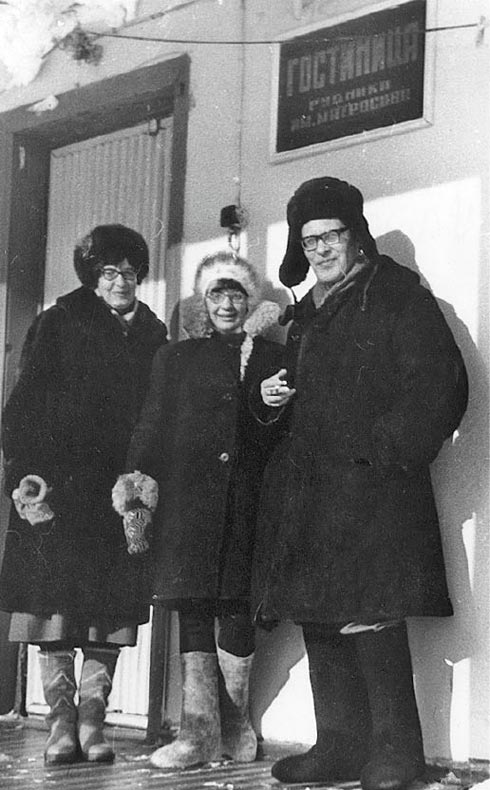
Wife and daughter came to Kovalev in exile: settled in the Rudnik hotel
them. Matrosov - under the sign and photographed
At the end of October 1993, Sergei Kovalev and his newly formed commission on human rights under the President of Russia presented a memorandum on violation of human rights in Moscow during an introduction of a state of emergency in the capital. This caused the first, distinct, although still deaf irritation of the authorities. None of the 16 criminal cases initiated then was brought to court.
The last meeting of Sergei Kovalev and Yeltsin took place on January 6, 1995, at the very beginning of the first Chechen war, when Kovalev flew out of the blazing Terrible and asked the president to declare a truce - at least on the occasion of Orthodox Christmas. The president answered the human rights activist: "There is no time yet." They didn’t see each other anymore.
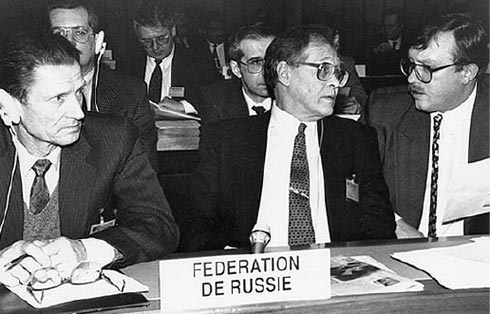
At a meeting of European Ombudsmen in UNESCO, 1995
Alien among strangers
Yeltsin's environment belonged to Kovalev differently. Some are like an alien, who is all taldy about human rights, others with displeasure. No, of course, they agreed that he was doing an important thing, useful for Russia. For example, he flew to Moldova, when the anti -Russian hysteria began there, then he sought hearings in the Supreme Council, insisted not to ratify the contract with Moldova, until the local authorities stop authorizing national discord. Or he went to the Baltic states, connected the Council of Europe and the UN to pressure on Estonia so that it has amended its law on citizenship, infringing on the rights of Russians, and achieved these amendments. In the same way, he traveled to the North Caucasus, when a military conflict broke out between Northern Ossetia and Ingushetia, in the Russian villages - Troitskaya in Ingushetia, Popov farm in Ossetia, in Assinovskaya in Chechnya, where criminal lawlessness was happening. He reported on the results of the trip to the president, offered specific measures. Yeltsin said: “He did not expect that in such a short time you will be able to understand the situation so well.” But not one of the proposals of Kovalev approved by the president was applied. Kovalev came to the village of Assinovskaya and then, in January 1995, already during the war, and it was for him, Kovalev, who were crying all and mortally afraid of everyone - both Chechens and Russian troops - Russian old people and the old women: “Why did they leave us here?” Well, then displeasure turned into hatred, and the State Duma deprived Sergey Kovalev of his status of the Commissioner for Human Rights. It was in 1995.
Detail: In 1974, the search and arrest of Sergei Kovalev was carried out by the KGB captain Anatoly Trofimov. In 1995, Lieutenant Trofimov General was already headed by the Moscow Department of the FSB.
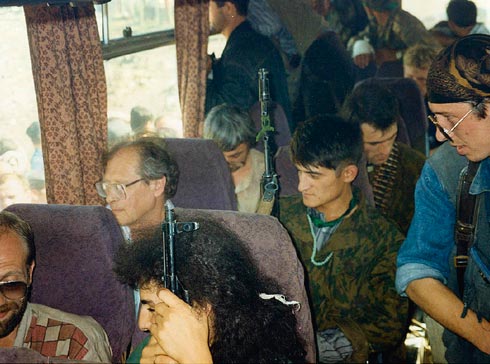
Tragedy in Budennovsk. S.A. Kovalev became a voluntary hostage of bandits:
He spent 36 hours in this bus
"I demand"
Kovalev annoyed the post -Soviet establishment to everyone: and, as he said, with all his intellectuals “of course”, “be kind”, “lett”. He annoyed him and how he held: he makes the impression of a soft man, but this softness is worn on a steel rod. “Viktor Vasilievich, in the end, I do not ask for this meeting, but I demand it,” Kovalev said to the first assistant to President Viktor Ilyushin, when in early January 1995 he came from Grozny and sought a meeting with Yeltsin. “You should not talk in this tone,” Ilyushin tried to besiege. “It should. I'm talking about the presidential constitutional duty. If he is busy with other matters, then I would like to know what matters can be more important than the mass death of his citizens. ” It was annoyed in Kovalev that the incriminating evidence was impossible to assemble him. And that he did not use his proximity to power in any way and in any form for himself: he did not open the companies, did not receive apartments, he had no access to special stores, the official summer house, too, and his own, of course, was not. As the chairman of the Commission on Human Rights under the President of the Russian Federation, he did not receive a salary - the salary had a salary in the State Duma, like all deputies. Of all the privileges he, then also a representative of Russia in the UN Human Rights Committee, was a service car with a telephone: he was really hard to walk - his heart. After Budennovsk, after 36 hours spent in a stuffy, like a camera, a bus as a voluntary hostage thundered to the hospital. By the way, about Budennovsk. It was the Kovalev group (and Yegor Gaidar helped them in Moscow) made maximum efforts to convince Viktor Chernomyrdin’s chairman to start negotiations in order to avoid new victims. And it was Sergey Kovalev who put his signature “from the Government of the Russian Federation on behalf of V.S. Chernomyrdina Head of the delegation S. Kovalev ” - on the very first version of the agreement on the release of hostages in Budennovsk.
Call
... In ancient times, the son of Kovalev at the school was given the task of writing an essay on the topic "What I love the Motherland for." He began with the epigraph “I love Russia, but with a strange love”, he wrote further: I love my homeland for the fact that people like Herzen, Solzhenitsyn, Akhmatova have always been in Russia. The teacher put a deuce to the student: “You did not open the topic incorrectly. It was Lermontov who could love his homeland with “strange love”, but you, Kovalev, cannot. ” The boy objected: “You incorrectly formulated the topic of essays, it was necessary:“ For what you, Tatyana Sergeevna, love your homeland, ”then I would write the way you want it.”
From Kovalev Sr., the power-first Soviet, then Russian-wanted him to love his homeland like it, the authorities, considers it right. And he loves her as he loves. And therefore he wrote and writes sharp letters to the first persons of the country-once to Yeltsin, then Putin, now Medvedev. He cannot and does not know how to love his homeland with his eyes closed and closed with his mouth (P. Chaadaev). So it was in 1974, when he went to prison, and 36 years later.
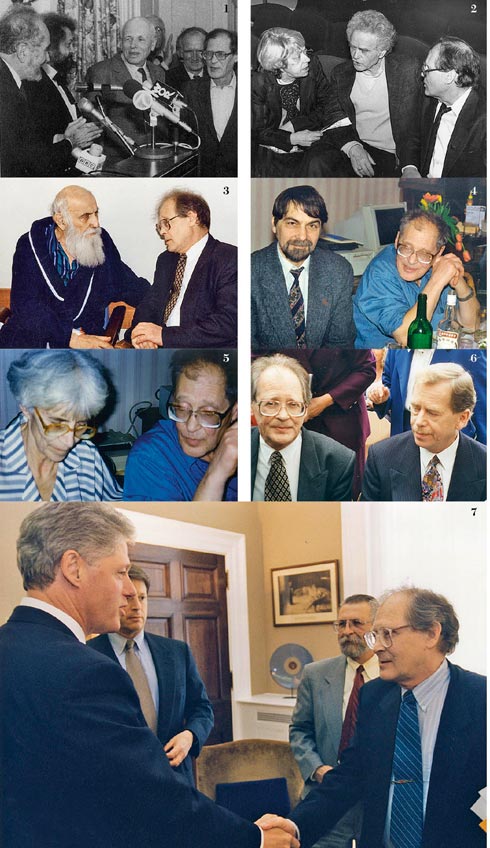
People of his blood group:
(1) with Andrei Dmitrievich Sakharov (in the center), (2) with Yuri Orlov (in the center),
human rights activists (2) Larisa Bogoraz (extreme on the left) and (5) Tatyana Velikanova,
Which in 1968 reached Red Square, (3) with the writer Lev Kopelev
and (4) judge of the Constitutional Court Anatoly Kononov, (6) with the president of the Czech Republic
Vaclav Gavel and (7) US President Democrat Bill Clinton
(White House, 1995)