
Translated material
Empty envelope
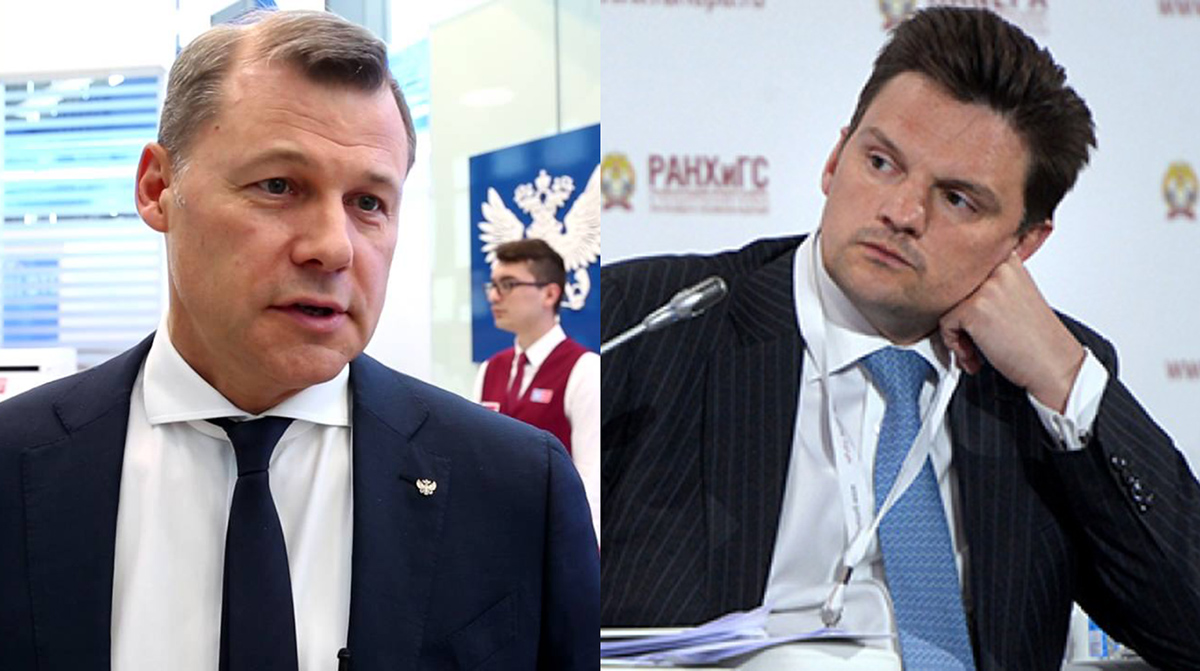
What happened to the head of the “Russian Post” and why he was fired when the state -owned company began to get out of the pit

The government refused to renew the contract with Dmitry Strashov, the head of the Russian Post, - his place will be occupied by the Deputy Minister of Economy Nikolai Podguzov. The short postal career of Strashnov, who turned the FSUE for three years from the national shame into the subject of the interest of the largest state -owned companies and earned criminal charges that ended with resignation, is a good explanation of why hospitalism in Russia cannot work as effectively as a regular market with all desire.
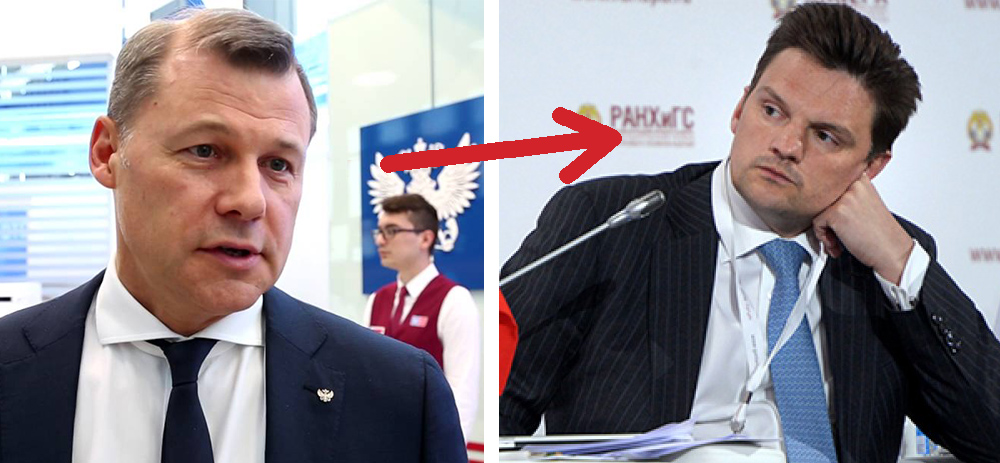
Dmitry Strashnov lasted three years as head of the “Post of Russia”. Now his place will be taken by the Deputy Minister of Economics Nikolai Podguzov
Postal triple
The appointment of the Deputy Minister of Economy Nikolai Podguzov on the post of head of the “Post of Russia” on July 7 was preceded by a rather funny and indicative story, which, apparently, means that leaving Dmitry Strashnov was not a foregone conclusion until the last day of his contract - until the end of June 2017.
By the end of June, the Ministry of Communications, according to the interlocutor in the government, prepared a list of possible candidates for the post of head of the postal Federal State Institution, in which there were only three people - actually, Nikolai Podguzov, a member of the Rostec board Sergey Kulikov and the deputy chairman of the board of Sberbank Svetlana Sagaydak. Despite the brevity of the proposed list, which the Prime Minister and the Presidential Administration had to be discussed then, he corresponded to the status of the Long List: after the “wems” procedure of candidates, Prime Minister Dmitry Medvedev was supposed to receive from the head of the Ministry of Communications Nikolai Nikiforov “Short List” applicants. Common sense suggests that there could be three, two or one surnames in the “short list”. However, on July 5, the “Short List” proposed by the head of the government had about ten names of the applicants, and there were no longer there, but two deputy heads of the Ministry of Communications, several deputy ministers of other departments and seemingly one temporarily not working, appeared there. Meanwhile, Dmitry Strashnov announced that his contract was not extended, but Olga Osina was appointed at the place of the acting - the main financier of the Russian Post.
In the administrative practice of the government, this meant several things at once. First: there are no substantial claims to Dmitry Strashnov, otherwise no one would wait for the expiration of the contract. The second: there is no certain decision on how the “Russian Post” should develop further, therefore, the decision on the new leader will be made for a long time - so it's time to sign up in a long line to the leadership and offer his services, in a few weeks or even months it may work. Third: the battle for the “Russian Post”, no matter what forces move it, is just beginning.
However, there was no battle. Medvedev chose to process the Long List, not paying attention to the “short list”, and on July 7, after a meeting with Podguzov, he announced that he recommends Nikiforov to appoint Podguzov to the “Russian Post”. Strashnov himself in an interview with RBC on the eve carefully explained that his main problem in the Russian Post was that the regrettable circumstance was that he could not get an audience with Vladimir Putin, where he would continue to work, he did not know success yet.
The reasons why the head of one of the original state monopolies in Russia left his post, he carefully did not reveal. And it can be understood: having received an appointment in the “Russian Post” in 2013, Strashnov hardly assumed that his career in FSUE would end so strange and crumpled.
On July 5, the “Short List” proposed by the head of the government had about ten names of applicants, and there were no longer there, but two deputy heads of the Ministry of Communications, several deputy ministers of other departments and seemed to have even one temporarily not working, appeared there.
Autumn of the post office
In order to understand what Strashnov was doing in the “Russian Post”, a brief excursion in the history of the venerable institution is needed. Despite the fact that the postal service system as part of the state apparatus has a little more than a thousand years, and a single state post has been working since the 1780s, a similar institution of the new Russia-FSUE “Russian Post”-has existed only since 2002, it used to be dozens of unitary enterprises throughout the country. In 2002, the newly created FSUE was headed by the head of the International Post Office, Igor Svirtsov. For those five years, while Syrtsov led the Russian Post, the structure was chronically unprofitable. In 2007, the former head of Sberbank Andrei Kazmin was actually exiled to the “Russian Post”, who quite quickly outlined for his interlocutors in the government, that for the development of modern postal communication, money actually needs money, which the post office does not have, but you can do everything gradually if you can’t ask a lot from it.
The fifth anniversary of Kazmin for FSUE was not particularly vivid, although many achievements of recent years are related to his work. Most likely, Kazmin simply pessimistically assessed the prospects of the country and too optimistic - the speed of eating the “Soviet” reserve of the strength of the postal infrastructure: new, modern centers of postal logistics, designed under the leadership of Kazmin, were built slowly, and citizens by 2007 remembered that they also have mail. Well, or should it be.
In 2009, the ex-head resigned. The retired retirement was also sent to his place-the ex-head of Svyazinvest Alexander Kiselev, who made his career in DHL in the 1990s. He activated the construction of logistics centers, began rebranding the Russian Post, but the demand for postal services increased faster than the capabilities of the Federal State Unitary Enterprise. At the end of 2012, after the grandiose “blockage” in the mail and quarrels with customs, Kiselev was also fired.
By this time, the Russian Post has already become a national shame. In some months, FSUE delivered only 30% of postal messages within a period, and the delivery time of international postal items could not be determined at all. The Russian Post was about 300 thousand people with an average salary equal to old -age pension or even less. Outside of more or less modern logistics centers, depreciation of fixed assets of mail was 70–80%, and almost all of the work in it was purely manual. And then the FSUE “Russian Post” was appointed Dmitry Strashnov.
By the end of 2012, “Russian Post” delivered only 30% of postal messages within the period, and the delivery time of international postal items could not be determined at all
What did the Strashnov team do
Already in itself the fact of the appointment of a native to FSUE from large businesses demonstrated the scale of the disaster that comprehended the Russian Post over the past 20 years. The authorities, traditionally extremely suspicious of any managers from non -state companies, are decided on such appointments mainly only when it does not matter what will happen next - mass dismissals, loud scandals, criminal cases against old managers, sharp growth of tariffs, network reduction, bankruptcy - it is still better than now. Dmitry Strashnov, who created a rather noticeable Electrolux business in Russia, in the 2000s-Philips, and then headed the Russian division of Tele2, came to the Russian Post in April 2013, which, in general, the government was not very sorry.
What happened later can be described in two ways.
The first is from the perspective of the consumer. For some three years, the queues returned to the mail-postal services are again in demand. It was during these years that in Russia literally from scratch the business of the Internet trade blossomed from scratch, and ordinary consumers reached out to the post offices for the parcels, first from Europe, and then from China. In principle, this was enough to evaluate the quality of the work of Strashnov and his team, which mainly came from the same Tele2, as well as from large distribution companies as amazing all imagination. Any meaningful purchases in the online store will voluntarily agree to receive at the mail only if two simple conditions are observed: the probability of the loss of the parcel will be small, and the delivery time will be predictable. No tricks, no tariff games and no deception are possible here.
By the way, it is easy to see that the Strashnov team at the Russian Post did not take any magical or revolutionary actions. Everything turned out to be much easier: adequate management activity in a more or less modern standard, without Agile and blockchain, without collective readings aloud, works of marketing geniuses, without Japanese motivation systems and without lifting corporate flag in all departments at 7 in the morning in Moscow, as it turned out, gives the result quite quickly. “Russian Post” began to deploy on the basis of the postal network “Post-Bank” using VTB, normalized the situation with trade, quickly agreed on the standards of work with customs, dealt with transport and logistics infrastructure, began to increase salaries in departments and at the same time eliminated the payment of “dead souls” in the regions, fired several thousand very respected old personnel, Having hired more or less adequate people - and all, in general, began to work out. By the end of 2016, the Russian Post, which was five years ago by a national shame, acquired two aircraft for delivery of goods from the PRC and began to plan the creation of a network of its own aviation cargo transportation.
The second way to describe what was happening was invented in the Prosecutor General of the Russian Federation. From her point of view, the activity of Strashnov and his team was exclusively the subject of personal enrichment. Moreover, enrichment of a very strange kind - public, open and, in general, practically nothing to do with corruption in its generally accepted descriptions. No theft, no bribes, no interception of cash flows, no fraud with loans and even no expiration of budget funds or money FSUE. However, there were accusations, and criminal cases, as well as constant hints of the further development of events. Strashnov and his team paid themselves market salaries. Or rather, bonuses. More precisely, they were going to pay. We were talking about tens of millions of rubles a year for Strashnov himself and hundreds of thousands and millions for his deputies - people who came to the Russian Post from a successful private business.
For any unbiased person, if he does not work in the Prosecutor General’s Office, the anecdotality of all these accusations was obvious: $ 1-2 million annual rewards for the head of the state -owned company with a turnover of about $ 3 billion per year should hardly raise questions, especially if the growth potential of the “Russian Post” was oriented, and if you recall that since 2015, FSUE refused to be refused from 2015 Direct subsidies from the state, that is, with unprofitable tariffs for the population for the first time in many years, approached breakestability. On March 15, the Investigative Committee instituted the criminal case, authorized by the Government, in the fact of receiving terrible “overstated” payments authorized by the government (the prosecutor's office demanded this since 2016), in fact, no other issues about the mail. Numerous “operational certificates”, regularly circulating in the near -government circles, did not contain any more “compromising” on Strashnov, except for stories with a bonus, rather lethargic claims to the “almost Russia” aircraft art scam and - the “Russian Post” hits work in the central office of dual citizenship and even foreigners: the deputy sterrisov Inessa Galaxy Lithuanian passport, although it has been working only in Russia for more than 20 years.
Usually this happens with the General Prosecutor's Office if the accused crossed the road to someone very respected.
By the end of 2016, the Russian Post, which was five years ago by a national shame, acquired two aircraft for delivery of goods from the PRC and began to plan the creation of a network of its own aviation cargo transportation
The illegal market
The circle of people who could be dissatisfied with the actions of Dmitry Strashnov in the “Russian Post” is theoretically quite wide - FSUE affects the interests of a decent number of players in Russian statehood. But in practice, the opposite is true: “Russian Post” for such a huge institute fabulously, fabulously poor, and therefore is little interesting.
Of course, Strashnov with his personnel reforms offended and even fired a lot within the postal department, but by 2013 even the most honored postmasters of the Russian Federation had no status, money, nor the merits that could encourage Alexander Bastrykin’s subordinates for several years to fight with the “Russian Post”.
As for the illegal business, we can talk about three problem areas in the field of activity that is engaged in FSUE.
The first is international postal items. The mail in one way or another is forced to interact with the FCS in this area, and its relations with customs have always been tense. However, there were no Shipynov’s work that the work of Strashnov interfered or could interfere with the operation of any large channels of illegal imports using mail resources in recent years.
The second is the so -called "gray post", the free use of the resources of the Russian Post for transporting goods and correspondence. Technically in Russia, this is not only possible, but also in large volumes - in the country there is not only the legal market of obsolete francsional machines that allow you to fake mail payments for sending mail (about 8 thousand), but also the underground sector of this market. Since 2014, Strashnov and his team have quite actively struggled with the “gray post” market in Russia, according to various estimates, which amounts to up to 15–20% of the postal turnover (in the EU-1-2%), and came close to the creation of a unified information system, which in two to three years to sharply reduce the possibilities of illegal mailing from Russian Post. Immediately before the dismissal of Strashnov, he just broke the contract with one of the large companies convicted of the large -scale operation of these capabilities, - Express LLC. There is little known about this market in a public field, except that it has existed since the 1990s and usually uses representatives of the FSB to protect their interests in the field and is extremely unnecessary. The evaluative turnover of this business should hardly exceed $ 200-300 million per year, but this is already the amount for which three-four invisible but non-poor people are not sin and to fight.
However, the third version seems to us more likely. At least until 2013, the Russian Post, or rather, its postal translation system, was a secondary, but rather noticeable channel for the cashing market - an element of shadow turnover of money in Russia. Several large criminal cases are known in which the structures of the Russian Post participated in the cashing of the sums from 15 to 60 billion rubles, in which large operators of a wider market “yelled” and transit “shone”, serving, on the one hand, illegal export of capital from the Russian Federation, on the other, smuggled imported supplies to Russia. The very capabilities of the Russian Post for such operations are very limited (at least with a sane leadership). However, it should be taken into account in recent years of all the possibilities for “cashed” and the extremely high political level of “roofs” for key operators of this, apparently, key element of the corruption market in Russia. Strashnov and his team in the Russian Post are unlikely to be compatible with its use - with a certain probability, the campaign for his dismissal was occupied by these people who expect to “agree” to restore him with the new leadership of the Federal State Unitary Enterprise.
However, even if our assumption is true, then the prospect of turning the “Russian Post” into a large “naked office” is small, which, under Kazmin and Kiselev, were considered more or less closed.
In the country, there is not only the legal market of obsolete francsion machines that allow you to fake the signs of mail for sending mail (about 8 thousand of them), but also the underground sector of this market. Since 2014, Strashnov and his team have quite actively fought with the “gray mail” market, which is up to 15–20% of the postal turnover (in the EU - 1-2%)

Big game
Already according to the Long List, applicants for the post of head of the Russian Post, at the end of June presented by Dmitry Medvedev, it is easy to restore the main applicants for the influence on the future post office in the country.
The market almost unanimously believes that the appointment of Nikolai Podguzov on the post of head of the Federal State Unitary Enterprise is a decision that continues the Strashnov course and, apparently, the closer cooperation of the Russian Post with VTB structures, where at one time the new head of the postal structure made his career before coming to the civil service. Recall that the bank of Andrei Kostin, together with the Russian Post, is created by the “Post-Bank”.
All mail of the world are historically the most branched retail networks exceeding any bank in scale. Почта, работающая в режиме банка или в партнерстве с банком, — это потенциально (а где-то давно уже и реально) крупное или очень крупное кредитное учреждение с уникальным статусом. В первые годы после перехода Андрея Казьмина из Сбербанка в «Почту России» число проектов создания на базе ФГУП конкурента Сбербанку исчислялось десятками. Будет неудивительно, если уже к осени 2017 года эти истории, но уже под новым руководством будут реанимированы.
Светлана Сагайдак, зампред правления Сбербанка, в качестве одного из претендентов на пост главы «Почты России» — отличная иллюстрация того, что в команде Германа Грефа хорошо представляют себе и масштабы потенциальных угроз бизнесу крупнейшего розничного банка страны, и размер возможных выгод для Сбербанка от возможного сотрудничества с «Почтой России». При этом следует помнить, что любое руководство «Почты России» так или иначе будет двигаться по пути, по которому двигалась команда Дмитрия Страшнова, — это акционирование ФГУП «Почта России» с последующей приватизацией части его акций. Предположение о том, что за пакеты акции «Почты России» в будущем будут торговаться и Сбербанк, и ВТБ, более или менее очевидны.
Наконец, также не случайно появление в «лонг-листе» представителей «Ростеха» — и это даже более серьезно. Карьера Дмитрия Страшнова в «Почте России» началась с эпизода, который, в сущности, всеми уже забыт: команда в мае 2013 года первым делом поинтересовалась в Минкомсвязи, актуально ли поручение президента 2012 года о назначении «Почты России», НИИ «Восход» и АО «Ростелеком» исполнителями работ по созданию в России инфраструктуры «электронного правительства». Насколько можно судить, ответа Страшнов так и не получил, и с тех пор, несмотря на то, что прошли годы, вопрос о том, как в дальнейшем будет строиться инфраструктура e-government в России, довольно яростно, хотя и не очень слышно, обсуждается в правительственных кругах. В этой связи, кстати, вполне возможно, что отставка Страшнова — в какой-то степени локальный эпизод лоббистской борьбы вокруг «Ростелекома», по сей день остающегося претендентом №1 на роль оператора не только IT-инфраструктуры «электронного правительства», но и значительной части физической инфраструктуры. Битва за «Ростелеком» идет уже не первый год, и в ней «засвечены» такие интересные персонажи, как, например, Константин Малофеев из Marshall Capital — человек, имеющий отличные связи в силовых структурах и один из весьма обеспеченных идеологов аннексии Крыма и «независимости» от Украины ДНР и ЛНР.
Между тем появление в «лонг-листе» претендентов на пост главы «Почты России» Сергея Куликова из «Ростеха», скорее всего, напрямую связано с популярными, по крайней мере в социальных ведомствах Белого дома, разговорами о том, что сама по себе идея «многофункциональных центров» (МФЦ), потенциальных «опорных пунктов» оказания электронных государственных услуг, тупиковая — и следует создавать инфраструктуру идентификации граждан для предоставления им госуслуг на базе тех самых почтовых отделений, которые есть вообще везде и, по крайней мере, никуда оттуда не денутся. 42 тыс. отделений «Почты России» при вливании в них достаточного объема денег, техники и ресурсов на обучение сотрудников, при коммуникационных ресурсах «Ростелекома» (и, например, программно-аппаратных разработках «Ростеха») — это идеальная сеть доступа для будущего всеобхватного «электронного правительства».
В общем, так или иначе в будущем «Почта России» имеет, судя по всему, хоть и туманные, но довольно хорошие перспективы быть не пребывающим в сенильном состоянии отживающим свое институтом середины XX века, а структурой, имеющей перспективы.
Что касается отставленного Страшнова, то если бы, как принято в госструктурах, построил бы себе в «Почте России» небольшую собственную госимперию — он и по сей день бы был незаменимым и уважаемым человеком в кругу таких же управляющих разнокалиберных госимперий всех мастей, составляющих экономическое устройство Российской Федерации. Но он предпочел более сложный путь — вернуть населению возможность почтовой связи друг с другом. Что ж, мы, в отличие от государства, скажем ему спасибо.