Translated material
Fragile jewel
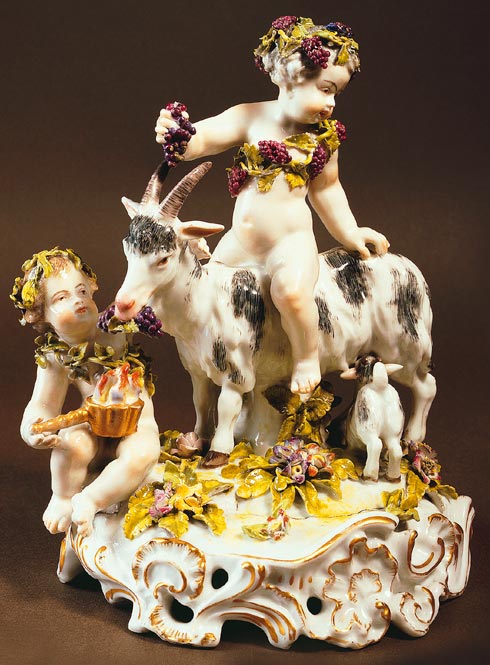
300 years ago, in June 1710, the Maissary Porcelain Manufacture produced its first products. In the same year, they were presented at the largest fair in Leipzig. All of Europe was convinced that the secret of porcelain was revealed and Saxony owns it. How the most expensive porcelain in the world was created and what is the secret of the popularity of products with an emblem of crossed blue swords - learned The New Times
Having rummaged in the linen cabinet, the decorator chooses a snow -white, lace <blood> and covers it with a large, dull flimming polishing table.
Yes, it will be beautiful. In the buffet, it seems, the Massenian service? Arrange porcelain plates along the edge of the table, around, and put all the seized treasures on them. This will be the best of all creations. So, the decoration is thought out.Boris Akunin. "Decorator"
If it were not for the Elector of Saxony Friedrich August I, he is the king of Poland August II, the strongest one under the name August is strong, European courtyards would have for a long time porcelain from China and Japan, paying a lot of money to the Dutch-reciters. Augustus was a life -lized and passionate collector - he bought up wherever he could, various outlandish things: samples of rare minerals, sculptures, ancient weapons, stuffed tropical birds, hours, measuring instruments, paintings by Italian, Flemish and Dutch masters. It was under August that the famous Dresden art gallery blossomed strongly. And it is precisely his love for luxury that we owe the appearance of European porcelain.
Pharmacy and power
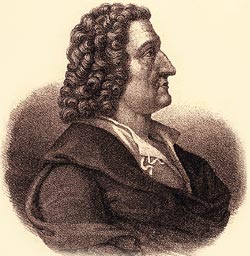 |
| The great alchemist Johann Friedrich Bettger Europe owes the invention of his own porcelain and liberation from Chinese dependence |
In the creation of porcelain, Prussia plays an instructed role. In 1696, 15-year-old Johann Friedrich Better came to Berlin in Berlin. A capable young man read a lot, and mainly books on alchemy - the path to gold seemed to him more reliable to rubbing the potions. And the king of Prussia Friedrich I believed in alchemy and really needed money. Using family ties in Holland, he bought up oriental porcelain in huge quantities. And not only, in order to please the wife of Sofia-Sharlotte, who stole a whole room from porcelain, and then, behind a lack of space, she began to smile them into the walls-it turned out an amazing porcelain cabinet in the Charlottenburg palace (it can be seen today). Another thing was important: Frederick I only recently became the king of Prussia and was supposed to insert a hairpin in Augustus, also a lover of porcelain. Porcelain was worth its weight in gold.
When in 1701 the rumor crawled along Berlin that Bettger's experiments were allegedly crowned with success, the Prussian king demanded a young man to the court. And since shortly before that he ordered to hang for the charlatanism the next court alchemist, Better prudently did not wait for a high purpose and simply escaped. The king of Prussia appointed a reward of 1000 thalers for the capture of the fugitive (a lot of money - and suddenly he would really get gold!). But Better fled to the Saxon city of Wittenberg, and there August found him. And naturally, he immediately imprisoned. He himself needed gold himself. Saxony was rich, but to support Poland and arrange an eternal holiday of life - no mines are enough.
Sharashka
 |
The world's first prison -type scientific institution was invented not at all under Stalin, but with a great August. The sentence to the fugitive Bettger sounded unequivocally: gold or something equivalent. He was transferred from the fortress to the fortress, sometimes softening the regime of imprisonment, sometimes releasing to people and even accepting at court under a fictitious name. Well, why not a secret academician ...
Count Erenfried Walter von Chirnhaus, a mathematician, a minerologist, and the owner of a glass factory, was set to observe his work. Bettger had the theory that at the final stage of the creation of a philosophical stone necessary for the production of gold, the temperature inside the tick should be higher than that which is able to withstand the usual clay vessel. And he took up experiments on creating ceramics that can withstand high temperatures. In 1705, the vessel made by Better saw von Chirnhaus. He knocked on him - and was stunned. Bettger's ceramics in its properties very much resembled porcelain. The created material was subsequently called red (Bettger) porcelain. He was the color of caked blood. Another name is Yashmovy. He was hard, succumbed to grinding and granting.
From now on, all the forces were thrown into porcelain. Augustus strongly increased funding. He did not have to explain the value of porcelain: he remembered this every time, buying another Chinese vase.
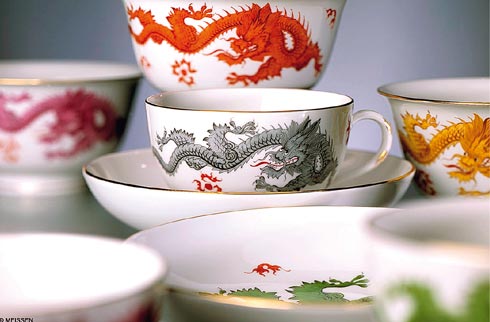
Once, in the hairdresser, Betger's hairdresser was sprinkled with powder, which went lumps. The zitsrynik channel instead of the road of French powder used white clay powder, which was once discovered by the merchant Schnorr near Dresden. The “Shnorrov land” in its characteristics turned out to be no worse than Chinese Kaolin. Adding quartz, alabaster, field spat, Better and von Chirnhaus in the maiden tower of Dresden created a white porcelain mass. And in 1708, Chirnhaus died of dysentery. About the victory - the first porcelain products made - in 1709, Better reported to the stronger to strong. All the laurels went to him. So often happens in life: who survived is right.
At the beginning of next year, Augustus issued a decree on the creation of a manufactory.
Three porcelain secrets 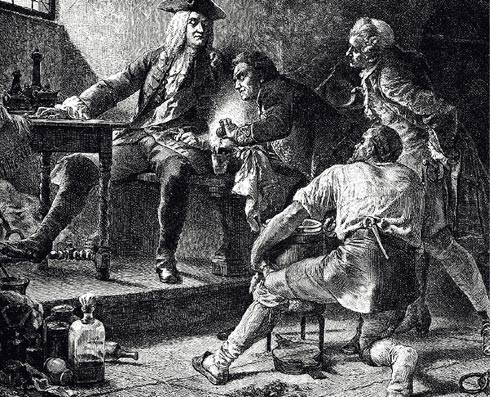
Bettger himself went to the laboratory of King August himself strong
An ideal place for secret production was the Albrechtsburgh castle in Meysen, located on the high bank of the Elbe. All basements and floors were given to porcelain. Better was appointed administrator. August laid a huge salary to him. But he did not give freedom. 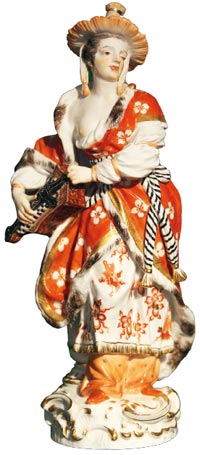
The two great heirs of Betger-the sculptor-model (who creates the forms of the future product) Johann Joachim Kendler and the artist Johann Gregor Hurald, who adopted the leadership, created the real glory of Meisen. Services, figures, bells, fireplaces, even tombstones - they all came up with. Like paints for painting.
Until the middle of the 19th century, production remained in Albrechtsburgh. Then a separate complex was built, which has grown significantly by our time.
The last parade
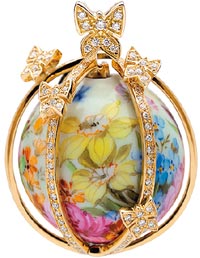
The most difficult and laborious work is painting with paints. Of the 800 employees of the manufactory, almost half are artists. In the artist’s hand is a thin brush, a long -standing device of Meysers is a leather pillow at hand so that the hand does not tremble and not tired. The second device is a small wooden circle on a lobby: it is more convenient to turn the cup on it and paint it from all sides. Porcelain paints are mixed manually in accordance with the recipe, which is slightly less than 300 years. During the painting, about 10 thousand shades are used, which are stored in the strictest secret.
Everything is done at the Meisen manufactory manually, because the products are unique and are very expensive. The simplest cup is € 50. A large multi -figure composition -? 40 thousand, or even more. The master takes up to 120 hours on the painting of one vase. There are at the manufactory a master of artists and molders who can repeat any of the most famous samples of the past, for example, Kendler's Swan Service (and there are more than two thousand items in it!).
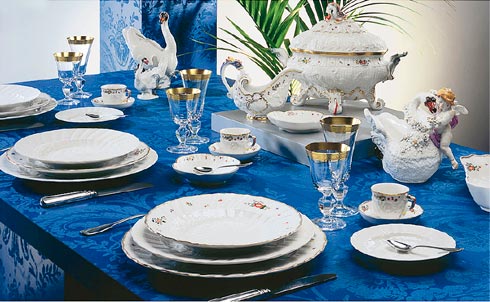
During the GDR in the office of the director, the porcelain "Sistine Madonna" hung. Rafael's colors of the Maissary masters were accurately transferred from the canvas to porcelain. After firing, the porcelain copy of the Madonna on the color scheme was almost indistinguishable from the original. By the way, the Meissen porcelain at the time of the GDR cost an order of magnitude less. Who was in Dresden, he probably saw the panel of the “procession of princes”, created at the beginning of the twentieth century: 104 meters long, 25 thousand porcelain tiles, which, fortunately, survived the terrible Anglo-American bombing of February 1945.
Old and new
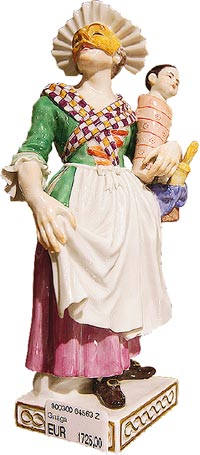
The difference between new and ancient porcelain products is practically not noticeable. Dr. Kurtski is a modern leader. He considers his task the maximum profit from the manufacture of the manufactory. “Luxury is a brand,” he says. “You have to pay for the“ blue swords ”.” And we pay.