
Translated material
Half
The story of the great dancer Nureyev and the removal of the performance of him at the Bolshoi Theater of the director Serebrennikov have the same roots
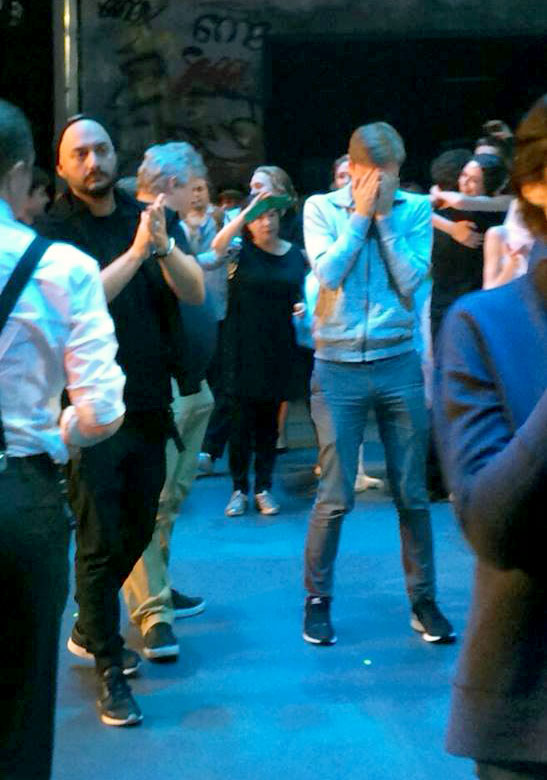
The Nureyev troupe is a portrait in the interior of the Bolshoi. Bolshoi Theater, Moscow, July 8, 2017.
Photo: from facebook.com
On Saturday, July 8, 2017, the day after the General Progon, it became known that the premiere of the play “Nureyev” was canceled on July 11, 2017. The performance was made by the same team as - last season - the triumphantly passed the “Hero of our time”: composer Ilya Demutsky, choreographer Yuri Posokhov, author of the libretto, scenographer and director Kirill Serebrennikov.
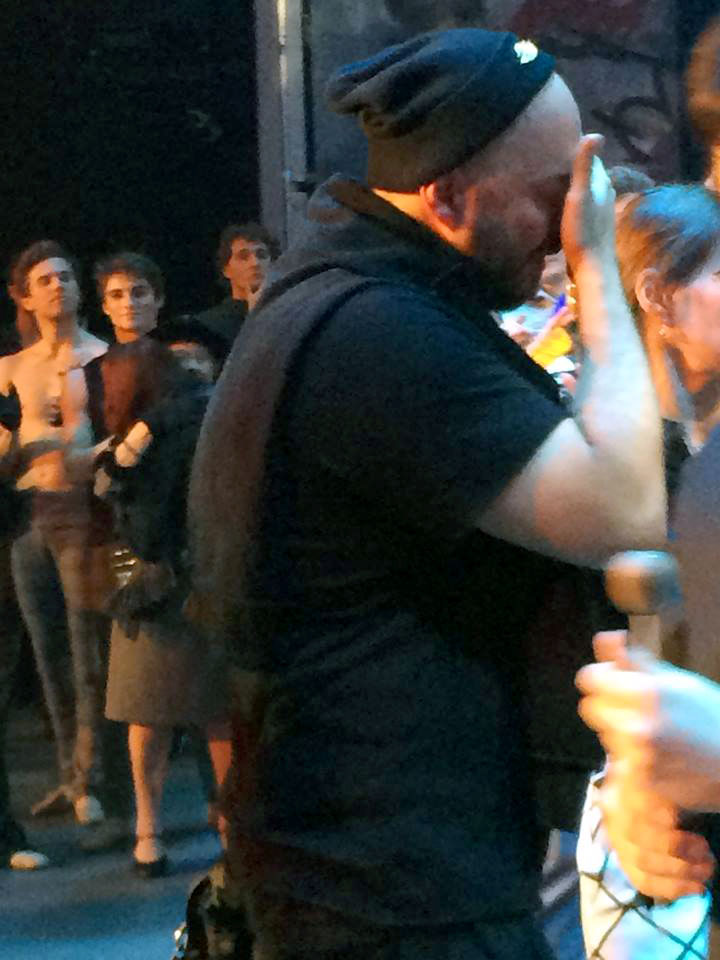
Director Kirill Serebrennikov after a run
and news of the cancellation of the premiere, Moscow,
Bolshoi Theater, July 8, 2017.
Photo: Facebook.com
Responsibility for the cancellation was taken by the director of the Bolshoi Theater Vladimir Urin. The reason for the abolition was formulated as slurred as possible. In short, Urin referred to the unpreparedness of the performance, which turned out to be "more complicated than we expected." TASS later said that the decision was made directly by the Minister of Culture of the Russian Federation Vladimir Medinsky, who saw in the performance the propaganda of non -traditional sexual relations. Why did kramol see only now? It's hard to say. The repertoire of the Bolshoi Theater is planned strongly in advance, 600 people were employed in the preparation of the performance, who were paid wages, Topov tickets (15 thousand rubles in the stalls and lodges) for the Bolshoi Theater prices for all premiere shows have long been sold, all scenery and costumes were made, compositions - declared. And a year ago, signing the contract with Serebrennikov and the team, the director at least knew exactly what the performance would be: this is the Bayopic of a brilliant dancer, a complex and conflicting person, one of the brightest stars of the 20th century - the dancer Rudolf Nureyev. On the poster there was even a note "18+".
Nureyev
Time itself rhymes itself amazingly. Perhaps in the biography of Nureev you can find answers to the question of what happened at the Bolshoi Theater on the eve of the premiere of the production of his life, creativity, love and hatred.
Rudolf Nureev was born on a train, next to the Irkutsk station, it happened. The Petersburg ballerina Anna Udaltsova taught him to dance: she was exiled to Ufa and, finding herself in a hopeless situation, taught choreography at the local Palace of Culture.
Nureev’s mother was a housewife, dad was an army political instructor; Of course, the family believed that ballet is not a male business. Nureev did not like to remember, but he told that his father had his own ballet, he used to even stink.
Nureev with difficulty and with a great delay entered the choreographic school in Leningrad, but brilliantly released. And he was even admitted to the Kirov ballet (now Mariinsky).
In 1961, he was recognized as the best dancer of the world. Then the troupe of the Kirov ballet went on a tour: London should have been behind Paris. According to the then rules for walking around the city, Soviet artists had to go out in the company of at least five people, to communicate only with those with whom it was allowed, dinner and dinner in the company of the “Watchman”. Nureev rebelled: it is known, for example, that, together with Ballerina Alla Osipenko, he fled to dinner in the castle of the sister of Marina Vladi, and indeed, tried to breathe in Paris as fully as possible. For behavior, the unworthy of a Soviet artist, Nureev decided to remove from a tour. The troupe flew to London without him. Then at the Airport of Le Bourget he did what they would then call a “jump into freedom”. Having asked for political asylum in France, Rudolf Nureyev will become the first Soviet “defeat”. In the USSR, he will be sentenced to 7 years with confiscation for treason for treason. And the only request of the dancer to the country's leadership - about the permission of the mother to go to him - will never be satisfied.
In 1987, Rudolf Nureev, by personal permission of Gorbachev, was allowed into the country for 72 hours, to say goodbye to the dying mother. They didn’t give them any more.
But 1989, he danced several performances on the native stage of the Kirov Theater, and in 1992, a few months before his death, he conducted the “Nutcracker” in Kazan, his mother’s hometown.
Amazingly, the “traitor of the Motherland” of Rudolf Nureev was rehabilitated only in 1998, five years after death. As stated in the statement of the General Prosecutor's Office of the Russian Federation, "in connection with the numerous appeals of the media."
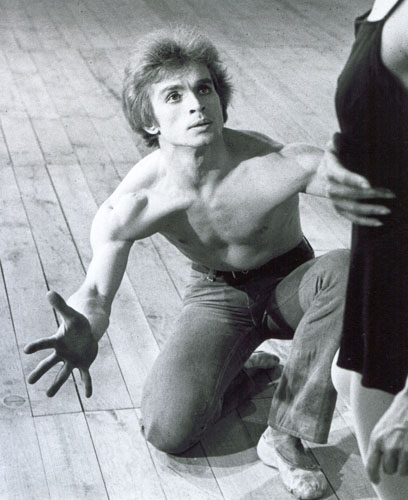
Rudolf Nureyev, Scene from the performance, 1963. Photo: from the photo gallery of the Rudolf Nureyev Foundation
"How you want to be alive"
Rudolf Nureyev was one of the first open homosexuals in the world, beloved and loving; The main relationship of his life is a long and difficult romance with an outstanding dancer, Prime Minister of the Danish Royal Ballet Eric Brun.
Rudolf Nureyev was one of the first victims of the then almost unknown HIV. He lived with illness for almost ten years, having died in 1993 from AIDS complications.
Nureev was a strange, sharp, vulnerable, sometimes rude and complex person. Absolute genius of dance. He shone in the Danish royal ballet, in the royal ballet of England, the Vienna opera, led the ballet troupe of the Paris Grand Opera. Not unhealthy, he gave up to three hundred performances a year, working without vacations and weekends, not sparing himself, trying to spend all the released forces on the art for which he lived, which was the only one, in fact, worried him.
Rudolf Nureyev will be sentenced in absentia to 7 years with confiscation. In 1987, with the personal permission of Gorbachev, he was allowed into the country for 72 hours-to say goodbye to the dying mother
They say that the last words of Nureyev before his death were: "How you want to be alive."
On the day of the funeral, Russian artists in Russian read Pushkin in Russian. Rudolf Nureyev’s tombstone is easy to find: against the laconic background of San-Geneveva de Bois, the Russian cemetery in Paris, a very beautiful and very sad oriental carpet from the colored mosaic looks a little elaborate.
Twice guilty
For the world, the great dancer Rudolf Nureyev is forever “Russian”, he is from here, from our latitudes. For me, he is the pride and pain of my country, the hero of my fatherland, so never humanly in front of him.
What part of his biography in 2017 in Russia and for the Russian viewer can be unimportant, insignificant or even forbidden: train? Offender teacher? Escape abroad? homosexuality? Or maybe a disease? What was the leadership of the Bolshoi Theater, concluding a contract with Serebrennikov: that it will be some other Nureyev, whose life in some unusual ways will be my outstanding contemporary, the pride of my fatherland, one of the most striking directors of the world Kirill Serebrennikov?
However, four years ago, Serebrennikov was already offered in exchange for a state -guide to Bayopic about Tchaikovsky to change a sexual orientation to the composer. All the same Minister of Culture Medinsky directly stated that: the state will support the film that will be dedicated to "Tchaikovsky’s genius, and not rumors around his biography." Then Serebrennikov returned the money received to the Ministry of Culture. And continued to work.
This would be the right turn of history, the restoration of justice and, undoubtedly, the triumph of art, if it were Serebrennikov who told the history of the Bolshoi Theater History of Nureyev from the main stage of the country.
During this time, he headed and raised the Gogol Center to his feet, turning it into the main place of power, into the center of cultural education of the country. I put it only in this theater: the performance “Idiots”, which was successfully shown at the prestigious theater festival in Avignon, the musical “Awakening of Spring”, the play “Dead Souls” (participant of the international festival Wiener Festwochen, prize for directing “Crystal Turandot”), “(M) the student” (and then removed the same name ”(then removed the same name The film), “To whom to live well in Rus'”, “Mugller car”, “Kafka”, “Akhmatova. A poem without a hero. "
In the Latvian National Theater - "Dreams of Rainis" and "Near City". And also the operas of Falstaf in Mariinka, the Golden Cockerel at the Bolshoi Theater, American Lulu in the Berlin Komische Oper, Symphony performance Requiem in the Moscow Art Theater. Chekhov, the oratorios of Jeanne d'Arc and Persephone in the Moscow International House of Music, Mysterion, Opera Station and Goddesses of the Machine for the Territory Festival of Contemporary Art. They say that Serebrennikov works almost seven days a week, puts performances, shoots cinema, invents projects. And yet, that the main thing in his life is an art that he is really obsessed with. Neither politics, nor near -theatal squabbles, nor material benefits. Art.
This would be the right turn of history, the restoration of justice and, undoubtedly, the triumph of art, if it were Serebrennikov who told Nureyev’s history from the main stage of the country, the historical scene of the Bolshoi Theater. But it did not happen. The premiere is now promised exactly on the eve of the next inauguration of Putin, in May 2018.
Outwarded
Until now, only three times have been canceled in three times: Shostakovich (when he dispersed with the party line), Swan Lake Grigorovich, because the Minister of Culture Furtseva did not like the sad finale of the Swan Lake and, by the decision of the artistic council, the premiere of the ballet Michaela Tariverdiev “Girl and Death”.
The story with the abolition (forever or before the “better times”) “Nureyev” is all the more dramatic that at that moment a criminal case has been instituted against the “seventh studio” of Kirill Serebrennikov. Home to the director, to one and a half dozens of employees of Gogol Center, the SK employees already came to the theater itself with searches. The former general producer of the studio Alexei Malobrodsky and accountant Nina Maslyaeva are detained, general director Yuri Itin - under house arrest.
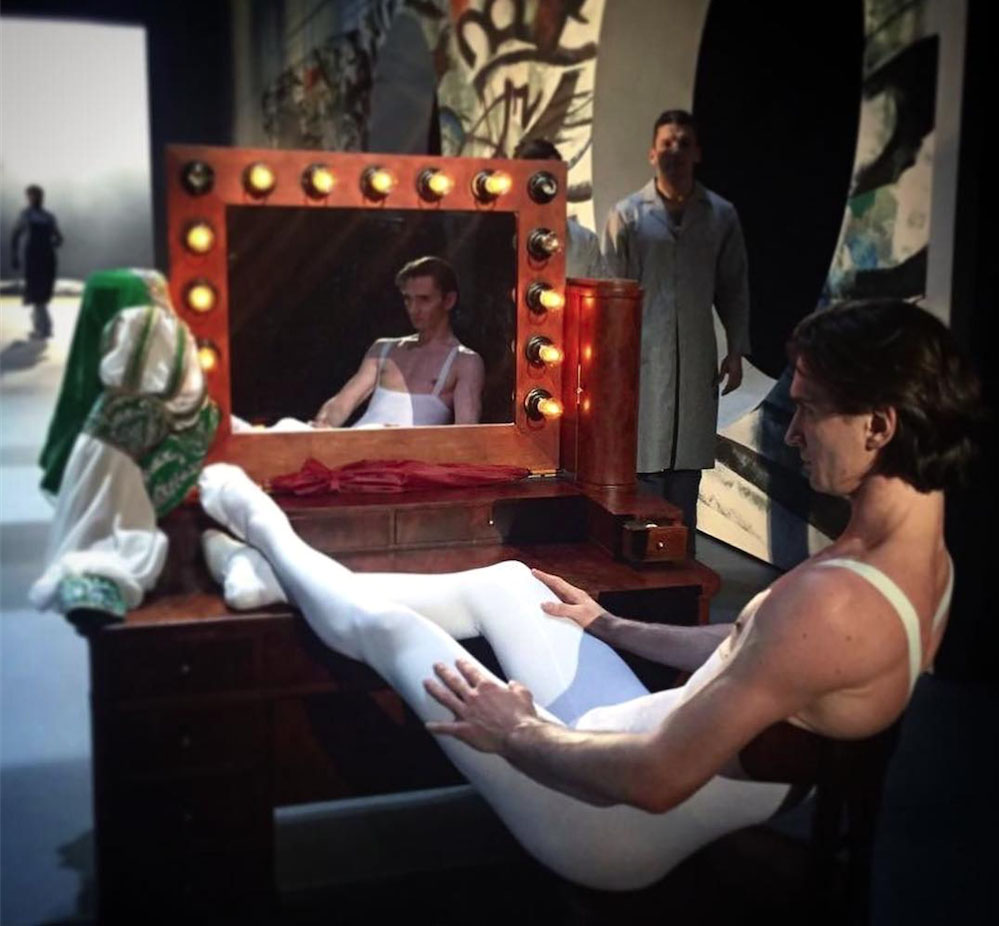
Prime Minister of the Bolshoi Theater Vladislav Lantratov, one of the performers of the role of Nureev, after the run and news of the cancellation of the premiere of the performance, Moscow, Bolshoi Theater, July 8, 2017
According to the investigation, all these people participated in the embezzlement of funds allocated for the production of the play “Summer Night”. The investigation even expressed the opinion that there was no such performance at all.
In support of Serebrennikov and the Seventh Studio, Russian theaters held a rally of solidarity, foreign and Russian theater figures spoke out, including the director of the Bolshoi Vladimir Urin, known in theatrical circles as a strong -willed, strong and unbending person.
During the beginning of the investigative actions, Serebrennikov released the Chadsky opera in Helikon-Opera, launched a film about Viktor Tsoi, was preparing for the premiere of Nureyev.
And he became, perhaps, the first in the latest history of Russia by a public person, in respect of whom the state arranged real persecution.
Perhaps then they will apologize for it.
I would like to believe that this will happen in May next year: at today's briefing in Bol, Vladimir Urin called the new possible date of the premiere - May 4–5, 2018. There was no director Kirill Serebrennikov at a briefing.