In Baghdad, everything is calm. US President Obama just announced: "In August 2010, the operation in Iraq will be officially completed." The country will remain from 35,000 to 50,000 American troops - to combat terrorism. The Iraqisets were studied by The New Times
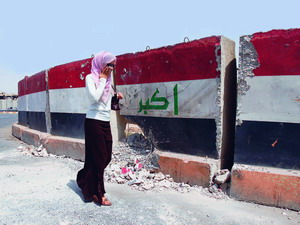
The young woman slowly paints her eyes and lips, then puts a pink bedspread on her head, leaving a somewhat whimsical background of hair with uncovered hair. Exactly at eight in the morning, a twenty-five-year-old wound leaves the doors of the parental house in a quiet street behind the University of Mustarsiria in the mixed Shiite-Sunni quarter of Baghdad and goes to work to the Ministry of Electricity. A year ago, it was unthinkable - for security reasons. “We all hope that the bloody madness that restored us against each other has finally ended and now a more or less normal life will begin,” explains the former student of the university, who in January 2007, at the very height of the civil war, became the target of one of the most tragic terrorist acts that claimed the lives of 70 people.
Strong hand
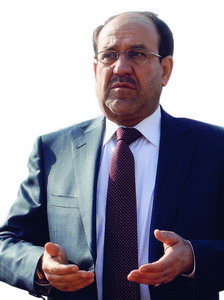
Endless concrete walls, erected over the past two years to protect against a terrorist threat, have not gone anywhere; However, a relaxed atmosphere on the streets of Baghdad indicates that something has really changed in the city. ¹ These changes, most of the population ascribes to the “iron hand” Prime Minister Nuri Al-Malika, who, as they believe, should return the country to normal life after five years of deaths, destruction and disappointment.
Almost every evening, countless Baghdad cafes and restaurants are crowded: they are visited even by women who are going to smoke hookah and chat with friends in the halls specially reserved for this. Time sign: Abu Navas Park, named for the main street of the city and stretching along the Tiger River, opposite the buildings of the Green Zone, is again open to visitors. I check the Iraqi military at the entrance to the park at the entrance to the park. P Reaoling the control point, you can leave the car in an open parking lot and roam the whole family on freshly reinforced pedestrian paths or observe children playing on the recently installed swings, which, however, already look somewhat dilapidated.
“Hope is gradually returning to us, however, the established balance is still very fragile,” Mohammed Khussein Ali, head of the department of laser physics at the University of Technology, restrainedly notes. He lived in Baghdad all these long dark years, when many of his colleagues were killed by Shiite and Sunni militants, and he himself, according to him, "every day expected to be the next." However, despite the fact that the capital seems to have almost completely freed from fear of al-Qaeda, tension is not reduced in many provinces of Iraq. Take at least Mosul, located in the north of the country: in this city, the third largest population, the positions of warlike Sunnis are very strong. And in Baghdad itself, although most of the Sunni families who left their homes in Shiite quarters (and vice versa) have already returned to their native foci, the feeling of threat remains: before allowing the car to get into the parking lot, they are searched, afraid that it is mined; Drivers, returning to their car, often climb under the bottom to check if there are “bombs” there (these bombs dubbed so that they are attached with the help of ordinary adhesive tape). The fact is that the rebels adapted to a new situation, although their movements are now limited by numerous control points.
Internal aggressor
Of course, now the population is afraid of less, but it does not lose vigilance. In the general opinion, when there are no improvements in the social infrastructure and the economic situation in the country, no one can guarantee that the world will be durable. “If the Americans leave our country too hastily, which they captured, not caring about the consequences and making some outcasts of us in the eyes of the world community, riots and violence can begin again,” Aiyad al-Samarai, a member of the parliament from the Sunni faction, the head of the financial committee and a candidate for the position of chairman of the parliament. “American President Obama said during his election campaign that he intends to withdraw American troops from Iraq in 16 months. It seemed to us that this is not feasible, and unreasonable: of course, our troops are already more numerous than before, but are still very poorly equipped. In service with our army - only Kalashnikov assault rifles and grenade launchers. We have neither such mortars, nor such aviation, nor such rear support to resist possible aggression from the inside, ”he emphasizes.
And who is he - a potential internal aggressor? Of course, “Al -Caida ”, but not only. There is also an “Mahdi Army” under the leadership of the radical Shiite leader of the Muktada al-Sadra, who, according to official information, is now in Iran, where he allegedly studies theology. Provocations in the city of Kirkuk, the center of oil industry in the north of the country, are not excluded - to push the Arabs and Kurds. Both communities are fighting for control of Kirkuk, and its status is still not determined.
At the end of 2008, the Iraqi government and the Presidential Administration signed an agreement on the conditions for the withdrawal of American troops. In July 2009, a referendum is provided. If the Iraqi population is displeased by the passage of the withdrawal of troops, it can be accelerated, but by agreement the American contingent will have to leave the territory of Iraq only by the end of 2011. “Even the presence of a limited contingent of American troops in the country would provide real assistance to the Iraq government,” Ayayad al-Samarai insists. This opinion is shared by the member of the parliament Mahmoud Otman, the ethnic Kurd and the hot defender of the human rights: “Before leaving the country, the Americans should train and arm us ... But do they really want this? For five years, they have not presented us a single evidence that they act really in our interests. So why should they start helping us now? On the other hand, if they are They will not do, the position of the authorities in the country will remain weak, riots may begin again, and this certainly does not meet the interests of the new administration! ”
Between the devil and the deep sea
The American presence in Iraq remains a sick theme for the inhabitants of the country and gives rise to confusion in the minds: the idea of “reorganization” of the Middle East in accordance with the ideals of American democracy is not close to them, nevertheless, the majority is inclined to compromise. “The Americans must go gradually and realize their responsibility,” says Samira al-Musavi, Shiitka, who heads the Parliamentary Committee on Women and Family Affairs. “We need to find balance between our ability to protect democracy and our ability to protect ourselves.”
A good wish, especially since the interests of the numerous political parties in Iraq are still dictated by their ethnic or religious affiliation - this state of affairs may only be able to change the local elections that were held at the end of January. “Nuri al-Maliki, the current prime minister, is the first who put an end to the shameless disconnection of our country with an iron hand and has become a kind of symbol of calm,” says the Dominican, Yuzif Tom. He is happy that he no longer needs to tremble with fear behind the walls of the monastery only because he professes the Christian religion.
However, it is worth leaving Baghdad and going to one of the neighboring provinces, where the Sunnis prevail, for example, to the city of Falluja, located west of Baghdad, or north, to the province of Diyal, as a feeling of satisfaction instantly disappears. In Falluj in 2004, the most cruel battles between the rebels and American troops rattled, and Diala still remains an outside zone, since al-Qaeda militants took refuge here only a few months ago. “Here, all the elders collaborated with the Americans, and above all for the sake of money,” complains a teacher who was close to the party of the Arabic socialist revival - Baas, and now voted in the election for a “independent” list. - Now they liked the power that had fallen on them, and they are ready for anything to preserve it. And since here, in the region of the predominance of Shiites, there are also Shiite rebels, we are inquired to be here between two lights! Shame on all pocket politicians - the proteges of the Americans, who will definitely leave with them! As soon as we free ourselves from these new oppressors, we will finally return to our true Arab values! I assure you, this is where the religious political parties will come to the end-in recent years we have been enough of all this, now we need order and discipline! ”
Nevertheless, the democracy “in the American manner” and the free elections that she brought with herself had one indisputable advantage: no matter what the displeased teacher said there, it was the notorious democracy that gave him the opportunity to express his opinion freely ...
_______________
1 The New Times published an Ann Niva report from Baghdad to No. 28 of August 20, 2007.
2 Baghdad’s guarded quarter, in which all the main state institutions of Iraq are located, high -ranking officials live and there is a new building of the American embassy, the largest in the world: about 1,500 people work in it.