
Translated material
The decipher of evil
Umberto Eco has released a new book
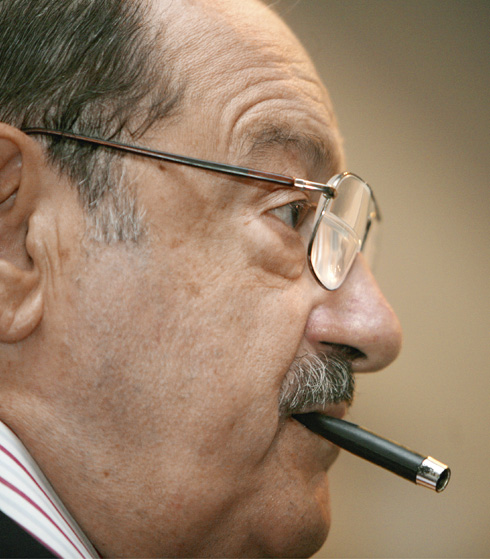
The decipher of evil. In Italy, a new novel by Umberto Eco “Prague Cemetery” was published, which immediately caused an acute polemic. He found out the arguments of the parties
The New Times
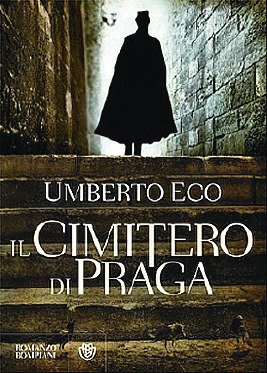 |
The novel about the deepest and most shameful political secrets of the 19th century, throwing an alarming reflection on the times in which we live, ”the Bompiani publishing house intrigues in his press release. The name is a subtle hint of: Prague cemetery is one of the oldest Jewish cemeteries in Europe. The main character, as said in the same press release, is “a cynical falsifier working on secret police of half of the European states: he weaves networks, arranges conspiracies and prepares attempts that determined the political and historical development of our continent.” The announcement does not say that the protagonist, captain Simone Simonini, brutally hates Jews and fabricates the dossier, which forms the basis of the famous "protocols of the Zion sages."
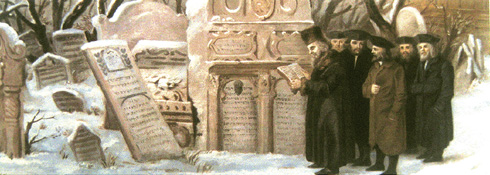
Prayer in the Prague cemetery. Grave Rabbi Leva. Illustration for the book of the Prague funeral society "Hebra of Gaddish", 1780.
According to Jewish legend, the Great Prague Rabbi - Rabbi Lev - imposed a spell on his grave: anyone who tries to break his peace will die: “Prague cemetery” on sale on October 29, but the first circulation of 200 thousand copies has already been sold out and on the approach of the second. The novel will be translated in 40 countries. Criticism, meanwhile, fell off the chain.
Contemplator or genius? Each time, when Umberto IVF, whom many consider the most significant of the living Italian intellectuals, releases a new novel, the Italian writer as if it “closes”. This time the reason is anti -Semitism, which is supposedly stuffed the book. However, the first sharp criticism of the novel did not concern the Jewish theme. Two days before the release of Roman, Zdenek Fryborn, the Czech Translator of IVF, who has not yet read the book, says in the newspaper Il Giornale: “Eco is a good writer, he has a good language, but nothing brilliant. His tongue does not bloom with poetry. He is rather a scientist who has discovered a way to achieve success and earn a prose. ”
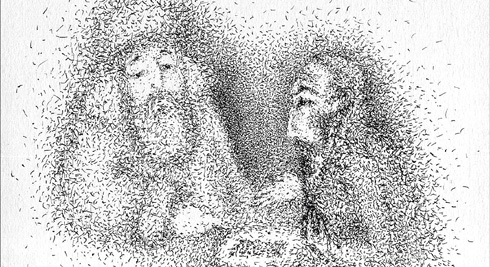
The reproduction of the graphic work of Rivka Belareva “The cabman and the Reb Isaac” but the real polemic unfolded after the article published in the Osservatore Romano, the official newspaper of the Vatican. The criticism of the novel in it is a dentist: the eco book is “boring, confusing, extremely difficult to read.” The author is Rayette Scaraffya, a teacher of the University of Roman La Sapienza, is indignant: according to her, the constant descriptions of the treachery of the Jews in the novel arouse suspicion of the author’s duplicity, and endless passages about the vile features of a Jewish character can force readers to believe in them. “To expose anti -Semitism, placing yourself, as it were, on the side of anti -Semites, means not to expose them, but to cause only a growing aversion to such prose,” she writes angrily in the chapter under the name “Contemplator of Evil”.
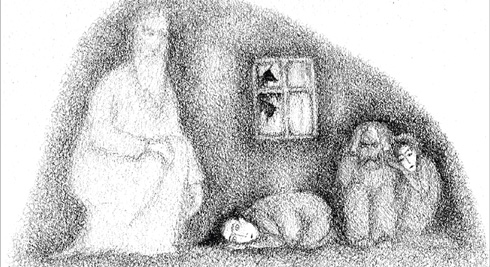
The reproduction of the graphic work of Rivka Belareva “Pogrom” with this position is also agreed by the historian Anna Foa. In an article published in the “Jewish pages”, the month of the Union of Jewish communities of Italy, she claims: “If in the“ name of the rose ”it was still possible to amuse the theme of heretics and witches, whether it is permissible to do this innocent in relation to the book that fed the Nazi plan for the extermination of Jews and which many still consider, if a false -like, reflecting, reflecting, reflecting. Reality? "
The speaking cricket , however, the answer of the author of the “Prague cemetery” is unequivocal: with this book “I expose the conspiracy of those who make evil, who sowing hatred of Jews,” Eco said in an interview with the same “Jewish pages”. “The author of a treatise in chemistry always has the right to expect that someone uses it to poison his grandmother,” the writer continues. - There are always malicious people. But I do not think that in order to generate ideas they needed to read my novels. On the contrary, with my book I tried to expose their conspiracy. ”
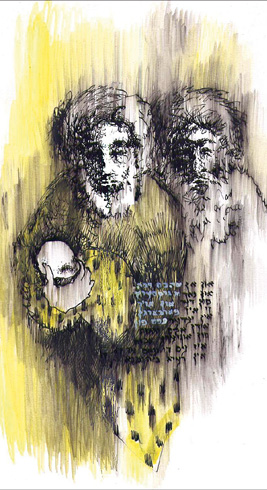
The reproduction of the graphic work of Rivka Belareva “Child” Umberto Eco plays with the anti -Semitic stereotypes of the 19th century precisely in order to break them and show their groundlessness. “Protocols of the Zion sages” - the primary basis of any anti -Semitic pamphlet - its long -standing passion. He studied them thoroughly, wrote about them, moreover, he discovered their shoots in the French novels of the 19th century. Eco emphasized their inaccuracy many times: “It is little believed that the villains express their insidious plans in such a shameless way,” he wrote in the article “Italians - anti -Semites?”, Published in 2002 in the weekly L'Espresso. According to IVF, the “Zion sages” in their texts even declare that the Jewish government encourages sports and visual propaganda for stunning the working class. “This thesis seems more likely to Berluskonievsky than Jewish,” the writer notes ironically.
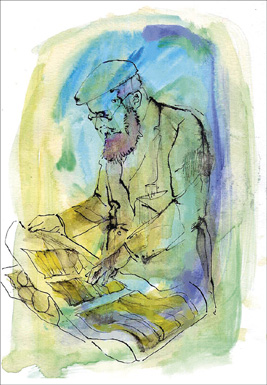
The reproduction of the graphic work of Rivka Belareva “Scroll” despite the fact that the authenticity of the text of the “Protocols” was called into question and refuted in the 20s of the XX century, Hitler used it as a historical justification for Jewish genocide. The Eco Roman-fruit-felon is just making an attempt to reveal how the fraudulent design of the “protocols” arose and what is their role in history. In an interview with the rabbi Riccardo Di Senya, published in the same L'Espresso, even before all discussions, the author of the Prague Cemetery explains what is behind the theory of the conspiracy, which is mentioned in the book: the conspiracy is needed for those who cannot explain to themselves why their life has failed, and others - on the contrary. “People need an enemy. I force this to say this to my characters, secret agents. Who is this enemy? - Another. While “others” are Qatar, the Albigensians disappeared during mass extermination, the Jewish tradition, thanks to the strength of their culture, resisted a little everywhere. That is why a Jew has become an ideal embodiment of the image of a “other”.
The theory of conspiracy (like the image of the enemy) is an eternal matrix in the history of mankind, which, according to IVF, is "born with the help of genuine and well -known materials, but composed in such a way that they arouse suspicion." Obviously, this is relevant not only for Europe and not only for the 19th century. Having debunking all the Izma, IVF expands the nature of a lie, almost indistinguishable from the truth, as a category of modernity.
Probably, Freybred is right, Eco is not a great writer. But he remains a clear mind of our time and, possibly, the last embodiment of that intellectual, talking a cricket, which he himself wrote about. It is not surprising that his novel was in the center of the polemic. Once, IVF was invited to Paris to Congress, organized by Francois Mitterin and his environment. The theme of the Congress: how intellectuals can participate in the resolution of world crises. The performance of IVF was completely brief: "Intellectuals do not allow crises, they create them."
Translation from Italian
Natalia Alyakrinskaya
"
People need an enemy. I force this to say this to my characters, secret agents. Who is this enemy? - Another
"
Umberto Eco - Italian prose writer, semiotic, culturalist, essayist. Born in 1932. In 1954 he graduated from the Turin University of Arts, worked on television, was the observer of the largest newspaper Espresso (L'Espresso), taught aesthetics and cultural theory at universities in Milan, Florence and Turin. Professor of Bologna University. Honorary Doctor of many foreign universities. The author of the novels “The name of the Rose” (1980), “Pendulum Foucault” (1988), “Island on the eve” (1994), “Baudolino” (2000), “The mysterious flame of Queen Loan” (2004).
The Protocols of the Zion sages is a collection of texts that appeared in Russia in 1903. The publisher - the royal guard - presented the “protocols” as a document of the World Jewish conspiracy. The texts set forth plans to conquest world domination, penetration into the structure of state management, taking non -Jews under control, eradicating other religions. In a series of articles published in the London newspaper Times in 1921, it is proved that the “protocols” are plagiarism, a fake made on the basis of a political satire that is not related to Jews. Despite this, the texts are still used by anti -Semites (especially in the Middle East) as the main proof of the existence of the so -called Jewish conspiracy.
Rivka Belareva-graphic artist, painter, art critic. The author of illustrations for biblical texts, parables, Hasidic books. The New Times wrote about the book graphics exhibition of Rivka Belereva “Through the Text” in No. 6 of February 22, 2010.