Translated material
Thai Toolbox
Which poisons relations between Moscow and Bangkok
Thai Toolbox. Russia can seriously spoil relations with Thailand - a popular tourist route for compatriots. Once again, the fugitive Thai oligarch, ex-Prime Minister Taxin Chinavat, whom the new Thai authorities are looking through Interpol on charges of corruption, visited Moscow. The fugitive does not hide his main goal - the overthrow of the current authorities with the help of riots. Why did the Russian bear intervene in the fight of Thai tigers - the New Times sorted out 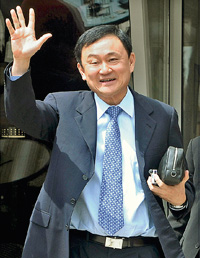
Not the first time
Actually, Chinavat has already been to Moscow. In 2007, shortly after his shift, he came to receive an honorary scientific degree of the Russian Economic Academy. Plekhanova - at that time he was robbed in the Moscow McDonald's. In March 2010, he again visited the capital and talked with the help of a video motor with his supporters in Thailand. Thai media call Chinavat a friend of Vladimir Putin. And the fugitive himself does not miss the opportunity to recall his “trusting personal relations” with the Russian prime minister. Peresawat seems to use Russian territory as a bridgehead to return to power: from other countries it can extradite it to Thailand. True, in the spring of this year, the Tatets visited Paris unhinderedly and even held a press conference there: on the banks of the Seine, Chinavat, according to rumors, is also friends with “serious people”. The delicacy of the situation is given by the fact that Chinavat is very popular in his homeland and remains one of the key figures of Thai policy. After fleeing from Thailand, he was appointed adviser to the Government of Cambodia in the economy - and the scandal immediately erupted, the relations of Bangkok and tumor -peni deteriorated. So the sad precedent seems to be available. But Moscow does not seem to be confused.
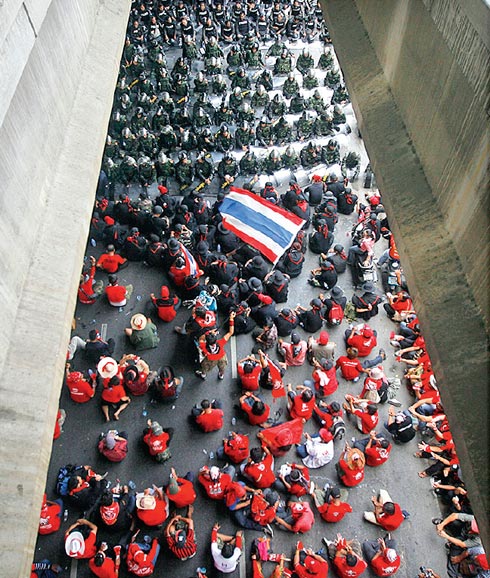
Opposition protests - the main weapon of Chinavat
The party guest?
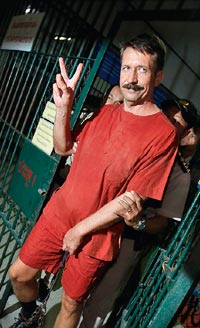
Russia is now connected with Thailand with a scandalous story called Victor But's case. Recently, Moscow has been able to understand Bangkoku that he is considering bilateral relations through the prism of the future fate of this entrepreneur sitting in Thai prison on charges of illegal trade in weapons. Russia in every possible way seeks to prevent the expulsion of a bot from Thailand to the United States at the request of the FBI. Why? The version was expressed that an entrepreneur may be a bearer of certain state secrets (Bout himself categorically denies this). He did not hold any official government posts, but he probably supported unofficial contacts with officials from the defense sphere. And this means that those secrets that Bout can transfer to the American intelligence agencies concern senior Russian officials personally. On August 20, the Russian Foreign Minister Sergei Lavrov stood up for a businessman. After this Thai ambassador, they called for a conversation at the Foreign Ministry ...
It seems that in the case of Bout, Moscow initially tried to behave in the same way as with the former head of the Minatoma Evgeny Adamov arrested in Switzerland - to achieve extradition to Russia, to find guilty and let go. Immediately after the arrest of Buta, an unnamed source in Russian law enforcement agencies even claimed that he was taking place in his homeland in a number of criminal cases as a suspect. But having come across the intransigence of the Thais, Moscow changed tactics, and now, as the diplomatic source of The NEW Times, "itself organized a leak on the stay of Chinavat in Russia in order to frighten Bangkok with the Moscow bonds of the ex-Prime Minister." Like, do not want to give a bot, get additional problems with the opposition. Moreover, the name of Chinavat was already mentioned in connection with the But case. At the end of August, the entrepreneur through his wife stated that the Thai authorities tried to attract him to capture a cursory prime minister. The assistant to the current Prime Minister of Thailand, who visited Buta in prison, asked him about the possible involvement of a official in the load of weapons detained in Bangkok in December 2009. According to the diplomatic source of The New Times, “some kind of bargain around the extraction of Buta is now, apparently, it is: the fact that the United States has not yet been issued, although the court has already made the corresponding decision seems strange.”
Not one tourism
But are the political investments that Moscow invests in Chinavat is not useless? The fact is that Russia's interests in Thailand are not closed on tourism. Moscow has long been looking at the development of nuclear energy in Thailand: at the construction of several power units as part of the Bangkok Mirny Atom development plan in 2007, according to estimates, is ready to spend $ 6-8 billion, and these contracts are not averse to get Russian companies. And Thailand's interest in guaranteed supply of hydrocarbons is ready to satisfy Gazprom. Another thing is that the current Thai authorities do not show much zeal in the field of cooperation. But Chinavat shortly before his displacement signed an agreement on strategic cooperation of the Thai oil and gas corporation RTT with Gazprom. Meanwhile, as noted in a conversation with The New Times, John Saydel, "the return of Chinavat to power is a very possible scenario, especially probable if the country is replaced by the monarch." * * It is believed that the current king of Thailand Phumipon Adulyadet (Rama IX), ruling the country since 1946, supported the conspirators who overthrew the Chinavat, and perhaps one of the initiators of the coup. As the expert emphasizes, "the former prime minister proved his political stability - all current talk about reconciliation in Thailand testify: it was not possible to get rid of Chinavat." And the bets made by Moscow may be not useful.
Taxin Chinavat was removed from power as a result of a military coup in September 2006. While he was in New York at the UN Assembly, the military deprived his government of all powers. However, in December 2007, his party won the parliamentary elections, the government was headed by the politician Samak Suntharavet close to Chinavat. In August 2008, mass unrest began in the country, the prime minister was forced to resign. He was replaced by another supporter of Chinavat, but he did not last long - he was replaced by the leader of the opposition Democratic Party Abkhitzit. In the spring of 2009 and 2010 Mass protests were already arranged by supporters of Chinavat.