
Translated material
The drama of the absurd
How to carry out a performance across the border
The drama of the absurd. Performances and exhibitions get stuck on the border-because of the ridiculous rules and illiteracy of customs officers 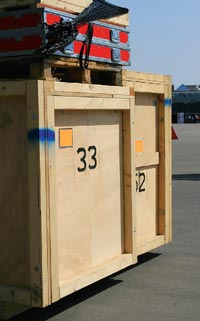
Another performance of the festival, the Vilnius Romeo and Juliet Oscaras Korshunovas, did not take place due to the fact that the driver of the truck with the scenery decided to go through Belarus, in which the Karnet transit is not accepted.
* * Carnet Ata - an international customs document that replaces customs declarations and allows for simplified and accelerated design of temporary import of goods in connection with the holding of exhibitions and fairs, as well as for the movement of commodity samples, professional equipment and some other categories of goods. There are enough examples of this kind. Alexei Goncharenko, the chief specialist of the theaters for children and theaters of the puppets of the RF RF, says that he often heard about problems with customs from directors of Russian festivals, to which they invite foreign participants: “It often happens that the decoration container is standing at the border for several days. Everyone is nervous, the audience bought tickets, and the performance is threatened with a breakdown. ” It’s easier with puppet performances: here it is enough for the Russian side to ask your guests not to declare the scenery and props, but to transport them as a personal baggage of participants in the performance. Many guesters themselves prefer to travel lightly, so they ask to find the parts necessary for the design directly at the site of the performance. Ordinary chairs, a screen and several cubes can easily be found in the workshops of any theater.
However, not all problems are solved so simply. The scenery of the "adult" performance, which is on the big stage, cannot be taken away in the suitcase. It is often difficult to understand the difference in the rules of transportation within the European Union and beyond its borders. Even those theaters that have already been to Russia and encountered complicated temporary import procedures, the interlocutors of The New Times say, forget that we have our own customs laws. These laws do not contradict the customs rules of Ata, but are complicated by the crossing of the border of the European Union. Here, problems begin to resolve and coordinate the rules of transportation.
Some rules of temporary import of goods into our country seem absurd to European theater people. For example, you can’t bring your makeup or outgoing props for the performance (that is, one -time use that “play” on the stage: paper, candles, nails), since the law implies the identity of the imported and exported property. Experts say that if at least one nail is left in Russia, it will formally be a violation of the rules and entail fines. Temporary import-output, according to international law, is not taxed, exists in a separate legal field-unlike commercial goods. But not all customs officers know this rule, therefore, theaters have difficulties. The problem can be dramatically solved, the organizers of the festivals believe, only having removed the boundaries, as in Europe. “But this is unrealistic, so you just need to prepare in advance and check and double -check everything,” Evgenia Shermenev sums up.
Therefore (since no regulatory documents that facilitate the life of touring are foreseen) The organizers in order to play it safe, they are forced to bring decorations and equipment to Moscow in advance, preferring to pay the days of downtime of transport here, but not to risk at the border.