
Translated material
Risk counting
Ten days have passed since the largest airline in the history of Russia. Who is responsible for the safety of Russian aircraft in the sky, from which it consists of - versed The New Times
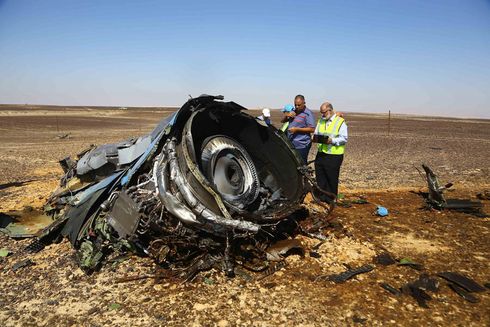
Rescuers and experts at the crash site A321, El-Arish, Egypt, November 1, 2015
Not a single plane crash is repeated one to one, Aviation experts assure. Yes, and they happen infrequently - in 2014 there are 21 cases for 50 million flights, according to the International Flight Security Agency. That is why each of them turns into a tragedy. The death of the A321 aircraft Kogalymavia forced to think not only about the reasons for its fall, but also about the principles of control and responsibility for the state of other aircraft of Russian airlines.
Follow age
The flight safety depends on a huge number of factors, and it is almost impossible to exclude the risk of completely risk. Therefore, it is extremely important to know clearly: what exactly, at what point and how it affects safety and who should control it.
The most important factor is the technical condition. Any air ship pass regular checks of seven different types. Before each departure, the technical and flight composition of the airline examines the skin, engines and the main systems of the aircraft - are looking for defects or damage. Once a day, the main nodes, the level of necessary liquids in systems and emergency equipment are checked. Oils and other fluids are replenished or change, the general condition of the sheathing, internal systems, chassis, generator, lights and electronic systems are checked. Four more checks, which include maintenance, are carried out, respectively, once a month, once every three months, once a year and once every 12 years. As a rule, they are carried out in the country where the plane is registered.
“Before the departure, it is no longer possible to check all the details with qualitatively, if only something is very noticeable,” explains NT deputy leader IFK-Technic CJSC Alexander Emtsov. “Small cracks, corrosion from the Earth is not visible, and there can not be a stewardess or a technician to evaluate their danger by his education.” It was known about Airbus Kogalymavia that in 2001, when the aircraft still belonged to the Lebanese company, he damaged his tail when landing at Cairo Airport. But the checks of its condition after the repair were carried out in Ireland, where the liner was registered. Therefore, the expert explains, the Russian owners could not independently evaluate what condition the damaged area is in exactly now, and they should not: they periodically received these check results from the registrars and focused on them.
“They tell us: in the West, old planes fly - this is true. But this is, as a rule, ships with a well -known history, operating with the same company "
The composition of the park of Russian airlines is another risk factor. The crisis of Russian aviation, which began back in the 1990s, led to the decisive predominance of "foreign cars", most often taken into leasing. In 2013, the share of foreign mediumagistral aircraft (flight range from 2.5 thousand to 6 thousand kilometers) amounted to 80%. Deputy Prime Minister Dmitry Rogozin called even smaller share of domestic aircraft in the total volume of passenger transport-only 4%. “Foreign cars”, taken on an average of a solid age - 16.3 years - and during their service changed more than one operator. The age of the fallen Kogalymavia aircraft is 18.4 years.
“They tell us: in the West, old planes fly - this is true. But these are, as a rule, ships with a well -known history operated by the same company, ”says Alexander Knight, member of the flight safety committee of the Union of Air Producers. And the planes that have already flown around the world are often dropped at cheap into undeveloped countries: to Africa, in the CIS, including Russia. ”
The risks lie in the norms of flight fitness of the vessel on which it is certified. Any plane complies with the norms of those years when it began to collect it. In the case of Airbus A321, these are the norms of 1984. The ship was modernized several times, but in general it remained at the level of safety of thirty years ago. Despite this, the demand for such planes does not fall: both cheaper, and taxation taxes below.
Offshore planes
In Russia, three “defendants” can have responsibilities for the supervision of aircraft at once: the manufacturer, the registrar and the country of the arrendor. If we are talking about labor-intensive checks, the ship is sent to the manufacturer or to the register country. It turns out that the techniques of Russian airlines are, as it were, it is not necessary to receive high qualifications to inspect foreign aircraft, and Russian departments relieve themselves of responsibility for accidents and disasters. According to NT interlocutors, usually the Russian authorities are “not even aware of what they are doing with airplanes”, because this is not in their competence.
Of the slightly more than 900 foreign production aircraft flying in Russia, about 50 are registered here. The rest are located in the register of Ireland and Bermud, occasionally to Switzerland. The same “Kogalymavia” put its aircraft for registration in Ireland, which is responsible for the condition of all parts of the aircraft. These three countries are attractive both to their offshore companies that provide tax benefits to businessmen and qualitative control of the state of aircraft. “It is so convenient for the registrars themselves, since they rarely see planes, and they are rowing - be healthy,” adds Alexander Emtsov.
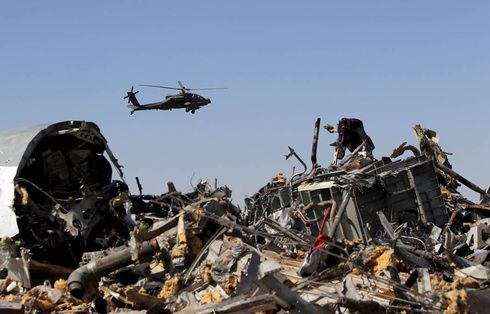
Fragments of the Russian A321, Egypt, El-Arish, November 1, 2015
The practice of registering abroad is also associated with the policy of leasing companies: they prohibit introducing aircraft to the Russian register. One of the reasons, according to a member of the board of the Russian Association of pilots and owners of Leonid Koshelev aircraft, is a drop in the cost of aircraft for several million rubles in a couple of years in the Russian register. After Russia, the ship is more difficult to sell, "if at all, it is possible to sell."
The situation when, in fact, a whole country flies on other people's aircraft is atypical for Europe and Asia, where all vessels register in the national register. In recent years, China and Brazil have improved their registration rules. The same must be done by Russia, the interlocutors of NT believe. “This is necessary, if only for us to be sure: the plane is normally serviced and is used correctly before that,” Alexander Knight is sure. True, such a desire will fly to Russia into a penny: you have to comply with the requirements of general designers, create powerful bases, train employees, buy expensive foreign equipment - all this now.
CERTIFICATE
The New Times learned from passengers who flew out of the Sharm Esh-Sheikh airport to and after the disaster, as a pre-flight check takes place there
Louise Grigoryeva, an employee of the project company, flew out on October 2, 2015:
My flight was carried out by the North Wind. The audit at the airport is the most ordinary: all the bags were scanned with a hand -made metal detector, but I did not remember if there were frames. They did not ask either to present a laptop, nor remove shoes or watches. The passport was checked during baggage, then before checking hand luggage purely symbolically scroll through.
Maria, an employee of the media industry, flew out on November 3, 2015:
Although I flew by Orenburg Airlines just three days after the disaster, nothing special happened at the Sharm Esh-Sheikh airport. The airport is small, dirty, untidy and dull. As the skinny guys were sitting there as guards and grandmothers in toilets, gnawing pistachios, and sit. The check took place like this: if people are in light shoes and sneakers, then they do not get off, if in boots with heels and on thick soles, then shoes in containers go to a transport tape. There are frames of metal detectors, but no one was inspected aimed, they did not ask to pull out laptops or remove the clock - only jewelry. I did not see manual metal detectors, only workers in gloves stood-they probably patted someone. There are no reinforced safety measures, although the stuffed aircraft flew into Moscow.
*Recorded Daria Khlyakina*There is no trust - no registration
“If you contact ICAO (the International Civil Aviation Organization that controls the implementation of the Chicago Convention * . - NT ) will immediately tell you: the whole world does not trust Russian state regulation (in the field of air transportation),” says Leonid Koshelev. “The refusal of leasing companies is associated with this to bring ships to the Russian register, and the fact that the inspections of the International Commission from ICAO are held with a creak.”
At the same time, aviation experts see the cause of distrust not in Russian rules and safety requirements: they are no worse and no better than European ones, and over the years they are more and more unified. The problem, in their opinion, lies in the reluctance of Russian aviation departments to take responsibility. “The aircraft and the Federal Air Transport Agency and Rosavision resist the Russian Air Fleet to transfer to them,” Leonid Koshelev explains the course of thoughts of airlines and government agencies. “It is better to inspect the courts abroad, and they will have less responsibility and the same money.”
In Russian state deals with such reproaches, they categorically disagree. In particular, the head of the press service and information of the Ministry of Transport of the Russian Federation, Timur Hikmatov, did not agree that the ICAO checks in Russia “with a creak”. “ICAO experts will end in checking our aircraft industries only in 2016,” the official explained in a comment for NT , “and so far we have not received a single serious remark.” He also recalled that since 2013, a state security program has been implemented in Russia since 2013, aimed at collecting and analyzing data on risk factors in flights. True, Mr. Khikmatov was forced to notice about the transfer of aircraft to the Russian register: “There are such conversations, but it has not yet reached specific decisions.”
Experts, however, insist: Russian operators and departments do not even comply with the Chicago Convention. The requirements of the 19th application dated 2013 on the creation of a state program, department and an official Commissioner for Flight Security have not yet been fulfilled. As a result, neither the Ministry of Transport, nor the Federal Air Transport Agency, nor the Interstate Aviation Committee (MAC) do not take responsibility for the accident or disaster.
In cold traces
The procedure for investigating aviation accidents is another important factor affecting safety. If the Federal Air Transport Agency is engaged in incidents and minor breakdowns, then the investigation of accidents and catastrophes in Russia takes on a poppy, the successor of the State Budgetary Institution. He does not obey anyone and makes unpertable decisions.
According to Alexander Emtsov, most of the incidents that fall into the committee for consideration are associated with errors on Earth-"either did something wrong or missed." Mack enjoys high authority among international colleagues, but his decisions have repeatedly been criticized by the authorities and the public. So, in particular, with the collapse of the Tu-154M with Polish high-ranking officials and President Lech Kachinsky, and with the Yak-42D who transported the Yaroslavl hockey team Lokomotiv.
Emtsov, who often participated in Mac's meetings, says that he personally "never had doubts about those conclusions and decisions that were eventually made." But at the same time, he admits: often the committee delays the investigation period for up to several years, as a result, sometimes expires the statute of limitations for criminal cases initiated on the fact of these disasters **.
As a result, the picture is formed: in Russia, old foreign planes are operated, control over their condition - outside the competence of Russian services, responsibility - too, and the investigation of incidents sometimes stretches for so long that criminal cases are terminated by the statute of limitations. And this situation makes the flights of Russian airliners a rather risky exercise. Even regardless of possible terrorist attacks.
Photo: Karem Ahmed / Upi / Landov
Photo: © Mohamed ABD EL GHANY / Reuter
* The Chicago Convention-a document signed in December 1944 in Chicago (Illinois, USA) 52 countries and established the basic principles of international aviation, in particular, flight rules for the territory of the participating country, the principle of national aircraft, facilitate international flights, international standards and recommended practice and so on.
** According to the Russian rules for the investigation of aviation accidents, the plane crashes should be investigated within a month, and the poppy extension extends the deadlines for an average of a year.