
Translated material
Chuchha-market
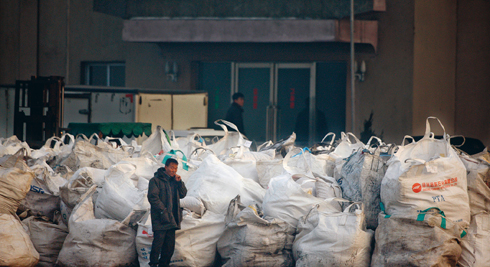
Capitalism from below. The North Korean leader Kim Jong Ir “made a number of important trips to the objects of the national economy of the country during which he managed the leadership on the spot,” local newspapers said. Today, these relations of any DPRK expert are only a grin. The "national economy" in North Korea already lives according to its own laws, not subject to a 69-year-old "beloved leader", nor his offspring Kim Chon Yunu, appointed to the successors. The situation was studied by The New Times
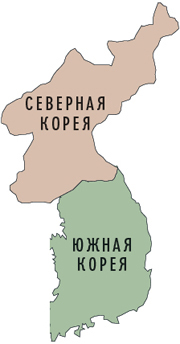
“It was with Kim Il Sene, that is, under socialism ... - And now, not socialism? “No, we no longer have socialism.” (From a conversation with North Korean refugee in China)
44-year-old Sleep Lee (all the names in the text have been changed for obvious reasons)-a former school teacher, has been managing an underground tobacco factory for almost 10 years: tobacco buys from peasants, cigarette paper and packaging in the market. She is subordinate to 20 teenage girls who receive 30 cents per day. Lee itself - about $ 150 per month. Lee -made cigarettes manufactured on artisanal equipment sold to wholesalers. By North Korean standards, she is secured, although not rich. There are hundreds in her town, border with China. Among the neighbors are there really rich people. For example, Kim Song Moon, a former athlete, holds several points of exchange of currency and hunts to usage. I bought a house for the proceeds (real estate trading in the DPRK is prohibited, but the purchase was made as an exchange), which has a LCD, a refrigerator, and washing machine. Although with electricity in the city problems, miracles of household appliances work for Kim. round the day: he agreed with the commander of the local military unit and connected to her network. Kim even has its own car! He pays for private dance lessons and classes of foreign languages - English and Chinese. Business contacts with Hia and Kim are connected by the Seoul acquaintance of the author, working with them through China. Familiar Europeans who visited the North Korean province talked about successful citizens of the DPRK thanks to the Two “Two countries: China - Korea”, quite freely acquired for € 1800 through an agency in Stockholm.
A little story
The DPRK of the times of Kim Il Sen (1948–1994) was a total of total control. There was almost no trade in the country: all food and essential goods were distributed by cards. The maximum size of the personal plot in the villages was limited by one honeycomb. A super -minute and super -centralized economy kept on Soviet and partly Chinese assistance. In 1990, the help stopped-the economy collapsed. *** The volume of industrial production of the DPRK in 1990–2000. It fell about half. In 1994-1995 They stopped making cards - millions of North Koreans were without familiar rations. Hunger began, which claimed in 1996-1999. From half a million to a million lives. Survivors (sorry for the tautology) had to somehow survive further. So the North Koreans discovered capitalism. First they began to change things for food, then trade, then produce necessary on their own. As a dream, the North Korean refugee in Seoul, noted in a conversation with the author of these lines, "there are two types of people in the north - those who trade, and those who died from hunger."
Walking to China
Since the mid-90s, food and clothing markets began to grow rapidly in the DPRK. One of them is now working in a border with China to the town of Sinaju, from where at the end of February the news about the "riots", with which "the police failed-had to be suppressed with the help of the army, at the end of February. This was what events in the presentation of world agencies looked. In fact, a small skirmish occurred in Siliadju, caused by the decision of the local authorities to double the tax fee by double: a couple of dozen trademark rose for half an hour, then everyone calmed down, no one was arrested. But this conflict in itself is indicative: according to some parameters, the economic policy in the DPRK is now determined at the local level.
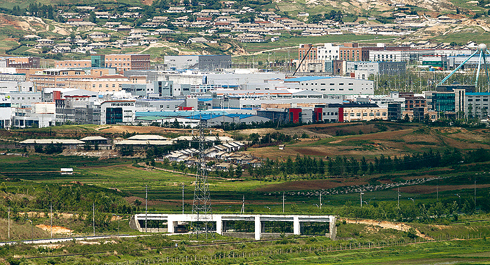 This is how the Inter-Korean Industrial Park Keson (free economic zone in the DPRK) from the South Korean checkpoint in Phanmunjon, on the 38th parallel
Most large clothing markets are not accidentally located near the poorly protected border with China. The DPRK smugglers began to sell machines and equipment from the stopped factories, fish, antiques, medicinal plants and all exotic fats like frog fat (very expensive, by the way, a product). In Korea, clothes, household goods, food came from China. In the markets, there was a noticeable part of humanitarian assistance, which entered the country from the USA and Europe.
Then, in the mid-90s, the mass movement across the border began-to China. Moreover, its scale was such that the North Korean authorities ceased to seriously punish the caught fugitives. Over the past 15 years, about half a million DPRK residents have visited China. At first they went beyond the cordon, fleeing hunger, but in the last 10 years, most migrants have been migrants - in China, Koreans can earn $ 50–70 per month *** The average salary in the DPRK is $ 2 per month ..
Corruption for salvation
When traveling along the DPRK, countless propelled rods on the mountain slopes are clearly visible. These are the private fields with which the North Korean peasants began to acquire in the last 10 years. Private agriculture in the country is still outlawed, but officials close their eyes to this. What are the fields - even underground factories, like the one that Hya Sleep Lee controls, as if they had received free. Functioners can be understood: the formal salary of a lower -scale official in the DPRK has always been modest, privileges were materialized in all kinds of special foods. Now special foods rarely reach the lower nomenclature. But numerous violators of the prohibitions, on the contrary, are ready to generously pay the official a sudden loss of vigilance. Corruption, which was almost absent during the time of “Generalissimo Kim Il Sen”, became under his son, “Marshal Kim Jong Ira”, almost universal. The paradox is that it was corruption that in many respects softened the consequences of the humanitarian disaster - if officials followed the instructions and forbidden, for example, trips to the more prosperous areas of the country for food or retreat to China, there would be much more victims of hunger.
Private practice
Another new phenomenon in the DPRK: pseudo -state enterprises that are actually private firms. A typical example is a catering. In 1996-1997 years, the vast majority of canteens and restaurants outside the Pyongyang closed. But soon they were replaced by new establishments in which, I must say, they fed a lot more tastier. Formally, new canteens and restaurants are considered state property, in practice these are private institutions: owners-investors simply pay officials for registration and then share profit.
Basically, intercity transportation has also become private: entrepreneurs buy used buses or trucks in China, and then agree (dispensed, of course) with a state organization or a military unit on the registration of a vehicle for a legal entity. Of course, the agreed amount is paid for registration with the organization’s management. 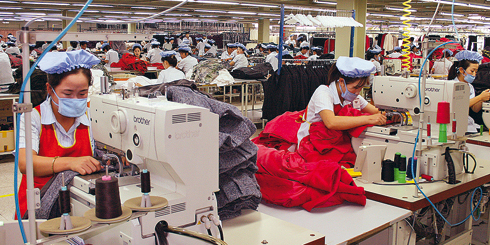
A typical example is a 47-year-old Mön, the owner of a company engaged in transportation and wholesale trade in bulk cargo, mainly salt. Med sends trucks (registered for a state -owned company) to salt crafts - also private and, as it were, non -existent. There, cars are loaded with salt and drive it to wholesale markets. In 2009, Mön had seven trucks and a thorough staff of employees. At the same time, both the owners of the company themselves, and all its personnel were formally considered employees of state -owned enterprises and regularly paid money to their bosses, so that they recorded their regular access to the invalid enterprise.
Fasts of Pyongyan
Everyone remembers the reserved workshops, which were comfortable in Soviet times, especially in Central Asia and the Caucasus. But what has happened in the last two decades in North Korea is not some kind of islands of private entrepreneurship in the sea of state property. Now the situation is rather the opposite: beyond the borders of Pyongyang, carefully keeping his “socialist” appearance, almost no one lives at the expense of the public sector. According to Kim Ben Yon, one of the specialists in South Korea in the North Korean economy, the private sector currently gives about 75–80% of the total North Korean GDP. At the same time, the North Korean state does not understand what he should do in such a situation. On the one hand, the powerful power consider the entire state economy of the Stalinsky model to be the ideal, for which from time to time, attempts are made to return it to the Kimirsen era - the last such attempt was the failure of the November - 2009 * * * * In the framework of the reform, which caused spontaneous protests of the population, the authorities made money in the ratio of 100 old won to the ratio of 100 old One new. (see The New Times No. 6 dated 02.22.2010). On the other hand, the bureaucracy of the middle and lower links does not show any enthusiasm in the fight against "private -capitalist manifestations."
It would seem that why the DPRK authorities not follow the example of China and not to stand at the head of the new North Korean capitalism? The answer is obvious: China will not work, in a divided country, liberalization will end in what it ended for East Germany. And they are afraid in Pyongyang.
In March 2010, the ex-chairman of the State Planned Committee of the DPRK Pak to us ki, the ex-chairman fired at the beginning of the same year, was executed in Pyongyang. According to the official Pyongyan, Pak Ki was “a man of bourgeois origin, embedded in the ranks of revolutionaries to destroy the North Korean national economy.” At the same time, according to the South Korean agency Yonhap, citing informed sources, both officials and the population do not believe in these accusations, believing that the official became the “scapegoat”, which was blamed for the failure of the foreign exchange reform carried out at the end of 2009. The reform was designed to strike at the black market businessmen, which accumulated significant amounts of money. The authorities also intended to completely return the turnover of goods in the country under state control. At the same time, the authorities put the persons who had foreign currency.