
Translated material
"Egypt Finish!"
The New Times correspondents Ilya Barabanov and Yegor Mostovikhov are transmitted from Cairo
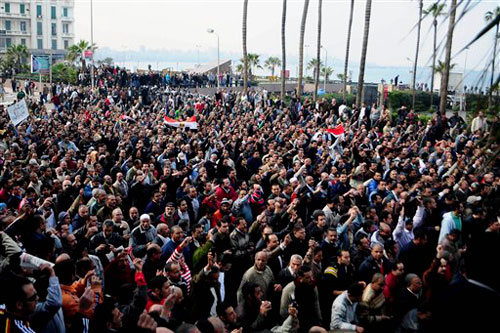
On the first of February, on the eighth day of protest in Egypt, the three -day period has expired, which the demonstrators took away to the new government to begin with indigenous changes in the country. On this day, hundreds of thousands of manifestants reached the streets of Egyptian cities, requiring the resignation of the country's president Hosni Mubarak. In the morning, thousands of people besieged the railway station in Alexandria, trying to go to Cairo. But the railway message, like the message by regular buses, has been paralyzed for several days in the country. 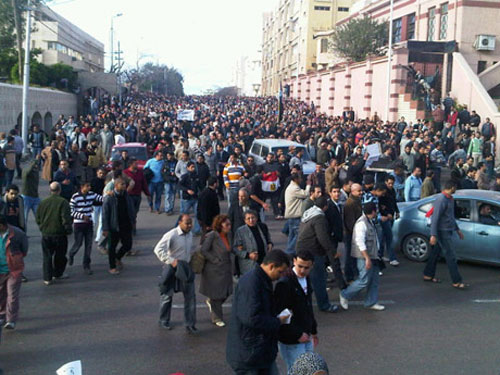
At the entrance to Alexandria, where the New Times correspondents went, a cork for hundreds of meters from cars in front of a checkpoint was also lined up. The military checked each car for the availability of weapons and checked documents from foreigners entering the city. On the main square, tens of thousands of people gathered on this day (one of the largest squares on the Alexandria embankment).
Ibrahim is 43 years old, he is an insurance agent and looks like a clerk who went out for a walk on his weekend. Gently dressed in fresh ironed shirts and vests. He says that the people suffered Mubarak for 30 years, but now people went to the square and demand to return their freedom, and intend to stand on it until the president retires.
Ahmed is only 20, and he is a student of a local college. He says that after graduation, he will not be able to find a job, because the country has great unemployment. However, if he manages to find a job, then the maximum that he can count on is a salary of $ 100 per month.
While he is saying this, the manifestants carry a stretcher past us. They imitate the coffin in which the "dead" lies, depicting the president of Mubarak. People take off their shoes and knock on this improvised coffin, thus demonstrating their extreme contempt and disrespect for the dictator.
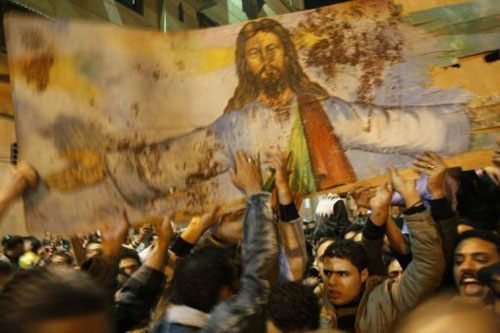
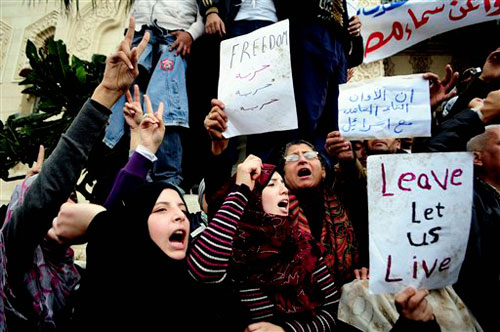
One of the most popular phrases that the New Times correspondents heard on the streets of Egyptian cities - Egypt Finish - Egypt ended.
Arabian coup: all materials about the development of events in Egypt
Muslim Revolution: All Inclusive. The topic of the number (Issue No. 3 dated January 31, 2011)