
Translated material
And you, fry!
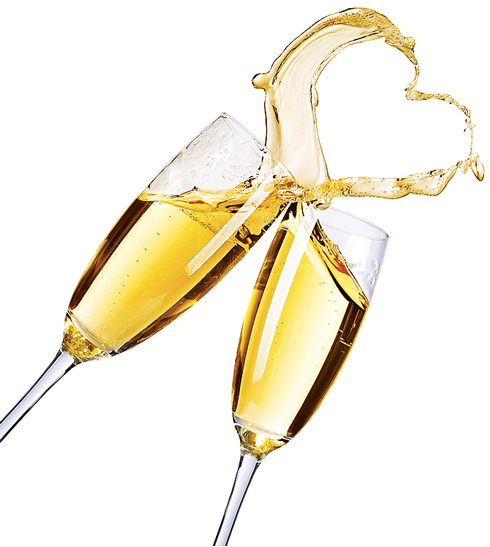
And you, fry! New Year can do without anything, even without a Christmas tree. But never - without champagne. About where the “wine with bubbles” came from and which cocktails can be made from it - people recognized the New Times into those who do not drink champagne under any circumstances, those who cannot live without it, and on everyone else, that is, who use champagne from case to case to case. And it so happened that once a year, both aristocrats and ordinary mortals drink it. Because the celebration of the New Year without champagne is inconceivable.
 |
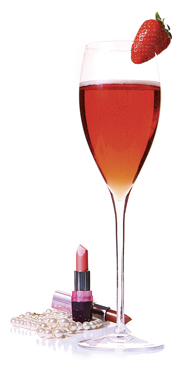
Board wine was promoted by nature by champagne. Champagne is one of the northern northern Grapegrad provinces of France and wine was never famous. It often came out sour, wandered and sometimes even exploded barrels. To turn the wort into wine, a certain temperature is required, but with early cold, fermentation in barrels stopped. The wine was poured into bottles and sent to the cellar. In the spring, fermentation resumed, and when the bottles were uncorked, it also happened that the foaming wine broke out, striking everyone with its taste. And it happened and vice versa. Everything depended on weather conditions: the wine either “rampant” or remained “quiet”. And it took a lot of time while winemakers learned to regulate this process.
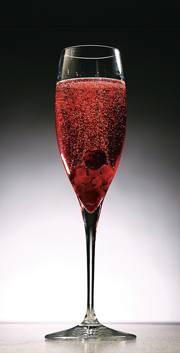
Between these walls, hissing, fountains, and champagne were boiled in three pools, of which the first-transparent-violet, the second-ruby, the third-crystal. Near them, blacks in scarlet bandages rushed about, with silver scoops filling flat bowls from the pools ...
Mikhail Bulgakov.
"Master and Margarita"
The first who was able to tame the Devil's Wine was the Benedictan of the abbey of the Otvilier Pierre Perinion, who lived in the 17th century. Perignon revealed the secrets of bathing, compounds of juice of different grape varieties, and began to pour wine into bottles, which allowed to hold carbon dioxide, which had hitherto exploded barrels - it was Perignon who guessed to make the taps of cork oak bark. Many contributed to the history of champagne. In the abbey, neighboring with a fever, for example, they noticed that dark glass bottles explode less often. But only in 1800, the pharmacist Francois from Chalon came up with a modern bottle, which takes into account not only the color of the glass, but its thickness and shape. Approximately then, the widow of the winemakers, who later became the famous Madame Klimko, eliminated another significant shortage of Pierre Perinion: her master Antoine Miller developed the Temusa technology, that is, to withstand the bottles in a special standing neck. At the same time, the bottles had to be constantly turned so that the sediment did not settle on the cork, then freeze, and then, along with a traffic jam, removed a small piece of ice with a sediment from the bottle. The bottles were added by the same wine and left for further exposure, so that champagne became crystal transparent.
The decisive step took the winemaker Victor Lambert, who developed in 1874 the technology of fermentation, which translates wine acid into lactic. Thanks to this, a brut appeared - very dry champagne. Soon, the brut became the most popular variety in the world. And the specialists of the winery house "Laurent-Perry" went even further and released Extra-break, super-drying champagne. Brats was created for those who know how to enjoy them, who can feel all the shades of a noble drink. Advanced sommelier recommend: if you drink champagne once a year, then drink half -gray. If once a month, drink dry. Well, if more often, then they certainly shave.
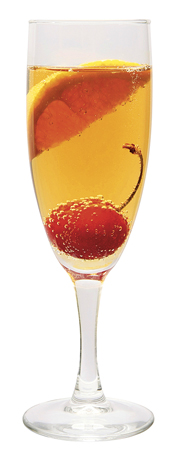
The rampant of the imagination if, nevertheless, champagne is not your drink (it is not for nothing that Alexander Sergeyevich Pushkin, after the famous ode to “blessed guilt”, moved to the prose of life: “But it changes with foam noisy to my stomach ...”), do not despair, and better hurry up to the chimes to make a cocktail from this divine drink. In addition to classic champagne cocktails, there is a whole family, so to speak, strange cocktails, in which the ingredients themselves are somewhat unexpected, and the proportions amaze the most relaxed imagination. For example, the popular Black Velvet (Black Velvet) is champagne with dark beer. Or French "75 mm". According to legend, this cocktail was invented during the First World War as a pilot of the American squadron Raul Laffberry, a great lover of champagne. And then I somehow decided Mr. LaFbury to mix champagne with cognac. The effect turned out to be stunning in every sense, and the action of such a mix was quite reasonably compared with the action of a 75 mm shell of the French gun. Since then, champagne began to interfere not only with cognac, but with everything that was at hand.
It is believed that nothing can be compared in terms of fence and a combination of taste shades with the cocktail “Death of the Podpo”, composed by Ernest Hemingway: “Pour the absen glass into a glass for champagne. Dilute it with chilled champagne until the liquid becomes a milk-dentist color. Drink a cocktail slowly. Repeat the procedure from three to five times. ” However, after the Second World War, the Soviet officers, who served in remote garrisons, continued the glorious case of Lafbury. Thus appeared cocktails “Prince of the Wales” (a quarter of cognac, three quarters of champagne), “White Bear” (half half a half, which almost corresponded to the proportions of the American ace), “Northern Lights” (three quarters of the cognac, a quarter of champagne) and, finally, a unique domestic invention of the Shimpanzee cocktail, which included drinking alcohol with drinking alcohol with drinking alcohol. Champagne (the proportions are purely individual, but you must bite the tangerines, which, in general, is against the etiquette of champagne consumption, and you certainly drink from aluminum unamalized mugs ...).
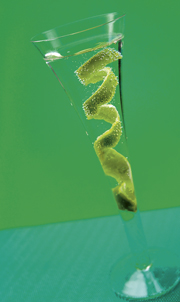
But let's move from extremely to more traditional recipes. The most famous mixed drink based on sparkling wines is called simply and without venture: “champagne-coctal”. Moreover, it is not only the most famous, but also one of the oldest. First mentioned in the book of Jerry Thomas, “Bonvivan's satellite”, published in 1862. Like many other cocktails, the “champagne-cocepy” has many variations, but the base is unchanged: a sugar cube saturated with a bitter (bitter tincture) and flooded with champagne in a high glass. Small doses of any strong drinks are often added, although, according to experts, they are unnecessary. But you can not do without classical decoration - spirals of lemon peel.
Ritz Fizz - by origin, most likely, an “American”. Although there is reliable information that in the last third of the 19th century he was served by guests of the Paris Hotel Ritz. However, the most famous drink associated with the name of the famous hotel empire was created exactly in America-in the Boston Hotel Ritz-Carleton. Ritz Fizz in the classical recipe is mixed from the blue “curacao”, “Amaretto” and champagne. Another “Rittsevo” cocktail is slightly more cruel and belongs to the category of pick-me-up-“hangover”. “Curasao” can be replaced with lemon juice, and “Amaretto” - with cognac. True, the taste is somewhat smoothed out by the addition of Grenadin syrup ...
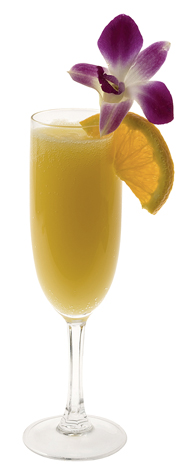
The ruddy mimosa all kinds of juices by authoritative bartenders unanimously recognize the most successful accompaniment for champagne. The most popular cocktail of this kind is “mimosa”. So it is called the Americans, the British is called Buck's Fizz named Baks, where Barten Pat Mc Gerry first mixed it in 1921. The priority of the British is indisputable, but the American name has become more popular. Probably because it successfully reflects the characteristic yellow color of a cocktail, preparing from champagne and orange juice. Further on this field is the widest scope for activities. Replace the orange juice with grapefrutov, and you will have a “walk along the moon”, with cranberry juice, you will have a noble “Poinshett”, with the mandarin, you will get a “Puccini” cocktail, with the juice of Marakui-“Bikini”, with apple-“Jersey Jack”. And if you mix orange and cranberry juices, you get a "ruddy mimosa".
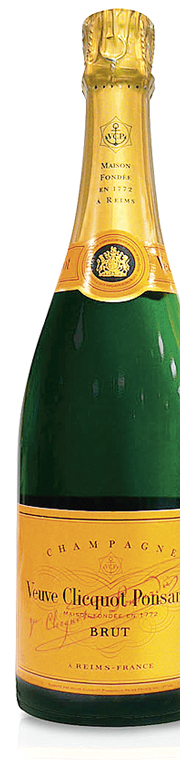 |
Widow Kliko or Moet
Blessed wine
In a bottle frozen for the poet
Immediately brought to the table.
It sparkles with an improving;
It is with its game and foam
(Like that)
I was captivated: for him
The last poor contribution, it happened
I gave. Remember, friends?
His magic stream
Gave birth to nonsense,
And how many jokes and poems,
And disputes, and funny dreams!
Alexander Pushkin.
"Eugene Onegin"
Bellini is perhaps the most popular cocktail of champagne with juice, namely Peskov. However, the classical recipe provides for the use of peach puree. Bellini undoubtedly belongs to the Higher League of alcoholic beverages. For the first time he was mixed in his Harry's Bar Venice Bar (where Ernest Hemingway, Somerset Moem, Rothschilda, Aristotle Onassis and Maria Callas, Charlie Chaplin, and later, Prince Charles and Princess Diana), the famous Giuseppe Cypriani, loved him. It is also known for the fact that in the 50s of the last century, Karpaccio invented-specifically for the suffering of anemia, Countess Amalia Nani Ureenigo. This dish received the name by the name of the Venetian artist of the Renaissance of Wittore Karpaccio, whose paintings are distinguished by an abundance of red. The cocktail is named after the Italian artist of the 15th century Giovanni Bellini: Cypriani quite rightly considered that the pale-prayed mixture successfully imitates the color of Bellini's paintings.
The cocktail is often modernized, replacing the labor -intensive in preparation of peach puree to nectar or juice in combination with a peach liquor. However, the classic remains the height of perfection. By the way, many bartenders believe that Italian sparkling wine is even more appropriate in the cocktail than classic champagne.
Simple and tastefully “Kir-Royal” is considered the simplest and most perfect of cocktails with champagne. Experiments with the ingredients do not stop since its creation in the mid-50s. The authentic cocktail "Cyrus", so named after the mayor of the French city of Dijon, was mixed from white wine with currant liquor. Thus, Cyrus saved the not very successful Harvest of the Shabel, for which he was immortalized. Later it turned out that with champagne cocktail it turned out to be more interesting to taste. So appeared "Kir-Royal." And then endless experiments began. "Cyrus-imperial", seasoned with vodka; Options with a strawberry or raspberry liquor instead of a black -brown. "Martini-Royal"-with Gin. The “Tokyo-Royal” with the melon liquor “Midori” and “China-Royal” with a Lycie Licer liqueur became peculiar peaks. Nevertheless, none of them can compare with the classic “Kir-Royal”.
An even greater variety of recipes is observed in cells (cobbler - a cocktail of wine, rum or whiskey with sugar, mint, lemon or orange and ice) with champagne. In some ways, they look like a “mimosa”, with one exception: usually a strong drink is added to their composition. Again, codes with champagne, with all their richest range, from apple to raspberry, are derivatives from serious, real cocktails mixed from a strong drink, wine and fruit juice.
Happy New Year! Champagne cocktails are worth trying them. But they do not cancel the disconnation at midnight bottles with a shot with a stopper in the ceiling. After all, as the great connoisseur and lover of champagne Oscar Wilde said, champagne can make the soul immortal, because he repels all hunting to think about the abominations of earthly ...
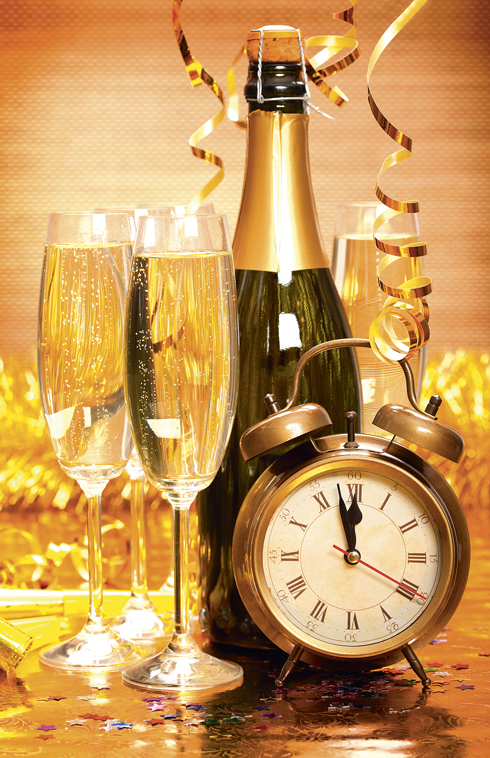
The pressure in the bottle of champagne is approximately 6.3 kg per square centimeter. The largest fixed flight length of the traffic jam from champagne was 54.2 meters. So open it delicately! Take a bottle, hold the case, without tilting, supporting the bottom with a thumb. In no case do not shake. To free the cork from foil and mussel (wire "bridle", invented in 1844 by Alfred Jixon). Slowly remove the cork, turning the bottle (namely a bottle, not a cork) - we must hear the sound of “last breath”. Correctly chilled drink will not shoot. Champagne is drunk cold, but not icy. The optimum temperature of the Brut is 7–9 degrees. This temperature will be achieved in a bucket of ice and water. You need to put such a bucket on a separate table.
The shape of the glass affects the release of gas bubbles in champagne, its "game". For a real Brut, a glass of colorless glass with smooth walls is best suited-a narrow high cone, gradually expanding, and then slightly narrowing. In such a glass, the game of bubbles is visible longer, talking about the quality of champagne. The remaining varieties can be drunk from wide glass glasses resembling a creamy in shape. Keep the glass by the leg so that the wine does not heat up. Champagne should be poured along the wall of the glass to improve the formation of foam and at the same time prevent it from escaping.