
Translated material
Exam and olympiads in mathematics
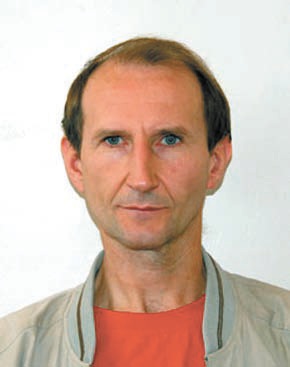 Nikolai Shtykov, candidate at first. sciences, Art. teacher, Irkutsk State Pedagogical University
In favor of the exam, two main arguments are usually given. According to the first of them, the USE makes it possible to objectively identify the level of knowledge in the corresponding subject, and the graduate can evaluate his chances of entering the selected university based on the approximate passing points that this university set. The second argument is the possibility of entering the university on the basis of the results of the exam without additional entrance exams (with some exceptions). Opponents of the exam have a much larger arsenal of arguments in their asset, including a psychological and ethical nature, which, in their opinion, together indicate "to the full failure of the exam." Certain cases of the emergence of options for examinations on the eve of the exams, reports on solving tasks on the day of the exam in groups of students and teachers, promptly neutralized employees of special services, give reason to the examination of the USE to declare the entire system of organization of the exam and other types of violations.
In addition to the general criticisms of an ideological nature, claims are made to the exam in mathematics regarding the level of complexity of tasks, their quality, and some critics indicate the aesthetic unattractiveness of test tasks. (Among these critics, there are mathematics teachers of quite famous schools in Russia with a very in -depth study of mathematics, whose students regularly become winners and prize -winners of the All -Russian mathematical Olympiads.)
In my opinion, serious arguments against the exam are primarily concerned for the content of the exam as a mechanism for selection to universities and the ratio of the exam with other types of entrance exams. The leaders of a number of central universities, as a lack of the created set of a set of applicants, only based on the results of the USE indicated the too “technical” nature of the examination of the exam (in particular, in mathematics), which does not allow to fully show the non -standard thinking of some students and thereby creates a barrier to enter universities of many gifted applicants. As an alternative to the exam, it was proposed to hold Olympiads, according to the results of which universities could gain the best applicants.
This argument, significantly backed up by the authority of the rector of leading universities in Russia, forced the Ministry of Education and Science to make some changes to the student recruitment system. Since 2008/09 Uch. G., according to order No. 285 dated 10/22/07 “On approval of the procedure for holding the Olympiads of schoolchildren”, according to the results of the Olympiads approved by the Council of Olympiads, the university conducting such an Olympiad can recruit students before the exam. Olympiad Council after evaluating the applications received from universities
He approved 120 olympiads distributed in three levels for the current academic year. Thus, the Olympiads organized by universities or education management in the regions now successfully complement the exam as the form of the entrance exam. According to the results of these Olympiads, about 10-15% of applicants can become students of university. In addition, 24 universities in 2009 received the right to conduct additional entrance exams in some specialties for which a high competition is expected.
Schoolchildren who have become winners and prize-winners of the final stage of the All-Russian Olympiad in any subject enter the relevant specialties without exams (100 points are placed in the USE certificate for this subject). Universities will probably take into account the results of regional olympiads somehow. Giving Olympiads, which leading universities have been held for many years, the official status of entrance exams will undoubtedly improve the quality of students' set. In mathematics, it is planned to hold 22 Olympiads (out of 120), according to the results of which many schoolchildren will become students of various universities, including Moscow State University and IFTI.
Considering that in Russia the Olympiad movement of schoolchildren is quite developed, many capable graduates will be able to become students of prestigious universities through subject Olympiads. Nevertheless, throughout the country, the Olympiad will not be able to make serious competition. According to the dews, in all regional olympiads in 2008 106,613 students participated, of which about a third of the class students were about a third. Not every participants showed thorough knowledge and understanding of the corresponding subject. For example, in the regional mathematics Olympiad in the Omsk Region (the best region in Siberia, based on the results of schoolchildren’s performance in the final stages of the All -Russian Olympiad in mathematics over the past few years), out of 70 participants in the 11th grade Olympiad, only two scored more than half of all possible points, and 45 participants did not solve one of the eight tasks.
A similar situation in many other regions of our country. Even in the Moscow City Mathematical Olympiad in 2008, out of 1102 participants who spoke for 11th grade, more than two tasks (out of seven) were able to solve 117, and 567 participants did not solve a single problem. An analysis of the results of regional olympiads in mathematics shows that only 300-350 graduates throughout Russia have really good mathematical training, allowing them to enter the best universities (including Moscow State University, St. Petersburg State University, IFTI) according to the results of such Olympiads as the “suburiors of the Vorobyovy Mountains”, “Lomonosov”, “Fizteh”.
On the other hand, about 940,000 graduates were handed over to the exam in mathematics in 2008, of which about 85,000 received fives and took part in competitions in universities for those specialties in which mathematics is a profile discipline or is important in professional training. Thus, the number of graduates who showed good results at regional Olympiads is less than 0.5 % of the number of students who passed the exam in mathematics for the five. Nevertheless, the value of the Olympiads as a type of entrance exams is quite significant. Firstly, schoolchildren take part in them, seriously suitable for further vocational training, configured for active work, striving to realize their abilities. Those of them who do not enter universities according to the results of the Olympiads receive an incentive for more intensive preparation for the exam. Secondly, capable and well-trained schoolchildren through the Olympiads become students of the best universities even before the exam. In this case, the Olympiads with their specifics, relatively non-standard tasks are a kind of insurance from the "accidents" of the exam.
Analysis of the results of the exam in mathematics, conducted over the past three years in most regions of Russia, allows you to make several statements (which, however, opponents of the exam will still dispute). The rather low results of the exam in mathematics in the last academic year clearly indicate significant gaps in mathematical training. About a quarter of graduates who received deuces (despite the fact that only seven rather simple tasks in 4 hours needed to be solved by the three), demonstrated the complete absence of not only mathematical knowledge, but also elementary computational skills.
When opponents of the USE say that instead of studying mathematics in educational institutions, “dragging” on the exam is carried out, they probably imply that “trained” graduates receive high points, not understanding mathematics. However, the results of the exam in mathematics clearly show that the technique “specially adapted for the exam” does not give any significant effect. The statistics of the final certification in the form of the exam in mathematics sometimes seem amazing. Many schools have shown the incredibly low level of mathematical education of their graduates. It is far from isolated cases when all students in schools handed over the exam on deuces and three. In those years when the final exam was given in the so -called traditional form, in these schools the number of graduates who received four and five at the exam was rarely less than 50%. Despite numerous talk about various types of corruption on a large scale during the exam, no convincing evidence confirmed in the courts was presented. To a large extent, the honesty of conducting the USE depends on the regional education management bodies. I can say with sufficient confidence that, in particular, in the Irkutsk region, for all the years of the USE leakage, information on control and measuring materials, data taces and other serious violations have not officially recorded.
The rule “plus is one point”, which acted during the period of the exam on conducting the exam, negatively affected the attitude of students to the final certification. The departure of schoolchildren who at randomly selected answers in the tasks of the type A and ignored all other tasks at random became widespread. The deuce received by such schoolchildren (in 2008 more than 200,000 graduates received deuces in the exam in mathematics) turned into a three, with which it was possible to enter a university on a commercial basis. It is difficult to expect improving the quality of higher education in universities with the abundance of "commercial" students.
After the cancellation of the “plus one point” rule, a surplus of discontent from negligent students and those parents who do not have a clear idea of the level of education of their children should be expected. Having gone to a reasonable and justified compromise with the rector of leading universities, the Ministry of Education and Science will be under the onslaught of schoolchildren, whose knowledge should not even be evaluated on a deuce, but by a size, infinitely close to zero, and their patrons who have raised the banner of the struggle with “insensitive machines”, checking the tasks of the “Inhuman EGE”. It will not be easy to withstand this onslaught of the Jurassic Park.
Already in the preliminary (demonstration) version of the exam in mathematics, prepared by FIPI, by order of the Federal Service for Supervision of Education and Science, some tasks of the basic level are simplified, which will allow even those schoolchildren who can hardly fold the fractions and do not distinguish the square of the amount from the sum of the squares. However, the efforts of the developers of tasks will still not separate a significant part of the losers from their native assessment. It will be curious to find out how, under such liberal conditions, to obtain a positive assessment in the exam in mathematics, it will be possible to reduce the percentage of doubles. In any case, certificates of graduation, instead of certificates, will be solemnly awarded to a considerable share of graduates.
Unfortunately, it is not customary to talk about the advantages of the exam in the media. In the media, the news of the low level of school mathematical education in Russia appeared on the basis of the data of the international study of the educational achievements of students (PISA), according to which Russia in 2006 was among the countries that took 32-38th places out of 57. However, these data should be approached with caution. Mathematics tasks look quite unusual and unusual for Russian schoolchildren. They checked not so much mathematical knowledge and skills in solving mathematical problems proper as the ability to put into practice (in everyday life) a certain set of simple computing and logical techniques. The solution of these several strange problems was attended by 6154 students at the age of 15 from 210 educational institutions in 45 regions of Russia. It is possible that the Armada of Devillers penetrated among them, who later received their legal deuce in the exam in mathematics.
On the other hand, it is difficult for those who believe that the results of the exam have only confirmed the data of international testing. In what is associated with Pisa, I note two amazing facts that can probably be comprehended while in a cozy metaphysical fog. The first fact is criticism in the English press of those educational institutions of England that refused to participate in PISA research. This resembles the statement of one famous Brazilian coach, who noticed that every fan in Brazil considers himself the best coach. The second fact is the conclusion made in one of the articles devoted to the analysis of the results of Pisa. It turns out that the problem of education in our country is that the “knowledge” component of Russian education still prevails over the “competency”. So, competencies are our educational.
Once again, I note that the exam has completely objectively showed the level of education of graduates of our schools. At least the results in mathematics, in my opinion, are very reliable. I would like to hope that with some disadvantages of the exam, its implementation as a form of final certification instead of the “traditional” form of final exams adored by the doubles, when, under the slogan of increasing academic performance, the weighty layer of non-taught graduates was covered for years, and will force at least something in the minds of their many followers.