
Translated material
It's time. Unnatural problems
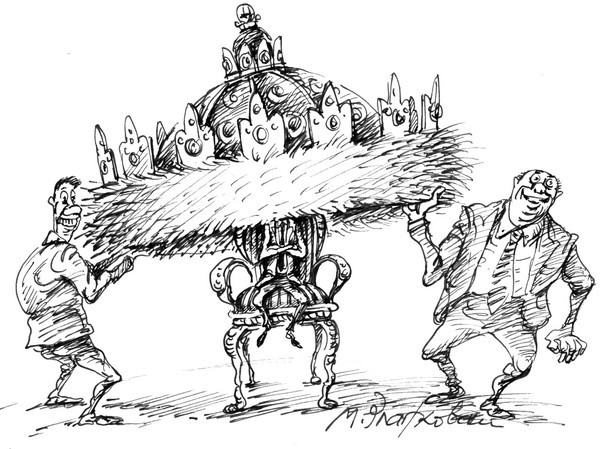
All the restrictions that were mentioned in the previous article, I think, in general, are natural. Even if painted with special Russian color. What are we talking about? Yes, for example: in all countries of the developed world, the process of urbanization leads to the outflow of people (and, first of all, youth) from rural areas and small towns to large and largest cities, where the palette of chances is really greater and success (at least, it seems like this) is more quickly achievable. And in Russia the same way. Only with Baief's intensity, so that not to say - rage. But “Features of a national character” have nothing to do with it. It’s just that we do not have stable, reliable, bringing self -confidence and albeit moderate, but still the prosperity of “anchors” in the field: family, often centuries -old business, equipped farms, reliable and everyday private property, finally. And there is an instant collapse of any prospects with almost everyday closure (as a rule, for complete loss of unprofitability) of the only production in towns and towns. Yes, and it is enough to compare the well -groomed and inhabited small towns of America or Europe with the village (urban -type villages), scattered through the expanses of Russia and reminiscent of either a camp, abandoned by guards, or a forgotten construction site of the failed construction, to literally skin, why we are trying to get out of them all the “capable of wearing weapons” while there are forces. So the outflow from the periphery to the centers is stronger.
But along with these objective restrictions, we also have purely subjective unnatural problems. Subjective - because their existence depends only on us, on our will/lack of will and on our actions (or inaction). Unnatural - because the Renaissance of such problems at the beginning of the 21st century and in the educated post -industrial country is a thing that contradicts the whole course of the historical process. There are two problems of these, and they are very interconnected among themselves.
The first is power (in the broadest sense of the word). She, obviously, is too much, and she, to put it mildly, is not too friendly in relation to the country. The second is a society that is not so much, but, read, practically is not completely, and this is “not at all” allows the authorities to be what it is.
What is now for the type of power, in my opinion, everyone has already guessed. The most attentive (the number of which I, my beloved, of course, cannot help but refer) have guessed for a long time. For almost two years, I wrote a fairly widely dispersed post called "Hollow Fascism". And these two of the last two years with some superstitious horror, as he could, opposed the fact that he himself seemed to be glued. To understand all the further, I only want to emphasize that I do not use the word “fascism” (I didn’t think that such a remark would be needed - but, come on, you suddenly remembered the word and began to use it in skirmishes as a censorship equivalent of a mat), and as a purely technical term characterizing the power and state formations of a certain type. Generally speaking, I was not going to dwell in detail at this point for his, as it seemed to me, obviously, however, the captivated cries of “Fire! Anxiety! ”,“ The country is rolling to fascism! ”,“ We see signs of impending totalitarianism! ” etc. - As if we are talking about a possible, even probable, but still perspective - they compel him to dwell on this point in more detail.
What a prospect! Everything has long been in full glory!
But since not to everyone the situation is obvious, then let's go according to the points.
The twentieth century proposed a rich selection of totalitarian regimes: and, in fact, fascism (moreover in quite diverse-choose a taste!-versions), and Nazism and communism, again in different guises. They have a lot in common.
Firstly, the structures of power. All power was always concentrated in one node - as a rule, an informal node (or formal, constitutional status of which did not provide it with such limitless powers), regardless of what ways the totalitarian regime came to power. In Nazi Germany, fascist Italy and the Soviet Union, the power actually ended up in the hands of a very narrow group of people closely around the Fuhrer, Duche or the “Father of Peoples” and formally called the top of the ruling party. In Spain-at the military elite around General Franco, in Portugal-by A. Salazar, formally called the Prime Minister. Now the helm in Russia is not even the presidential administration (at least some formal structure), but President Putin personally, members of the Lake Cooperative and persons close to them. All other structures have always been politically and turn out to be purely decorative and are used only as technical mechanisms for the implementation of the decisions of the top.
Typically, totalitarian power was based on mass parties with their youth Hitler yugen and Komsomols. After the establishment of a totalitarian regime, these parties were rapidly turning from parties into certain clubs of large and small beneficiaries and regime customers who swore to it on loyalty, into a kind of vessels and capillaries that permeated all other structures of society. This quasi -party structure had two main functions: a short leash for its members (crafting from the ranks meant an immediate social collapse for an apostate or exile) and a channel of an unconstitutional and irresponsible connection for the retranstation of decisions from above. It was the mandatory for the execution of decisions transmitted through an irresponsible quasi-party channel that formal decisions were technically made by constitutional institutions-and ensured the impossibility of civil influence on decision-making and control over their implementation: formal agents did not make them and played the role of a lightning rod. The Putin regime even did not create such a party, by and large, did not (the experiment with Err remained so unfinished experiment): why, when all the party’s pie, including the formidable and opposition of the Communist Party, voluntarily and with songs, perform this role of a drive belt and boxing pear? Moreover, for fear, too, but for fear of being excommunicated from the feeder (both party and even more personal).
The judicial power in all totalitarian regimes was actually a “semiconductor” in “vertical” conflicts (man-firmness), remaining quite independent and even impartial when considering “horizontal” (civilian) cases, at least to maintain the myth of a “strict but fair” ruler. But in “vertical” processes, it was guided by both vertical, repressive in relation to the personality by law, and signals, retraneled by the quasi-party communication channel. And here the Putin government, if it is original, is only that he does not even try to create the appearance of justice, giving the court almost entirely to the deed of the judicial estimate of the judicial estate: “The one who has brought more or who the patron is stronger is right.” The only thing that requires power from the court (and the courts, understanding perfectly well from whose hands they feed, the authorities, of course, do not refuse reciprocity)-it immediately becomes the deaf-mute Gerasim, as soon as Mu-Mo-Mo-Mo-Mo-Mo-Mo-Mo-Mo-Mo-Mo-Mo-Mo-Mo-Mo-Moh.
Finally, the loyalty of the population was provided by the developed suppression apparatus at the head of which the state authorities were controlled by the top. Security: Gestapo and SS in Germany, ChK-NKVD-KGB in the USSR, Stasi in the GDR, Securitate in Romania. The ministries of the internal affairs and the police or police subordinate to them, in addition to their direct functions to maintain public order at the “household” level, also charged the responsibilities of the “prevention” of the lower manifestations of public discontent and for the implementation of draft work for state bodies. Safety. The lodging power acts exactly the same, except that the exorbitantly broody police practically removed the shoes of maintaining the “household” order - why these troubles are on their heads, if, of course, they won’t pay for them! ..
And now I turn to those who are trying to present the matter as if totalitarianism have not yet come, but only on the way, only threatens our society: how does the Putin government differ from any clearly totalitarian? Unless the fact that she has an improved, “improved and supplemented” version (well, still learn at least their own!). And she began to “threaten” and “portended” at all now, but back in 2004, starting from the first “case of Yukos” and, running ahead, with the defeat of NTV.
At the same time, it is obvious that the current regime is neither communist nor Nazi regime: it is quite indifferent to the national issue (not declarative, but in real actions) and is completely devoid of “non -reality” social rhetoric and practice. But if the power is totalitarian, and at the same time neither communist nor Nazi, then on the principle of its structure it is fascist power. And it remains only to confirm this thesis by the analysis of relations between the authorities and business, the authorities and the means of information.
In all totalitarian regimes-and this, secondly, a totalitarian transformation of the business took place. But if in the communist he degenerated into an abstract “production sphere” of the state, in its industrial-agrarian department, then in Nazism and fascism, the business forcibly integrated into the structure of the corporate state. Kruppa and Messerschmidt concessions in Germany or Fiat in Italy, formally remaining not nationalized, were actually fully controlled by power, and their owners and top management were usually forced to enter the ruling quasi parties and, at least, to fulfill the role of the guides of the authorities, and often to fought with the power, compassion actions. The statement of A. Hitler “We do not nationalize production - we nationalize people” is very significant. The middle and small business, less tightly covered by the central authority, was in the position of the hostage and the dairy cow of the local party princes, on the one hand, both the reliable and unrequited “shells of the shells” for the mentioned large corporations. The most important property of all totalitarian regimes was the system of observing the social world through the formation of fully controlled by the authorities of trade unions, who acted as the exact expression of Ilyich, in the role of “drive belts” of power. Yes, the forms were different, but the structure of the state itself. trade unions, uniting workers of the industries "across" social and party classification, was common to everyone. And in cases where private property was formally preserved (that is, with Nazism and fascism), the entire structure of the state acquired a corporate nature.
And the corporations, which are abstracted with the state, are altogether, only that are only rowing in the guise of joint-stock companies, it seems like private but controlled by the authorities of almost all Churovsky 146%, and small and medium-sized businesses, completely uncontrollable in the face of a state machine and categorically deprived of the possibilities of amateur, uncontrolled growth, at least due to exorbitant sliding tribute, paid “curators” from power, and Official trade unions, really poorly functioning - all these features of the totalitarian state, and it is in its fascist version in modern Russia, as we see, there are.
Thirdly, all totalitarian regimes resolutely monopolized the media and means of communication, moreover, they did it from top to bottom. The benefit of information in the first half of the 20th century was few, and the seal of at least any tangible circulations could be carried out only on large printing houses, vigilantly controlled by the authorities. The only hard -controlled remedy was a short -wave radio. And with which all the modes tried to remove the short -wave receivers from the population with, indicates that the threat was realized. Here (this is the experience of the USSR) - and jammers around large cities. The situation has not changed with the advent of multiplying technology: in the USSR, first they began to register writing machines, and then hide all as a sin that appeared in the special equipment in special departments so that it is not God forbid! - I did not decisively get into free access (who is older, remember what value the buried pre -revolutionary “Underwoods” that did not pass the gate registration was reprinted on them!). Censorship filtered print publications - and not necessarily purely political - artistic also (however, “politics” was everything), the film studio and the recording studio - the blanks of the records were also objects of strict reporting. But even here there were loopholes: the craftsmen began to record the forbidden “subversive” music on used X -ray films (especially for the young: “Bitters on the bones” - this is exactly about this). And then tape recorders appeared - and the “iron curtain” began to slowly spread at the seams. “There is - there is a picture on the subframe. There is - four copies are tapped. There is a tape recorder of the Yauza system! That's all. And this is enough! " - A. Galich felt this unusually acute and accurately.
In this area of the current government, you will not envy: both the people have grown up, and all the means have increased. Therefore, in order to get to the “final decision” with distributors of free views and “incorrect information, it took more time. In fact, the last act of this play is played in our eyes right now. Because if with federal television channels they figured out not washing (as if “public Russian television”-ORT, suddenly becoming a state 1 channel), so skating (remember the rolls with Gazprom Media and NTV?) Quickly, with a printed press, too, either a purely “market” method (just business-nothing personal!), Or unhappy use of administrative resources (especially in provinces), it turned out to be more difficult to get to the Internet and Internet publications. Fortunately, the Internet itself did not come out of the Lubyan Research Institute and is by no means imprisoned for total control. Well, here they can handle the little way - blocking the "faces", "hedgehog", Kasparov.ru of that visual examples. Of course, until the end has not yet been able to-and everyone who reads these lines of this is a living witness-but now he will achieve his power. In any case, it is very likely that it will achieve that these media will cease to be the media, turning more and more into mined reservations. Or more beautiful - in hunting cages with a bait as if uncontrolled words and thoughts.
I note in brackets: it is the story of the taming of the media that is almost brighter than all the others that before that potentially authoritarian authorities began to rapidly acquire all the features of the fascist regime after 2004.
The past two years only strengthened, emphasized all those features of the fascist state that was discussed. The “enraged printer” was therefore enraged that all the conditions for complete insanity have already been created, resigned and cherished before that. And, alas, not without our silent complicity.
The only thing that surprised all these two years (and what, in fact, gave the name to my post two years ago) is the ideological hollow of the regime. All fascist (and the same type of one - Nazi, communist) regimes were the modes of a great idea, a large project. I do not discuss now whether these projects were good (they were monstrous), I just state the fact: there were such large projects. And in Putin's fascism, I could not even see him even under a microscope (I think, his absence from many prevented him from identifying his direct connection with fascism). At one time, it seemed that such a project would try to make clericalism of the most mossy, aging property. But it didn’t work out, yes, probably, it could not have developed, moreover, for two reasons: on the one hand, too Christianity as such is not an Orthodox ritual, but “just Christianity”, in the words of K. S. Lewis - resists such application! And on the other, there are too many unbelievers among people (atheists, and for the most part - agnostics).
And then the Kiev Maidan finally gave a certain point of support for the Russian authorities, which dared to release imperialism from the bottle of Gin. At least in the form of an imperial ideology (although in Crimea it is no longer just ideology). "Imperial" in the sense of restoration of the facade of the empire.
This clarification is completely no coincidence. And this is why: any of the empires known to us in its core was carried by a certain Message, a message by Urbi et Orbi, that biggest project. And in this - but only in this regard! - Imperial ideology is close to any totalitarian. The difference in the content of the message. It was PAX Roman, with its superiority of ordering the world and still established the world and civilian Roman law - yes, of course not for everyone, but only for Roman citizens (but let's not forget: Greek democracy was also the power of the “narrow” people, which were understood exclusively by the citizens of the policy) - but in the vast territory of the then civilized Okumena. И римских граждан не только по крови и рождению: напомню, иудей Савл, обратившийся в апостола Павла, проповедника гонимого в ту пору христианства, чувствовал себя вполне защищенным уже одним фактом того, что был римским гражданином. То Французская империя времен Наполеона Бонапарта, несшая на штыках идеи Французской революции: Liberté, Egalité, Fraternité. И не надо говорить, что эти идеи были фикцией – вспомните, что случилось с русскими офицерами-дворянами после заграничного похода русской армии, и откуда в 1825 г. они черпали свои идеи. То это была Британская империя с ее идеей цивилизационной миссии (опять же припомним ее певца Р. Киплинга с его «бременем белого человека»). Все эти идеи, так или иначе, имели целью улучшение внешнего по отношению к империи мира по собственному образцу и подобию, а уж насколько этот образец был хорош и универсален – разговор отдельный.
Но время этих империй безнадежно прошло. Просто потому что мир стал гораздо более сложным, чем раньше. И несводимым к образцам, сложившимся где-то там, в некоем просвещенном и продвинутом центре. Потому нео-империи новейшего времени возникали только за счет архаизации, упрощения, достичь которого без насилия над естественно усложнявшейся жизнью было невозможно. Нацистский Рейх с его чудовищным идеалом построения Нового Мира на основе незамысловатой идеи превосходства арийской расы (и неполноценности других) или не менее безжалостные идеи коммунизма со светлым будущим на основе классового превосходства пролетариата – во всех случаях, всегда и везде, пусть в архаизирующей, отбрасывающей мир назад форме, но в основе нео-имперских идеологий тоже было послание миру. Только вот послание, требовавшее от мира ликвидации человеческой свободы, сведения многоцветья жизни к унылому хаки военных френчей, марширования строем, прополки и общей стрижки под бобрик. «Триумф воли» Лени Рифеншталь и сталинские высотки куда как ярко говорят об этих чудовищных Проектах, очень ярко – потому что проекты были околдовывающе грандиозны. И при всей несвоевременности, это были все же именно нео-империи: даже в них, подчеркнуто безразличных, даже противостоящих личности, бенефициарами нео-имперских проектов были (или, по меньшей мере, мыслились) их полноправные граждане либо по крови, либо по классу.
Собственно, именно здесь – принципиальная развилка. Развилка между идеей имперской (каковую нынешняя власть пытается выдать за правду и внедрить в сознание граждан России) и псевдо-имперской, какой она является на самом деле.
Все фанфары, что так громко звучат сейчас в сердцах доморощенных ура-патриотов – СамыйдлинныйвмиремостнаостровРусский!, СамаялучшаяОлимпиадавСочи!, Крымнаш!, Чемпионатмирапофутболу2018! и так далее – все эти фанфары оставляют самих ура-патриотов (если только они не члены закрытого привилегированного озёрно- кооперативного клуба) на обочине праздника возводимой будто бы имперской жизни. All. Вне зависимости от нации или класса. Потому что никаких бонусов населению имперской метрополии путинская имперская идея даже и не сулит, разумеется, если не считать таковыми призывы подзатянуть пояса, чтобы поделиться с Крымом, Донбассом... далее по списку. А до того – не слишком афишируя за тогда еще не приобретенной популярностью – с Чечней, Дагестаном, Абхазией, Южной Осетией...
Империя, паразитирующая на собственных гражданах (ну, хорошо – на собственных подданных) – это не империя, и идея такой империи – не имперская идея, а только их обертки, их симулякры, что, собственно, только и может дать столь несвоевременный для начала XXI века сеанс спиритизма с вызыванием духов прошлого.
Увы, духи откликаются на зов. И хотя это просто бесплотные и бесплодные духи, и толку от них в реальной жизни никакого, вреда – сколько угодно. И самый главный – это иллюзия снятия с себя ответственности за текущую жизнь, своего рода впадание в детство, когда некие Умные и Большие решают за тебя. По сути, последние события показали, что общества у нас попросту нет – только население. И нет его потому, что нет граждан. Готовых думать и действовать самостоятельно и брать ответственность за свои слова и действия. И за действия своей власти тоже, даже (и тем более) если они им не нравятся.
Можно долго спорить о причинах такого скатывания вниз, к худшим совковым временам, хотя на самом деле причина одна: у людей нет никакого мировоззрения, никакой веры (я сейчас не про религию). Традиционное общество уже давно завершилось вместе с его необсуждаемыми, принимаемыми как данность ценностями – а в наступившем «прекрасном новом мире» некому сказать, что такое хорошо и что такое плохо. Не потому, что пророка не уродилось, а потому что это время – не для пророков. А для каждого из нас. Только вот воли заставить себя думать самостоятельно не нашлось. Словами А. Галича, «мы проспали беду», только этой бедой был не приход фашизма – он лишь следствие! – мы позволили убаюкать себя вкрадчивым голосам наших собственных конформизма и отстраненности, чистоплюйства и брезгливости: «политика – грязное дело, не для нас, белых и пушистых!» И не надо мне говорить, что это некая объективная данность, плод нашей истории – это мы сделали или не сделали сами здесь и сейчас, сделал или не сделал каждый из нас! Ведь даже сейчас, когда фашизм уже проявил себя во всей красе, очень многим оказалось проще поддаться воодушевительному пафосу его маршей, закрывая глаза на их поразительную схожесть с «Маршем мародеров». А другим – попытаться отсидеться за закрытыми дверьми, авось, пронесет!
Но у такой безответственной сладости есть и оборотная сторона: за нее приходится платить. У фашизма всегда и во все времена в комплекте с успокоительными шорами наготове узда: повязывание, по меньшей мере, моральной кровью всех, поддавшихся искушению. А то и самой что ни на есть горячей и солёной. Всех, наговоривших и наделавших… как бы это сказать помягче… опрометчивых шагов. Слов и действий, которые обнаруживают свою постыдность немедленно с утиханием постимперского похмелья.
Из состояния имперского запоя вообще выходить нелегко – это некая внутренняя ломка, связанная с отказом от иллюзорного величия. Еще сложнее это будет делать потому, что всем и каждому из свалившихся в него придется отдать самим себе отчет в том, что они говорили и делали.
По сути, речь идет именно о покаянии. А это очень непросто и далеко не всем под силу (гораздо легче устоять перед искушением – но это всегда так, а искушениям мы все равно поддаемся). Только вот без покаяния уже ничего не получится. И не выходить из запоя не получится тоже – жизнь заставит: транквилизирующее пойло вот-вот кончится. И гораздо раньше и больнее, чем это представляется сегодня распушившим имперский павлиний хвост.
Потому что единственный выход из состояния клиентеллы – это собирание самих себя в общество, обучение гражданственности. Даже принудительное – в школе мы тоже не ахти как хотели делать домашние задания.
Власть нельзя приспособить, подкорректировать для будущего – она нереформируема в принципе, поскольку отстроена на порочной основе. Так или иначе, но ее обрушение произойдет, и произойдет быстро. Хотя бы потому что у тех, кто при власти, нет никаких идей и идеалов, за которые они были бы готовы сложить головы. А вот приватизированных интересов, ради которых каждому захочется свою личную голову поберечь – и плевать, в конце концов, что там случится со страной! – хоть отбавляй. И при первой пробоине никто из нынешних не кинется ее затыкать, а рванет к спасательным шлюпкам, торопясь быть первым.
С обществом так быстро не получится. Это только вfantasyс гибелью Саурона сила его чар тотчас развеивается, как дым. Нам такой милости не светит. Нам всем, и поддавшимся этим чарам, и тем, кто вроде бы устоял, всем нам придется еще трудно и упорно избавляться от похмелья. Но зато здесь я кое-что могу предложить. О том, что, как я думаю, нам надо будет делать (наконец-то!) – в следующей части.
Graphics of Mikhail Zlatkovsky/Zlatkovsky.ru