
Translated material
The Quiet Angol flew by
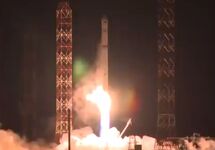
With the Angolan satellite Angosat-1, which was launched the night before from the Baikonur Baikonur Zenit missile, has not yet managed to establish a connection. This was reported by TASS with reference to a source in the rocket and space industry.
“While there is no connection with the Angosat satellite, we deal with the situation,” the agency’s source said. “After separation with the Frigate accelerated block, everything was standard at 06:54 Moscow time, its own satellite orientation system turned on, the telemetry came in full. Then the disclosure of solar panels began, and telemetry was lost at this stage.”
Experts believe that the connection with the Angolan satellite can still be restored. “This is a fairly standard situation, this sometimes happens,” the source said. “Naturally, there are chances that the connection and telemetry with the satellite will be restored, and it will continue to work in normal mode.”
Angosat-1 is a fairly typical satellite-resident weighing about 1.5 tons, which should work in a geostationary orbit. It was developed by the Russian Space Corporation "Energy" by order of the Angol government.
The Zenit missile was developed at the Ukrainian design bureau "Yuzhnoye" and was produced at Yuzhmash until 2013. In the summer, Yuzhmash announced the resumption of Zenith production, but Roscosmos said that the corporation has no obligations to the Ukrainian plant for the supply of RD-171 engines used on these missiles. Thus, the rocket launched on Tuesday was the last made "zenith".
On November 28, after the launch from the Vostochny Cosmodrome, the Soyuz-2.1B missile brought into an intermediate orbit a satellite of the remote sensing of the Earth "Meteor-M". However, then the satellite, along with the accelerated block, Fregat entered the atmosphere and fell into the Atlantic Ocean . In addition to the "meteor", 18 more spacecraft of a low load were lost.
On December 12, the head of Roscosmos Igor Komarov said that the accident was the result of an error in the algorithm of the Frigate acceleration block , which cannot be identified by existing methods. “Experts came to the conclusion that the unexplored behavior of the accelerated block was led to an abnormal situation after its separation from the launch vehicle,” Komarov said. “Unfortunately, we are faced with a problem that was not associated with quality discipline, but with a feature of the software, which was first tested about 20 years ago. This was the first start of this cosmodrome in this. The combination of "Soyuz-Frigate" must be said that if this start took place at another time of the year and there would be several other fields of the fall, then we would not have an accident. "